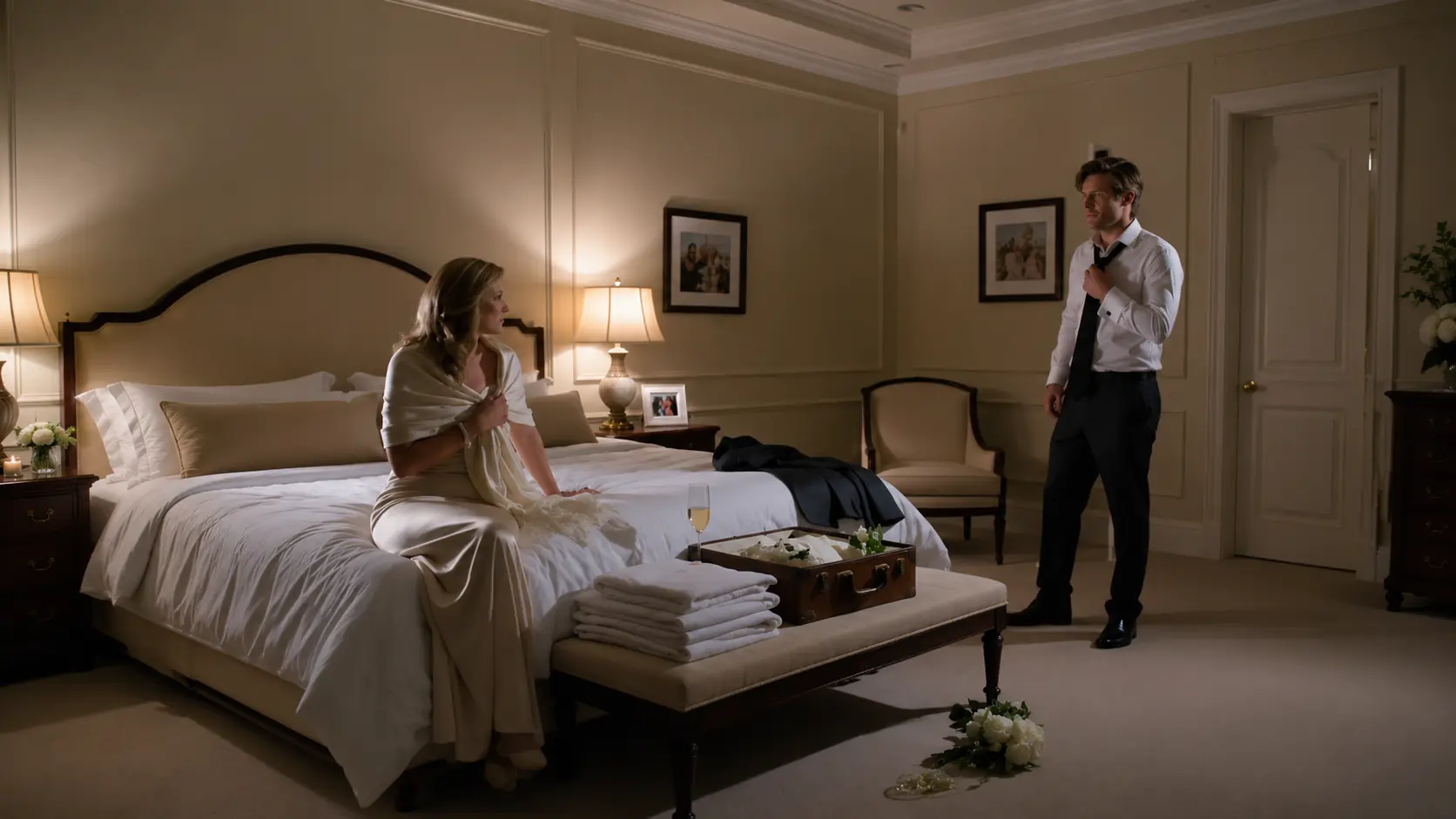
They Called Her Too Old to Marry - Until London’s Most Desired Duke Chose Her
London, May 1851.
Rain tapped softly against the windows of Whitmore House as Lady Eleanor Whitmore sat in her favorite armchair, an embroidery hoop forgotten in her lap. At thirty-seven years of age, with chestnut hair now touched with silver at the temples, she had long since accepted the cruel label society had placed upon her: spinster. The grand library of Whitmore House was her sanctuary, with towering mahogany bookshelves, leather-bound volumes, beeswax polish, and the faint scent of lavender tucked between the cushions.
Through the bay window, Eleanor watched raindrops turn the London streets into ribbons of gray and amber. She traced one finger over the delicate rose pattern she had been stitching, a botanical study born from her deepest passion. Unlike many ladies who embroidered merely to seem accomplished, Eleanor truly loved rare plants and careful cultivation. Her private garden behind the house held roses she had nurtured for years, each one a small triumph against time.
At her feet, Wellington, her brother’s aging spaniel, sighed contentedly, his graying muzzle resting on her slipper. Across the room, Byron, a portly ginger cat rescued from starvation two winters earlier, had taken possession of a reading chair and showed no intention of surrendering it. “You are both terribly spoiled,” Eleanor murmured, though neither animal stirred. This was her life now: quiet afternoons, loyal animals, books, gardens, and the peaceful solitude of a household that no longer expected much from her.
Mrs. Davies entered with a silver tea tray and set it beside Eleanor with the gentle familiarity of nearly two decades of service. There was no pity in the housekeeper’s face, only warmth. She asked whether Eleanor would dine with the family that evening or have a tray sent to her rooms. Eleanor chose to join them, asking whether her brother had returned from Parliament.
Lord James Whitmore had arrived, Mrs. Davies said, and young Thomas was already pestering him about their promised fishing expedition. Eleanor smiled at the thought of her nephew, fourteen years old and full of boundless energy. Her niece Charlotte, sixteen and nearly ready for her first season, was equally precious to her. Motherless since childhood, both children had received from Eleanor all the love she would never give to children of her own.
Then a purposeful knock broke the calm. The library door opened, and James entered, still in his parliamentary attire, carrying an embossed invitation sealed with the Peyton crest. Eleanor recognized it at once, and her stomach tightened. James placed it on the table between them and said quietly, “The Peyton ball. Two weeks hence. We have been invited.”
“How lovely,” Eleanor replied, though she did not touch the envelope. James leaned forward, his expression gentle but firm. As his hostess and Charlotte’s aunt, Eleanor was expected at major social events. Charlotte’s debut season was approaching, and their family could not afford to withdraw from society completely.
Eleanor set down her teacup with careful precision. She had attended a musicale the previous month, but James reminded her that a small musicale was not the same as a Peyton ball. Half of London would be there. “You cannot hide forever, sister,” he said softly.
“I am not hiding,” Eleanor answered. “I am simply existing peacefully. There is a difference.”
James reached across the table and took her hand. He reminded her that she had done nothing wrong and that she should hold her head high. But Eleanor knew better. Society’s whispers had touched her before, and they had carved wounds that eighteen years had not fully healed.
She remembered the pitying glances, the conversations that died when she approached, and the cruel remark Lady Hartwell had once spoken loudly enough for her to hear. Poor Eleanor Whitmore, still clinging to society’s edges like a wilted flower. At thirty-seven, that was what she had become in their eyes. A wilted flower.
A memory flashed through her mind before she could stop it: herself at nineteen, wearing white silk and orange blossoms, standing in the Ashworth garden while Lord Ashworth shouted accusations. Her mother’s face had been horrified, and the whispers had begun that night. They had never truly stopped.
Eleanor pushed the memory away with the discipline of long practice. “Very well,” she said at last. “I shall attend.”
James’s face brightened with relief. Eleanor told herself it was for Charlotte’s sake. She would not allow her own damaged reputation to harm her niece’s prospects. Besides, it was only one evening, and she had survived worse.
Charlotte burst into the room moments later, brimming with excitement about the ball. She insisted on helping Eleanor choose her gown, immediately suggesting the emerald silk Eleanor had barely worn. Eleanor reminded her that the gown was five years old, but Charlotte only smiled brighter. They could add cream roses from the garden to her hair, she said, and Eleanor would be the most elegant lady there.
The contrast between Charlotte’s innocent excitement and Eleanor’s weary dread created an ache in her chest. Charlotte had no idea what awaited her aunt at that ball: the stares, the whispers, the careful social maneuvering required to maintain dignity while others quietly enjoyed her humiliation. Still, Eleanor touched her niece’s cheek and agreed. The emerald silk it would be.
That evening, after dinner with the pleasant chaos of Thomas’s fishing stories and Charlotte’s ball preparations, Eleanor stood at her bedroom window. London glowed beneath gas lamps, the rain having left the streets shining and fresh. Two weeks remained until the Peyton ball. Fourteen days to fortify herself against pity, curiosity, and cruelty disguised as concern.
She had survived eighteen years as society’s cautionary tale. One more evening would not break her. Eleanor Whitmore had learned long ago that survival was its own form of victory. What she did not know, as she watched London’s lights flicker in the damp night, was that the Duke of Ashborne’s ship had already docked in London Harbor that very afternoon.
The Peyton mansion blazed with light two weeks later as the Whitmore carriage stopped before its grand entrance. Every window glowed, music spilled from the open doors, and carriages lined the circular drive, delivering London’s elite in silk, jewels, and barely concealed ambition. Eleanor descended with practiced grace, her emerald silk catching the lamplight. James offered his arm while Charlotte trembled with excitement.
They joined the line of guests ascending the marble steps. Eleanor kept her expression serene, her posture perfect, an armor fashioned over eighteen painful years. Even before they entered, she felt the turning of heads and the whispers behind fans. As they crossed into the entrance hall, Lady Hartwell’s voice carried with deliberate clarity.
“Poor Eleanor Whitmore,” she said to her companion. “Still clinging to society’s edges like a wilted flower. Someone should tell her it is undignified at her age.”
Eleanor’s fingers tightened slightly on James’s arm, but her face did not change. She had learned that visible pain only encouraged cruelty. James murmured for her to stay steady, covering her hand with his own. They passed through the receiving line and entered the ballroom.
The room was magnificent. Crystal chandeliers spilled light across polished floors, flowers perfumed the air, and an orchestra played from a gilded alcove. Ladies in jewel-toned gowns moved through the dance in the arms of gentlemen in severe evening dress. Charlotte was quickly claimed by young ladies her age, leaving Eleanor with James near the edge of the room.
James asked if she wished to dance, but Eleanor declined and urged him to circulate. He hesitated, torn between duty and concern. She smiled and told him she was perfectly content to observe. After he left, she endured thirty minutes of polite torture.
Former acquaintances approached with false concern. They praised her bravery for still attending such events, asked whether she found young girls exhausting, and suggested the country might be peaceful for ladies of a certain age. Eleanor smiled and deflected until the strain of composure nearly shattered her. When she found the chance, she slipped through the French doors onto the terrace.
The cool May air was a blessing against her flushed cheeks. The terrace was mercifully empty, and Eleanor gripped the stone balustrade with both hands, breathing deeply. Through the windows, she could see young women twirling in the ballroom, their faces bright with possibility. She did not resent them, but she mourned quietly for the girl she had once been.
That girl had worn white silk and believed truth would protect her. That girl had thought happy endings belonged to the innocent. She had not understood that one terrible night could redirect an entire life. Eleanor was so lost in thought that she did not notice the sudden hush inside.
The music faltered. Conversations died mid-sentence. A ripple passed through the ballroom like wind through wheat. Alexander Hartfield, Duke of Ashborne, had arrived.
At thirty-five, the duke possessed a commanding presence that drew every eye. He was tall and broad-shouldered, with dark hair, steel-gray eyes, and a strong jaw shaped by discipline and restrained temper. He had been absent from London for three years, traveling the continent, though no one knew exactly why he had left or what had brought him back. Every unmarried woman in the room, and many married ones, turned toward him like flowers toward the sun.
Mothers positioned daughters with strategic precision. Lady Beatrice Caldwell, acknowledged as one of the season’s greatest beauties, adjusted herself in his line of sight. Eleanor watched the scene through the French doors with detached amusement. The marriage market had awakened in full predatory display.
Then Alexander’s eyes swept across the ballroom and stopped on her.
Eleanor froze, half hidden on the terrace. Surely he was looking at someone else. But his gaze locked on hers with an intensity that made her breath catch. Without acknowledging Lady Peyton’s eager greeting or the beautiful young women waiting for him, the Duke of Ashborne walked directly toward the terrace.
Panic fluttered in Eleanor’s chest. This made no sense. She stepped back, intending to slip away before an awkward misunderstanding could unfold. Then his voice stopped her.
“Lady Eleanor Whitmore, I believe.”
She turned slowly, her heart hammering. Up close, he was even more imposing, but not threatening. There was intelligence in his gray eyes, and something unexpectedly warm beneath his severe expression. Eleanor sank into a curtsy, wondering whether they had met before and knowing she would have remembered.
Alexander introduced himself properly and asked whether he might have the honor of a waltz. Eleanor’s mind went blank. She asked him to repeat himself, certain she had misheard. He did, calmly and firmly.
“Lady Eleanor Whitmore, would you do me the honor of dancing with me?”
For one suspended moment, Eleanor could only stare. This had to be a cruel jest, perhaps a wager, something designed to make the spinster believe she had been noticed. Alexander seemed to understand her hesitation. He extended his arm and said softly, “I have you.”
The words broke through her paralysis. Eleanor placed her hand on his arm and allowed him to escort her back into the ballroom. The effect was instant and electric. Every eye turned toward them, conversations stopped, and whispers spread like wildfire.
The Duke of Ashborne was dancing with Eleanor Whitmore.
Eleanor felt the weight of those stares like physical pressure, but Alexander appeared utterly unbothered. He led her onto the floor, and as the orchestra recovered from its shock, the waltz began. His hand settled at her waist, firm but respectful, while his other hand held hers with steady assurance. Eleanor had been an accomplished dancer in her youth, and her body remembered what society had tried to make her forget.
“You dance beautifully,” Alexander said.
“Thank you, Your Grace,” she replied automatically.
Then he asked what occupied her time and what her interests were. The question was so unexpected and genuinely curious that Eleanor answered honestly. She spoke of managing her brother’s household, cultivating roses, hybridizing varieties in her garden, and tutoring Thomas in botany and literature when his instructors struggled to keep his attention.
Alexander’s expression warmed with genuine interest. He asked which rose varieties she had been working with. Soon they were truly conversing about grafting techniques, soil composition, and disease-resistant specimens. Eleanor found herself speaking with an animation she rarely displayed in public, while Alexander listened as though every word mattered.
For a few moments, she almost forgot the hundreds of eyes watching them. She almost forgot that dukes did not dance with aging spinsters and discuss botanical experiments. Then her foot caught slightly on her hem, more from nerves than clumsiness. Alexander’s hand tightened at her waist, steadying her and drawing her slightly closer.
“I have you,” he murmured again.
The waltz ended too soon. Alexander escorted her from the floor toward the refreshment table, his hand remaining at the small of her back in a gesture that did not go unnoticed. Lady Peyton quickly appeared, her smile strained, suggesting that His Grace might prefer a more suitable partner, perhaps Lady Beatrice or Lady Caroline. Alexander turned toward her, and the air seemed to cool.
“I have danced with the only suitable woman in this room,” he said quietly, though his words carried clearly. “Lady Eleanor has more grace and intelligence than the rest of your guests combined.”
Shock moved through the room. Fans stilled. Mouths opened. Dukes did not champion spinsters, and they certainly did not publicly cut society hostesses. Eleanor felt the color drain from her face. It was too much, too public, and too impossible to understand.
She excused herself and fled.
She made it to the ladies’ retiring room before her knees weakened. A moment later, James entered, ignoring propriety in his concern. “Ellie, what in God’s name just happened?”
“I do not know,” Eleanor whispered. “James, I do not know. I have never met him before.”
The ride home felt unreal. Charlotte chattered excitedly about the duke’s handsomeness and the romance of it all, but Eleanor sat in silence, replaying every moment and searching for a rational explanation. When they reached Whitmore House, she went directly to her room. Still wearing the emerald gown, she stood by the window, trying to understand the evening.
Below, a lone rider on a magnificent black horse passed through a pool of lamplight. He looked up at her window, and Eleanor’s breath caught. Even at that distance, she recognized Alexander. He sat motionless for a moment, his gaze fixed on her window, then touched one hand to his heart in a gesture that might have been a salute or a promise before riding into the night.
The next morning, Eleanor woke after restless dreams filled with gray eyes, waltz music, and whispered speculation. At breakfast, Charlotte could barely contain herself. Mrs. Davies entered carrying a crystal vase with a single perfect white rose. The bloom was exquisite, its petals like cream silk in the morning light.
A small card bore only the Ashborne ducal crest. No message. No explanation.
Charlotte declared it romantic. James looked both pleased and concerned. Eleanor insisted it was likely only a courtesy, perhaps an apology for drawing attention to her. But later, in her sitting room, she could not stop glancing at the rose on her writing desk.
The next morning, another white rose arrived. On the third morning, a third rose came. By then the household staff was openly curious, and Mrs. Davies admitted that even the cook had never seen such devotion from a gentleman.
On the fifth day, Lady Peyton called at Whitmore House, wearing peacock feathers and false warmth. She circled the subject for several minutes before finally asking about the Duke of Ashborne. Eleanor served tea with perfect courtesy and told her plainly that she and the duke had never corresponded, nor had they known each other before the ball. Lady Peyton left no wiser than she had arrived.
The gossip spread through London. The Duke of Ashborne was sending white roses to Eleanor Whitmore. But why? Theories multiplied: old family friendship, hidden fortune, political strategy, or a cruel wager. The last theory hurt Eleanor most because she had been the subject of cruel jokes before.
On the eighth day, she sent Alexander a careful note asking him to cease his attentions. The speculation was uncomfortable, she wrote, for both of them. The next morning, two white roses arrived. This time the card included a message in bold masculine handwriting.
“I do not cease easily.”
Frustration and dangerous joy warred in Eleanor’s chest. He was impossible, stubborn, and completely disregarding her request. For eighteen years, she had protected herself from hope. Now those defenses were crumbling.
Three days later, seeking solitude, Eleanor walked Wellington through Hyde Park on a gray morning. The fashionable crowds had avoided the threatening weather. Near the rose beds by the Serpentine, she heard hoofbeats and turned. Alexander Hartfield sat astride a magnificent black stallion, looking as though he had ridden out of a romantic painting.
He dismounted and approached, leading his horse. Wellington, traitor that he was, wagged his tail and greeted the duke happily. Eleanor kept her voice steady, though her heart hammered. Alexander said he had received her note, and she replied that she had received his answer.
“Why are you doing this?” she asked at last. “The flowers, the attention, your public defense of me at the Peyton ball. What do you want from me?”
He studied her face before answering. “I want to know you.”
He told her he had spent three years traveling through Paris, Rome, Vienna, and Constantinople, meeting diplomats, artists, scholars, and soldiers. Yet in one evening at a tedious ball, Eleanor had intrigued him more than anyone he had encountered. Eleanor shook her head, unable to believe him.
“I am too old,” she said. “Too tainted by scandal. Dukes do not court spinsters.”
“Why not?”
“Because there are dozens of beautiful young women who would marry you in an instant. Because this makes no sense.”
“It makes perfect sense to me,” Alexander replied gently. He had seen her on the terrace, alone but not lonely, resigned but not defeated. He had seen her quiet dignity in the face of cruelty and recognized a kindred spirit.
Eleanor whispered the phrase back, stunned.
Alexander admitted that he had fled London three years earlier because he could no longer bear its suffocating expectations. He was tired of strategic marriages, shallow conversations, and women who saw only his title and fortune. Then he met Eleanor, who spoke passionately about roses, answered honestly, and did not want his attention. That, he said, was precisely why he wanted to know her.
She told him he did not know who she was. She had once been society’s darling, and scandal had destroyed everything. Alexander answered that he was not interested in society’s opinion. He wanted to know who she was, not who they said she had been.
When he asked permission to call on her formally, with her brother present and every propriety observed, Eleanor knew she should refuse. Yet hope, dangerous and bright, had already entered the room of her heart. She looked into his eyes and whispered yes.
Their courtship took shape with surprising ease. Three times each week, at the proper hour, Alexander’s carriage arrived at Whitmore House. James sat as chaperone while Eleanor discovered what it meant to be courted by a man who genuinely valued her mind. Their early conversations were careful, then lively, then exhilarating.
They discussed Gothic architecture, rose grafting, literature, politics, and the reform bill before Parliament. Alexander found that Eleanor challenged him, questioned his assumptions, and forced him to defend his opinions. It was unlike anything he had known among debutantes trained to agree with him. Eleanor made him think, and he loved her for it before he fully understood that he loved her.
When Alexander began insisting on public walks through Hyde Park, Eleanor worried that people would talk. “Let them talk,” he said mildly. “I am not ashamed to be seen with you. Why should you be ashamed to be seen with me?”
Their first promenade became an exercise in endurance. Some acquaintances nodded politely, while others whispered. Lady Hartwell and a group of society matrons turned their backs as Eleanor and Alexander approached. Alexander stopped and addressed her with cool precision, remarking that her eyesight must be failing since she appeared not to have noticed Lady Eleanor.
Then he withdrew his family’s annual patronage from Lady Hartwell’s charitable committee. The Ashborne patronage was worth several thousand pounds a year. Lady Hartwell went pale, but Alexander did not relent. Eleanor trembled as they walked away, whispering that he did not have to do that.
“Yes,” he said gently. “I did.”
As the weeks passed, Alexander noticed everything about Eleanor: how she took weak tea with honey but no cream, how she favored one ankle on rainy days, how she tucked hair behind her ear when concentrating, and how Byron the cat appeared whenever she sat down. He wanted every detail of her life. He especially wanted to see her rose garden.
When she showed it to him, her face brightened with pure joy. She explained her most successful hybrid, a delicate blush-pink rose created from Alba and Damask varieties. Alexander listened to the grafting methods, the failed cuttings, the patience required, and the pride in her voice. Standing in that modest garden, watching Eleanor speak with the passion of a scholar, he realized he had already fallen completely in love.
Charlotte’s debut ball approached, and Eleanor grew anxious that the gossip around her courtship might overshadow her niece. Alexander offered Ashborne House as the venue, calling it practical rather than generous. A ball there would secure Charlotte’s status and publicly demonstrate his support for the Whitmore family. James hesitated, then accepted, and with that acceptance gave Alexander his quiet blessing.
The courtship deepened. At the opera, Alexander escorted Eleanor publicly, his hand at her back as society watched. During intermission, Lady Hartwell insulted Eleanor again, calling her a wounded bird being charitably escorted by the duke. Alexander turned and said, clearly enough for the lobby to hear, that Lady Eleanor was no wounded bird, but a woman of remarkable strength, intelligence, and grace.
In the carriage afterward, Alexander asked Eleanor what had happened eighteen years earlier. He did not ask from curiosity, but because what had hurt her mattered to him. After a long silence, she told him the truth.
She had been nineteen, still naive enough to believe innocence could protect her. At a garden party at the Ashworth estate, Lord Ashworth, a married man nearly twice her age, cornered her in the rose garden and attempted to force himself upon her. She fought him off and fled. To protect himself, he told everyone she had tried to seduce him.
His wife believed him. Society believed him. Worst of all, Eleanor’s mother believed him over her own daughter. The scandal destroyed Eleanor’s prospects, and she became society’s cautionary tale.
Alexander took her hands and told her she was none of the things they had called her. She was brave, brilliant, and beautiful, and everyone who had failed her had been wrong. He vowed to restore her reputation, but Eleanor warned him he could not fight eighteen years of whispers without damaging himself. Alexander said he did not care about his standing. He cared about her.
That night, as he escorted her to the door, he touched her cheek gently. For one suspended breath, it seemed he might kiss her, but James opened the door and the moment broke. Eleanor fled to her room, pressing her fingers to her jaw where Alexander’s hand had rested. She was falling in love, and the terror of it nearly overwhelmed her.
Across London, Lady Beatrice Caldwell read the gossip with mounting fury. She was young, beautiful, and expected to become a duchess, yet Alexander was wasting his attention on a spinster with a scandalous past. Beatrice decided she would not allow it. In a dim tavern near the docks, she hired a skilled forger to create letters in Eleanor’s hand, suggesting an intimate affair with the late Duke of Ashborne.
The timing was deliberate. Charlotte’s debut ball at Ashborne House was only days away. The letters would surface just before the event, too late for Eleanor to defend herself and too public for the scandal to be contained.
Three days before the ball, Eleanor walked through Ashborne’s grand ballroom and saw it transformed into a wonderland of white roses. Alexander appeared behind her and asked whether she approved. She said it was breathtaking and that Charlotte would be overwhelmed. Alexander took her hand and quietly told her he had not done it for Charlotte.
After the ball, he intended to speak to James formally. His intentions were marriage. He loved Eleanor. Terrified and overjoyed, Eleanor confessed that she loved him too.
Then the forged letters arrived.
On the morning of Charlotte’s ball, James summoned Eleanor to his study, devastated. Six letters had been delivered to his club, with copies sent to major households across London. The handwriting looked horrifyingly like Eleanor’s. The letters described an affair that had never existed with the late Duke of Ashborne.
Eleanor swore she had not written them, and James believed her. But society would not. The handwriting was nearly perfect, and by evening the scandal sheets would have them. Eleanor immediately thought of Charlotte and decided to leave London before the ball began, hoping her absence would protect her niece.
At Ashborne House, Alexander read the scandal sheet and felt fury rise through him. The accusations were absurd. His uncle had been devoted to his late wife, and the letters were clearly a malicious fabrication. Alexander summoned his solicitor and the best handwriting expert in London.
The expert confirmed that the letters were false. The ink was too modern for the dates, the paper bore a watermark from the previous year, and small inconsistencies proved that the handwriting had been copied. Still, the ball was only hours away, and society had already seen the letters.
Alexander rode immediately to Whitmore House.
He found Eleanor surrounded by half-packed trunks. She told him he should distance himself from her or risk destroying his own standing. Alexander took her by the shoulders and told her that he loved her, and that nothing had changed. He would prove the letters false and expose whoever had done this.
Eleanor whispered that there was no time. Charlotte’s ball was that night. Alexander told her not to attend if she felt she could not, but not to flee London. Instead, she would stay at Ashborne House under his protection. It was irregular, but he did not care.
That evening, Eleanor sat alone in Alexander’s library while Charlotte’s debut ball began above. She could hear the distant music and the murmur of society gathering to witness what they expected would be a social disaster. Alexander came to her before entering the ballroom and kissed her forehead. “Stay here,” he said. “No matter what you hear, trust me.”
The ballroom glittered with London’s elite. No one had dared refuse the duke’s invitation. They came to whisper, watch, and judge. Alexander entered alone, and the orchestra fell silent. He walked to the center of the room and raised his hand.
Before the festivities could begin, he spoke of Lady Eleanor Whitmore. He declared that the letters were malicious forgeries and that experts would prove it. Then he promised that anyone who repeated lies about Eleanor’s character would answer to him personally.
The ballroom froze. Dukes did not make public threats. Dukes did not defend compromised women. Lady Beatrice stepped forward, attempting to suggest that he had been deceived, but Alexander cut her off coldly and forbade her from speaking of Eleanor in his presence again. Beatrice retreated, humiliated and furious.
Downstairs, Eleanor heard none of it.
Then James entered the library carrying a locked wooden box, his hands trembling. He told Eleanor there was something he should have revealed eighteen years ago. Their mother had made him swear never to open the box, insisting that the family’s reputation required Eleanor’s quiet acceptance of disgrace.
Inside were papers yellowed with age: a signed confession from Lord Ashworth admitting he had attacked Eleanor and lied to protect himself, witness statements from people who had seen her flee the garden injured and weeping, and a journal entry from their mother’s lady’s maid describing what truly happened.
Proof had existed all along.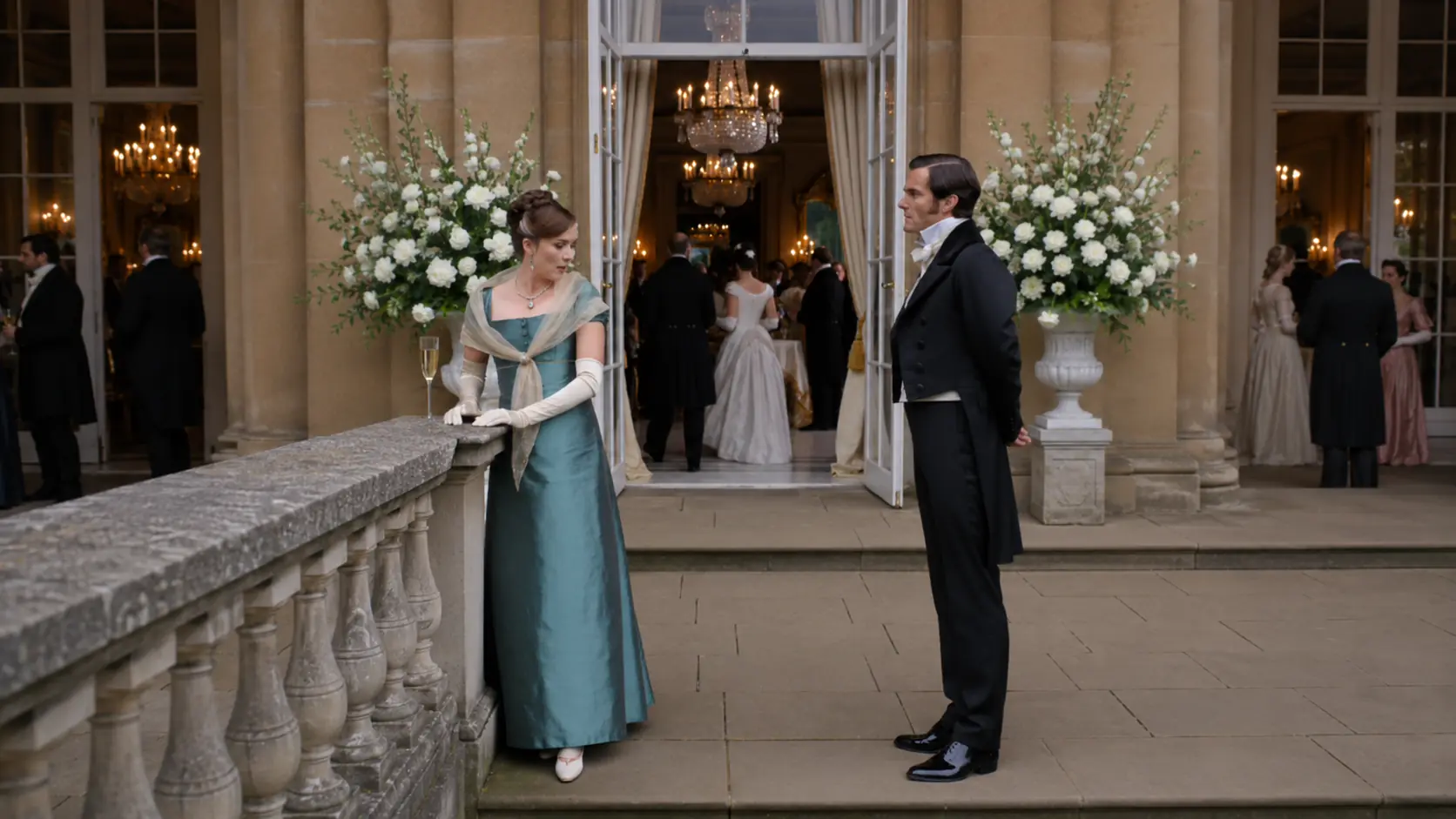
Eleanor could hardly breathe. Her mother had known the truth and forced her to live in disgrace anyway. James broke down, confessing that he had been young, frightened, and too weak to defy their mother. Eleanor looked at her brother’s anguish and understood that they had both been children trying to survive. She took his hand and forgave him.
When Alexander entered and read the papers, fury transformed into fierce joy. The evidence did not merely prove the new letters false. It vindicated Eleanor from the original scandal completely. He told her that the next day, the House of Lords would witness something unprecedented.
Eleanor barely slept. At dawn, Alexander’s sister, Lady Margaret Hartfield, arrived and insisted Eleanor wear the Ashborne sapphires. The jewels, she explained, were worn by the Duchess of Ashborne on occasions of great significance. When Alexander presented Eleanor before the lords, society needed to see that he had already claimed her as his own.
The House of Lords was packed. Every peer in London had received Alexander’s summons on a matter of honor. The public gallery held selected members of society whose opinions shaped the ton. Eleanor entered between James and Margaret, the sapphires glittering at her throat. Every eye followed her.
Alexander stood below in formal parliamentary robes. He addressed the chamber, first presenting the forged letters and calling an expert witness to prove they could not be authentic. The ink, paper, dates, and handwriting all betrayed the fraud. Then Alexander turned to the older injustice.
He read Lord Ashworth’s confession aloud.
The chamber fell into shocked silence as the truth emerged: Eleanor had been innocent, attacked, slandered, and punished for another man’s guilt. Witness statements confirmed every part of the story. Some peers looked ashamed. Some women in the gallery wept.
When one elderly lord tried to defend Ashworth’s memory, Alexander’s voice cut through the chamber. “My lord, are you calling me a liar?” The challenge was unmistakable, and the man sat down pale and silent.
Then Alexander turned toward Eleanor. He declared that she had endured eighteen years of undeserved scorn and that he would not allow one more day of it. He asked her to stand. Trembling, with tears on her face, Eleanor rose.
“Eleanor,” he said, his voice carrying through the chamber, “you are the finest woman I have ever known, brilliant in your mind, resilient in your spirit, dignified in the face of cruelty that would have broken lesser souls. Will you consent to be my wife, my duchess, my partner in all things?”
The chamber held its breath.
Eleanor’s voice emerged clear despite her tears. “Yes. A thousand times, yes.”
Shock and admiration erupted around them. Alexander ordered it recorded that any insult to his future duchess would be an insult to him. Then he broke protocol, left the floor of the Lords, climbed to the public gallery, and took Eleanor’s hand. Before all of London’s power, he kissed it.
Another witness was brought forward: a terrified lady’s maid who confessed that Lady Beatrice Caldwell had hired a forger, provided a stolen sample of Eleanor’s handwriting, and ordered the letters prepared before Charlotte’s debut ball. Every head turned toward Beatrice. Her face went white, and her social destruction was immediate.
In the privacy of Alexander’s carriage afterward, Eleanor finally broke down. Eighteen years of pain poured out in great shaking sobs. Alexander held her, promising that no one would make her feel lesser than she was ever again.
London exploded with gossip. The scandal sheets printed retractions and apologies. Families that had shunned Eleanor now begged for audiences with the future Duchess of Ashborne. Flowers and invitations poured into Ashborne House, but Eleanor accepted none of them for the first week. Freedom, after so many years in chains, required time.
Beatrice was disowned by her father and sent to a remote estate in Scotland. Alexander asked whether Eleanor wished to press charges. After a long silence, Eleanor said no. Beatrice was already destroyed, and Eleanor did not want to become someone who inflicted pain simply because pain had been inflicted on her. She wanted peace.
Three days before the wedding, Eleanor visited her mother’s grave. She told the silent stone that she was marrying Alexander, a good man who had fought for her when she had stopped fighting for herself. She also told her mother she was choosing forgiveness, not because her mother deserved it, but because Eleanor deserved peace.
The wedding took place at Westminster Abbey. Alexander insisted it be public, because after years of public scorn, London would witness Eleanor’s triumph. She personally selected the guest list, rewarding loyalty and excluding cruelty. Those who had mocked her found themselves outside the doors.
On the morning of the wedding, Eleanor wore ivory silk, her mother’s pearls, and the Ashborne sapphires. She did not look like a girl. She looked like a woman who had survived, endured, and become fully herself. As she descended the stairs, she carried no bitterness, only joy and the quiet certainty that her story was finally beginning again.
Crowds lined the streets as the Ashborne carriage rolled toward Westminster Abbey. Some watched with resentment, but most cheered. One young woman called out that Eleanor gave them hope. Eleanor turned, found her eyes, and waved.
Inside the Abbey, every important family in England had gathered. The congregation rose as Eleanor entered on James’s arm. Former tormentors were forced to lower their eyes respectfully. Former friends who had abandoned her watched with regret and shame.
Then Eleanor saw Alexander at the altar, and everyone else faded. His severe face was transformed by joy. When James placed her hand in his, Alexander leaned close and whispered that she was radiant. Eleanor whispered back that she was happy, and realized that happiness, not vindication or revenge, was her true triumph.
The vows were spoken. Alexander pledged to defend her honor as fiercely as he treasured her heart. Eleanor pledged to stand beside him, never behind him, as his equal. When the ceremony ended, he kissed her with restrained but unmistakable devotion, claiming her before all of London as she claimed him in return.
At the reception in Ashborne House, white roses filled the ballroom. Alexander toasted his bride, praising true nobility as character and courage rather than birth or title. Eleanor answered with wit, toasting the husband who had taught her that some men were worth waiting for, even if the wait was nearly forty years.
Later, Alexander led her to the conservatory, where she gasped to find her rose collection moved there carefully, every beloved variety preserved. “Your roses belong wherever you are,” he said. “And you belong here with me.” Eleanor cried then, but they were happy tears.
Six months later, at the vindication ball, Eleanor stood beside Alexander as the Duchess of Ashborne. She wore burgundy silk and the Ashborne rubies, moving with the assured grace of a woman who knew exactly who she was. Before the dancing began, she addressed the room and thanked those who had stood by her in her darkest hours. To those who had not, she hoped her example would teach their daughters that a woman’s worth was not determined by age or gossip, but by character and courage.
Late that night, after the guests had gone, Eleanor and Alexander stood together at the window overlooking London’s glittering lights. He asked whether she regretted the years she had waited. Eleanor leaned back against him and thought carefully.
“Not one moment,” she said. “The waiting taught me my worth. The struggle taught me my strength. And you taught me that real love does not see age. It sees souls.”
“They said you were too old,” Alexander murmured.
Eleanor smiled and turned in his arms. “I was exactly the right age. Old enough to know my worth, brave enough to demand it, and wise enough to recognize real love when it fought for me.”
Eleanor was no longer society’s cautionary tale. She was the Duchess of Ashborne, beloved wife, champion of the wrongly accused, and living proof that the best revenge was a life magnificently lived. She had reclaimed her story, rewritten her ending, and proven that it was never too late for a woman to claim the happiness that had always been her birthright.
Tags:
News in the same category

My Wife Cheated on Me - So I Betrayed Her With the One Woman She Never Expected
My Son Gave My Bedroom to His In-Laws and Put Me in the Garage - Then He Learned Whose House It Really Was
My Son Watched Them Strip Me of My Seat at Christmas — Then Walked Away and Took Everything Back
My Mom Stole My $45,000 College Fund for My Sister’s House - Then I Faced Them as a Millionaire
Mom Mortgaged Her House to Fight Me in Court - All to Defend My Convicted Brother
She Told Her Mother-in-Law to Reheat Leftovers - Then The House Was No Longer Hers
He Said “You’re Not What I Ordered” - Then She Returned His Ring and Left Him Speechless
The Maid Said “Sir, I Speak 9 Languages” - Then the Duke’s Fiancée Laughed at the Wrong Woman
The Duke Hid His Royal Crest - Then He Fell for the Woman Who Understood His Deaf Brother
Married at 17 to a Cold Husband - Then the Duke Said “Mine”
A Barefoot Girl Asked a Cowboy for Work - Then He Saw What She Carried to His Porch
"Be My Wife for One Night" - Then Her Kiss Stopped Him Cold
Nobody Wanted the Giant Cowboy as a Husband - Then She Saw His Gentle Heart
The Rich Cowboy Chose the Outcast Sister - And Shocked the Entire Town of Blackridge
She Thought She Married a Poor Mountain Man - Then He Drove Her to a Hidden Mansion

They Refused His Wheat at the Elevator - Then His Old Barn Made Him Rich

They Called His Well a Joke—Then the Drought Forced Them to Beg Him for Water
Her Father Called the Quarry Worthless - Then One Pound of Her Mushrooms Sold for Thousands
News Post
My Mother Slept With My Fiancé - Then Came Back Begging for an Unthinkable Favor
My Wife Cheated on Me - So I Betrayed Her With the One Woman She Never Expected
My Son Gave My Bedroom to His In-Laws and Put Me in the Garage - Then He Learned Whose House It Really Was
My Son Watched Them Strip Me of My Seat at Christmas — Then Walked Away and Took Everything Back
My Mom Stole My $45,000 College Fund for My Sister’s House - Then I Faced Them as a Millionaire
Mom Mortgaged Her House to Fight Me in Court - All to Defend My Convicted Brother
She Told Her Mother-in-Law to Reheat Leftovers - Then The House Was No Longer Hers
He Said “You’re Not What I Ordered” - Then She Returned His Ring and Left Him Speechless
The Maid Said “Sir, I Speak 9 Languages” - Then the Duke’s Fiancée Laughed at the Wrong Woman
The Duke Hid His Royal Crest - Then He Fell for the Woman Who Understood His Deaf Brother
Married at 17 to a Cold Husband - Then the Duke Said “Mine”
A Barefoot Girl Asked a Cowboy for Work - Then He Saw What She Carried to His Porch
"Be My Wife for One Night" - Then Her Kiss Stopped Him Cold
Nobody Wanted the Giant Cowboy as a Husband - Then She Saw His Gentle Heart
The Rich Cowboy Chose the Outcast Sister - And Shocked the Entire Town of Blackridge
She Thought She Married a Poor Mountain Man - Then He Drove Her to a Hidden Mansion
They Refused His Wheat at the Elevator - Then His Old Barn Made Him Rich
They Called His Well a Joke—Then the Drought Forced Them to Beg Him for Water