The Maid Said “Sir, I Speak 9 Languages” - Then the Duke’s Fiancée Laughed at the Wrong Woman
England, 1813.
A duke with everything, title, fortune, a brilliant fiancée, and a diplomatic crisis he could not solve, stood at the head of a dinner table while the most important negotiation of his career dissolved in three languages at once. Two foreign delegations sat before him, offended and increasingly impatient. There was no interpreter. There was no rescue arriving through the door.
Then a housemaid set down her wine tray, stepped forward, and said quietly, “Sir, I speak nine languages.”
The room went silent.
His fiancée laughed.
It was that particular laugh Lady Cordelia Vane reserved for things too small to take seriously. She called it charming. Like a well-trained parrot, she said. What Lady Cordelia did not yet understand was that the woman she had just dismissed had spent her childhood in the drawing rooms of Paris, Vienna, Constantinople, St. Petersburg, and Lisbon.
Elizabeth Lunn had spent the last six months hiding every trace of that life.
London in the spring of 1813 was a city obsessed with appearances. Every ballroom was a battlefield, every dinner table a political arena, and every unmarried woman a chess piece waiting to be moved across the board by fathers, uncles, and the merciless logic of inheritance law. In such a world, the most dangerous thing a woman could be was conspicuous. The second most dangerous thing she could be, as Elizabeth had learned the hard way, was invisible.
She had been both at different points in her life.
She remembered the first: the years when she was Miss Elizabeth Lunn of Grosvenor Square, daughter of Sir Edmund Lunn, one of His Majesty’s most distinguished foreign envoys. Those were the years of candlelit drawing rooms and silk gowns, of being introduced to ambassadors at twelve and discussing trade routes at fourteen. She moved through Paris, Vienna, Constantinople, St. Petersburg, and Lisbon as though the whole world were simply a series of elegant rooms to pass through.
Her father had believed, with the passionate conviction of a man who loved ideas more than money, that language was the only true currency.
“Libby,” he would say, holding up a finger for each idiom, “a person who speaks one language lives one life. A person who speaks many lives many.”
He taught her French before she could read English properly. Italian came next, then German, then Greek, then Latin for the pleasure of it. Russian arrived courtesy of a formidable countess in St. Petersburg who decided that Libby’s ear for accents was a gift too rare to waste. Arabic and Turkish followed in Constantinople, absorbed during three years of diplomatic postings, overheard conversations, and the particular genius children have for languages when no one is formally teaching them.
By the time Libby was seventeen, she had nine languages, a wardrobe full of fine dresses, and a future that looked bright by every reasonable measure.
By the time she was twenty-two, she had nine languages and nothing else.
Sir Edmund Lunn died of a fever in Lisbon, suddenly, without a will properly executed, without debts paid, and without a plan. The house in Grosvenor Square went to creditors. The furniture went to creditors. The carriage went to creditors.
Libby’s dowry, it turned out, had never quite existed in the way her father had described it. What remained was a small trunk of books, a box of her mother’s jewellery that she sold piece by piece, and nine languages that no one in polite English society particularly wanted to acknowledge that a woman possessed.
She tried, at first, to use them properly. She applied to be a translator for a shipping firm, and the manager looked at her as though she had said something faintly obscene before explaining that they employed gentlemen for such work. She approached a publisher of foreign texts, who was more polite but no less firm. Surely, he suggested, she had a brother, a cousin, or some male relative who could act as the face of the enterprise.
She wrote to two government offices whose work she knew from her father’s years of service. One did not reply. The other replied that her qualifications were impressive, but the position was not, regrettably, suitable for a woman.
It was Mrs. Partridge who saved her in the end.
Mrs. Partridge had once been housekeeper in the Lunn home during better days. She had never forgotten the strange, serious girl who used to sit on the kitchen stairs at ten years old, reading Voltaire and stealing biscuits. By February of 1813, Mrs. Partridge had become head housekeeper at Ashworth House, the London and country seat of the Duke of Ashworth. She sent a short, practical letter to Libby on a Tuesday.
“There is a position here. The work is honest. The pay is fair. Come if you need to.”
Libby needed to.
She arrived at Ashworth House on a Wednesday morning in her plainest dress, her hair pulled back with a severity she had learned to use as armour. Before she crossed the threshold, she made a decision. The nine languages would go into a box. She would lock the box, put the key somewhere she could not easily find it, and become Elizabeth Lunn, housemaid.
That would be enough.
It had to be enough.
She had been there three months before she met the duke properly.
Duke Phineas Gage was, in the estimation of London society, the most eligible and most infuriating man in England. He was thirty-two years old, possessed a fortune that made matchmaking mothers weep with longing, and carried the sort of physical appearance painters tried to capture and usually failed. He was tall, dark-haired, with a strong jaw and serious eyes that suggested either great depth of character or considerable stubbornness.
In his case, it was both.
He was not unkind. That was important to understand. He was not cruel, not capricious, and not the sort of man who enjoyed the suffering of others. He was deeply good in the way a river is good, constant, purposeful, always flowing in the same direction, wearing down obstacles through persistence rather than malice.
His tenants loved him. His solicitors respected him. His grey stallion, Augustus, appeared to be genuinely fond of him, which Mrs. Partridge always said was the only character reference a gentleman truly needed.
But Phineas had a flaw, and it was a significant one.
He was proud, not vain. He cared little for admiration and disliked the social rituals that required him to be admired. His pride ran deeper. He believed in the rightness of his own judgment. He believed that once he made a decision, that decision was correct, and that revising it amounted to weakness.
He believed, in particular, that his engagement to Lady Cordelia Vane was a sensible arrangement that served the interests of both families. Whatever faint discomfort he occasionally felt in her company, he told himself, was merely the ordinary friction of two independent personalities learning to coexist.
He told himself this frequently.
The frequency should perhaps have been a warning.
Lady Cordelia Vane was twenty-four years old, daughter of the Earl of Whitmore, heiress to a fortune built on colonial trade, and possessed of a beauty so precise and deliberate it felt, in certain lights, like a weapon manufactured for war. She was charming in company and devastating in private. Her insults were never crude, never obvious, and always wrapped in the gauze of wit.
She treated servants with the particular contempt of someone who had never, not for a single day, been required to depend on her own resources. Maids were furniture to her, useful, interchangeable, and faintly ridiculous when they forgot their function and attempted to have personalities.
She had noticed Libby exactly once in three months. It was the occasion on which Libby had failed to move out of her path quickly enough in the upstairs corridor. Cordelia had looked at her with the distant curiosity one might apply to an unremarkable piece of decor, then looked away.
Libby had preferred it that way.
The evening that changed everything began, as most fateful evenings do, with an administrative failure.
It was a Thursday in April, one of those English spring evenings that could not quite decide between cold and merely unpleasant, and Ashworth House was hosting a dinner of considerable political importance. Two foreign delegations had arrived in London for preliminary trade negotiations. The Russian envoy, Count Alexei Volkhonsky, was large, emotionally expressive, and possessed of the energy of a thunderstorm. The Ottoman representative, Señor Ibrahim Hassan, was philosophical, patient, and had been visibly unimpressed by England since the moment his ship docked at Dover.
The professional interpreter contracted for the evening had taken ill, genuinely ill, with a fever of concerning magnitude. The second interpreter, hired as a precaution, had simply not appeared. His rooms were empty. His landlady had not seen him. He had, in the most complete sense, vanished.
Phineas discovered this forty minutes before dinner.
His secretary, a nervous young man named Fellowes, delivered the news with the expression of someone confessing to a capital crime. Phineas received it with the stillness of a man who, beneath that stillness, was doing rapid and unflattering calculations about the evening ahead.
The dinner was important. The trade negotiations were important. Count Volkhonsky spoke no English and no French. Señor Hassan spoke no English, but was fluent in Arabic and Turkish.
The two foreign guests could not communicate with each other or with their English hosts. The dinner was, in every practical sense, a catastrophe waiting to happen in three languages simultaneously.
“Has anyone in the household any facility with Russian or Turkish?” Phineas asked his secretary with the forced calm of a man attempting not to shout.
“Not to my knowledge, Your Grace,” Fellowes said, already backing toward the door.
“Find out. Ask everyone. I want an answer in ten minutes.”
No useful answer came. Nobody in Ashworth House spoke Russian. Nobody spoke Turkish. Nobody, it appeared, spoke anything except English and a little schoolroom French that would not survive contact with either delegation.
Libby was carrying a tray of wine glasses through the corridor outside the dining room when she heard the evening begin to dissolve into polite chaos. Through the door, she could hear Volkhonsky’s voice rising in Russian, each word clipped with offence. She could hear Hassan’s quieter, more controlled responses in Turkish, each sentence carrying the weight of a man who had expected England to be barbaric and was finding himself proved right.
She could hear the English voices, Phineas, Fellowes, and two junior diplomats, making the specific sounds of men who understood something was going wrong and had absolutely no way to stop it.
She stood in the corridor for a moment. The tray was heavy. The box where she kept her languages was firmly locked.
Mrs. Partridge appeared at her elbow with the timing of a woman who had spent forty years anticipating problems.
“Don’t,” Mrs. Partridge said quietly.
“I have not done anything,” Libby said.
“You are thinking about doing something. I can tell by the way you are holding your tray.”
Libby looked down and realised she was gripping it with both hands very tightly.
“It is just that they are making a mess of the greeting entirely,” she said. “Volkhonsky is offended because nobody acknowledged the Tsar’s name in the opening address. It is a protocol matter. Hassan has not been offered tea, which in Ottoman custom is a significant slight.”
“Libby.”
“I know.”
“You know what will happen if you step forward.”
“I know, Mrs. Partridge.”
Then she walked through the door.
She told herself later that it was a small thing, a practical necessity, nothing more than the application of a relevant skill to an urgent problem. What she actually did was set the tray on the sideboard, move to the centre of the table with a bottle of wine, and address Count Volkhonsky in Russian.
She spoke in the precise formal register she had absorbed from three years in St. Petersburg. She told him that the Duke of Ashworth wished to express his profound respect for the Tsar and his emissary, and that the absence of a formal interpreter was a matter of deep regret that in no way reflected the importance with which His Grace regarded this meeting.
Volkhonsky’s monologue stopped as though she had turned a switch.
He stared at her.
She poured wine.
Then she turned slightly and addressed Hassan in Turkish, not the careful Turkish of someone who had studied it in a classroom, but the easy, idiomatic Turkish of someone who had lived it. She told him that the duke sent his greetings, trusted that the journey had been comfortable, and that tea would be brought immediately.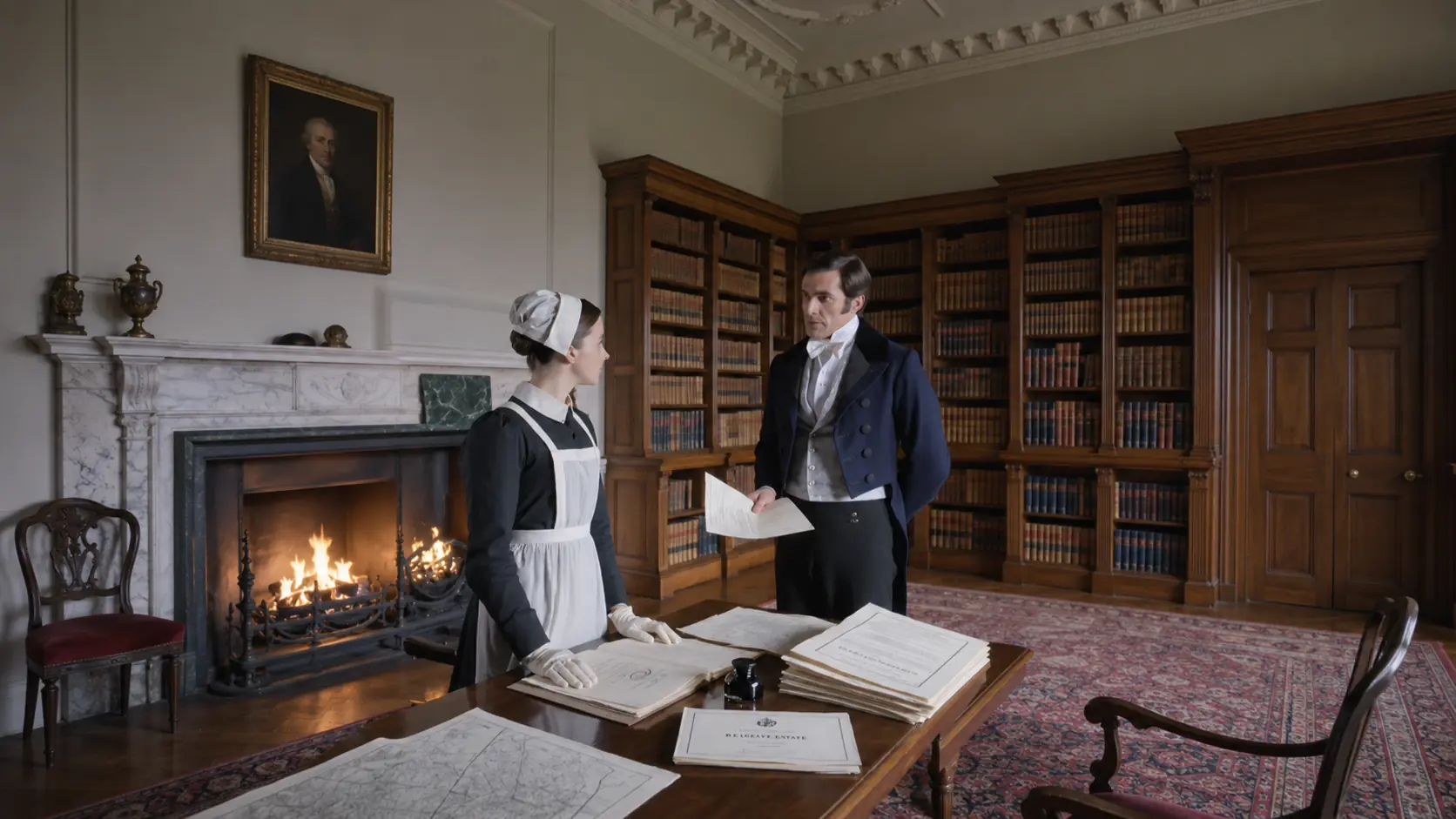
Hassan set down his fork very slowly. He looked at her with the particular attention of a man encountering something that rearranged his expectations of the room.
“You speak Turkish,” he said in Turkish, testing the words.
“Among other languages,” she replied.
“How many others?”
“Enough for this evening.”
The dining room was very quiet.
Phineas looked at her from the head of the table with an expression she could not quite read. Not surprise exactly, because surprise implies a simple recalibration of expectation, and what was on his face was more complicated. He looked at her the way one looks at a map that has suddenly revealed a country one did not know existed.
Lady Cordelia, seated to his right, broke the silence with a laugh.
“How charming,” she said, with a smile that could have cut glass. “A maid who speaks Russian like a very well-trained parrot.”
The room waited.
Libby did not reply. She had learned, over several years of practising invisibility, that the most effective response to that sort of remark was no response at all. Silence, properly deployed, could be more devastating than any comeback. She simply refilled the next glass with the serenity of someone who had heard nothing of particular interest.
It was Hassan who spoke. He said, in English, his first English words of the evening, delivered with the deliberate precision of someone choosing a weapon, that in his experience, a person who could speak many languages had, by definition, lived many lives. He said that in his country, such a person would be received with great honour.
He looked briefly at Cordelia.
He did not need to say anything else.
Cordelia’s smile did not waver, but something behind her eyes did.
Phineas was still watching Libby. She could feel it. She finished serving and left the room.
She expected nothing to come of it. That was not false modesty. It was a pragmatic assessment based on three months of observation. Phineas was a practical man. He would note what had happened, file it appropriately in the ledger of his mind, and move on.
The box would stay locked. Libby would go back to being invisible, which was exactly what she preferred.
She had not accounted for the fact that Phineas was also, underneath the practicality and the pride, a man constitutionally incapable of leaving an interesting question unanswered.
She found him in the library at eleven that night when she went in to collect abandoned glasses from the post-dinner reading that senior members of the household sometimes indulged in. He was in the leather armchair by the fire, jacket discarded, cravat loosened, reading Voltaire in the original French. Not performing the reading of Voltaire. Actually reading it, with a pencil making small notes in the margins.
She stopped in the doorway.
He looked up.
“You do not have to go,” he said.
It was not a command. It was a statement offered in a tone so matter-of-fact that it caught her off guard.
She took two steps into the room and began collecting glasses.
“Where did you learn Russian?” he asked, turning a page.
“St. Petersburg, Your Grace.”
“And Turkish?”
“Constantinople.”
He was quiet for a moment. She could hear the fire and the distant sounds of the house settling into night.
“How many languages do you speak?”
She considered lying. The lie was easy. Something about a little French, some Italian picked up from a cook. But there was something about the library, about the Voltaire with pencil marks in the margins, and about the way he had asked as though he actually wanted to know.
“Nine,” she said.
He lowered the book.
“Nine?”
“Counting Latin, which is technically deceased. If that disqualifies it, then eight.”
“Latin does not disqualify.”
A pause.
“Why did you not say so when you were hired?”
There it was, the question she had been waiting for, the one with the real answer underneath it. She placed the last glass on the tray and looked at him directly.
“Because maids with nine languages are not hired as translators,” she said. “They are hired as curiosities, shown off at dinner parties, made to perform for guests, and then dismissed when the novelty becomes inconvenient or when guests begin asking uncomfortable questions about why a person of such education is carrying their coats.”
He was very still.
“That is…” he began.
“True,” she said. “Yes.”
He looked at her for a moment. Something shifted in his expression, not dramatically, but with the small movement of a man who has been told something he cannot argue with.
“I was going to say unjust,” he said.
She had not expected that.
“Oh,” she said.
Then, because there was nothing more useful to say, she added, “Good night, Your Grace.”
She left with her tray.
In the corridor outside, she stopped for just a moment, her back against the wall, the tray cool in her hands. She told herself, clearly and firmly, that whatever had just happened in that library was not interesting, not significant, and not something she was going to think about.
She thought about it for the next six days.
The negotiations did not collapse after the interpreter disaster. They were salvaged almost entirely by Libby. This was not Phineas’s idea, or rather, it arrived sideways through practical necessity. Fellowes brought him the situation on Friday morning.
Volkhonsky had agreed to continue the talks, but only on the condition that the translator from Thursday evening be present at all subsequent sessions. Hassan had added his endorsement with the serenity of someone who had already won and was simply waiting for everyone else to realise it.
“They want the maid,” Fellowes said, in the tone of a man who found the sentence surreal.
“Her name is Miss Lunn,” Phineas said.
“Yes, Your Grace.”
“Arrange it.”
The sessions were held in the library, which Phineas had chosen because it was the most neutral room in the house, free of the social theatre of the drawing room and the formality of the study. He told himself it was purely practical. He told himself this often over the following days.
The first session lasted four hours.
Libby translated without notes, moving between Russian, Turkish, and English with the ease of someone changing registers in a single conversation. She paused occasionally to explain cultural nuances that went beyond the words themselves, the specific gravity a Russian word carried in the context of imperial honour, the way a Turkish construction could imply a commitment its English equivalent left open.
Volkhonsky was transported. Hassan smiled a small private smile that felt, to those who noticed it, like a blessing. Phineas sat at the head of the table and conducted the negotiations and told himself he was not watching her.
He was watching her.
He watched the way she listened completely, without the half attention most people applied to conversation. He watched how she processed not just words, but the architecture of each sentence, the weight of what was said and what was carefully not said. He watched the small precise gestures she used when searching for the right word in one language to carry the full meaning of something said in another.
On the second day, during a break, he brought her tea without quite deciding to.
She looked at the cup. She looked at him. He looked at a point approximately six inches above her left shoulder.
“Thank you, Your Grace,” she said.
“How do you say thank you in nine languages?” he asked, which had not been what he intended to say.
She told him. She went through each one, French, Russian, Arabic, Turkish, Latin, and the rest, and he listened with an attention that was not entirely linguistic.
“My Latin is extremely poor,” he said.
“I know,” she said.
He looked at her.
“I heard you reading Cicero aloud last Tuesday. You mispronounced consul three times.”
“You were outside the library on Tuesday?”
“I was cleaning the corridor, Your Grace. Sound travels.”
“Did you consider correcting me?”
“I considered it and decided against it. You seemed very committed to your pronunciation.”
He looked at her. She was looking at the tea. Something at the corner of her mouth was not quite a smile and not quite not a smile.
Lady Cordelia was not oblivious.
Whatever else she was, and she was many things, not all of them comfortable, she was not a fool. She had been watching the library sessions from the periphery, catching fragments through half-open doors and reading the temperature of rooms she entered after Libby had left them. She noticed the way Phineas moved through the house differently now, with faint, uncharacteristic restlessness. She also noticed that he laughed occasionally in the library.
She had not heard him laugh since before the engagement was announced.
Cordelia did not like this. More than not liking it, she was constitutionally unable to let a challenge stand without responding in the most spectacular way available. She was, in this sense, an artist. Her medium was public humiliation.
With exquisite timing, she organised a soirée. She framed it as a celebration of the successful negotiations, a gathering of the season’s finest minds and most elegant personages, a cultural event befitting the Ashworth name. She invited sixty people, arranged the music personally, oversaw the flowers like a general deploying cavalry, and prepared a small, perfect, devastating trap.
The evening began beautifully. The rooms of Ashworth House blazed with candlelight. The music was Haydn, performed by a quartet Cordelia had hired because they were excellent and because excellence made her look generous. The guests were splendid. The champagne was cold.
Libby moved through the edges of it, serving and collecting, maintaining the invisibility she had practised for months.
She noticed nothing unusual until Cordelia’s voice rose above the general conversation.
“Friends,” Cordelia said, with a radiance that lit the room like a second set of candles, “we have been so fortunate this season to have in Ashworth House what I can only describe as a singular curiosity. A maid who speaks, if reports are to be believed, nine languages. Libby, darling, do come forward.”
The room turned.
Sixty faces arranged themselves toward her with the collective attention of an audience hearing the curtain rise.
Libby came forward. There was nothing else to do.
“Do give us a demonstration,” Cordelia said warmly, as though she were doing Libby an enormous favour. “Something in each language, perhaps. Just a phrase or two. After all, it is such an entertaining accomplishment.”
She said entertaining as though she meant impossible to take seriously. She said accomplishment as though she meant trick.
The room waited.
Volkhonsky and Hassan, invited as guests of honour, stood near the window and watched with a different quality of attention. Alert. Assessing.
Libby stood in the centre of the room. The box where she kept her languages was, as always, locked. But she had the key.
She looked at Cordelia for a long, clear moment, the kind that did not flinch, did not perform, and did not ask for anything.
Then she spoke.
She spoke in Italian first, not a casual phrase but a sentence from Machiavelli, something she had read at fifteen in her father’s library in Vienna. She moved into French with a line from Montesquieu, then German with a precise observation from Goethe. Russian followed, then Arabic, then Turkish, each language landing in the room with its own weight, history, and music.
Then she stopped.
In English, her first language, the language she had grown up speaking and reading and thinking in, she looked directly at Cordelia with a politeness so perfect it had edges.
“Those were from Machiavelli, Montesquieu, Goethe, Pushkin, and two classical scholars whose names I would be happy to provide in writing. My father taught me that languages are not tricks. They are lives. Each one I learned is a life I have lived in rooms, markets, libraries, and conversations with people who trusted that the girl listening understood them. I am not a curiosity, Lady Cordelia. I am simply a person who listened more carefully than most.”
The room was silent.
Then Volkhonsky began to clap. He clapped slowly and deliberately, in the Russian manner, the kind of applause that carries intention. Hassan smiled, the real smile this time, not the small private one. A few other guests joined, uncertain of the social calculus but certain they had witnessed something important.
Cordelia’s smile remained perfectly in place. Her eyes did something entirely different.
Phineas stood near the fireplace. He had not moved. He looked at Libby with the expression of a man presented with evidence that contradicted a theory he had held for a long time, and who was now updating it completely.
Afterward, when the guests were occupied and the applause had dissolved back into conversation, Libby went outside. The garden at Ashworth House was private, cold, and poorly lit, and those were all recommendations at that moment. She stood near the rose beds that were not yet in flower. It was too early for roses. Everything was still tight and dormant and waiting.
She heard footsteps on the gravel.
She did not need to turn to know whose they were.
“That was extraordinarily unwise,” Phineas said behind her.
“Yes,” she agreed, “and completely correct.”
She turned. He stood a few feet away, his breath a small cloud in the cold air.
“I should have said something,” he said, “at the dinner, in the corridor after, and at any point in the last three weeks when she was unkind and I said nothing because it was convenient not to.”
He said this with the specific discomfort of a person making a confession they had been avoiding.
“I am aware that my silence was a form of permission.”
She looked at him. There was something in his voice she had not heard before. Not softness exactly, because softness was not his register, but something adjacent to it, something that required effort to produce and was therefore more honest than easy kindness.
“Why are you telling me this?” she asked.
He was quiet for a moment. In the house behind them, someone sat down at the piano and played something slow and searching.
“Because you are the only person in that house who tells me the truth without wanting anything in return. My solicitors tell me what they think will please me. My secretary tells me what he thinks I need to hear. My fiancée tells me things that are strategic. You tell me when I mispronounce Latin.”
“That is a very low bar for honesty.”
“It is higher than you might think.”
The piano continued. Libby looked at the rose beds, dormant and waiting.
“This is going to complicate things,” she said.
“It is already complicated.”
“More complicated.”
“Probably.”
A pause.
“I find I mind less than I should,” he said.
She should have said something practical then. She should have said that he was a duke, she was a housemaid, and Lady Cordelia’s family had the kind of influence that ended careers and closed doors. She should have said that an interesting conversation in a library did not change the architecture of the world.
Instead, she said, “The roses will be out in three weeks.”
It was not an answer to anything, but he looked at her for a moment, and something in his expression loosened.
“I know,” he said.
“I will be in the country by then.”
“Yes,” she said. “Good night, Your Grace.”
She went inside.
The letter arrived on a Monday.
Libby was in the upstairs corridor when Mrs. Partridge found her, and she knew from the older woman’s brisk, purposeful walk that something had shifted.
“The Earl of Whitmore has written to His Grace,” Mrs. Partridge said.
That was all she said.
Libby understood the rest. She accepted it with the competence adversity had given her. She went downstairs and began organising her small collection of books and the single photograph of her father that she kept on the windowsill. She told herself this had always been the probable outcome.
Pack the trunk. Find the next position. Carry the languages and the memory of a good house where the housekeeper had been kind, the library had been beautiful, and the duke had once brought her tea without deciding to.
She was folding her second dress when Phineas knocked on the door.
She had never seen him on this floor of the house. It was not precisely a violation of anything. It was his house, after all. But there was something dislocating about it.
“You are packing,” he said.
“You received a letter.”
“I received a letter.”
He stepped inside.
“The Earl of Whitmore is of the opinion that your continued presence in this household is an insult to the Vane family and suggests that your removal would constitute a necessary gesture of good faith toward the marriage.”
“I see,” she said. “I will be out by Thursday.”
“You will not.”
She stopped folding.
“Your Grace.”
“I replied to the Earl this morning,” he said. “I told him Miss Elizabeth Lunn is an indispensable member of this household, that her service has been exceptional, and that suggestions regarding the management of my staff fall outside his jurisdiction.”
Libby put down the dress very carefully.
“That will cost you.”
“Perhaps.”
“He will threaten the engagement.”
“He might.”
Phineas looked at the photograph on her windowsill.
“Your father?”
“Yes.”
“He looks like a man who enjoyed a conversation.”
“He did,” she said, and something moved in her chest. “He would have liked you, I think. You argue with books.”
“Is that a recommendation?”
“It is the highest one I know.”
He looked at her then, the full direct look she had been carefully not receiving for three weeks because she understood, in the practical part of her mind, where it led.
“There are things,” he said, “that cost less than they appear to. Some things that appear to cost a great deal cost very little under examination. Other things that appear to be free are, in fact, the most expensive decisions a person can make.”
“You are talking about the engagement.”
“I am talking about several things simultaneously,” he said. “I am not, as you have probably noticed, extremely practised at that.”
“You are better at it than you think,” she said. “You are just afraid of where the sentences end.”
He was quiet for a moment.
“I am going to need those languages for the final signing next week.”
“I know.”
“Do not pack the trunk.”
She did not answer.
He left.
She stood in the middle of her room with the folded dress in her hands and looked at the half-packed trunk, the photograph of her father, and the window where afternoon light fell across the floor. Then she sat on the edge of the bed and breathed.
The day of the final signing was one of those English spring mornings that make up for all the grey ones, clear and bright and generous with light. The great hall of Ashworth House had been arranged with formal precision. Two long tables. British documents in neat stacks. Delegations in their finest.
Libby arrived early, as she always did, and arranged herself near the window where the light was good and she could see all three groups simultaneously. She had dressed more carefully than usual. Not elaborately, but carefully, which is different. Mrs. Partridge had left a small gold pin on her windowsill that morning without comment.
The delegations arrived. Volkhonsky was resplendent and emotional. Hassan was composed and watchful. The English contingent looked solemn in the way of men who understood they were participating in history and were slightly self-conscious about it.
Cordelia arrived last.
She was, as always, devastating to look at. Her dress was the exact colour of confidence. She took her place near Phineas with the proprietary ease of a woman who considered the space around a man an extension of her territory.
Libby began the translations.
The final review of the document was the last formal hurdle, a reading of each clause rendered into all three languages and confirmed by all parties. It was intricate work requiring the full architecture of her attention. She gave it that.
For a while, there was nothing in the room except the work itself and the satisfaction of doing it well.
She was in the middle of the fourth clause, a delicate point about commercial precedents that Hassan had flagged as requiring precise language, when she heard Cordelia’s voice.
It was low, intended only for Phineas from three feet away.
“My father’s patience has limits,” Cordelia said, with the pleasantness of a woman describing the weather. “Dismiss her this week or the engagement is finished. Consider carefully, Phineas. A maid or a county.”
Libby did not look up.
She continued translating. She rendered the fourth clause into Turkish, paused for Hassan’s confirmation, and turned to render it in Russian. In her peripheral vision, she could see Phineas. He was very still.
She rendered the fourth clause into Russian. Volkhonsky nodded. She turned to the fifth.
Then Phineas spoke.
“Very well.”
“I beg your pardon?” Cordelia said.
“The engagement,” he said. “Very well. If those are the terms, then it is finished.”
The pause that followed was significant.
Cordelia turned to look at him with the expression of a woman who had said something that always worked before and was encountering, for the first time, the possibility that it had not worked.
“You cannot be serious.”
“I am almost always serious,” he said. “It is, as you have frequently pointed out, one of my less endearing qualities.”
Libby had stopped translating. The room had noticed. Volkhonsky and Hassan were watching with the specific interest of people who understood that something more important than a trade agreement was being negotiated.
It turned out to be quite enough.
Tags:
News in the same category

My Wife Cheated on Me - So I Betrayed Her With the One Woman She Never Expected
My Son Gave My Bedroom to His In-Laws and Put Me in the Garage - Then He Learned Whose House It Really Was
My Son Watched Them Strip Me of My Seat at Christmas — Then Walked Away and Took Everything Back
My Mom Stole My $45,000 College Fund for My Sister’s House - Then I Faced Them as a Millionaire
Mom Mortgaged Her House to Fight Me in Court - All to Defend My Convicted Brother
She Told Her Mother-in-Law to Reheat Leftovers - Then The House Was No Longer Hers
They Called Her Too Old to Marry - Until London’s Most Desired Duke Chose Her
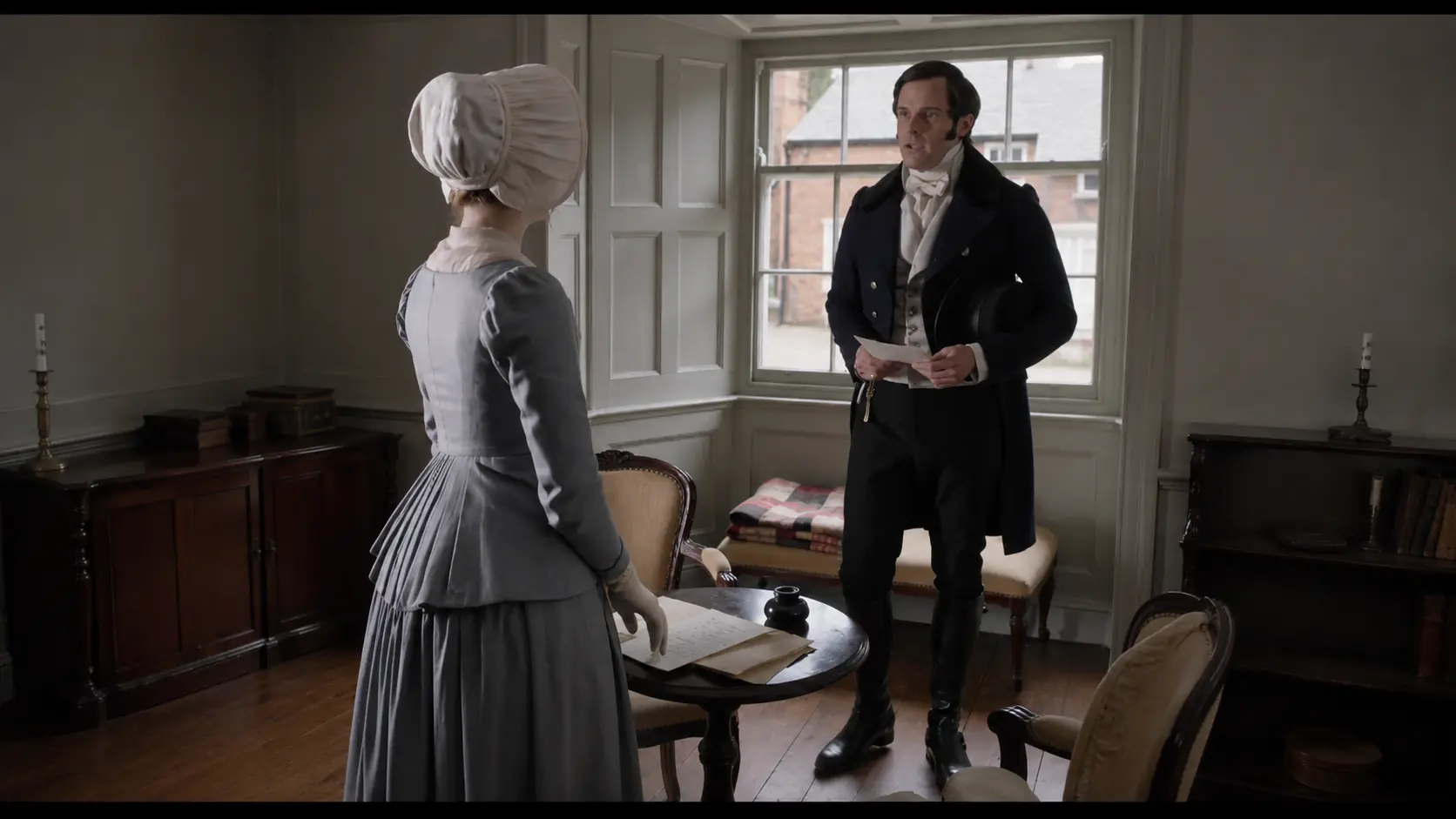
He Said “You’re Not What I Ordered” - Then She Returned His Ring and Left Him Speechless
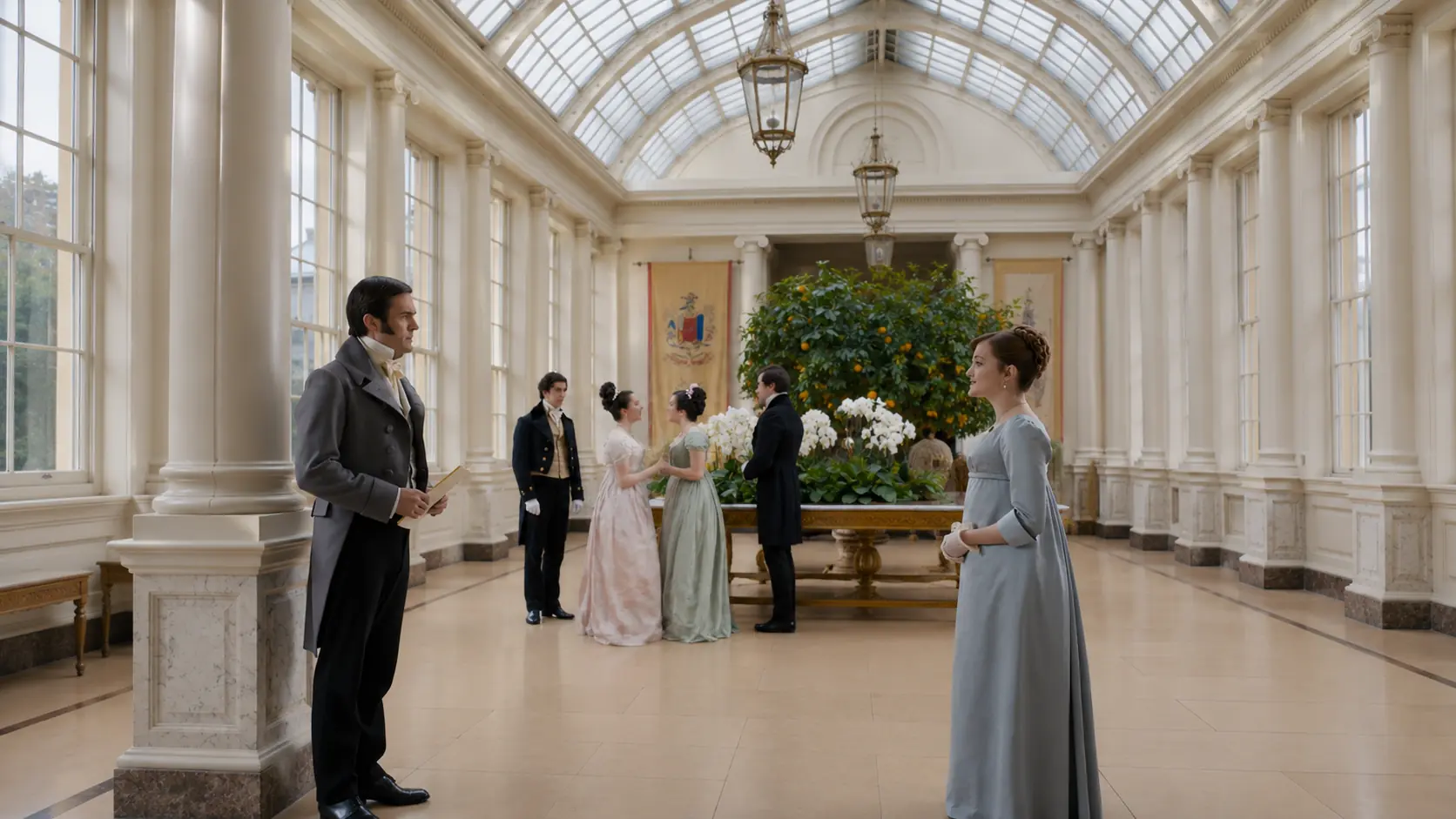
The Duke Hid His Royal Crest - Then He Fell for the Woman Who Understood His Deaf Brother
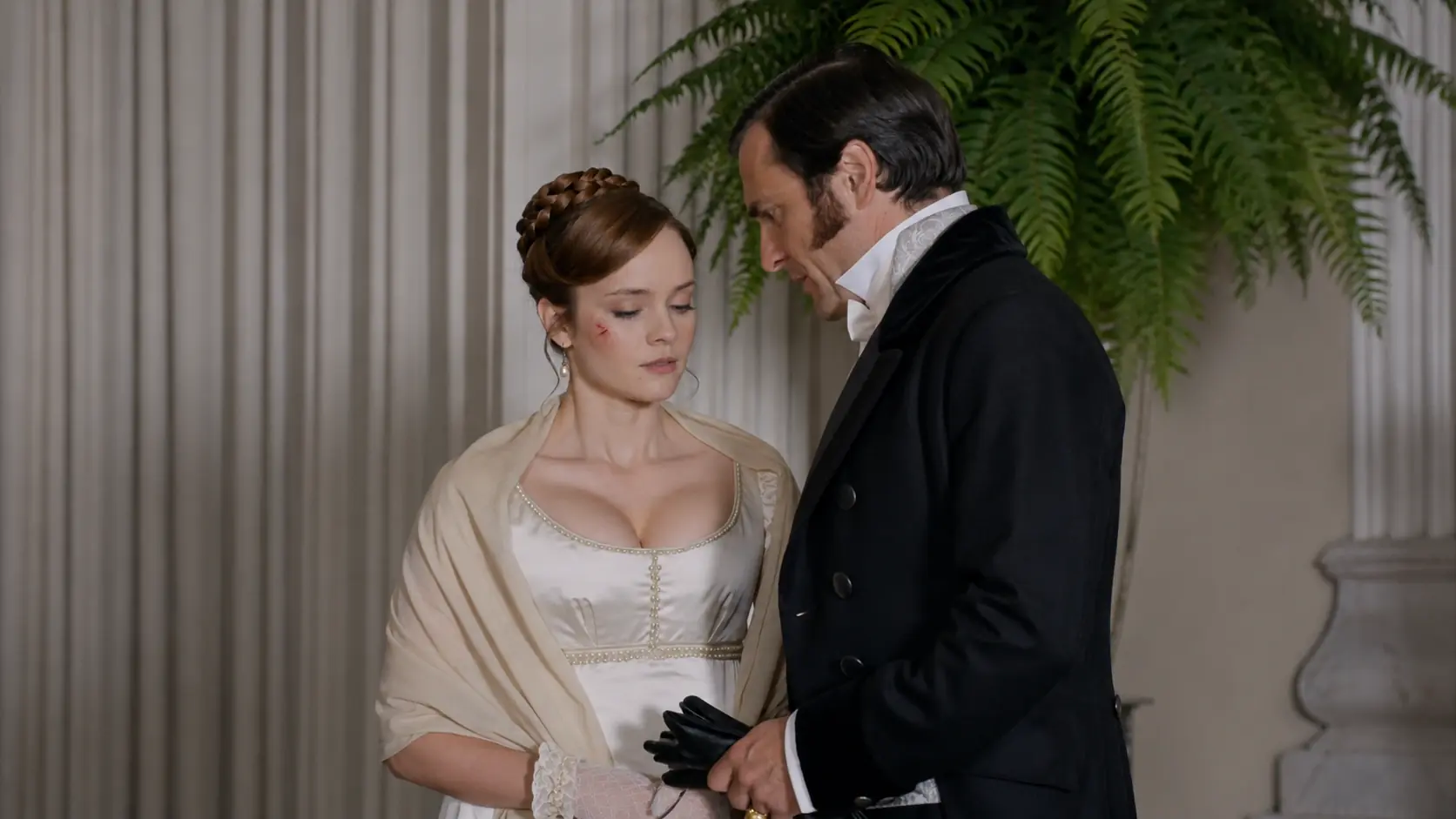
Married at 17 to a Cold Husband - Then the Duke Said “Mine”
A Barefoot Girl Asked a Cowboy for Work - Then He Saw What She Carried to His Porch
"Be My Wife for One Night" - Then Her Kiss Stopped Him Cold

Nobody Wanted the Giant Cowboy as a Husband - Then She Saw His Gentle Heart
The Rich Cowboy Chose the Outcast Sister - And Shocked the Entire Town of Blackridge
She Thought She Married a Poor Mountain Man - Then He Drove Her to a Hidden Mansion

They Refused His Wheat at the Elevator - Then His Old Barn Made Him Rich

They Called His Well a Joke—Then the Drought Forced Them to Beg Him for Water
Her Father Called the Quarry Worthless - Then One Pound of Her Mushrooms Sold for Thousands
News Post
My Mother Slept With My Fiancé - Then Came Back Begging for an Unthinkable Favor
My Wife Cheated on Me - So I Betrayed Her With the One Woman She Never Expected
My Son Gave My Bedroom to His In-Laws and Put Me in the Garage - Then He Learned Whose House It Really Was
My Son Watched Them Strip Me of My Seat at Christmas — Then Walked Away and Took Everything Back
My Mom Stole My $45,000 College Fund for My Sister’s House - Then I Faced Them as a Millionaire
Mom Mortgaged Her House to Fight Me in Court - All to Defend My Convicted Brother
She Told Her Mother-in-Law to Reheat Leftovers - Then The House Was No Longer Hers
They Called Her Too Old to Marry - Until London’s Most Desired Duke Chose Her
He Said “You’re Not What I Ordered” - Then She Returned His Ring and Left Him Speechless
The Duke Hid His Royal Crest - Then He Fell for the Woman Who Understood His Deaf Brother
Married at 17 to a Cold Husband - Then the Duke Said “Mine”
A Barefoot Girl Asked a Cowboy for Work - Then He Saw What She Carried to His Porch
"Be My Wife for One Night" - Then Her Kiss Stopped Him Cold
Nobody Wanted the Giant Cowboy as a Husband - Then She Saw His Gentle Heart
The Rich Cowboy Chose the Outcast Sister - And Shocked the Entire Town of Blackridge
She Thought She Married a Poor Mountain Man - Then He Drove Her to a Hidden Mansion
They Refused His Wheat at the Elevator - Then His Old Barn Made Him Rich
They Called His Well a Joke—Then the Drought Forced Them to Beg Him for Water