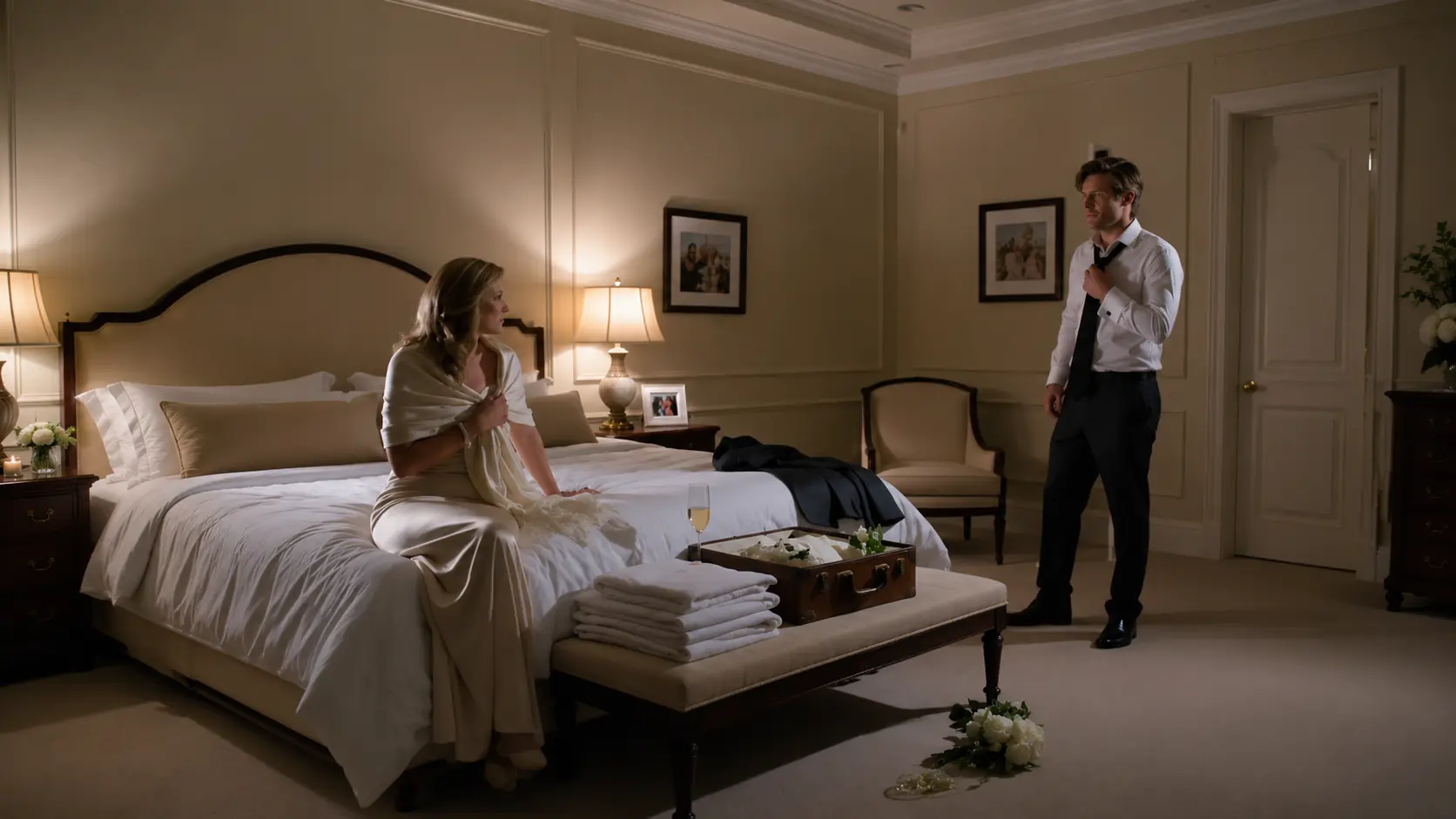
She Told Her Mother-in-Law to Reheat Leftovers - Then The House Was No Longer Hers
The restaurant glowed under soft evening lights, and wine glasses chimed to celebrate my daughter-in-law’s new title. I stood near the host stand with a small silver-wrapped gift in my hands, my son Ethan right beside me, while Madison Pierce smiled at her coworkers as if the whole room belonged to her. I had ironed my navy-blue dress that afternoon, the one my late husband Robert used to say made me look ten years younger. I had bought Madison an engraved Parker fountain pen and told myself that, for one night, I could be proud of her without remembering all the ways she had made me feel small.
Then the server checked the reservation list.
Four names were there: Madison, Ethan, Noah, and Ellie. Not mine. The server hesitated, and Madison tilted her head with a smile so polished it almost hid the cruelty behind it. “It’s fine,” she said. “She’s just tagging along.”
Her voice lowered, but it was still sharp enough to cut through the room. “She was never part of this family.” A few guests glanced over. Some frowned, others pressed their lips together in pity, and Ethan froze for one terrible second before looking away.
That was the moment my heart understood what my mind had been refusing to admit for three years. I stood stunned, my face burning, my throat locked with shame. I had sold my old house, helped buy the home they lived in, cooked their meals, watched their children, washed their clothes, and still, in front of a room full of strangers, my daughter-in-law could speak of me like an unwanted servant. Ethan said nothing.
As the dinner went on, Madison laughed loudly and raised her glass, soaking in congratulations for her promotion to regional operations director. I sat with my hands folded in my lap, trying to disappear without leaving. Near the end of the evening, she turned toward me again with a smooth, mocking sweetness. “Oh, Mom, remember to heat the leftovers in the fridge. Don’t let them go to waste.”
The table laughed, some out of politeness, some because cruelty is easier when everyone pretends it is a joke. My hand gripped the table’s edge until my knuckles turned white. In that roar of laughter, I felt myself vanish, as if the world had agreed I did not deserve respect. I did not scream, argue, or cry.
I stood, placed my napkin on the table, and said softly, “Thank you for the dinner.”
Then I walked out.
The Santa Fe night was cold and dry, carrying dust and a hint of lavender from a café across the street. The restaurant light fell across my face as I stood outside, trembling not from the cold, but from anger and clarity. Inside, the pain began to cool into something harder. I whispered to myself, “Enough, Caroline. Enough.”
My name is Caroline Pierce. I am sixty-three years old, a widow living in Santa Fe, New Mexico, in a cream-colored two-story house I helped my son buy three years ago. That night, when I got home, the music from Madison’s promotion dinner still echoed in my head. My phone glowed with her text: “Remember to heat the leftovers in the fridge. Don’t waste food.”
No thank you. No apology. No exclamation point. Just a cold command, as if I were the help.
I looked around the kitchen where everything shined because of my hands. Every tile, every curtain, every light fixture, every clean surface, I had chosen, paid for, washed, or maintained. All of it had come from the savings I had after selling the small house where my husband died. Three years earlier, Ethan had told me, “Mom, sell the old house. It’s too lonely by yourself. Come live with us, Madison, and the kids. It’ll be happier for everyone.”
I believed him.
I believed I was stepping into peaceful years close to my grandchildren, cared for and loved. I believed we were rebuilding family after grief. But in that bright kitchen, with Madison’s message glowing on my phone, I understood I had never truly belonged to this house. I had only been useful in it.
I stood up and took a deep breath. No crying. No shouting. I began clearing the table, each motion like gathering the last pieces of my pride.
Glasses rinsed. Towels hung. Stove wiped dry. Then I opened the fridge and looked at the half-eaten rotisserie chicken and a few cold fries Madison had ordered me to reheat.
I let out a quiet, bitter laugh. She was right about one thing. I would not let anything go to waste, just not the way she imagined.
I walked to my room and turned on the desk lamp. On the shelf sat a photograph of Robert, my husband, who had passed eight years ago after a stroke. His eyes in the frame were as gentle as ever. “Robert,” I whispered, “I kept my promise. I took care of our son like you wanted, but maybe it is time I take care of myself again.”
Then I opened the safe.
Inside was a thick brown file with worn corners. I had kept it quietly for three years, not because I wanted revenge, but because a lifetime in accounting had taught me one thing: numbers do not lie. Inside were bank statements, transfer receipts, a photocopy of the purchase contract, and most importantly, the property deed. The name printed on it was mine.
Caroline Pierce. Not Ethan’s. Not Madison’s.
Attorney Harold Kemp had advised me to keep it that way when I put my $120,000 into the down payment. “Help your son,” he had said, “but protect yourself. The world changes faster than people’s hearts sometimes.” At the time, I thought he was being cautious. That night, I realized he had been wise.
I opened my old laptop and plugged in a silver USB drive. On it were recordings I had saved over the years, conversations Madison never knew I had overheard. In one, she had told a friend, “It’s like having a free maid. She cooks, cleans, and watches the kids. I don’t even have to thank her.” Every word cut like a blade, but I had not deleted them.
I had saved receipts, too. Roof repairs, a washer, a sofa set, utilities, taxes, maintenance, groceries, children’s clothes, school supplies, every dollar I had spent since selling my old home. I had logged dates, stores, amounts, and notes in the brown leather notebook Robert gave me for our thirtieth anniversary. I had done it all with an accountant’s precision.
That night, I dragged the files into a new folder and named it “Tomorrow.”
Then I wrote a letter to Ethan. Black ink, steady strokes, no shaking.
“Ethan, my son, love does not mean letting others trample you. I have been silent too long, and in that silence, I lost myself. I am leaving not out of anger, but to survive. On the table are papers you need to read carefully. This house is not anyone’s trophy. It is my blood and tears. Read closely before you use the word family.”
I placed the letter neatly on the dining table beside a copy of the deed, the financial statements, and an envelope labeled “For Ethan Only.”
Then I packed. A few clothes, my journal, medications, and Robert’s old wedding ring still shining in its small velvet box. I took the deep blue suitcase Robert and I had carried on our last trip to Maine. I walked through each room one final time, touching the sofa, the family photos, the stair rail, and the kitchen counter that still smelled faintly of leftovers.
Everything was quiet. Too quiet. I pulled the house keys from the hook and held them tightly, not because I feared losing them, but because I knew they would be my final statement. I was the only lawful owner of that house. I had forgotten my own place in it, but the paperwork had not.
I called Martha Lane, my closest friend for more than twenty years. When she heard my voice, hers trembled. “Caroline, goodness, you sound odd. Is everything okay?”
“Martha,” I said, “I need a place to sleep tonight. Just one night.”
“You always have a room here. Come over. I’ll make coffee.”
Her voice felt like a blanket on a cold night.
I ended the call, then called Avery Pierce, my niece, an attorney who specialized in family property. “Avery, can you meet me tomorrow morning? We need to talk about the house.”
“Of course, Aunt Caroline,” she said. “I’ll prepare the documents. Nine a.m. at my office.”
My last call was to Harold Kemp. His voice was gravelly but steady. “Mrs. Pierce, your documents are fully valid. That house is in your name. No one can transfer it without your signature.”
“Thank you, Harold,” I said. “I just needed confirmation.”
At 11:45 p.m., I rolled my suitcase to the door, locked the house carefully, pulled the key, and slipped it into my purse. The click sounded dry but final. Outside, Santa Fe was hushed beneath silver moonlight. I looked back at the living room lights glowing through the window like empty eyes.
“Sleep well, my house,” I whispered.
Then I walked away, one mother, one suitcase, and the keys to reopen her own life.
Three years earlier, I had lost Robert, the man who shared more than forty years with me. After his funeral, the old Albuquerque house felt too large, too cold, and too full of memory. I would make coffee every morning and set an extra cup by mine, even though he would never drink it. I would draw the curtains and whisper, “Good morning, Robert,” with no answer.
Two weeks after the funeral, Ethan and Madison came with tulips and a lemon cake Madison called homemade, though I recognized the bakery taste. Ethan sat across from me and said they had found a house in Edgewood near his work. It had a big backyard, and there would be a room just for me. Madison smiled and said, “We are worried you’re too lonely. Come live with us like a real family.”
Loneliness had gnawed at me, and the thought of hearing my grandchildren laugh every day made my eyes sting. When Ethan told me the house needed about $120,000 more for the down payment, I sat silent for a long time. The Albuquerque house was where Robert and I had started with nothing. Every corner held our effort, our memories, our breath.
But I looked at my son and believed I was choosing family.
Three months later, the Albuquerque house sold. After expenses, I had exactly enough for the down payment. At Harold Kemp’s office, he recommended that the house remain in my name since the funds were mine. Ethan read the clause and said, “That’s fine, Mom. This house is ours.”
Ours.
I remembered that word because it made me trust. It made me believe nothing could shake the bond between mother and son.
The Edgewood house was brand new, with white walls, a red tile roof, a green lawn, and a downstairs room facing lavender. Madison told me she had chosen that room because it would be easier for me to get around. I was touched, not yet knowing it also kept me far from the primary bedroom upstairs.
The first dinner in the house felt like hope. Madison cooked pasta with mushroom cream sauce and raised a glass to “a new beginning.” I raised mine and believed every word. I did not know that wine was my farewell to an easy life.
The first week, I helped unpack. The second week, Madison asked me to watch the children because she had to leave early for work. The third week, a chore list appeared on the fridge: laundry, dishes, clean rooms, prep dinner, fold children’s clothes. I told myself it was temporary.
Temporary stretched into months.
Ethan worked long hours as an engineer. Madison climbed the banking ladder. I became housekeeper, cook, babysitter, and sometimes a ghost. I woke at six every morning, made coffee, prepared breakfast, cleaned, cooked, helped with homework, and lay awake at night telling myself I should be grateful because I was living with family.
But gratitude thinned into fatigue, and fatigue became emptiness. No one asked if I slept well, if I had eaten, or if I needed anything. The chore list kept changing, written in red marker and slapped onto the fridge. When I forgot fabric softener once, Madison said lightly, “Caroline, I know you’re older, but the house still needs discipline, right?”
I stayed quiet because arguing made things awkward for Ethan. I would not do that to my son.
Slowly, “we will live together” turned into an unsigned contract. My payment was labor. Theirs was indifference. I was no longer Mom, but the person in charge of keeping the house running. I was not asked for opinions, only assigned tasks.
At family gatherings, Madison often handed me the phone and said, “Mom, can you take one for us?” So I held the camera. I framed them, counted one, two, three, and clicked. In every photo, they were smiling together, and I was the invisible one making sure the picture looked right.
One afternoon, I heard Madison talking on the porch through a cracked glass door. “Old and still living free,” she said. “It’s like having a private maid. She cooks, babysits, cleans, no paycheck. Who wouldn’t want that?”
I was folding a tablecloth when my hands stopped. I heard every word, every breath, and her soft chuckle sounded like glass breaking inside me. I did not cry. Instead, a huge silence opened inside me, and in that silence, something slow and certain woke up.
That night, after everyone slept, I took out a small voice recorder from my accounting days. I put in fresh batteries and tucked it under the lace runner on the dining table. The green light blinked. That was the beginning.
I recorded every belittling comment, every joke with a sting, every cold order Madison let fly. I saved receipts, bills, and bank statements. I photographed everything I paid for. I was not planning revenge. I was planning survival.
And then came the promotion dinner.
When I walked out of Mirador Restaurant that night, I did not yet know exactly what would happen next. I only knew I was done being erased. I drove home with the radio on, but I heard nothing. Madison’s sentence kept ringing in my mind: “She was never part of this family.”
The house appeared under silver moonlight. I stepped inside without turning on the lights. Everything was tidy because of my hands. On the counter sat the leftover boxes Madison had told me not to waste.
I opened one lid and smelled the cold food. “No, Madison,” I muttered. “Some things, once cold, only make people sick if you reheat them.”
Then I turned on the light and began.
At 1:20 a.m., Ethan and Madison’s silver SUV rolled into the driveway. They entered laughing, still carrying the scent of wine and the loose carelessness of people who believed the house would always receive them the same way. Madison flicked on the kitchen light, then froze. There was no washer running, no smell of reheated food, no sound of me tidying in the next room.
The house was clean, orderly, and lifeless.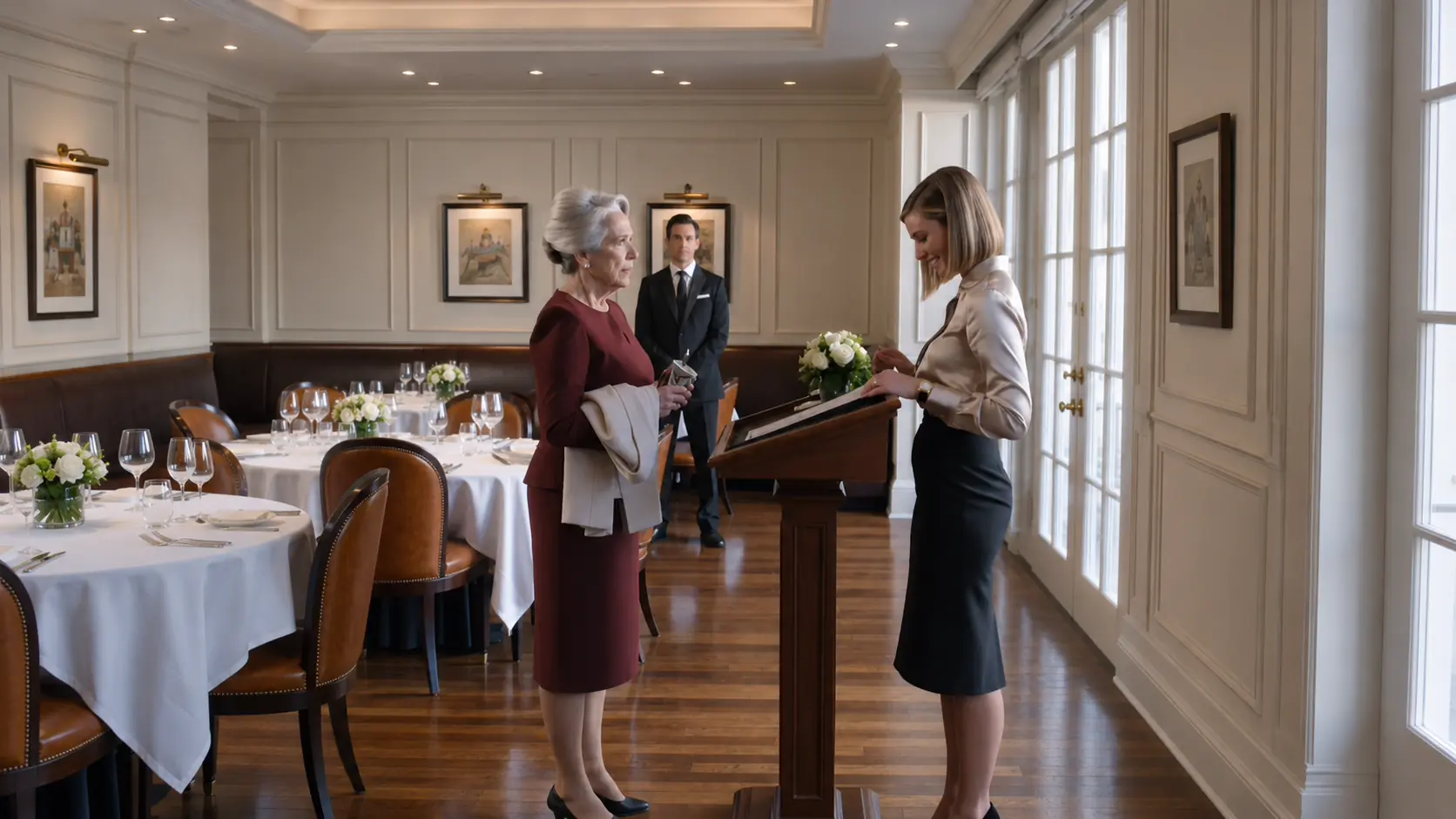
My bedroom door was ajar. The bed was made. The closet was empty except for wooden hangers, and a small note lay on the dresser: “Thank you for making everything clear.”
On the dining table, under the pendant light, sat the cream envelope.
Ethan opened it with shaking hands. Inside were three things: a breakdown of my financial contributions, a silver USB drive, and a copy of the deed with “Caroline Pierce” printed under owner. The numbers were exact: down payment, roof repair, sofa purchase, carpet cleaning, HVAC maintenance, utilities, taxes, and support. Total: $185,600.
Ethan stared at the paper, his face draining. Madison snatched it, skimmed it, and laughed. “Oh, please. She counted every penny. Typical old folks, thinking money buys affection.”
Ethan did not answer. He plugged the USB into the laptop. The first file played, and Madison’s voice filled the kitchen, clear and cold. She spoke of pushing me into a cheap nursing home, selling the house, and using Ethan’s guilt against him. The room went silent.
Madison shrieked that it was edited, that I had set her up, that Ethan should believe his wife over his mother. But Ethan’s face had gone empty. “That’s your voice,” he said. “No mistaking it.”
He opened a second file, and her voice became even worse. Ethan shut the laptop and bent forward, hands on his head. For the first time in three years, he saw clearly what I had been living under. “My mom lived here, did everything, paid for almost all of it, and you called her a burden?”
Madison had no answer.
Then Noah appeared at the stairs, his hair messy and his eyes sleepy. “Where’s Grandma, Dad? Why is it so dark?” Ellie stood behind him, rubbing her eyes. “I didn’t say good night to Grandma.”
Ethan tried to smile, but his voice cracked. “Grandma went to rest for a while, buddy.”
Moonlight slipped through the curtains and landed on the deed. Madison saw my name and went pale. She grabbed the page and shouted, “She can’t do this. This house is ours.”
Ethan answered softly, “No, Madison. It’s hers.”
By then, I was asleep on Martha Lane’s old sofa. A small lamp glowed through the curtain, and Martha had tucked a blanket around me. “You okay, Caroline?” she whispered.
“I’m okay,” I said.
For the first time in three years, I slept in a house where no one told me to scrub the sink.
The next morning, Santa Fe sunlight angled through Martha’s window. The smell of fresh coffee and toast filled the room. I sat with a mug in both hands and watched the first rays crawl across the wooden wall. For three years, I had woken early to serve everyone else. That morning, I woke only for myself.
Martha asked softly, “What are you going to do next?”
“Go see Avery,” I said. “It is time I do the right thing. Not for revenge, but to take my name back.”
At Avery’s office on Canyon Road, I placed the file bag on the table. Avery reviewed the deed, receipts, recordings, statements, and notes. She listened to a short clip from the USB and grimaced. “Horrible,” she said, “but it makes my job easier. You have everything: paperwork, audio, spending proof, lawful ownership. It is all clear.”
She called Harold Kemp, and he confirmed the documents were valid. No one could dispute ownership without my signature. Avery prepared a letter stating that I was the lawful owner of the house, that Madison and Ethan had violated residential rights through misuse, insults, and defamation, and that I was not seeking immediate eviction. I wanted acknowledgment, cooperation, and an end to insulting behavior.
About an hour after the letter went out, Madison texted: “Caroline, I’m sorry if anything last night upset you. I was drunk. Hope you don’t blow this out of proportion.”
I read it, then deleted it.
Ethan called next. His voice shook. “Mom, I’m sorry. I was wrong. I just want you to talk to me. Please don’t get lawyers involved.”
I stared at his name on the screen but did not answer. I set the phone face down and walked onto Martha’s porch. The lavender moved gently in the breeze. Martha brought two cups of tea.
“So you really did it?” she asked.
“I don’t want to beat anyone,” I said. “I just want respect.”
Soon after, Avery arranged a meeting at Harold Kemp’s office. I sat at the head of the table with Avery beside me and Harold in his gray suit. Ethan and Madison arrived together but sat apart, the air between them colder than the morning outside. Madison wore no makeup. Ethan looked exhausted, with dark circles under his eyes.
Avery opened the file and summarized my investment in the Edgewood home: $185,600, including maintenance, repairs, utilities, and property taxes. Harold slid a copy of the deed across the table. “Mrs. Pierce holds full title,” he said. “No co-ownership. No third-party guarantee.”
Ethan looked at me. “Mom, you’ve been on the title this whole time?”
“Yes,” I said. “Harold advised it because the purchase funds were entirely mine. I never intended to hold it over you, but maybe this is the only way we can finally talk honestly.”
They were given three options: move out within sixty days, buy the house at current market value, or establish conditional co-ownership with me holding sixty percent and them holding forty. I added my own terms. I would not live there anymore, but I would retain the right to rent out my share. Costs would be split according to ownership. Ethan and I would attend family therapy for six months, and Madison would begin individual therapy to address her insulting and controlling behavior.
Madison shot to her feet, furious. Avery remained calm. “If you do not agree, we file suit. Mrs. Pierce has ample evidence. I do not think you want that in your legal record.”
The room went silent.
Ethan took Madison’s hand and said quietly, “Madison, stop. I’ve been wrong for too long. At least let Mom have some peace.”
Madison sat down. Her voice was low. “Fine. I agree.”
Harold added one more clause: if any party living in the house violated respectful conduct toward tenants or co-owners, a forced sale would take effect, with proceeds split sixty-forty. Ethan signed first. Madison signed next. When Harold slid the pen to me, I looked at “Caroline Pierce” on the signature line and signed with a steady hand.
Everything was legal now. Fairness lived on paper, no longer depending on anyone’s goodwill.
After the meeting, Ethan walked toward me. His eyes carried something broken and something trying to mend. “Mom, I’m sorry. I let this go too far. I’ll do therapy. I promise.”
“Do it for yourself,” I said gently. “Not for me.”
Three weeks later, I rented out my sixty percent of the Edgewood house to Angela Brooks, a thirty-nine-year-old high school teacher who had recently lost her husband. She had two children, Marcus and Laya, and they brought kindness back into that house like fresh air. Madison had to learn to share the space she once ruled. Ethan had to learn to participate instead of hiding behind silence.
At the first shared dinner, Angela made lemon baked salmon. Madison muttered about the water bill, and Angela calmly placed a receipt on the table, saying they had already paid their share. Ethan stood and picked up his plate. “I’ll do the dishes,” he said. “Sit down.”
That small act was worth more than gold to me.
Therapy began slowly. In the first session, Ethan admitted he had stayed silent because he feared confrontation, losing his wife, and breaking the family. Then he said the sentence I had needed to hear: “Silence is a form of betrayal, too.” I told him I was not hurt only because of money or the house. I was hurt because each morning I woke up and felt invisible in the family I had nurtured.
We wrote apology letters. Ethan read his with shaking hands. “Mom, I hurt you with my silence. I let you be humiliated when all I had to do was speak. I forgot you taught me to stand tall and tell the truth.”
I read mine slowly. “Ethan, I do not hate you. I am just hurt. I once believed love could replace respect, and that was my biggest mistake. I forgive you, but I will not go back to the old life.”
Madison began her own therapy. Months later, she sent me an email with no excuses. She admitted that she had believed control was protection and that whoever had more should have more say. She wrote that kindness was not in a marriage contract, but in how people treated each other. I did not reply right away, but I saved the message because it reminded me that people can change when they finally choose truth over pride.
Six months after the agreement, Madison asked to meet me at a small café on Galisteo Street. She looked different: simple clothes, no designer labels, no hard smile. She placed a file on the table and said she wanted to buy back my sixty percent of the house through a five-year installment plan, with legal terms and collateral. I asked why now.
“Because now is right,” she said. “I want that house to mean what it should: a home. But I do not want it back as a favor. I want it back as a responsibility.”
I did not sign immediately. Avery reviewed the contract and said it was valid and protective. I added one final condition: everyone in the house would have dinner together at least once a month. Not to show off, not to control, but to remember that a home exists only if people sit down together.
Madison wrote the line into the addendum herself. “Family dinner once a month,” she said. “Agreed.”
One month later, I attended the first monthly family dinner. I wore a beige linen dress and brought a jar of lavender from Martha’s garden. Ellie ran out to greet me and shouted, “Grandma Caroline is here! Grandma, you have to sit in the special seat.”
On my chair was a small handwritten card: “For Grandma Caroline.”
Madison had cooked lasagna herself. The edges were slightly burnt, and for once, no one pretended perfection mattered. Ethan asked my opinion about fixing the porch roof, and his voice held real respect. Noah gave me a signed baseball from his team. Ellie gave me a watercolor of an older woman standing in a doorway with light behind her.
Underneath, in crooked letters, she had written: “Grandma Caroline, the Keeper of Light.”
I held the paper and felt tears rise. “That light is not mine,” I said softly. “It belongs to this house. I just helped it not go out.”
Later that evening, we took a picture together around the dinner table. For the first time in years, I was in the photo instead of holding the camera. I posted it with one simple caption: “Respect warms a home, not blood.”
Almost two years have passed since the night I left the house in Edgewood. My life now is small, calm, and enough. I live in a third-floor apartment overlooking Santa Fe’s plaza, where mornings are full of sun and evenings carry the sound of street guitars. I teach a community knitting class every Tuesday and listen to women tell stories of divorce, widowhood, family wounds, and forgiveness.
Madison’s installment payments arrive on schedule. Ethan visits every Sunday. Noah and Ellie call often just to say they love me. Madison sometimes sends photos of new dishes she is learning to cook, no orders, no sharp comments, just simple sharing.
On my wall hangs the photo of both families around the dinner table, with me in the middle holding a cup of tea. No suspicious eyes. No distance. Just a mother, a friend, and a woman who stepped out of the dark and found herself seen.
I did not destroy a family. I made them relearn how to love with boundaries, gratitude, and respect. I used to be the mother pushed away from the table. Now I am the one in the middle, listened to and called by name.
Every morning when the first light pours in, I smile. Others may see an old woman living alone in a small apartment. I know the truth.
I am living in a house built of self-respect.
Tags:
News in the same category
My Wife Cheated on Me - So I Betrayed Her With the One Woman She Never Expected
My Son Gave My Bedroom to His In-Laws and Put Me in the Garage - Then He Learned Whose House It Really Was
My Son Watched Them Strip Me of My Seat at Christmas — Then Walked Away and Took Everything Back
My Mom Stole My $45,000 College Fund for My Sister’s House - Then I Faced Them as a Millionaire
Mom Mortgaged Her House to Fight Me in Court - All to Defend My Convicted Brother
They Called Her Too Old to Marry - Until London’s Most Desired Duke Chose Her
He Said “You’re Not What I Ordered” - Then She Returned His Ring and Left Him Speechless
The Maid Said “Sir, I Speak 9 Languages” - Then the Duke’s Fiancée Laughed at the Wrong Woman
The Duke Hid His Royal Crest - Then He Fell for the Woman Who Understood His Deaf Brother
Married at 17 to a Cold Husband - Then the Duke Said “Mine”
A Barefoot Girl Asked a Cowboy for Work - Then He Saw What She Carried to His Porch
"Be My Wife for One Night" - Then Her Kiss Stopped Him Cold
Nobody Wanted the Giant Cowboy as a Husband - Then She Saw His Gentle Heart
The Rich Cowboy Chose the Outcast Sister - And Shocked the Entire Town of Blackridge
She Thought She Married a Poor Mountain Man - Then He Drove Her to a Hidden Mansion
They Refused His Wheat at the Elevator - Then His Old Barn Made Him Rich

They Called His Well a Joke—Then the Drought Forced Them to Beg Him for Water
Her Father Called the Quarry Worthless - Then One Pound of Her Mushrooms Sold for Thousands
News Post
My Mother Slept With My Fiancé - Then Came Back Begging for an Unthinkable Favor
My Wife Cheated on Me - So I Betrayed Her With the One Woman She Never Expected
My Son Gave My Bedroom to His In-Laws and Put Me in the Garage - Then He Learned Whose House It Really Was
My Son Watched Them Strip Me of My Seat at Christmas — Then Walked Away and Took Everything Back
My Mom Stole My $45,000 College Fund for My Sister’s House - Then I Faced Them as a Millionaire
Mom Mortgaged Her House to Fight Me in Court - All to Defend My Convicted Brother
They Called Her Too Old to Marry - Until London’s Most Desired Duke Chose Her
He Said “You’re Not What I Ordered” - Then She Returned His Ring and Left Him Speechless
The Maid Said “Sir, I Speak 9 Languages” - Then the Duke’s Fiancée Laughed at the Wrong Woman
The Duke Hid His Royal Crest - Then He Fell for the Woman Who Understood His Deaf Brother
Married at 17 to a Cold Husband - Then the Duke Said “Mine”
A Barefoot Girl Asked a Cowboy for Work - Then He Saw What She Carried to His Porch
"Be My Wife for One Night" - Then Her Kiss Stopped Him Cold
Nobody Wanted the Giant Cowboy as a Husband - Then She Saw His Gentle Heart
The Rich Cowboy Chose the Outcast Sister - And Shocked the Entire Town of Blackridge
She Thought She Married a Poor Mountain Man - Then He Drove Her to a Hidden Mansion
They Refused His Wheat at the Elevator - Then His Old Barn Made Him Rich
They Called His Well a Joke—Then the Drought Forced Them to Beg Him for Water