
Mom Mortgaged Her House to Fight Me in Court - All to Defend My Convicted Brother
My mother mortgaged her house to fight me in court, all to defend my convicted brother’s right to be near my three daughters.
Patrick, my brother, had served five years in prison after being convicted of assaulting a seven-year-old girl. When he was released, my entire family insisted that I let him around my daughters. I refused. My oldest had just turned eight, and every part of me knew that my children’s safety came before anyone’s feelings.
My mother called me seventeen times the day Patrick came home. I knew what she wanted before I picked up. For months, she had been preparing me with speeches about forgiveness, second chances, and family healing. But I was not going to let a convicted child offender sit at my dinner table, attend our holidays, or spend even five minutes around my girls.
She arrived at my house the morning of his release with a folder full of certificates from prison programs. She said he had completed every course offered to him, as if that erased what he had done. She asked where my compassion was. I kept my answer simple: Patrick was not welcome in my home.
My mother’s expression changed from pleading to fury. “Those are his nieces,” she said. “You are depriving him of his family.”
The guilt campaign began immediately.
My sister Beth called and cried about Patrick having nowhere to go. My father sent me Bible verses about forgiveness every morning. Even my aunt Helen, who lived three states away, called to tell me that everyone deserved another chance. They all acted as if I was the cruel one for refusing to risk my daughters’ safety.
Then came Sunday dinner.
I had stopped by my mother’s house to pick up my grandmother’s ring, which she had been resizing. When I walked in, the whole family was there. Patrick sat at the kitchen table as if nothing had happened, as if he had not destroyed a child’s innocence and served time for it.
My daughter Elise saw him and exclaimed, “Uncle Patrick!”
Before I could stop her, she ran toward him, with her sisters close behind. I had never moved so quickly in my life. I gathered all three girls and headed for the door. Patrick had the audacity to look hurt.
“I only wanted to meet them,” he said softly. “I am their uncle.”
That was when I snapped. I told him that being blood did not give him access to my children. I reminded everyone in the room what he had been convicted of. My mother covered her ears, my father muttered something about living in the past, and Beth accused me of traumatizing the girls.
The smear campaign began the next day.
My mother told her church I was keeping her grandchildren away from her. She conveniently left out why. Beth posted online about people who did not understand forgiveness. Relatives responded with prayer hands and quotes, while my phone filled with messages from people who did not know the whole story.
Then Patrick began showing up at places where we were.
The grocery store. The park. Near school activities. He always kept his distance and claimed it was a coincidence. Sometimes he waved to the girls from across the playground, smiling like he had done nothing wrong.
I began documenting everything. Date, time, location, witnesses. My husband installed security cameras after Patrick drove by our house three times in one day. We started living like we were being watched, because we were.
The breaking point came at Jane’s eighth birthday party.
We had rented the community center and invited her whole class. Halfway through cake, Patrick walked in carrying a gift. My mother followed behind him, smiling as if she had planned something beautiful.
“Every girl deserves an uncle on her birthday,” she said.
Parents began gathering their children and leaving. One father recognized Patrick from the public registry. Within minutes, my daughter’s birthday party was ruined. Jane cried in the restroom while parents whispered in the parking lot.
Patrick had brought a doll as a present. The sight of it made my stomach twist.
I applied for a restraining order the next morning.
That was when the real war began.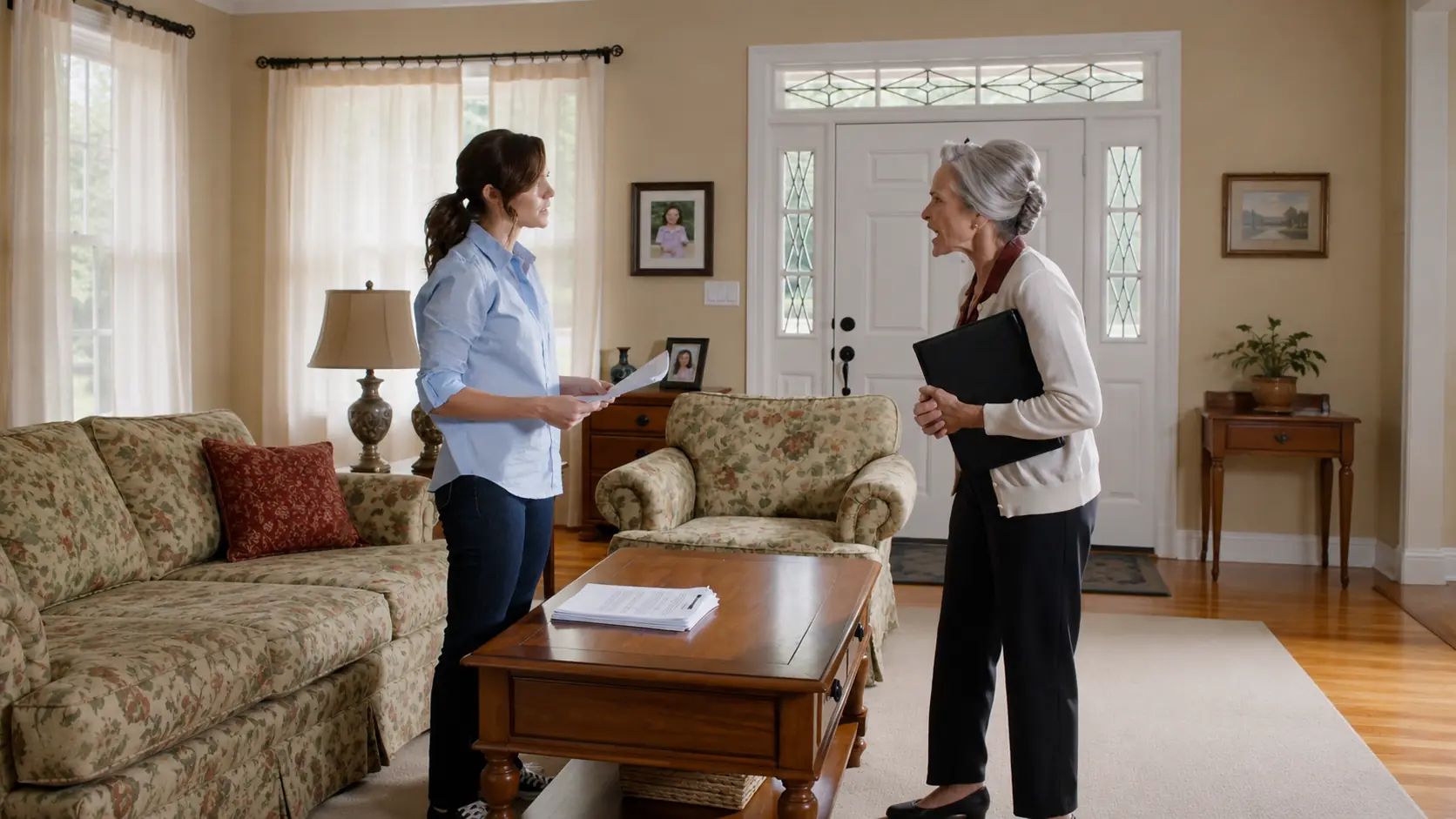
My mother spent her retirement savings to hire Patrick a lawyer. They claimed I was alienating him from his family. His attorney argued that Patrick had served his sentence and deserved to see his relatives. My own mother testified against me in court.
The judge granted a temporary order, but warned that it might not last. Patrick had finished probation. Technically, he was not breaking rules simply by being near us. A final hearing was scheduled for the next month.
Meanwhile, the harassment escalated.
My father began showing up at my husband’s workplace, urging him to talk sense into me. Beth attempted to pick up the girls from school, claiming I had asked her to. The school had to remove my entire family from the approved pickup list. Even relatives I had not spoken to in years chose sides.
One night, I found Elise looking through old Christmas photos on my phone.
“Why don’t we see Uncle Patrick anymore?” she asked. “Grandma says you are being rude to him.”
I wanted to shout, but instead I hugged her tightly and changed the subject. I knew this was far from over. The final hearing was two weeks away, and my mother had made it clear that she had mortgaged her house to fight me.
That threat was not empty. She had already spent her retirement money on Patrick’s lawyer. I began calling every family law attorney in town and scheduling consultations, hoping to block them from representing my mother if the conflict rules applied. My husband took time off work to help with the girls while I prepared for court.
After Beth’s school pickup attempt, the principal agreed to personally escort the girls to the bus. We enrolled them in after-school programs to reduce the chance of surprise family visits. Our lives became schedules, backup plans, passwords, and locked doors. I hated that my children had to live like that.
Three days later, my cousin Cheryl called.
Cheryl had always stayed neutral in family drama, so when she asked to meet for coffee, I agreed. She looked exhausted when she sat across from me. She kept glancing around the café before pulling out her phone.
“I need to show you something,” she said. “Your mother has been organizing the family. There is a group chat.”
My stomach dropped as I read the messages.
Twenty-three family members were actively planning ways to force contact between Patrick and my daughters. They discussed showing up at school activities, arranging “accidental” meetings at stores, and using different relatives to file for grandparent rights or family visitation just to overwhelm me legally. The worst part was how they talked about me.
To them, I was unstable, vindictive, and poisoning my children against their loving family. My mother had convinced them that Patrick’s conviction had been a misunderstanding and that the victim’s family had overreacted. Cheryl looked at me and said quietly, “I have kids too. I checked the records. It was not a misunderstanding.”
I spent the rest of the day saving screenshots Cheryl sent me.
The group chat revealed their entire plan. They intended to fill the courtroom with supporting relatives, including aunts and uncles who had written character letters for Patrick. My mother had even persuaded my childhood pediatrician to write about how devoted Patrick had once seemed. It was all designed to make him look harmless and me look cruel.
That evening, I found Patrick’s truck parked across from our house again. This time, my mother was beside him. They sat there for an hour just watching. When my husband went outside to confront them, they drove away, only to return the next morning.
The girls noticed the tension. Jane asked why we could not eat at restaurants anymore. Elise asked why Grandma could not babysit. I gave vague answers, but children are smart, and they knew something was wrong.
A week before the hearing, I was loading groceries into the car when a woman approached me in the parking lot. She introduced herself as Patricia from Child Protective Services. Someone had filed a report accusing me of emotional abuse through family alienation.
My hands shook as I gave her my lawyer’s contact information.
The home visit went well. The girls’ rooms were clean, the fridge was full, their artwork covered the walls, and they talked happily about school and friends. Patricia was professional but thorough. Later, our lawyer subpoenaed the complaint and confirmed it came from my mother’s address.
The irony would have been laughable if it had not been terrifying.
As the hearing approached, Patrick became bolder. He jogged past our house every morning, always on public property, always waving at the windows as if hoping the girls would see him. We kept them away from the front rooms, which meant living like prisoners in our own home.
My father left voicemails about how I was destroying the family. Beth sent long emails about healing. Blocked relatives created new accounts to message me. They all repeated the same accusation: I was cruel, unreasonable, and unforgiving.
Then came the letters.
My mother organized relatives to write directly to my daughters. I intercepted them before the girls saw them. Each one followed the same pattern: how much everyone missed them, how sad Uncle Patrick was, and how Mommy was keeping the family apart. One aunt even included photos of Patrick looking lonely.
The violation felt profound. They were no longer pressuring me. They were trying to manipulate my children directly.
We changed our routes to school and activities. I started grocery shopping in a neighboring town. We installed more locks and an alarm system. We were hiding while still living in our own house.
The weekend before court, my mother made her biggest move. She filed for emergency grandparent visitation rights, painting me as an unstable mother who had cut off family access without cause. She demanded immediate supervised visits with the girls, with Patrick allowed to attend as their uncle.
Our lawyer called it a “kitchen sink” strategy: throw everything at the wall and see what sticks. My mother hoped the judge would compromise by denying the restraining order but granting her access. I spent the entire weekend organizing evidence: security footage, group chat screenshots, documentation of encounters, school reports, and character references from teachers and doctors who actually knew us.
The morning of the hearing arrived gray and rainy.
I dressed carefully, conservatively but not severely. My husband wore his only suit. We dropped the girls off early at school, and my stomach turned as we left them, even with the security measures in place.
The courthouse parking lot was full of familiar cars.
Patrick sat in the front row beside my mother and their lawyer, wearing a new suit and a fresh haircut. He looked like a respectable uncle, not someone on a registry. Around him stood aunts, uncles, cousins, family friends, and church members whispering in clusters and giving us dark looks.
My mother dabbed her eyes with a tissue, playing the grieving grandmother.
Our side of the courtroom was nearly empty: me, my husband, our lawyer, and unexpectedly Cheryl. She gave me a small nod when we took our seats. Whatever happened that day, I knew I was not completely alone.
Our lawyer began with the security footage. It showed Patrick repeatedly passing our home and watching from a distance. The timestamps showed a pattern. My mother’s lawyer argued that a man had the right to jog on public streets.
During recess, Beth made urgent phone calls in the hallway while glancing at me. My husband stayed close as we passed groups of hostile relatives. My father cornered him near the water fountain, waving his hands and trying to pressure him into dropping the case. My husband simply walked away.
When my mother testified, she painted herself as a heartbroken grandmother. She spoke about family gatherings and cried about being denied access to her grandchildren. But under cross-examination, the truth began to show.
When asked directly about Patrick’s conviction, she claimed the victim’s family had exaggerated and that Patrick had only been showing affection. Several relatives nodded along. I felt sick watching them rewrite reality in a courtroom.
Cheryl testified next. She brought printouts of the group chat messages. My mother’s lawyer objected repeatedly, but the judge allowed them as evidence of coordinated harassment. Cheryl’s hands trembled as she read their plans to ambush us at different locations.
Then Patrick took the stand.
He spoke softly about rehabilitation, redemption, and wanting to be part of his nieces’ lives. He had clearly been coached. But when asked why he kept jogging past our house and why he had appeared at Jane’s birthday party, he stumbled. His calm mask cracked when confronted with the victim impact statement from his original case.
The CPS investigator also testified. Patricia stated that she found no evidence of abuse or neglect, and that the children were thriving and well cared for. My mother’s lawyer tried to twist that into proof the girls needed extended family, but it fell flat.
My testimony came last.
I described every incident: the surprise visits, the letters, the school pickup attempt, the birthday party, the surveillance, the family group chat, and the direct manipulation of my daughters. I explained how we had changed our entire lives to avoid Patrick. My mother’s lawyer accused me of being paranoid and controlling.
I stayed calm and stuck to facts.
The judge said he would review the evidence and issue a decision within three days.
As we left the courtroom, Patrick stepped directly into my path. His eyes held a coldness that chilled me. He leaned close enough for only me to hear and whispered that he would see the girls soon. My husband immediately stepped between us, and our lawyer documented the interaction.
That evening, our mailbox was stuffed with letters from relatives condemning us and demanding reconciliation. Someone had also left a Bible on our doorstep with verses about forgiveness highlighted. The message was clear: they had not stopped. They had only shifted tactics.
The next morning, Jane’s teacher called. Beth had shown up at the school claiming a family emergency and demanding to take the girls. The school followed our protocol and denied her access, but she created a scene that upset several students. The principal showed me security footage of Beth arguing with the front desk.
I left the school feeling defeated. My mother’s campaign was working exactly as intended. It was making our lives smaller, more stressful, and harder to defend.
At home, my husband was installing more cameras. He had taken the rest of the week off work after my father showed up there again, this time with another relative, trying to corner him in the parking lot. Cheryl called with new screenshots from the group chat, where relatives were already planning what to do after the judge’s decision.
They talked about filing more legal actions to drain our money. They discussed showing up at the girls’ activities to create “unintentional” contact. Every screenshot felt like another weight on my shoulders.
Two days after the hearing, Patrick appeared at the grocery store while I was shopping with the girls. He did not approach us directly. He positioned himself where they could see him and waved, calling their names. I rushed the girls out, abandoning the cart.
Jane asked why we were leaving without groceries. Elise asked why we could not talk to Uncle Patrick. Their innocent questions broke my heart.
That night, we discovered someone had been in our backyard. Nothing was stolen, but the girls’ outdoor toys had been rearranged, the playhouse door was open, and three wrapped presents had been left inside. The security cameras had malfunctioned during that exact period.
The police took a report, but without footage or proof of forced entry, there was little they could do. I checked every lock and window. My husband began working from home. We were prisoners in our own lives, and that was exactly what my mother and Patrick wanted.
The judge’s decision came during a thunderstorm.
He extended the restraining order for one year, citing stalking behavior, coordinated harassment, the birthday party incident, and the retaliatory CPS complaint. My mother’s side erupted in whispers and anger. Patrick’s face twisted with fury beneath his calm mask.
But the judge also granted my mother limited grandparent visitation: one supervised hour per month at a neutral location, with Patrick barred from attending.
It was a mixed decision. We had won the main battle, but my mother now had a legal foothold. As we left, Beth grabbed my arm in the hallway and demanded that I stop denying the children their family. Security intervened and removed her, creating another scene.
When we got home, there were more gifts on the porch. Three identical heart necklaces. The message was obvious: Patrick was not giving up.
Soon my mother’s attorney filed for expanded visitation, claiming the supervised visits were too restrictive. Cheryl sent screenshots from the group chat where relatives celebrated my mother’s “partial victory” and discussed using the visits strategically. Some suggested having Patrick appear nearby by coincidence. Others discussed wearing recording devices to gather evidence against me.
The first supervised visit took place at a converted house used as a visitation center. We arrived early so the girls could become familiar with the space. My mother arrived dressed perfectly, carrying approved coloring pages and crayons. For a brief moment, I saw the grandmother she might have been if she had chosen the girls’ safety over Patrick.
At first, the visit looked normal. Then she began talking about missed family events, how sad everyone was, and how much the girls were missing. The supervisor redirected her several times, but my mother was skilled at emotional manipulation. When the visit ended, the girls were confused and upset.
They wanted to know why Grandma could not visit at home. They wanted to know why Uncle Patrick could not come. I struggled to answer honestly without frightening them.
Then Patrick filed his own petition, claiming defamation and emotional distress. He said my “false accusations” had damaged his reputation and relationships. It was clearly vindictive, but fighting it cost money we barely had.
The war became one of attrition.
Every legal filing drained our savings. Every family appearance shattered our peace. Every manipulation attempt harmed my children’s innocence. Relatives began appearing at dance class, soccer practice, the gym, and church, always staying just far enough away to avoid violating orders but close enough to make their presence felt.
Patrick got a job at a hardware store two blocks from the visitation center, giving him a legitimate excuse to be near every visit. My mother brought photo albums and family scrapbooks, carefully including pictures of Patrick at every milestone to portray him as the loving uncle the girls were missing. The supervisor caught some things, but not everything.
The girls started changing.
Jane became withdrawn. Elise’s nightmares worsened. Our youngest became clingy and angry. Their grades slipped, and family therapy became another expense layered on top of legal fees and security measures.
My husband’s blood pressure climbed. I developed migraines and insomnia. We installed panic buttons, more cameras, and window sensors. We established code words with the girls and taught them to find a trusted adult if anyone approached them unexpectedly.
I hated every second of it.
I hated that my children had to learn vigilance because adults who claimed to love them refused to respect boundaries.
During one supervised visit, my mother dropped her careful act when the supervisor stepped out briefly. She whispered something to the girls. I could not hear it through the monitor, but I saw their faces change. Jane looked scared, and Elise looked confused.
That night, I found them whispering together in Jane’s bed. When I entered, they stopped. Later, Elise finally broke down and told me Grandma had said Patrick had special gifts for them at her house, gifts they could have if they convinced me to let them visit.
The manipulation was masterful. My children now had a secret with their grandmother, and I was being made into the obstacle.
Christmas made everything worse.
On Christmas Eve, three packages appeared on our doorstep at 3 a.m., left by someone who knew exactly where our camera blind spots were. Inside were handmade dolls with a card signed, “Love, Uncle Patrick.” The girls had already seen them. Throwing them away made me the villain; keeping them meant he had invaded our home again.
I placed them in the garage and told the girls we would figure it out later.
The day after Christmas, our lawyer called with bad news. In Patrick’s defamation case, the judge dismissed some claims but allowed others to move forward. A trial would determine damages. We could not afford a trial. The retainer alone would bankrupt us.
My mother and Patrick had won the financial war.
I had to make an impossible choice: surrender or lose everything fighting.
During the seventh supervised visit, I told our lawyer to offer a settlement in Patrick’s defamation case. The number made me sick: $30,000. We did not have it, but the settlement came with conditions Patrick could not refuse, including a permanent no-contact agreement that went beyond the restraining order.
Patrick accepted, likely believing he would find a way around it later. We liquidated retirement accounts to pay him. It felt like paying ransom, but I knew I had to change tactics. I could not win by playing defense forever.
My mother’s reaction was swift and vicious. She filed for expanded visitation, claiming the settlement proved I had been wrong about Patrick. But our lawyer had anticipated this. The settlement included Patrick’s acknowledgment that continued contact could be detrimental to the children’s well-being.
This time, the judge saw the pattern.
He recognized the coordinated harassment, the stalking behavior, and the use of supervised visits to undermine parental authority. Instead of expanding my mother’s access, he reduced it to quarterly visits under stricter supervision.
My mother’s investment in Patrick had cost her almost everything: retirement savings, credibility, and most of her access to her grandchildren.
The family group chat erupted in rage and disbelief. Cheryl sent screenshots as the coalition began turning on itself. Some blamed my mother for pushing too hard. Others blamed Patrick for taking the money. Without my mother’s resources holding them together, the group that had terrorized us began to fracture.
We used the breathing room to rebuild.
The school strengthened security. We found a therapist who specialized in family manipulation dynamics. We began explaining the truth to the girls in age-appropriate ways. They slowly learned that some relatives were not safe, and that love sometimes meant keeping distance.
The quarterly visits with my mother became less traumatic. With stricter supervision and less frequency, she could not maintain the same level of manipulation. The girls began to see her as a distant relative rather than the center of their family world.
Six months later, Patrick violated the no-contact agreement by sending birthday cards through a third party. Our lawyer immediately filed for contempt. This time, the judge had no patience. Patrick faced a serious penalty and chose to pay a substantial fine, which further drained my mother’s resources because she was still funding his legal fights.
Eventually, most of the extended family moved on. A few continued to send messages or make comments, but without coordination, their efforts had less power. The storm did not vanish, but it became survivable.
On the anniversary of Patrick’s release, I sat in our backyard watching my daughters play.
We had paid a terrible price: financial strain, family destruction, months of fear, and innocence lost too early. But my girls were safe. Their innocence had been scarred, but not shattered.
My husband came outside with coffee and sat beside me. We did not need to speak. We had survived by choosing the battles we could win and accepting the cost of the ones we could not. Protection had not been clean, easy, or perfect.
The girls ran toward us, laughing, their faces bright with life. They had adapted to our new normal with the resilience only children seem to have. They understood now that some family members were not safe, and that boundaries were not cruelty.
The restraining order would need to be renewed. My mother would still have quarterly visits. Patrick would probably search for new weaknesses someday. The war might never be completely over.
But for now, my daughters were safe.
That was the only victory that mattered.
Sometimes I still wonder whether my mother truly believed she was doing the right thing or whether it had always been about control. I wonder how someone can look at three little girls and decide a grown man’s comfort matters more than their safety. I may never understand it.
But I know this: every parent would pay the price if the bill came due. We paid in money, relationships, peace, and innocence. Watching my daughters play safely in our yard, I knew I would pay it again.
Tags:
News in the same category

My Wife Cheated on Me - So I Betrayed Her With the One Woman She Never Expected
My Son Gave My Bedroom to His In-Laws and Put Me in the Garage - Then He Learned Whose House It Really Was

My Son Watched Them Strip Me of My Seat at Christmas — Then Walked Away and Took Everything Back
My Mom Stole My $45,000 College Fund for My Sister’s House - Then I Faced Them as a Millionaire

They Called Her Too Old to Marry - Until London’s Most Desired Duke Chose Her

He Said “You’re Not What I Ordered” - Then She Returned His Ring and Left Him Speechless

The Maid Said “Sir, I Speak 9 Languages” - Then the Duke’s Fiancée Laughed at the Wrong Woman

The Duke Hid His Royal Crest - Then He Fell for the Woman Who Understood His Deaf Brother

Married at 17 to a Cold Husband - Then the Duke Said “Mine”

A Barefoot Girl Asked a Cowboy for Work - Then He Saw What She Carried to His Porch

"Be My Wife for One Night" - Then Her Kiss Stopped Him Cold

Nobody Wanted the Giant Cowboy as a Husband - Then She Saw His Gentle Heart

The Rich Cowboy Chose the Outcast Sister - And Shocked the Entire Town of Blackridge

She Thought She Married a Poor Mountain Man - Then He Drove Her to a Hidden Mansion

They Refused His Wheat at the Elevator - Then His Old Barn Made Him Rich

They Called His Well a Joke—Then the Drought Forced Them to Beg Him for Water
Her Father Called the Quarry Worthless - Then One Pound of Her Mushrooms Sold for Thousands
News Post
My Mother Slept With My Fiancé - Then Came Back Begging for an Unthinkable Favor
My Wife Cheated on Me - So I Betrayed Her With the One Woman She Never Expected
My Son Gave My Bedroom to His In-Laws and Put Me in the Garage - Then He Learned Whose House It Really Was
My Son Watched Them Strip Me of My Seat at Christmas — Then Walked Away and Took Everything Back
My Mom Stole My $45,000 College Fund for My Sister’s House - Then I Faced Them as a Millionaire

She Told Her Mother-in-Law to Reheat Leftovers - Then The House Was No Longer Hers
They Called Her Too Old to Marry - Until London’s Most Desired Duke Chose Her
He Said “You’re Not What I Ordered” - Then She Returned His Ring and Left Him Speechless
The Maid Said “Sir, I Speak 9 Languages” - Then the Duke’s Fiancée Laughed at the Wrong Woman
The Duke Hid His Royal Crest - Then He Fell for the Woman Who Understood His Deaf Brother
Married at 17 to a Cold Husband - Then the Duke Said “Mine”
A Barefoot Girl Asked a Cowboy for Work - Then He Saw What She Carried to His Porch
"Be My Wife for One Night" - Then Her Kiss Stopped Him Cold
Nobody Wanted the Giant Cowboy as a Husband - Then She Saw His Gentle Heart
The Rich Cowboy Chose the Outcast Sister - And Shocked the Entire Town of Blackridge
She Thought She Married a Poor Mountain Man - Then He Drove Her to a Hidden Mansion
They Refused His Wheat at the Elevator - Then His Old Barn Made Him Rich
They Called His Well a Joke—Then the Drought Forced Them to Beg Him for Water