The trouble with Nathaniel Ashbourne had begun long before his wedding, although he would have denied that trouble was a quality a man could inherit. His father had died in November, leaving behind a magnificent title, an ancestral house with a leaking roof, six hundred tenant families, and an assortment of debts that revealed themselves with the punctuality of unpaid tradesmen. Nathaniel had grown up believing that an Ashbourne's word was as solid as an oak beam. When he opened the ledgers after the funeral, he discovered that his father's word had been offered as security for so many obligations that it was difficult to distinguish a promise from a mortgage. At thirty-two, he was old enough to know the difference and young enough to be furious that no one had explained it earlier.
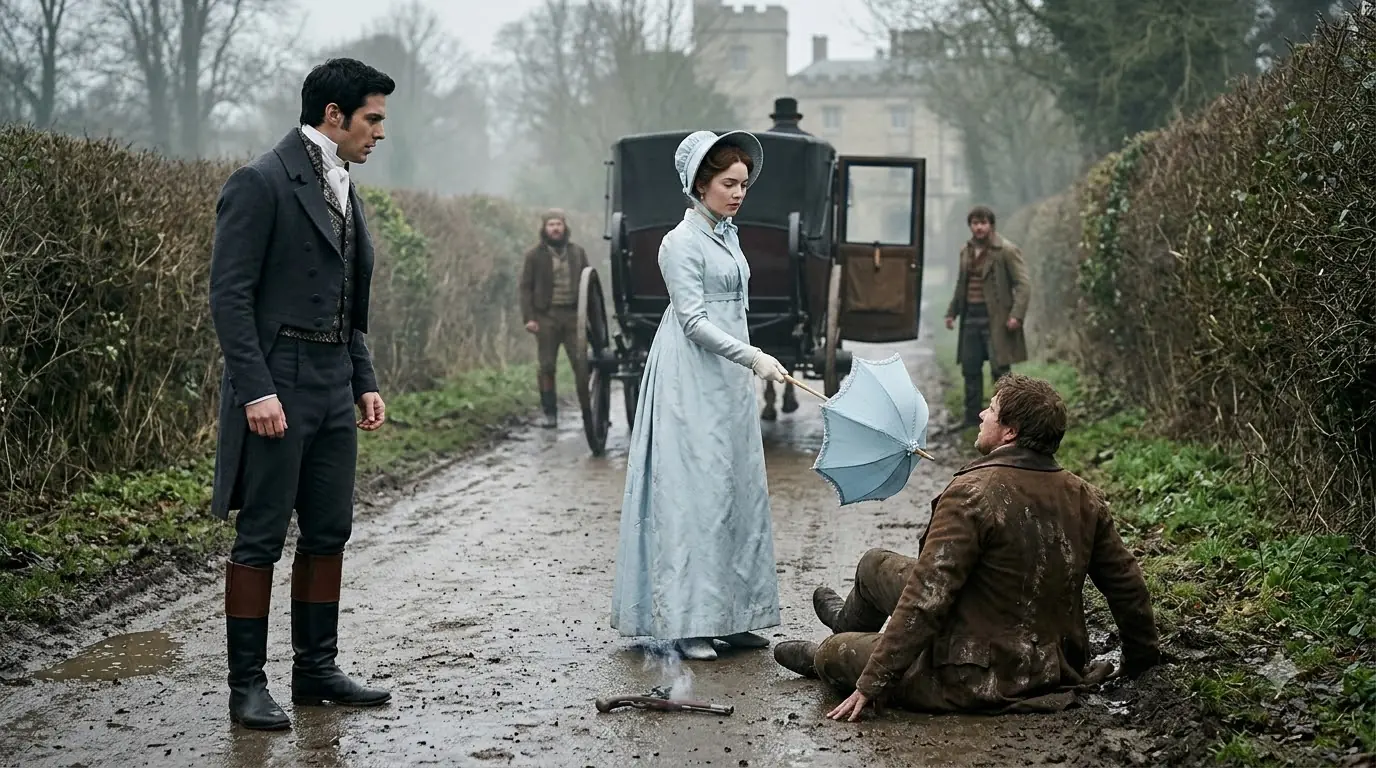
He had not intended to marry that year. He had intended to establish which boundary farms might survive another winter, persuade the bank to defer a crushing demand, and determine why the mill accounts disagreed with the rent rolls. His aunt Augusta, who believed almost any crisis could be solved through an appropriate invitation, had invited a succession of marriageable ladies to dinner. Nathaniel had sat through evenings of accomplished singing while mentally adding the cost of new drainage pipes. He had admired a lady's skill with the harp and then offended her by asking whether her father had ever inspected a lease. By Christmas, the county considered him unsociable, melancholy, or both. He considered the county blessedly occupied with its own conclusions.
The proposal involving the Whitfield family arrived on a Tuesday, inside a letter from a solicitor who had never met a human emotion he could not reduce to a numbered clause. Lord Whitfield possessed extensive commercial investments and important mill rights, but he wished his youngest daughter to marry into an established family. Nathaniel possessed the established family and very little ready cash. The arrangement was described as mutually advantageous, a phrase that immediately made him suspicious. He examined the figures, considered the households dependent upon him, and agreed to a meeting without allowing himself the comfort of pretending that affection had entered the calculation.
His first sight of Evelyn Whitfield had been through the open doors of her father's drawing room. She wore a plain pale-green gown and was listening to a widowed relation describe a tedious dispute about household linen. Her hands rested loosely in her lap. Whenever the widow lost her thread, Evelyn prompted her with a gentle question and somehow made the old woman feel interesting rather than confused. Nathaniel had supposed her shy. Then he noticed that she knew exactly where each servant stood, which window refused to latch, and which of the gentlemen had taken an extra glass of port before luncheon. Her attention seemed generous. It was also remarkably complete.
Evelyn had been twenty-four, the youngest of three daughters and the only one not already established in an independent household. Her sisters had written from their respective homes to warn her that dukes were prone to mistaking silence for agreement. Her mother had warned her that a man could be intelligent,