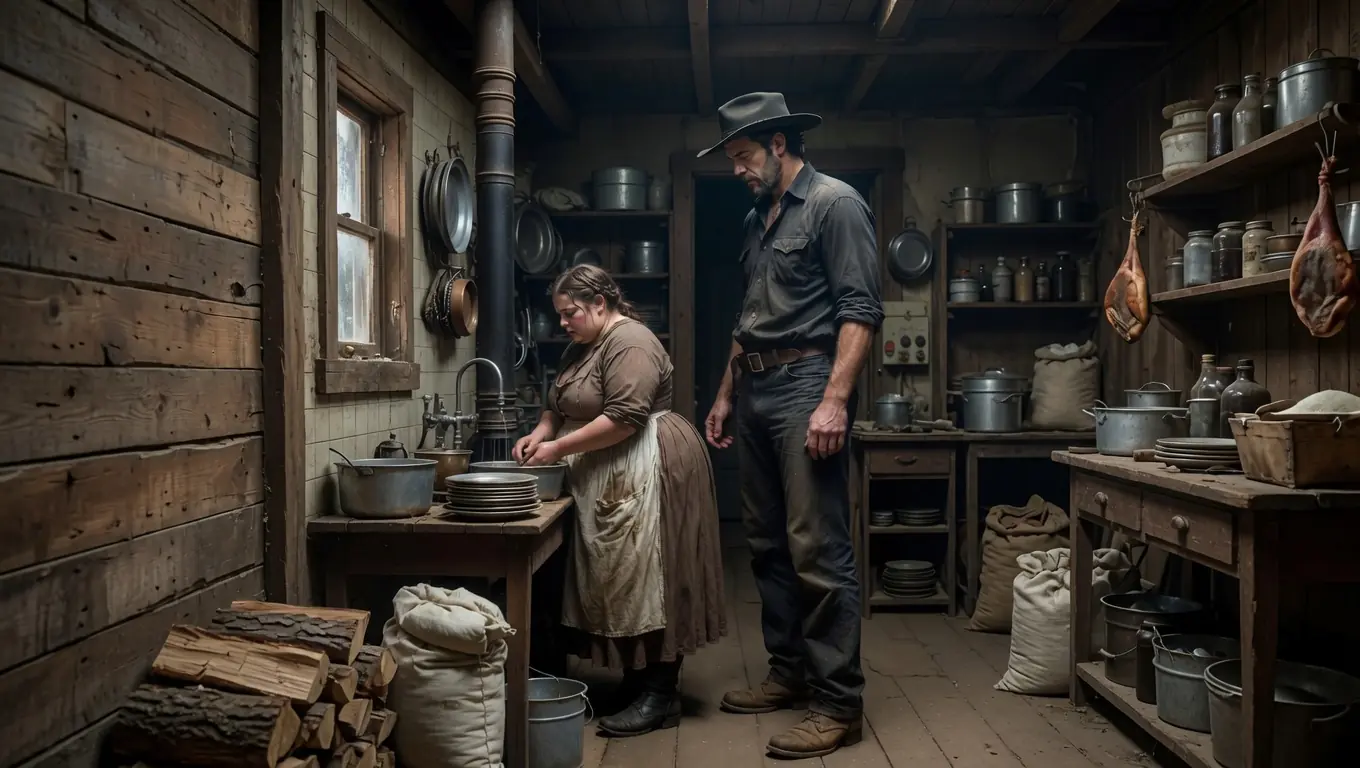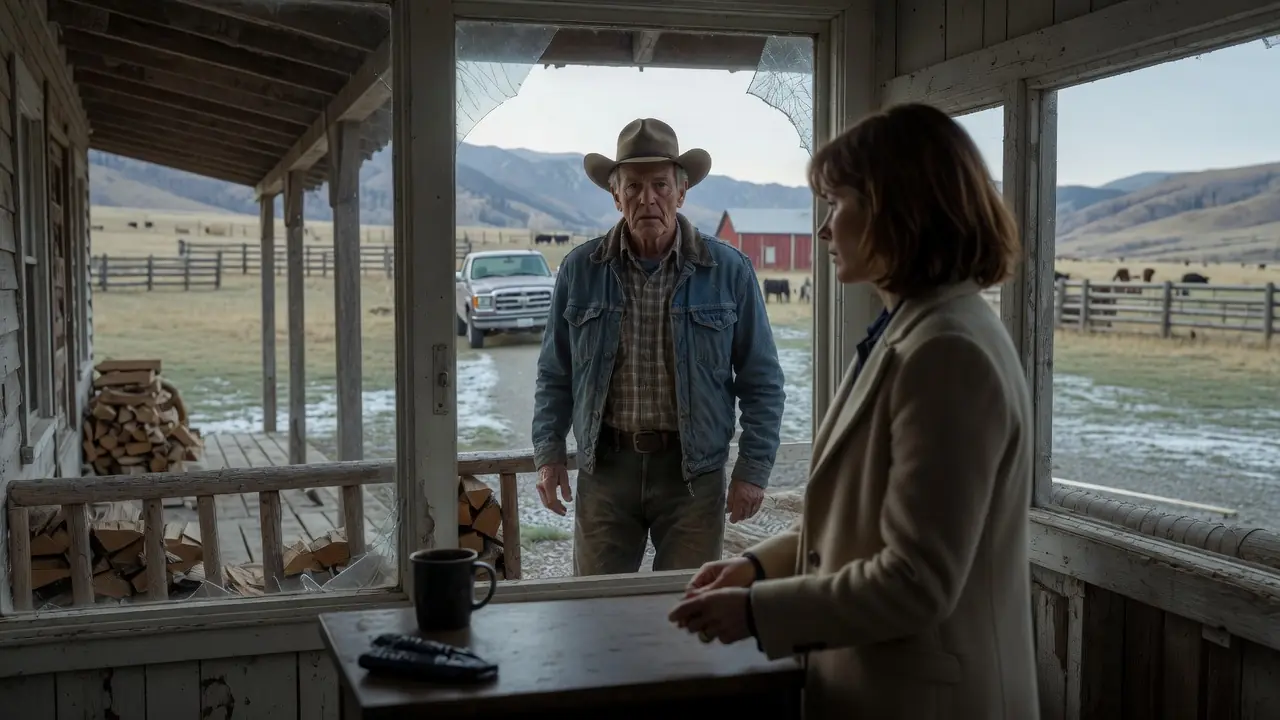
The Wealthy Rancher Disguised Himself as a Farmhand - Then the New Cook Saw Through Him Instantly
The wagon wheels creaked as they rolled through the dusty main street of Concordia, Kansas, and Mara Ashford gripped the wooden seat beneath her, wondering if accepting this cooking position sight unseen had been the biggest mistake of her twenty-two years. The year was 1878, and opportunity for a woman alone was scarce enough that she had jumped at the letter offering steady work at a large cattle ranch outside town. The advertisement had promised good wages, respectable lodging, and meals for a cook willing to feed a crew of ranch hands through the autumn roundup and beyond. She had left St. Louis three weeks earlier with her savings tucked into the lining of her carpet bag, determined to start fresh where nobody knew the scandal that had cost her everything.
Being caught alone with the master of the house, even though she had been fleeing his unwanted advances, had been enough to ruin her reputation in polite society. The references she carried now were forged, carefully penned by her only friend in the world, but they would have to do. The driver, a weathered man who had introduced himself only as Pete, pulled the wagon to a stop in front of the general store and told her he needed to pick up supplies before they headed to the ranch. Mara nodded and stepped down from the wagon, taking the chance to stretch her legs with as much grace as her travel-worn dress would allow.
The streets of Concordia bustled with afternoon activity. Cowboys wandered between saloons, farmers loaded wagons with goods, and women in their best dresses picked their way across the dusty thoroughfare. Mara found herself studying the faces around her, wondering which of these rough men she would be cooking for, when someone collided directly into her back. She stumbled forward and caught herself against a hitching post as strong hands gripped her shoulders and steadied her.
“My apologies, madam,” a deep voice said. “Wasn’t watching where I was stepping.” Mara turned to find herself looking up at a tall man in worn denim and a faded blue work shirt. Dust covered his clothes, and dark hair peeked from beneath a battered hat, but what struck her immediately were his eyes. They were a startling green that seemed at odds with his sun-weathered face and calloused hands.
Those hands released her shoulders quickly, almost too quickly, as though he was unused to the roughness of his own grip. “No harm done,” Mara said, brushing off her skirts. “These streets are certainly busy.” The man’s voice carried the slightest hint of education beneath a drawl that seemed almost practiced as he asked if she was new to town. Mara answered that she was just passing through on her way to a position at a ranch, where she was to be the new cook.
Something flickered in those green eyes, gone too quickly for her to name. “Is that so?” he asked. “Which ranch would that be?” Before Mara could answer, Pete called from the store entrance, telling Miss Ashford to come help him sort the order for the ranch kitchen. The tall stranger’s eyebrows rose fractionally, and Mara could have sworn she saw the ghost of a smile tug at his lips before he tipped his hat.
“Well then, Miss Ashford,” he said smoothly. “I expect we will be seeing each other again real soon. Name’s Zachariah Young. Most folks call me Zach.” He turned and walked away before she could respond, his long stride carrying him toward a group of ranch hands loading supplies onto a buckboard. Pete was grinning when she joined him inside the store.
“I see you met one of your future colleagues,” Pete said. Mara looked back toward the street. “That man works at the ranch?” Pete nodded and said Zach had hired on about two months earlier, right around the time old Charlie threw out his back and had to retire. According to Pete, Zach was a hard worker who kept to himself, but knew his way around cattle and horses better than men who had been doing it their whole lives.
As they loaded crates of flour, sugar, coffee, and spices into the wagon, Mara found her gaze drifting back to Zachariah Young. There was something about him that did not quite fit. Perhaps it was the way he held himself, or the careful way he spoke. She had spent enough time in wealthy households to recognize certain mannerisms, and this supposed farmhand had them in abundance despite his shabby clothing and dusty appearance.
The ride out to the ranch gave Mara time to take in the landscape. The Kansas prairie stretched endlessly in all directions, with grass rippling under the late September sun and cattle dotting the hills in the distance. Pete kept up a steady stream of conversation, explaining that the Yates Ranch was one of the biggest operations in the region and had been in the family for nearly thirty years. Old man Yates had passed five years earlier, leaving everything to his only son, young Mr. Yates, who ran a tight operation and expected a full day’s work for a full day’s pay.
The ranch came into view as they crested a low hill. A large two-story house stood at the center, painted white with a wide wraparound porch, while barns, corrals, and outbuildings sprawled beyond it. Smoke rose from the bunkhouse chimney, and men worked with horses in one of the corrals. Pete drove the wagon directly to the back of the main house, where a covered porch led into what Mara assumed was the kitchen.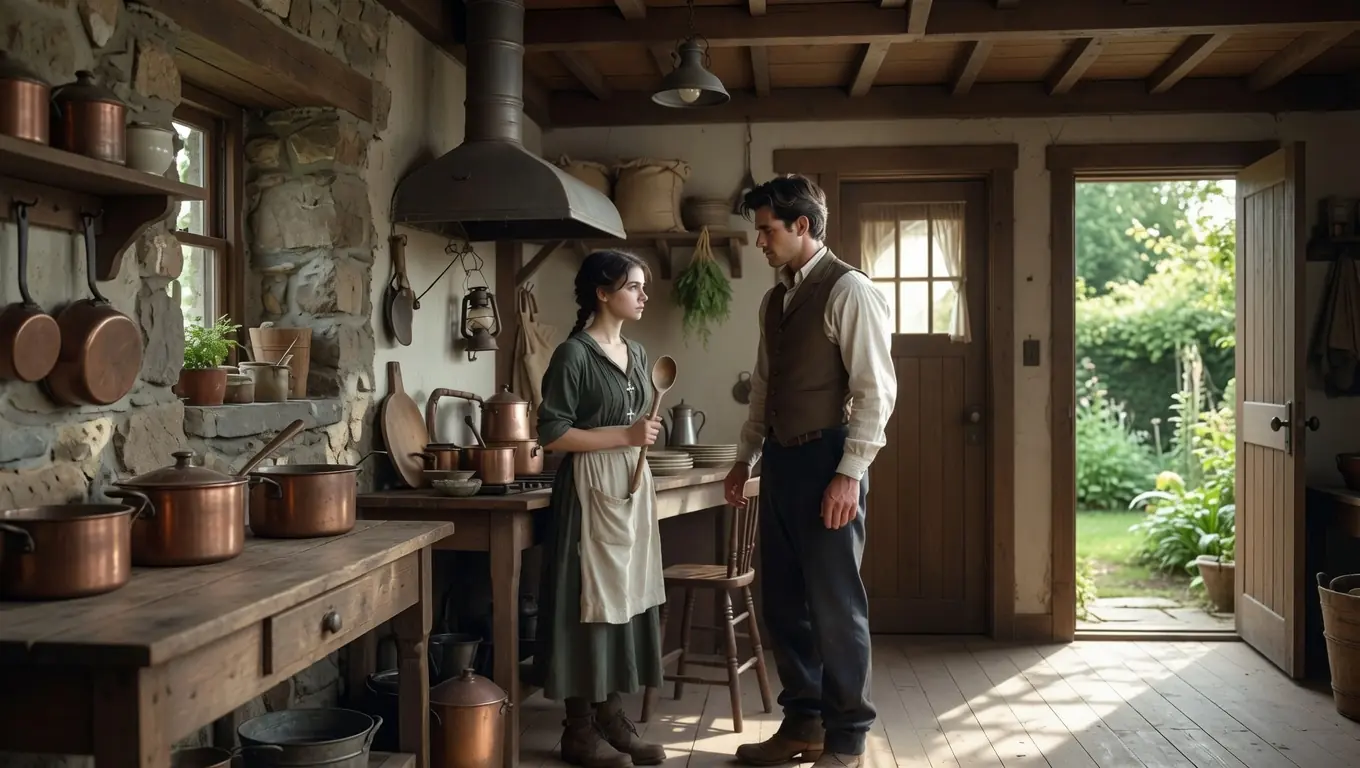
A stern-faced woman in her fifties appeared in the doorway, wiping her hands on her apron. She introduced herself as Mrs. Donnelly, the housekeeper, and said Mr. Yates was out checking fence lines but had ordered her to get Mara settled. Her room was small, private, and close to the kitchen, and her schedule would begin before dawn. Breakfast was at five, dinner at noon, and supper at six, with the kitchen kept clean and Mr. Yates’s coffee strong enough to float a horseshoe.
Mara shook her head when asked if she had questions, overwhelmed by the rapid-fire instructions. Mrs. Donnelly’s expression softened slightly when she noticed how exhausted Mara looked. She showed her to the small room off the kitchen, which held a narrow bed, a washstand, and just enough space for her trunk. After weeks of travel and uncertain lodging, it felt like a palace.
Mara unpacked her few belongings, changed into a fresh dress, and splashed water on her face. Through the thin wall, she could hear Mrs. Donnelly moving about the kitchen while voices drifted in from outside as men finished their day’s work. She was smoothing her hair when a knock sounded at the kitchen door. Mrs. Donnelly’s voice carried clearly through the wall as she greeted Mr. Yates and said she had not expected him back until dark.
The answering voice was deep, cultured, and oddly familiar. Mara hurried out of her room and into the kitchen, then stopped short when she saw the man standing in the doorway. He was tall, broad-shouldered, and immaculately dressed in clean trousers, a pressed white shirt, and a leather vest. His dark hair, still damp from washing, was combed back from a handsome face dominated by the same startling green eyes that had looked at her in town from beneath a battered hat.
“Miss Ashford,” Zachariah Young said smoothly, without a trace of surprise. “Welcome to the Yates Ranch. I am Zachary Yates, the owner.” Mara felt her cheeks flush hot as the truth snapped into place. “You lied to me,” she said. Mrs. Donnelly gasped, but Zachary held up a hand and told her that Miss Ashford and he needed to have a conversation.
When the housekeeper left, Zachary leaned against the doorframe, studying Mara with an expression she could not quite read. He said he had not lied, only given her part of his name, since Zachariah was his full first name and he had simply left off the part about owning the ranch. Mara crossed her arms, anger warring with embarrassment, and asked what possible reason he could have for pretending to be one of his own hired hands. Zachary stepped farther into the kitchen, his movements easy and confident now that he had shed the persona he had worn in town.
He asked if she had ever noticed how people behaved differently around money and power. A ranch hand, he explained, could walk through town and hear honest conversation, but the moment people knew he was Zachary Yates, everyone wanted something from him. Land, jobs, money, and marriage all came with his name. He said the last word with a bitterness that surprised her.
Mara asked if he spied on his own employees. Zachary said he preferred to think of it as making sure he knew who he was working with. Two months earlier, three of his hands had been caught stealing cattle after coming with glowing references and seeming like honest men. They had been rustling from him for six months and selling to buyers in Abilene, so he had started going into town dressed as a ranch hand to listen, watch, and learn who could be trusted.
Mara studied him, her anger fading into curiosity despite herself. She asked what he had hoped to learn about her in those few moments on the street. Zachary set down an apple he had been turning in his hands and met her gaze directly. He said he wanted to know whether she was who she claimed to be and whether the references she carried were genuine.
Then he said they were not. Mara’s heart hammered in her chest, and she said she was a good cook and would work hard, whatever he thought he knew about her past. Zachary said he knew nothing about her past, but he knew fine penmanship when he saw it, and both her reference letters had been written by the same hand despite claiming to come from different sources. He also knew genuine fear when he saw it.
His expression softened, and he told her he was not going to send her away. The ranch needed a decent cook, and he was simply asking for honesty. Whatever trouble she had left behind in St. Louis, he needed to know if it posed any danger to his ranch or his men. Mara answered no, her voice barely above a whisper, and said the trouble she left was the sort that ruined reputations but broke no laws.
She said she had needed to get away and start fresh somewhere she was not known. Zachary nodded slowly and said they had an understanding. She would cook, work hard, and keep to herself, and he would ask no more questions about her past. In return, he asked for discretion about his occasional trips into town as Zach Young, farmhand.
Mara asked why he would continue the deception now that she knew who he was. A smile tugged at his lips, transforming his serious face into something almost boyish. He said that sometimes even a wealthy rancher needed to escape his responsibilities for a few hours, and the information he gathered helped him protect what was his. Then he extended his hand and asked if they had an agreement.
Mara looked at his outstretched hand, calloused despite his wealth, then back at his face. There was something in his eyes, a loneliness that resonated with her own. Whatever his reasons for the disguise, she understood the need to be seen as something other than what the world expected. She took his hand, her smaller one engulfed in his warm grip, and told him they had an agreement.
Zachary asked her to call him Zachary, or Zach when they were alone, because Mr. Yates made him feel like his father, and his father was not a man he cared to emulate. He released her hand, and Mara found herself missing the warmth before she pushed the thought aside. This was her employer, nothing more. She said she should start familiarizing herself with the kitchen if she was to have breakfast ready by five.
The next morning arrived far too early. Mara woke in darkness to the sound of roosters and men’s voices as the hands prepared for the day. She dressed quickly, braided her hair, tied on her most serviceable apron, and entered the kitchen. Mrs. Donnelly had left detailed instructions and a schedule of meals the previous cook had followed.
Mara lit the large stove and began pulling ingredients from the well-stocked pantry. By the time the sky began to lighten, she had biscuits in the oven, bacon sizzling in heavy cast-iron skillets, scrambled eggs keeping warm, and coffee strong enough to satisfy even Zachary’s exacting standards. The first ranch hands came in quietly, clearly not expecting much, and settled at the long wooden tables with the resigned air of men facing another uninspired meal. The first bite brought surprised murmurs, then enthusiastic eating, and by the time Mara refilled the coffee, several men were already returning for seconds.
A young cowboy flushed red and told her it was the finest breakfast he had eaten since his mother’s table. Mara thanked him and told the men to eat their fill. She was scraping plates in the kitchen when Zachary appeared, dressed for a day of ranch work in denim and leather. He poured himself coffee, took a long drink, and nodded approvingly.
Mrs. Donnelly had said breakfast was laid out for him in the dining room, but Zachary said he would eat with the hands as he had the day before. Mara turned to face him, wooden spoon still in hand, and accused him of testing whether the new cook could actually cook. His eyes held a hint of amusement as he told her she had passed. He said he had heard three separate marriage proposals being debated on the way back to the bunkhouse.
Mara said that was hardly appropriate. Zachary agreed, but said good cooks were worth their weight in gold out there, and good cooks who were also young and pretty were even rarer. He said it matter-of-factly, without impropriety, yet Mara still felt heat rise to her cheeks. She told him she was there to work, not to be courted by ranch hands, and he promised to make sure the men understood.
Over the following weeks, Mara fell into the rhythm of ranch life. She woke before dawn to start breakfast, spent mornings preparing the large midday meal, and used afternoons to bake bread and plan supper. The work was exhausting, but satisfying in a way her previous position had never been. Here, her efforts were appreciated, and even Mrs. Donnelly admitted the kitchen had never been in better order.
Zachary remained an enigma. Some days he ate with the hands, joking and talking about cattle and horses like any other cowboy. Other days he took his meals in the main house while dealing with paperwork and business correspondence. Twice, Mara saw him ride out before dawn dressed as Zach Young, only to return hours later in different clothes, his hair carefully combed, looking every inch the wealthy rancher.
She found herself watching for him and listening for his voice among the others. When he came into the kitchen for coffee, which he did several times a day, they fell into easy conversation. He asked about her cooking, complimented dishes he enjoyed, and occasionally stayed to help with heavy lifting or high shelves. One afternoon, as he carried a sack of flour from storage, Mara protested that he had plenty of men who could help.
Zachary said he knew, but he enjoyed talking with her and the task gave him an excuse. He set the flour down, leaned against the counter, and asked if he might call her Mara. The use of her first name sent a small thrill through her. He asked if she liked the ranch, not just the work, but the prairie, the place, and the life itself.
Mara said she did. She had thought she would miss the city, the shops, the theaters, and the libraries, but there was something about the openness of the ranch and the honesty of the labor. You worked hard, ate well, and slept soundly. It felt real in a way her old life never had.
Zachary said he had felt the same way when he came back from Boston. His father had sent him there for university, wanting him to become a gentleman who ran the ranch from behind a desk. Zachary had spent four years learning business, literature, and all the things wealthy men’s sons were supposed to learn. When he returned and wanted to work alongside the hands, to know the cattle and the land, his father had been furious.
He told Mara they had fought constantly until his father died. His mother had died giving birth to him, and his father had blamed him for it, raising him more out of obligation than love. Then Zachary caught himself and said she had a way of making people talk. Mara asked if that was why he came to the kitchen so often.
He met her eyes with an intensity that made her breath catch. He said the kitchen was the only place on the ranch where he felt he could be himself, not the boss or wealthy landowner, but just Zachary. Before Mara could answer, the dinner bell rang, and he straightened as if the vulnerable moment had passed. He left her to work, and Mara stood motionless for a long moment, her heart racing.
Something was growing between them, something beyond employer and employee, and even beyond friendship. It terrified and exhilarated her in equal measure. The autumn roundup began in early October, bringing extra hands and nearly doubling Mara’s work. She rose even earlier, often finding Zachary already in the kitchen making coffee before dawn.
One morning, he handed her a cup and said he could hire additional help. Mara said she could manage, though she admitted she looked forward to the roundup being finished. As she worked, Zachary asked how she had learned to cook so well. She told him her mother had been a cook in a wealthy household, and that she had grown up in the kitchen learning from her before working her way from kitchen maid to assistant cook to head cook.
The memories hurt, but less than they once had. Zachary said her mother would have loved this kitchen, with its space, modern stove, and abundance of ingredients. He also said her mother would have been proud of her. Mara smiled and said she hoped so.
The next morning, Zachary drove Mara into Concordia to buy supplies. On the wagon ride, Mara told him about St. Louis, where she had grown up in the servant quarters of a mansion on the good side of town. She described marble, mahogany, gas lighting, and indoor plumbing, but said she had never truly been part of that world. She had served it, cleaned after it, and made it possible with her labor, but she had been invisible unless something went wrong.
Then she told him what had gone wrong. The master of the house, Mr. Peterson, had decided he wanted the young cook for more than cooking. He found excuses to come to the kitchen, brush against her, and make inappropriate comments. One night, after everyone else had gone to bed, he came to her room.
Mara fought him off and made enough noise for the housekeeper to come running. But when Mrs. Peterson learned what had happened, she blamed Mara and said she must have encouraged him. She was dismissed without references the next morning, and the housekeeper, a good woman who had known her mother, forged the letters and gave her enough money to leave the city. Mara’s reputation had been ruined, because word spread quickly in domestic service.
Zachary pulled the wagon to a stop in the middle of the prairie road. He turned to face her fully, his green eyes blazing, and told her that what Peterson had done was not her fault in any way. He called Peterson a coward and a predator who abused his power. He said Mara had fought back, survived, and built a new life, and that took more courage than most people possessed.
The fierce conviction in his voice broke something open inside her. Tears she had held back for months spilled over, and Zachary pulled her gently into his arms, holding her while she cried against his shoulder. He smelled of leather, soap, and prairie grass, solid and real and safe. When she apologized for falling apart, he told her not to apologize, because she had earned the right to cry.
By the time they reached Concordia, something between them had shifted. Zachary helped her down from the wagon, his hands warm on her waist and lingering a moment longer than necessary. He told her he would be at the bank, then meet a cattle buyer at the hotel, and they could have lunch before heading back. Mara went to the general store to buy spices, still feeling the warmth of his reassurance.
While comparing prices on cinnamon, Mara heard a woman’s voice behind her. Millicent Hartford introduced herself with cold blue eyes, expensive silk, and an elaborate hat that marked her as one of Concordia’s elite. She said her father owned the largest bank in town and that she and Zachary had an understanding. Mara replied that she had not known Mr. Yates was engaged.
Millicent said they were not engaged yet, but it was only a matter of time, because they were perfectly suited by family, property, and power. Then she looked Mara up and down and warned her to remember her place. Mara was hired help, nothing more. Mara kept her voice calm, thanked Millicent for the advice, and returned to her shopping while her hands shook slightly.
At noon, Mara met Zachary in the hotel dining room and told him she had met Miss Hartford. Zachary’s expression darkened. When Mara mentioned Millicent’s claim about an impending engagement, he leaned forward and said he was not engaged to Millicent, had never been engaged to Millicent, and had no intention of ever being engaged to her. Her father kept proposing business arrangements sealed by marriage, and he kept refusing.
Relief flooded Mara, followed by embarrassment, and she said it was not her business either way. Zachary reached across the table and covered her hand with his. He told her he had thought he made his feelings clear. He sought out her company because he enjoyed it, valued her conversation, admired her honesty and strength, and hoped she might become something more than a friend.
Around them, whispers began, and Mara warned him that people were looking. Zachary said to let them look, though he withdrew his hand before attention grew worse. They made it through lunch speaking of small things, but the air between them felt charged with unspoken possibility. On the ride home, Mara admitted she cared for him too, but feared she was not from his world and had no family, connections, or prospects beyond her ability to cook.
Zachary stopped the wagon near the barn and turned to face her. He said people like Millicent Hartford were snobs who measured worth in dollars and bloodlines, and he was not interested in that kind of life. He was not asking Mara to marry him tomorrow, only asking permission to court her properly and see where their feelings might lead. Mara looked into his earnest face, saw hope and uncertainty there, and agreed.
By church that Sunday, half the county seemed to know. Mara felt the weight of curious stares, heard the whispers, and saw Millicent Hartford sitting rigidly with her parents in the front pew. After the service, several ranch wives approached Mara with cautious but genuine warmth. One older woman said they were glad to see Mr. Yates taking an interest in someone, because he had been alone too long in that big house.
As autumn gave way to early winter, Zachary made his affection known through small gestures. Wildflowers appeared on the kitchen table, he began taking his evening meal in the kitchen instead of the formal dining room, and he helped Mara with dishes afterward. They took long walks after supper, supposedly so he could show her the ranch, but really just to talk. Mrs. Donnelly watched it all with a knowing smile and said it was about time that boy found someone worth caring for.
One cold November evening, Mara and Zachary sat on the kitchen porch watching the sun set over the prairie. He had draped a blanket over both their shoulders, and Mara leaned into his warmth, feeling safe and content. Zachary said he had been thinking about the future, and every version he imagined had Mara in it, not as his cook, but as his partner and his wife. He did not ask yet, but he told her his intentions clearly: he loved her and wanted to spend his life loving her.
Tears pricked Mara’s eyes, but they were tears of joy. She said she loved him too, and she thought she had started falling for him that first day in town when he helped her up and she knew he was not what he seemed. Zachary kissed her forehead and asked if she would think about marrying him when he asked properly. Mara said she did not need to think, because whenever he asked, the answer would be yes.
They decided to wait until after Christmas to make an official announcement, wanting time to enjoy their happiness privately. But fate had other plans. Two weeks before Christmas, Zachary rode into Concordia as Zach Young, farmhand, to gather information about a land deal Millicent’s father was pushing. Dressed in shabby work clothes, he settled into a saloon corner and listened.
He had been there less than an hour when three dusty men came in, ordering whiskey and talking loudly about a cook who had skipped out of St. Louis owing money. The name they used was Mara Ashford. They claimed she had stolen jewelry from her employer, and Zachary knew with absolute certainty that it was a lie. He also knew that truth mattered little when powerful men wanted revenge.
Zachary waited until the men were deep in their cups, then slipped out and rode hard for the ranch. He found Mara in the kitchen preparing supper, humming softly, completely unaware of the danger coming for her. He told her everything, and the color drained from her face as she whispered that she had never stolen anything. Zachary said he believed her completely, but if those men convinced the sheriff to arrest her, it would be her word against theirs.
Mara asked if she was supposed to run again, find another town, take another name, and spend the rest of her life looking over her shoulder. Zachary took her hands and said no. He told her to marry him that night, right then, because as his wife, she would have the protection of his name and resources. He had lawyers and investigators who could dig up the truth about Peterson, but they needed to act fast.
Mara stared at him and asked if he wanted to marry her in a rush because she was in trouble. Zachary said he wanted to marry her because he loved her, and the timing was not ideal, but his feelings were unchanged. He asked her to let him protect her and stand with her against whatever came. Mara searched his face, found no doubt, and said yes.
They rode to Concordia immediately, racing the setting sun. The preacher, an elderly man who had known Zachary since childhood, agreed to perform a private ceremony despite the late hour. Mrs. Donnelly and Pete served as witnesses, both confused but supportive. In the small church by lamplight, without pomp or ceremony, wealthy rancher Zachary Yates married cook Mara Ashford.
The simple gold band he placed on her finger had belonged to his mother and had been kept for years in a drawer in his office. As he slid it onto Mara’s finger, he whispered that he had saved it for someone special, someone worthy of it, and he was glad that person was her. The next morning, the men from St. Louis arrived at the ranch with the sheriff. They found Zachary waiting on the front porch, every inch the wealthy rancher, with Mara standing beside him as his wife.
The transformation in his demeanor was striking. Gone was any hint of the humble farmhand. This was a man who owned thousands of acres, employed dozens of people, and had lawyers and bankers at his command. He told the men they were several hours too late, because the woman they sought was now Mrs. Zachary Yates, and any accusations would have to go through his attorneys.
The lead man claimed Mara was a thief and said they had a warrant for her arrest. Zachary demanded to see it, read the paper carefully, and handed it to the sheriff. He pointed out that it was not a warrant, only a private complaint filed by Mr. Peterson, with no investigation, evidence, or official sanction. The sheriff confirmed that he could not make an arrest without actual evidence of theft.
Zachary then said his wife’s quarters had been searched thoroughly and no stolen jewelry had been found. Her personal possessions were only clothing, a few books, and cooking implements. When one man claimed she had probably sold the jewelry already, Zachary looked at Mara in her simple work dress and asked if she looked like someone who had been spending lavishly. Then he stated plainly that a young woman had rejected the advances of her employer, and that employer had invented a story to ruin her reputation and see her imprisoned.
The men warned that Peterson was powerful in St. Louis. Zachary replied that he was powerful in Kansas and had friends in St. Louis who would be very interested to hear about a man who harassed his employees and falsely accused them of theft. He told them to return to Peterson and say his scheme had failed. If Peterson continued, Zachary would make sure every newspaper in Missouri knew exactly what kind of man he was.
The men finally backed down. Zachary asked the sheriff to escort them to town and make sure they boarded the next train out of Kansas. After they left, Mara collapsed against him, shaking with relief. Zachary held her close and told her she was safe now, truly safe, and no one would hurt her like that again.
News of the marriage spread quickly, bringing scandal, gossip, and judgment. Millicent Hartford declared that Zachary had been trapped by a scheming fortune hunter, and several society ladies snubbed Mara in town. But ranch families and working people welcomed her warmly because they saw the love between Zachary and Mara. Mrs. Donnelly began teaching Mara how to move from cook to mistress of the house without giving up the parts of herself she loved.
Mara learned to balance ranch books, host dinner parties for cattle buyers, manage household accounts, and navigate the difficult social world of county society. She also continued cooking for the ranch hands when she wanted to, which earned her respect from working families. Zachary’s first Christmas gift to her was a library built inside the small room where she had first slept. He filled it with cookbooks, novels, poetry, history, and everything he thought she might enjoy because she had once mentioned missing the libraries of St. Louis.
Winter passed into spring, and Mara began feeling sick in the mornings. Mrs. Donnelly recognized the signs immediately, and Dr. Morrison confirmed a week later that Mara was nearly three months along. Zachary was beside himself with joy, fussing over her until she ordered him to stop treating her like glass. He built a cradle with his own hands, determined that their child would have something made with love.
In late August, Zachary made one final trip to Concordia as Zach Young to investigate rumors of rustlers. Mara was unhappy about it and worried someone might discover who he really was. He promised to be careful and return by supper, then kissed her goodbye with one hand resting gently on her swollen belly. But supper came and went, and by midnight, he still had not returned.
Pete and several ranch hands found Zachary two hours later, unconscious in an alley behind the saloon. He had been badly beaten, his ribs cracked, his face bruised, but the doctor said he would survive. Mara stayed by his bedside, refusing to leave even when Mrs. Donnelly begged her to rest. Three days later, Zachary opened his eyes and told her rustlers had recognized him and beaten him after discovering he was not truly a farmhand.
He apologized, saying his disguises and need to play at being someone else had put them all in danger. Mara told him they would face it together, but he had to promise no more disguises and no more sneaking around. He was Zachary Yates, wealthy rancher, her husband, and the father of her child, and that was enough. He promised, with tears on his cheeks, that there would be no more hiding.
The rustlers made their attempt two weeks later, but the ranch was ready. The sheriff, deputies, and every able-bodied man on the ranch were waiting, and the rustlers were captured without a shot being fired. Afterward, Zachary sold the shabby clothes he had worn as Zach Young and donated them to the church for the poor. He threw himself fully into his role as rancher, husband, and soon-to-be father, discovering he did not miss the deception at all.
Their son Samuel was born on a crisp September morning, announcing himself to the entire ranch with a lusty cry. Zachary placed the baby in Mara’s arms with shaking hands and tears in his eyes. Samuel had his father’s green eyes and came into a household full of security and affection. Two years later came Catherine, and later Thomas, each child adding more noise, joy, and life to the house that had once felt lonely.
The Yates Ranch continued to grow and prosper. Zachary became known as a fair and respected rancher who treated his workers as valued members of the ranch family rather than hired hands. Mara established a small school on the ranch for the children of the workers and eventually built a proper schoolhouse. The kitchen remained her favorite room, and Zachary still sought her there for coffee, conversation, and stolen kisses.
Years passed, and the love between them deepened with each season. Samuel grew into a serious young man who loved the ranch as much as his father did. Catherine showed a gift with horses, and Thomas became the scholar of the family, always reading and asking questions. On a summer evening twenty years after their wedding, Mara and Zachary sat on the porch swing, watching the sunset and remembering the day he had disguised himself as a farmhand.
Mara said she had seen a man trying to escape the expectations placed on him, trying to find something authentic in a world that valued appearances over substance. Zachary said she had seen through him instantly, and that was the moment he knew he had found someone who could see the real man beneath the disguise. They had built a life, a family, and a home out of hope, hard work, and love. Neither of them would have changed the path that brought them there.
On their fiftieth anniversary, their children and grandchildren gathered to celebrate them. The house overflowed with noise and laughter, three generations of Yates family honoring the couple who had started it all. Later, when everyone else had gone to bed, Zachary and Mara sat alone in the kitchen with coffee strong enough to float a horseshoe. They spoke softly about the day they met on a dusty street in Concordia and how close they had come to missing everything.
Zachary said it terrified him to think he might have lived his whole life without knowing what real love felt like. Mara told him he had always been worthy, from the moment he stood up to the men who came for her, married her to protect her, and promised to love her all his days. They finished their coffee in comfortable silence and went upstairs to the bedroom they had shared for fifty years. The house that had once seemed empty now overflowed with family and love.
In time, Zachary and Mara lived out their final years in peace and contentment, surrounded by the evidence of a life well loved. When Zachary passed at eighty-two, Mara sat beside his bed holding his hand and whispering words of love until his final breath. She followed him six months later, unable to exist long without the other half of her heart. They were buried together on a hill overlooking the ranch, beneath a single stone that read, “Zachary and Mara Yates, together always.”
The Yates Ranch continued under Samuel’s capable management, then passed to his children and their children after him. But the story of how it began was told and retold through the generations. It was the story of the wealthy rancher who disguised himself as a farmhand and the cook who saw through him instantly. It became a family legend, a reminder that the truest wealth is not measured in land or cattle, but in the bonds we build with the people who see us for who we truly are.
Tags:
News in the same category
They Laughed at Her for Planting Eucalyptus in the Pasture - Then the Drought of 1988 Proved Her Right
They Invited Her Only to Fill an Empty Seat - Then the Most Eligible Duke Chose the Chair Beside Her
A Duke Wrote Letters Seeking a Wife - Then the Humblest One Stayed
My Mother-in-Law Planned My Divorce and Had My Twins Abandoned - Then My Husband Saw Us on TV

My Family Skipped My Housewarming for My Brother’s New Car - Then I Found Out Who Paid for It

They Left Me in the Woods as a Joke - Then I Owned Their Town
On Mother’s Day, My Millionaire Son Asked About the $5,000 - Then the Truth Finally Came Out
My Mother Gave My Room to the Nanny - Then Made It Clear Which Daughter She Never Wanted

My Father Embarrassed Me in Front of Everyone - Then I Revealed the Life He Was Never Invited Into

My Cheating Wife Ran Off With Another Man - Then On the Day She Made Her Biggest Mistake
Wife of 18 Years Secretly Became a Surrogate for Her Sister - Then Her Husband’s Revenge Destroyed Everything

My Dad Suspended Me Until I Apologized to My Sister - Then The Next Morning, She Smirked Me
My Dad Looked Down on Me for Being a Janitor - Then His Thanksgiving Toast Made Me Walk Away Forever
Her Sisters Married Lords - Then England’s Most Powerful Duke Knelt for the Forgotten Eldest Spinster

At Every Ball, Men Asked About Her Sisters - Then the Most Desired Duke Said, “I Came for You, Not Them”

She Fell Into the Crippled Duke’s Lap - Then He Walked Again and Whispered, “You’re Mine”
A Rich Cowboy’s Dog Found a Dying Ranch Girl - Then He Realized She Was His Promised Bride
News Post
I Forgot My Hearing Aid and Turned Back - Then I Heard My Daughter Say, “Tonight, We End This”
They Laughed at Her for Planting Eucalyptus in the Pasture - Then the Drought of 1988 Proved Her Right
They Invited Her Only to Fill an Empty Seat - Then the Most Eligible Duke Chose the Chair Beside Her
A Duke Wrote Letters Seeking a Wife - Then the Humblest One Stayed
My Mother-in-Law Planned My Divorce and Had My Twins Abandoned - Then My Husband Saw Us on TV
My Family Skipped My Housewarming for My Brother’s New Car - Then I Found Out Who Paid for It
They Left Me in the Woods as a Joke - Then I Owned Their Town
On Mother’s Day, My Millionaire Son Asked About the $5,000 - Then the Truth Finally Came Out
My Mother Gave My Room to the Nanny - Then Made It Clear Which Daughter She Never Wanted
My Father Embarrassed Me in Front of Everyone - Then I Revealed the Life He Was Never Invited Into
My Cheating Wife Ran Off With Another Man - Then On the Day She Made Her Biggest Mistake
Wife of 18 Years Secretly Became a Surrogate for Her Sister - Then Her Husband’s Revenge Destroyed Everything
My Dad Suspended Me Until I Apologized to My Sister - Then The Next Morning, She Smirked Me
My Dad Looked Down on Me for Being a Janitor - Then His Thanksgiving Toast Made Me Walk Away Forever
Her Sisters Married Lords - Then England’s Most Powerful Duke Knelt for the Forgotten Eldest Spinster
At Every Ball, Men Asked About Her Sisters - Then the Most Desired Duke Said, “I Came for You, Not Them”
She Fell Into the Crippled Duke’s Lap - Then He Walked Again and Whispered, “You’re Mine”
A Rich Cowboy’s Dog Found a Dying Ranch Girl - Then He Realized She Was His Promised Bride