My mother kicked me out to give my room to the nanny, just to make it clear which daughter she never regretted having. She used to tell people I ruined her life before I ever took my first breath, and she said it with a little laugh that made everyone else think she was joking. But I knew she meant it. I did not understand the full story when I was a child, but I knew enough to understand that I was not part of any plan.
The details came later in bits and pieces, usually when adults forgot I was in the room or when someone wanted to win an argument and threw the past in someone else’s face. My mother was twenty, in college, finally out of her parents’ house, and dating my father casually when she got pregnant with me. She wanted to end the pregnancy, but my father, who never met a boundary he did not stomp through, got excited and told his parents, then told her parents before she had time to figure out what she wanted. After that, there was no way back for anyone.
My grandparents on my mother’s side were the kind of religious people who cared more about appearances than people. According to my grandmother, when my father blurted out the news at a family dinner, she did not think about my mother’s health or future. She thought about the people at church and how fast gossip traveled. My grandfather told my mother that if she even considered ending the pregnancy, she would be cut off completely, with no tuition, no rent, and no family.
My father and mother had a huge fight, broke up before my next ultrasound, and never got back together. My grandparents told everyone they were standing by their daughter through a difficult time. In reality, they were forcing her to carry a baby she did not want while controlling every decision and calling it love. I became the project they used to keep her in line.
There is one afternoon from when I was maybe eight that still plays in my head like a badly recorded video. My mother had one of her church friends over, the kind who always smelled like strong perfume and carried a Bible that looked more like a prop than something she actually read. I was supposed to be in my room doing homework, but the walls were thin, and my door never closed all the way. I could hear the rise and fall of their voices even when I pretended I was not listening.
My mother poured coffee into the good cups she only used for company and started telling the story she always told when she wanted people to feel sorry for her. It was the story where I was the tragic plot twist that ruined her life. She talked about how close she had been to finishing school, how she had plans, and how she had been naive enough to trust my father. Then she lowered her voice just enough to sound intimate and said, “I did not even get a choice.”
Her friend asked softly, “Do you ever regret it?” She meant me, obviously. My mother sighed like she was carrying the weight of the world and said, “I try not to think about it, but some days are harder than others.” I remember sitting there with my pencil in my hand, staring at a math problem that suddenly did not matter at all, feeling my ears burn like I had done something wrong just by existing in the next room.
She knew I was home. She knew I could hear her if I walked down the hallway for a snack or to use the bathroom. Still, she framed me like a punishment in her own living room. When her friend left that night, my mother knocked on my door, came in without waiting for me to answer, and asked if I had finished my homework.
I nodded, and she said, “Good. At least you are useful for something.” Then she turned off my light and walked out like she had not spent the last hour explaining to someone else how my entire life was an inconvenience she had never wanted. I think that was the first time I understood, in a way I could not explain yet, that whatever softness other mothers seemed to have for their children, mine kept locked away somewhere I was never going to reach. By the time I was born, that relationship was already dead and cold.
My father still showed up at the hospital with flowers and a stuffed animal from the gift shop, trying to play the part of the excited new dad. My mother looked at him like he was just another thing she had to survive. My grandmother used to brag about being the first one to hold me because my mother was exhausted and not in a good headspace, which was her polite way of saying my mother would not look at me for hours. When she finally did, according to my grandmother, she sighed and said something like, “Well, there goes my life.”
My grandparents set up the system that defined my childhood. They paid my school tuition directly to the school, not through my mother, so she would not mismanage the money. They sent a fixed amount every month for my food and clothes, and my mother had to send them receipts as proof that it was all for me. They loved the idea of being saviors, my mother got to keep a roof over her head as long as she cooperated, and I became the project they used to control her.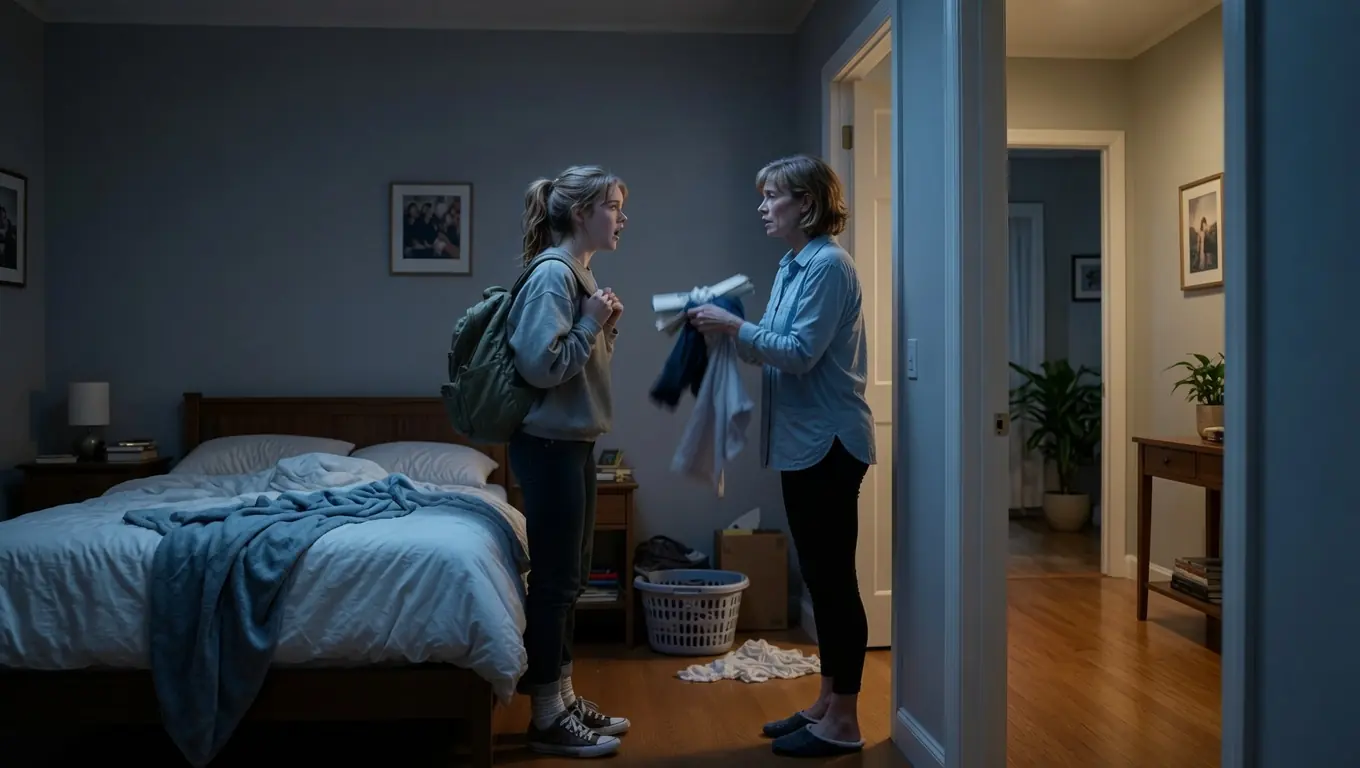
She took care of me in the technical sense. I was fed, I had clothes, I went to school, and I had a bed, but there was no softness and no warmth. She would say things like, “If your father had kept his mouth shut, I would have finished college on time,” or, “If I had been allowed to make my own decision, you would not even be here.” She did not say those things only during fights; she said them while making dinner, folding laundry, or scrolling through her phone on the couch.
From the outside, people thought we were fine. We did not look rich, but we looked stable. My grandparents loved talking about how they sacrificed to give me a good school, and my mother acted like a proud parent in public. When I brought home my first big achievement, a school competition certificate for first place, I walked into the kitchen holding it like it was a golden ticket.
“Look what I got,” I said. “I won.” My mother glanced at it, nodded, and said, “That is the minimum with the school you go to.” Then she went back to rinsing dishes.
The next Sunday at church, she told at least five people how proud she was, how hard I worked, and how she always knew I was smart. She smiled so wide it hurt to look at. On the drive home, she did not mention it once. My father existed like background noise through those years.
He had problems with substances, which is a softer way of saying the man could not keep his life together for more than a few months at a time. When I was little, he showed up maybe once a month, usually late, smelling like stale smoke and something I could not name then. He brought random toys or fast food, told stories about when he and my mother were young and wild, then left again. My mother let him in because it looked good to let him in, then complained about him nonstop after he left.
When I was around ten, I started asking to stay with him on some weekends. I wish I could say I had a good reason, but the truth is that I was desperate for any version of a parent who might actually want me around. My mother seemed relieved more than anything. Fewer days with me in the house meant fewer reminders of the life she thought she should have had.
The first weekend I spent at my father’s apartment burned itself into my brain. The place was small, stale, and smelled like smoke and something sharp that made my throat itch. Blankets blocked most of the sunlight, dishes were piled in the sink, and takeout containers sat on the coffee table. The bedroom had a mattress on the floor with no frame and a random collection of clothes in a corner pretending to be a closet.
He tried to act normal. He pointed at the television and asked what I wanted to watch, offered me snacks, and talked about some band he liked. I sat there trying to ignore the feeling that the whole place might collapse if I touched anything too hard. What made that weekend worse was the way I kept trying to talk myself into believing it was normal.
When the sink backed up with cloudy water that smelled like old food and something sour, I told myself lots of people had plumbing problems. When I opened the fridge and saw half a bottle of soda, a carton of eggs that had expired two months earlier, and a single takeout container with sauce dried on the lid, I convinced myself we just had not gone grocery shopping yet. He put a thin blanket and a flat pillow on the couch and joked that it was like camping. I laughed because I could tell he needed me to, even though my back hurt halfway through the night.
The next morning, he tried to make it better in the only way he knew how. He woke up before me, which almost never happened, and went out to get breakfast. I woke up alone on the couch with sunlight in my face and panic crawling up my spine because I thought he had disappeared again. Ten minutes later, the door opened, and he came in carrying a greasy paper bag and two drinks.
He had bought the cheapest breakfast sandwiches he could find and an orange juice he clearly could not afford. He said they had a two-for-one deal, like that explained it, and I pretended to believe him. We ate sitting on the floor because the little table was covered in unpaid bills and random junk. That meal was awful and perfect at the same time because it tasted like salt, cold bread, and someone trying, even if he was already failing in ten other ways I could not ignore.
Back home, nothing softened toward me because my father was a mess. If anything, it gave my mother new ammunition. Anytime I brought up something I wanted, even something small, she would sigh and ask if I wanted to end up like him, always begging for help and always depending on other people. She reminded me regularly that my grandparents paid for my school, my clothes, and any chance I had at a normal life.
When I hit my mid-teens, my mother started dating someone. He had a decent job, came from a family my grandparents approved of, and wore button-down shirts even on weekends. He was polite to me in that distant way where you could tell he had not signed up for a package that included a teenage daughter. My mother lit up around him in a way I had never seen.
They got married when I was around seventeen. The wedding was small, tasteful, and suffocating. There were speeches about second chances and new beginnings, and people told my mother she deserved happiness. Nobody asked what I deserved.
About two years after the wedding, my mother told me she was pregnant again. She was already a few months along when she dropped it over dinner, between bites, like she was mentioning a new show she had started watching. Her husband sat there with a proud, nervous smile while she said they had good news. When she said there was going to be a baby, I just nodded.
My stomach twisted, but not from jealousy. It felt more like watching someone start a brand-new book while I was still stuck in the middle of one no one wanted to read. Around that time, the real war with my grandparents started. They had strong opinions about how my mother should raise the new child, just like they had tried to direct everything when she had me.
The difference now was that my mother had a husband and a sense of herself she had not had when she was twenty. She pushed back and told them she would raise the baby the way she wanted. They did not take that well. Finally, my grandparents did what they had been threatening my whole life: they cut her off.
Cutting her off meant cutting me off too because all the money they sent every month was technically for the child, and that child had always been me. They stopped paying the school directly, stopped sending the monthly transfer for my clothes and food, and told my mother that if she wanted to make her own decisions, she could pay her own bills. They did not call me separately to explain or comfort me. In their minds, I was leverage, not a person.
By the time my nineteenth birthday came around, my mother was deep into the pregnancy with my baby sister. We had a small birthday dinner at home because there was no extra money for anything beyond basic bills and baby supplies. Her husband kept saying the big break was coming, and they were already floating things on credit while pretending it was not panic. I cut my own cake and wondered if maybe, when the baby came, things would be different.
My sister arrived a week later, small and loud and completely innocent in a situation that was already toxic. The whole apartment shifted around her. My mother was suddenly affectionate, obsessed, and glowing in a way I had never seen. She took pictures constantly and talked to the baby in soft voices I would have sold my soul to hear when I was little.
I helped because I did not know what else to do. I changed diapers, warmed bottles, and walked the baby at three in the morning so my mother could sleep for an hour. I thought maybe this was the way in, the way to finally be part of a family instead of orbiting the edges. Two weeks after the baby came home, my mother and her husband sat me down in the living room for a serious talk.
I should have known nothing good ever starts with, “We need to talk.” They waited until after dinner, when the dishes were done and the baby was finally sleeping. My mother sat on the edge of the armchair with her hands on her knees, and her husband sat next to her. I sat on the couch opposite them, already feeling like I was on trial without knowing the charges.
My mother started with, “You know we love you,” which hit my ears like a warning siren. Then she said they had signed up for an au pair program, a living nanny from another country. She said it like it was some smart solution, cheaper than daycare, like paperwork could magically turn debt into stability. The nanny would help with the baby so my mother and her husband could focus on his business.
The nanny, according to the program rules, needed her own bedroom. Our place had three bedrooms. My mother and her husband had the main bedroom, the baby had the small room that used to be the guest room, and I had the last one. Her husband leaned forward and said, “You are an adult now. You are working. You are capable, and we think it is time for you to start your own life.”
It took a second for my brain to connect the dots. When it did, I felt physically cold. I asked where they expected me to go. My mother shrugged like we were discussing where to put a piece of furniture and said, “You can rent a room somewhere. That is what adults do.”
I brought up college and how I had put it off because there was no money and she had promised we would figure it out. She laughed, not kindly, but the way you laugh at a bad joke. “I have done my time,” she said. “I carried you. I raised you. I fed you. If it had been up to me, you would not even be here, remember? I finally have the child I chose, and I am not going to sacrifice her future because you are too scared to grow up.”
Her husband did not say a word in my defense. He did not propose alternatives. He just sat there, nodding occasionally, his eyes drifting toward the television like he had somewhere better to be. The only time he spoke directly to me was to remind me in a mild voice to leave my house key on the kitchen counter when I left.
Then my mother went into my room and made the decision real. She opened my closet, pulled my clothes from the hangers, and threw them onto the hallway floor as if they were not attached to a life. My books came next, then my shoes, then the little stack of personal things I had kept on my desk because I had nowhere else to put my memories. The room that had never truly felt like mine became empty in front of me.
I wish I could tell you I stayed calm and handled it gracefully. I did not. I cracked wide open and told my mother she was cruel, that she had never wanted me, and that she was proving it again. I told her that one day my sister would grow up and see exactly who she really was.
She rolled her eyes and told me not to be dramatic. She said I was not the victim, and people moved out at my age all the time. She made it sound like I was throwing a tantrum over rent instead of being discarded to make space for a stranger. I packed while I was still shaking.
I grabbed clothes, my small stack of books, and a few personal things I could not imagine leaving behind. I stood in my doorway for one second, looking at the room that had never truly felt like mine but had still been the only thing standing between me and homelessness. Then I shut off the light and walked out. Nobody followed me, and nobody asked where I was going.
The baby cried in the nursery as I closed the front door. I left my key on the counter like I was supposed to. The only place I could go was my father’s apartment. It was either that or a shelter, and as bad as things were with him, sleeping on his couch still felt safer than the unknown.
I took a bus across town, holding my bag so tightly my fingers went numb. When my father opened the door, he looked worse than the last time I had seen him. His eyes were bloodshot, his hands shook, and he had that restless energy that comes right before another bad decision. He blinked at me like he could not process what he was seeing.
Then he smiled, this lopsided smile, and said, “Hey, kid,” like I had just stopped by for a casual visit. The mix of anger and relief that hit me in that moment was almost nauseating. I walked past him into the apartment, which somehow looked even more chaotic than before. Empty cans, clothes on the floor, and something spilled and dried on the coffee table greeted me like old warnings.
He asked what was going on, and I started talking before I could lose my nerve. I told him I had nowhere else to go, that I was staying, and that he needed to get his act together because I could not build a life on quicksand anymore. He chuckled at first and reached for the cigarette in his hand. That sound snapped something in me.
I grabbed the cigarette, walked to the sink, and put it out under the faucet. When he reached for the pack to get another one, I slapped his hand hard. The sound shocked both of us. His face darkened with embarrassment and anger, and he muttered a curse before stumbling into the bedroom and slamming the door in my face.
I spent that first night on the couch fully dressed, shoes still on, staring at the ceiling. A crack near the light fixture looked like a crooked line, and I followed it with my eyes over and over until they burned. My bag sat on the floor beside me like a reminder that this was it. This was home now.
The next morning, he looked more human. Still tired and still older than he should have looked, but calmer. He sat on the edge of the armchair and asked if I had really meant it when I said I was staying. I told him everything that had happened at my mother’s place.
Every word, every shrug, every casual rejection came out of me. His jaw tightened, and his eyes got shiny in a way I had never seen. He tried calling my mother, but she did not answer. He tried calling my grandparents, and my grandmother picked up long enough to say, “This is not our problem anymore,” before hanging up.
That was the moment it became real that there was no safety net left. No grandparents waiting in the wings, no mother who would calm down and call back, just me, my father, and an apartment that smelled like stale smoke and failed promises. We made a plan that morning because that is what people do when everything is falling apart and they need to feel like they have control. I would keep working at my boring job, he would get sober for real this time and find steady work, and we would split the bills.
Reality did not care about our plan. The next months were some of the hardest of my life. My father tried, and I will give him that. He went to a few support group meetings because I pushed him, applied for jobs, printed resumes, and went to interviews.
Sometimes he came back hopeful, sometimes he came back crushed, and sometimes he did not come back at all until late at night, smelling like every bad decision he had ever made. We got our power shut off once because he used the bill money for something else. We got a notice on the door threatening eviction. I started sleeping with my wallet under my pillow after I woke up to find him standing over my bag, fingers already on the envelope with the rent money.
The night I caught him like that split my life into before and after. I had just come out of the shower, hair wrapped in a towel, thinking about whether I could make noodles without using too much water because the bill was already late. He was crouched on the floor by the couch with my bag tipped over, my wallet open, and his fingers on the envelope of rent money. For a second, he froze like a child caught with his hand in a cookie jar.
He started babbling about making sure I had put it somewhere safe, that he was checking, that he was helping. His face was flushed, his eyes were glassy, and he could not quite look directly at me. I stepped forward, took the envelope out of his hand, and said, “Do not do this to me. Not this. Not you.” He tried to laugh it off, but something inside me hardened in a way that scared me almost as much as what he had done.
Two days later, the power company finally followed through on the bright orange notice they had slapped on our door. The lights went out in the middle of the evening. The television clicked off, and the cheap fan that moved warm air around the living room stopped with a little dying sound. My father was not home.
I sat on the couch for ten minutes, listening to other people’s air conditioners humming through the walls. Then I lit the one candle I had been saving for emergencies. I charged my phone at work the next day and pretended the outage was temporary whenever anyone asked. At home, I showered in cold water and used my phone flashlight to find clothes in the dresser.
That was the week I stopped thinking of myself as a daughter who happened to be helping and started accepting that I was the adult keeping both of us barely above water. I got used to performing normal at work. I smiled, answered phones, sorted invoices, and made small talk in the break room. One afternoon, a coworker looked at me and said, “You look like you have not slept in a week. Do you have kids or something?”
I laughed it off and said, “No, just family stuff.” She shook her head and said I had the vibe of someone from one of those families where there was always some mess happening. She meant it as a joke, but it landed like a diagnosis. Eventually, my father did land a job.
He was hired as a supervisor at a distribution center, the kind of place where the work is hard and the pay is average, but they do not dig too deeply into your past as long as you show up on time. Around the same time, my boss offered me a promotion to a better position handling accounts. The raise was not huge, but when you are counting every dollar, even a little feels like moving a mountain. For the first time, we could pay rent and utilities more or less on time.
Stability did not magically cure anything between us, but it changed the temperature in the apartment. My father still had cravings, and he slipped sometimes. I still hid cash in strange places. But he started taking recovery more seriously, went to meetings without me nagging, and talked to people who understood what it meant to destroy your own life and then try to rebuild it.
We started having real conversations that were not only about bills or disaster control. He told me stories from work, stupid jokes his coworkers made, and annoying customer stories. One time he came home laughing because a customer tried to return a hammer after using it to build an entire deck, claiming it was defective. We started leaving ridiculous notes on the fridge, competing to see who could make the other laugh first.
Out of nowhere, a childhood friend reached out on social media. We had been close in middle school before her family moved away, and after surface-level updates, she asked how things were really going. I told her a version that was honest but not graphic. She told me her father was expanding his office supply business and needed someone organized and stubborn enough to help run a new location.
My first instinct was to say no because it felt like charity. She replied almost immediately, “This is not a handout. This is me offering you a job because I know you show up.” She reminded me that I had always been the one keeping track of deadlines for group projects. She said, “Let me put in a word. You still have to show up and do the work.”
The interview was more of a conversation than a formal thing. Her father asked about my experience, why I wanted to leave my current job, and what I was looking for. I did not give him the full memoir, but I did not sugarcoat my situation either. Somehow, the honesty did not scare him off.
He offered me the job. The pay was better, there was room to grow, and he asked almost as an afterthought if I knew anyone reliable who could handle warehouse work. I thought of my father, hesitated, and then said his name. My father nearly panicked when I told him.
He asked if I was sure and worried they would find out about his past and regret hiring him. I told him this was his chance to prove he was not the sum of his worst days. He went through the interview process, told the truth when they asked about gaps in his history, and somehow they hired him. We both gave notice at our old jobs, held our breath, and stepped into something new.
We moved into a slightly nicer apartment in a safer neighborhood so we could be closer to the new jobs. For the first time, I had a bedroom that did not feel temporary. I painted the walls a color I liked, bought a thrift store dresser and a secondhand desk, and cried the night everything was put together. It was the first space in my life that felt like it belonged to me and only me.
The first night in that new apartment did not feel like a perfect fresh start. The walls were bare, the carpet smelled vaguely like the last tenants’ cooking, and our furniture looked too small and tired for the space. We ate fast food on top of a cardboard box because the table was still in pieces. My father kept opening and closing cabinets like he could not believe we had more than one.
After we finished eating, he held up one of the plastic cups and said, “We will get real glasses when your first paycheck hits,” like it was some big, fancy plan. I laughed harder than the joke deserved because it was the first time in a long time that the future did not feel like a black hole. Later, when he went to bed, I sat on the floor in my half-unpacked room with old photos spread around me. I needed proof that my life had actually happened, that I had been a child once and not just a permanent inconvenience moving from one tense living room to another.
Years went by. Not a lifetime, but enough time for the rawness of those earlier years to scab over. I did well at work, my boss trusted me, and I got small raises and more responsibility. My father stayed with the job, showed up, and earned a reputation as the man who would cover a shift if someone else called out.
Through all of that, my relationship with my mother and her side of the family stayed exactly the same: nonexistent. No calls, no texts, no birthday cards that got lost in the mail. If I wanted to, I could have convinced myself they had all simply evaporated. Then one random weekday afternoon, my phone rang with a number I did not recognize.
I almost let it go to voicemail, but something in my gut told me to pick up. I said hello, and after a pause, I heard my mother’s voice for the first time in years. It is ridiculous how a voice can drag you right back into being a scared child. My hand started shaking.
She did not start with “I am sorry.” Of course she did not. She started with, “I know it has been a while,” and then, “We are in trouble.” She told me she had left her stable job years earlier to help her husband with a new venture, and they had taken out loans, put expenses on credit cards, and poured everything into it.
It failed slowly and then all at once. They were behind on payments, had sold the house, the nicer car, and jewelry, and were living in a small rental while still drowning. She said she had heard from relatives that I was doing well, that I had a good job, and that I lived in a nice place. She sounded half impressed and half offended when she said it.
Then she got to the point. She needed my help, not advice, not emotional support, but money. She told me specific debts had deadlines looming, and if they did not pay, they risked losing their home. Then she mentioned my sister, saying she was old enough to understand what was going on and was terrified.
Of course, my sister did not deserve any of it. The question was whether I was supposed to be the answer. I told my mother I needed time to think. She agreed, but she sounded more relieved than emotional, like she had just secured a loan extension.
Over the next few days, my phone became a constant reminder of that conversation. She texted lists of numbers I did not ask for, amounts, due dates, and warnings that they could not stall the bank forever. Part of me waited for an apology, just one acknowledgment that what she had done to me was wrong. I thought that if she could admit even once that kicking me out the way she did was cruel, maybe I could help in some limited way.
Every time we talked, I tried to steer the conversation gently in that direction. Every time, she dodged. When I brought up the night she told me to leave my key on the counter, she sighed and said, “You were an adult. You would have moved out eventually. Stop acting like I threw you to the wolves.”
On our second long call about the money, she said the quiet part out loud. She told me my grandparents had sacrificed for me, paid for my school, my clothes, and my food, and that I had benefited from all of it. She asked if I thought that just disappeared. In her mind, my entire childhood had been a loan, and the interest was due.
I asked if she felt any regret about how she had spoken to me growing up. I did not yell. I asked as calmly as I could. There was a small pause, just long enough for me to hope she might say something real for once.
Then she laughed, not a full laugh, just that dry sound she made when she thought someone was ridiculous. She said, “I did what I had to do. Life is not easy. You think I had the luxury of worrying about your feelings?” I told her that having a roof and food did not cancel out being told I ruined her life every time she was in a bad mood.
She said I was almost thirty and asked if I was really still stuck on this. She told me she had real problems now and needed money, not a therapy session about my teenage angst. Then she said the thing that truly got me. “Do you have any idea what I sacrificed to keep you? People told me to get rid of you, and I did not. You should be grateful every day you are even alive to complain.”
She said it like she was listing items on a receipt, like my whole existence was a bill she never finished paying. I told her that if she wanted credit for not ending the pregnancy, she should take that up with the people who pressured her, not with me. She went quiet for a second, then said, “If I was such a monster, why are you even talking to me? Just hang up.” But she did not hang up, and neither did I.
Something inside me snapped. All the years I had spent rehearsing conversations in my head crashed into that one moment. I told her I remembered every time she called me a mistake, every time she used me as a joke, and every time she made sure I knew I was the consequence and not the child. She tried to cut in, but I talked right over her.
I told her about ninth grade, when I came home excited about an award and she said, “Do not let it go to your head. It does not change who you are.” I told her about the night she told me to leave my key on the counter like I was returning something she never ordered. I told her about the way she smiled for church people and went silent the second the front door closed. When she told me to lower my voice because my sister might hear, I said maybe she should.
She called me cruel, ungrateful, dramatic, and accused me of loving to play the victim. I told her that if telling the truth made me the villain in her story, I could live with that. By the time I finished, my throat hurt and my hand was shaking. All she could say was, “You are being cruel. I only called because I needed help.”
“Exactly,” I said. “You never call unless you need something.” For the first time in my life, I let the silence after my words sit there instead of rushing to fill it and make her feel better. When I hung up, my hands were shaking. My father stood in the doorway, watching me like he had just seen a car crash.
That night, I did something I know is controversial. I opened a blank post on a social media app, stared at the empty box, and started typing like my hands were trying to outrun my second thoughts. I wrote about being told I ruined her life before I was old enough to spell the word ruin. I wrote about being introduced as the consequence, the lesson, and the warning instead of the daughter.
I wrote about trophies shoved into drawers, birthdays that felt like obligations, and the night I was told to leave my key on the counter so the au pair could have my room. I wrote about sleeping on a sagging couch at my father’s place while he shook on the other side of a thin wall, trying to recover without a plan because it still felt less painful than staying where I was not wanted. I did not use my mother’s name or my grandparents’ names, but I did not soften anything. I was done editing myself to protect the people who had never protected me.
The responses came faster than I expected. At first, there were only a couple of likes from people I barely talked to anymore and one comment from an old coworker saying, “I had no idea.” Then my cousin shared it and added, “This is our family,” like some kind of warning label. After that, it took off inside the small circle of people who knew us.
Some people were supportive, and others said there were always two sides. A woman who used to sit behind us at church wrote that she had always wondered why I seemed so quiet and tense. Old classmates sent messages saying they always knew something was off in my house but could never put a finger on it. A few relatives accused me of airing dirty laundry, as if the years of mud my mother had flung at me behind closed doors had kept us clean until then.
The weirdest part was seeing my mother respond without responding. She did not comment on my post. Instead, she made her own vague status about betrayal and how some people twist sacrifices into abuse because they cannot handle the truth. Half her friends rushed to comfort her, telling her she was strong and had done her best.
I attached screenshots of a few of her recent texts with her number blurred but the words clear. The ones where she said I owed her. The ones where she tried to hang my sister’s fear around my neck. I stared at that post for a long time, thought about the little version of me standing in a kitchen with a certificate in her hand, and hit share.
My phone lit up almost immediately. People commented, messaged, and reacted with icons that felt too small for what I had thrown into the world. Strangers told their own stories about being the scapegoat child, the unwanted one, the kid who got the leftovers of everyone’s patience. Reading them felt like standing in a crowded room where nobody was pretending everything was fine.
My father saw the post later that evening. He sat with his reading glasses, slowly scrolling, his mouth a thin line. When he looked up, he said, “I am not going to lie. Seeing all of that written out makes my stomach twist. Not because it is wrong, but because it is true.” He asked if I was sure I wanted to deal with whatever came next.
For about a week, my mother stayed quiet. I know she saw it because people told me she had called them sobbing, saying I had betrayed her. Then two weeks later, my phone rang again with a number I did not know. It was her, and she did not bother pretending everything was fine.
She said I had dragged her name through the mud, that people at church were whispering, and that neighbors were looking at her differently. She said I had twisted things to make myself look like a victim and her look like a monster. I asked which parts of what I had written were not true. She paused, then said, “That is not the point. The point is, you did not have to say it.”
Then she told me she regretted ever having me. She had said versions of that before when I was a child, always with a half-joking tone, but this time there was nothing playful about it. She said, “I should have walked away when I had the chance. You have done nothing but bring misery into my life.” The words landed, but they did not break me like they would have in the past.
I told her I regretted her too. I told her I would rather have grown up alone than with a mother who made me feel like a punishment. She tried one last time to use my sister as a weapon, saying my sister was being embarrassed at school because other kids’ parents had seen my post. She blamed all of that on me, as if my words had created the behavior instead of exposing it.
I told her I did not control what other people did with the truth. I told her I hoped my sister would one day understand that the mess she was living in existed long before I wrote anything. We ended the call with her saying she never wanted to hear from me again and me telling her I believed her. She blocked my number, and I blocked hers.
A month later, after the storm mostly passed, I quietly deleted the post, not because I regretted it, but because I had already gotten what I needed. My story had been told. People had seen the other side. I did not need to keep the wound open forever.
Life went back to its new version of normal. I still went to work, still came home to the apartment I shared with my father, and we still ate dinner in front of the television more nights than not. But something in me had shifted. I felt less haunted by the idea that I was supposed to fix everything, prove something, or save someone.
Sometimes my sister emails me from an account she set up herself using the old family computer after everyone is asleep. She tells me about school and friends and how our mother gets mad if she spends too long in the shower. I answer when I can and tell her I love her even from far away. I do not talk badly about our mother to her because I do not need to.
Last month, she asked if she could call me instead of just emailing. We talked for an hour about nothing important: school, friends, and a show she was watching. When we hung up, I realized we sounded like sisters who actually knew each other, and that felt like enough for now. I do not know where it goes, but at least it is going somewhere.
Most days, my life would sound boring to someone who loves chaos. I work, pay bills, meet friends for coffee, listen to music while I clean, and make grocery lists. I argue with my father about whose turn it is to take out the trash. We laugh about small things, sit in comfortable silence, and sometimes talk about the past in a way that feels less like ripping off a bandage and more like comparing scars.
There are nights when my brain replays everything and asks if I went too far. Did I need to post that story? Could I have handled it more quietly? Maybe, but the quieter version would have left me carrying all the weight alone.
Writing it down and letting other people see it forced me to admit to myself that it was real and that it was as bad as it felt. It was not a nightmare I exaggerated. It was my life. I do not have some neat closure to offer.
My mother did not suddenly see the light and come back with apologies. My grandparents did not reach out with regrets. My sister and I are figuring out our relationship in the shadow of everything that happened before she was old enough to remember. My father and I keep moving forward one ordinary day at a time.
I am not healed, but I am not drowning either. If there is any point to all of this, it is that sometimes choosing yourself looks ugly from the outside. Sometimes it looks like the wrong person is walking away. People are still free to think I am the villain in my mother’s story, and they probably always will.
In my own story, I am just a woman who finally stopped begging to be loved by someone who never wanted the job. I learned to build a life with the imperfect, inconvenient love that actually showed up. I learned that being unwanted by one person does not make you unworthy of everyone else. And I learned that the room they threw me out of was never the whole house of my life.