The second time Clay Rusk rode into Martha Bell's pasture with a rifle, he came close enough to the house that her youngest boy could see him through the kitchen window. He did not ask permission to enter. He did not trouble himself to close the gate behind his horse. He simply took his time riding past the windmill, selected the gentle Jersey cow standing beside the creek, and called for the widow to come outside. Martha was carrying a pan of bread dough when she heard him. The sound of his voice made her put the pan down without thinking.
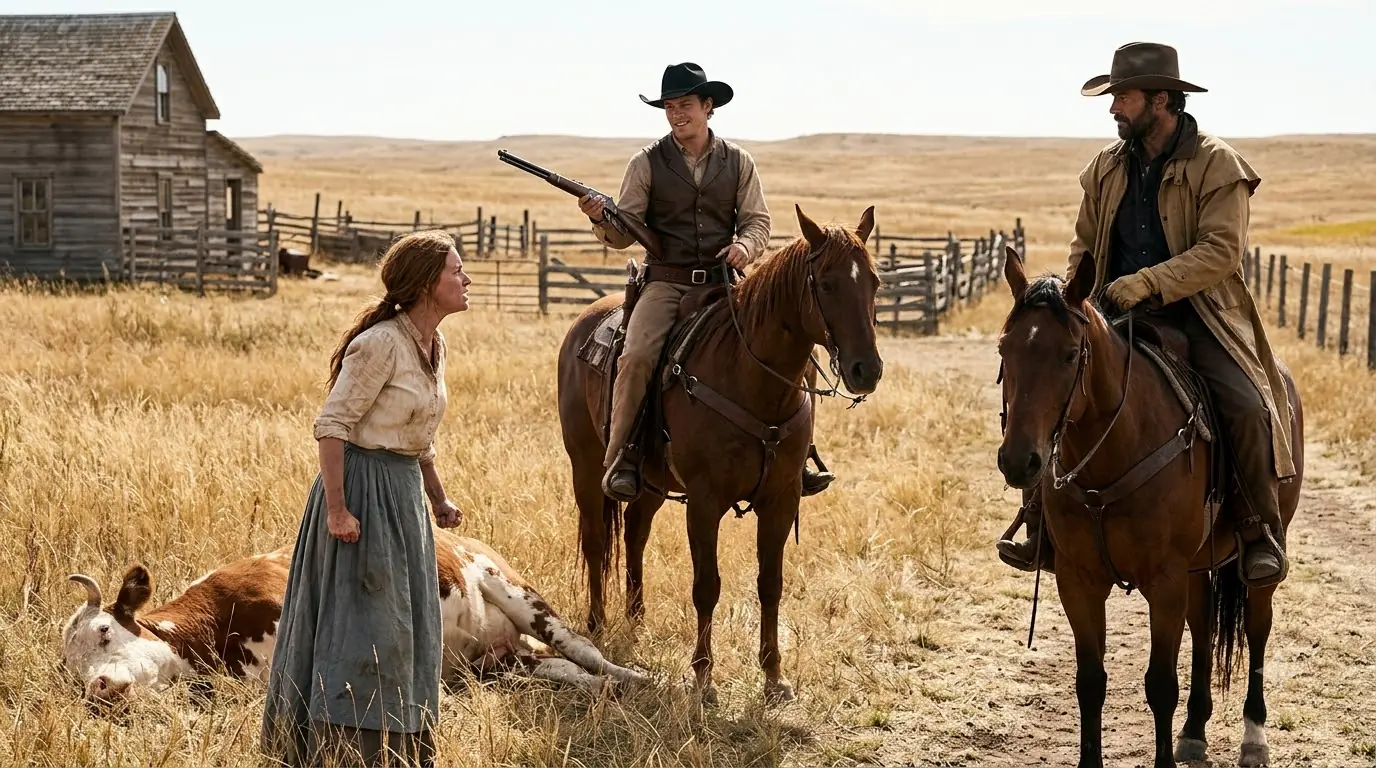
Clay was twenty-six, handsome in the way a man can be handsome before the world has asked him to answer for anything, with a narrow black mustache and a new saddle bought with money he had never earned. His father's brand was burned into the leather. He wore his revolver openly and held his rifle across the saddle as if there were nothing unusual about either weapon. The cow raised her head from the grass when he rode close. She wore a worn bell around her neck because Martha's oldest daughter had always been afraid of losing her among the cottonwoods.
"End of the month," Clay called. "That is all my father is giving you now. Your papers signed, your wagons loaded, and your family off his range." Martha stood on the porch with thirteen-year-old Anna on one side and eight-year-old Will on the other. Her middle child, Daniel, stood just inside the door, holding the small wooden horse his grandfather had carved for him. Martha said the same thing she had told Clay on four previous visits: the homestead belonged to her family, and she was not selling it. Clay's smile disappeared, but his horse continued to walk forward.
"The trouble with you, Mrs. Bell, is that you think saying a thing makes it so." He turned his rifle toward the cow. Martha shouted, and Anna caught her mother's sleeve. The report rolled across the pasture, scattering blackbirds from the fence posts. The cow stumbled and fell near the creek, still for a moment before her legs jerked in the grass. Will began screaming. Clay did not look at the children. He merely lowered the rifle and repeated his father's deadline.
A stranger was riding the county road beyond the fence. He had been traveling north since morning on a lean bay gelding, his coat powdered with road dust and his hat bent out of shape by weather. He stopped at the shot. He watched the cow fall, watched the children on the porch, and then let his eyes settle on the young man in the expensive saddle. His voice was quiet enough that Clay had to turn his horse to hear it. "Did that animal ever do you harm?" he asked.