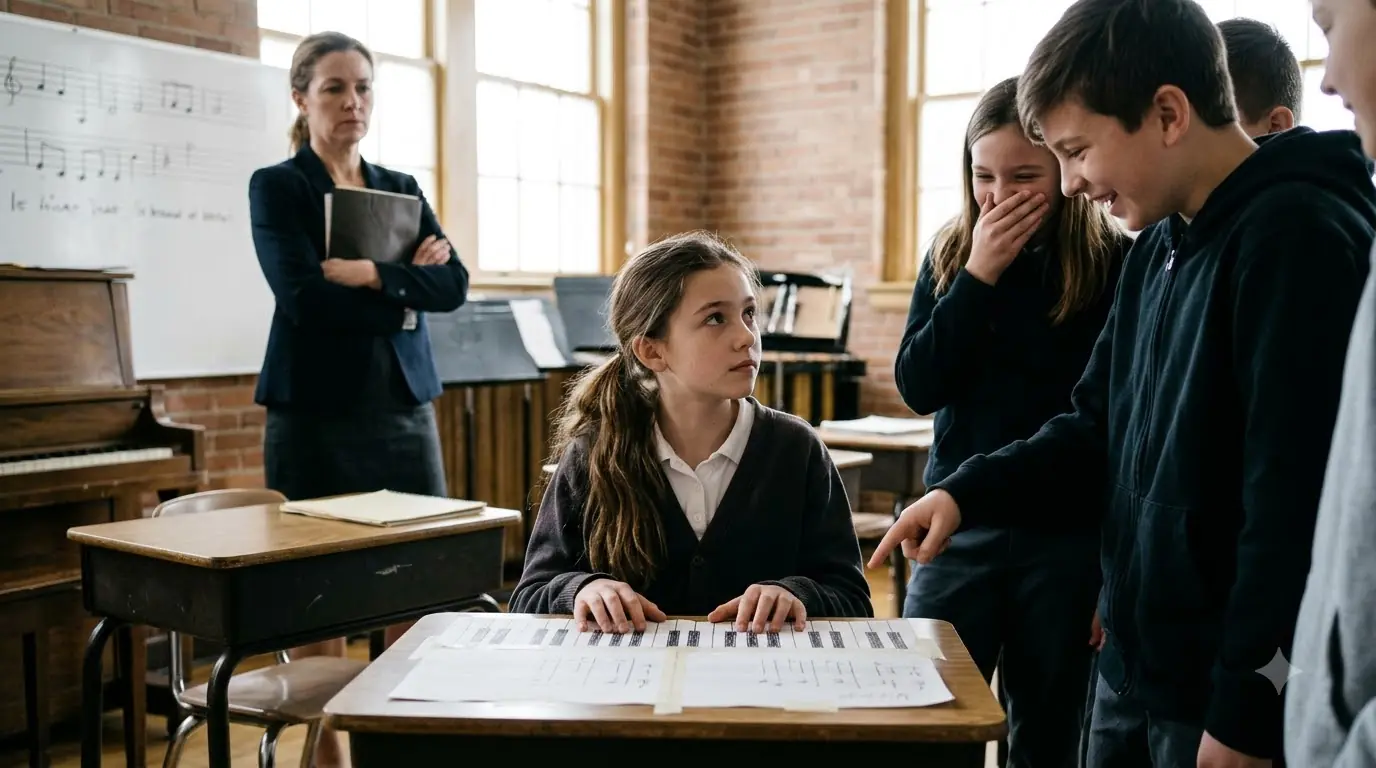
The first piano Nora Bellamy ever played did not make a sound. She had drawn it across the back of a discarded grocery calendar, carefully measuring the white keys with a ruler borrowed from school and shading the black keys with the stub of a carpenter's pencil. The paper lay across the narrow kitchen table in her family's rented house, between a bowl of dried beans and a stack of bills her mother had turned facedown. Every evening Nora sat before it and moved her fingers in silence, listening to music that existed nowhere but in her head. At twelve years old, she had already learned that a thing could be perfectly real to you and still be invisible to everybody else.
The first time she heard a real piano, rain was running down the windows of Maple Glen's old community hall. Nora had been walking home from school with her backpack tucked beneath her coat, trying to keep her library books dry. She would have passed the building without looking if a long, low chord had not escaped through the partly open doors. It was followed by a melody that seemed to rise, hesitate, and finally find its way home. She stopped in the rain, her wet shoes planted in a puddle, and listened until the last note disappeared.
Maple Glen sat among the wooded hills of western Pennsylvania, an old mill town whose brick storefronts looked more prosperous from a distance than they did up close. Its church bells still marked the hours, and the families who had owned the houses overlooking the river still spoke as though they owned the town itself. The textile mill had closed before Nora was born, leaving empty warehouses, a row of boarded windows, and hundreds of people who drove thirty miles for work. Her mother, Elise, cleaned houses in two neighboring communities and took laundry home when there was extra work. Nora's grandmother, Ruth, had spent most of her life in that mill, and the cough it left her with made cold mornings difficult.
They lived in a two-bedroom house where the porch dipped at one corner and the kitchen faucet had to be turned a little past closed to stop dripping. The rent was low because the landlord had long ago stopped improving anything. Elise slept in the smaller bedroom, Ruth in the larger one, and Nora on a narrow daybed behind a curtain off the dining room. Nobody called their circumstances comfortable, but the kitchen was warm in winter and somebody always knew when somebody else came home late. Nora had not imagined wanting much beyond that until the afternoon she heard the piano.
She returned to the community hall the next Tuesday and waited beneath the awning. The music started at four, just as it had the week before, and this time she recognized the shape of a repeating phrase. She tried to count the beats, lost them, and began again. A man in a brown coat arrived to lock the side door and found her standing there, eyes closed, one hand moving through the air. He asked whether she was waiting for someone, and Nora said no, she was listening. He gave her an odd look but left the door open a crack.