The first time Nathan Mercer heard the press make that sound, he thought of a drawer closing on a child's fingers. It was a sharp, double knock beneath the ordinary thunder of the stamping line, followed by a metallic scrape that traveled through the concrete floor into his work boots. The men around him hardly looked up. They had heard it so often that the noise had become part of the factory's morning, like the bell, the air compressors, and the announcements reminding everyone how many parts remained to be shipped before Friday.
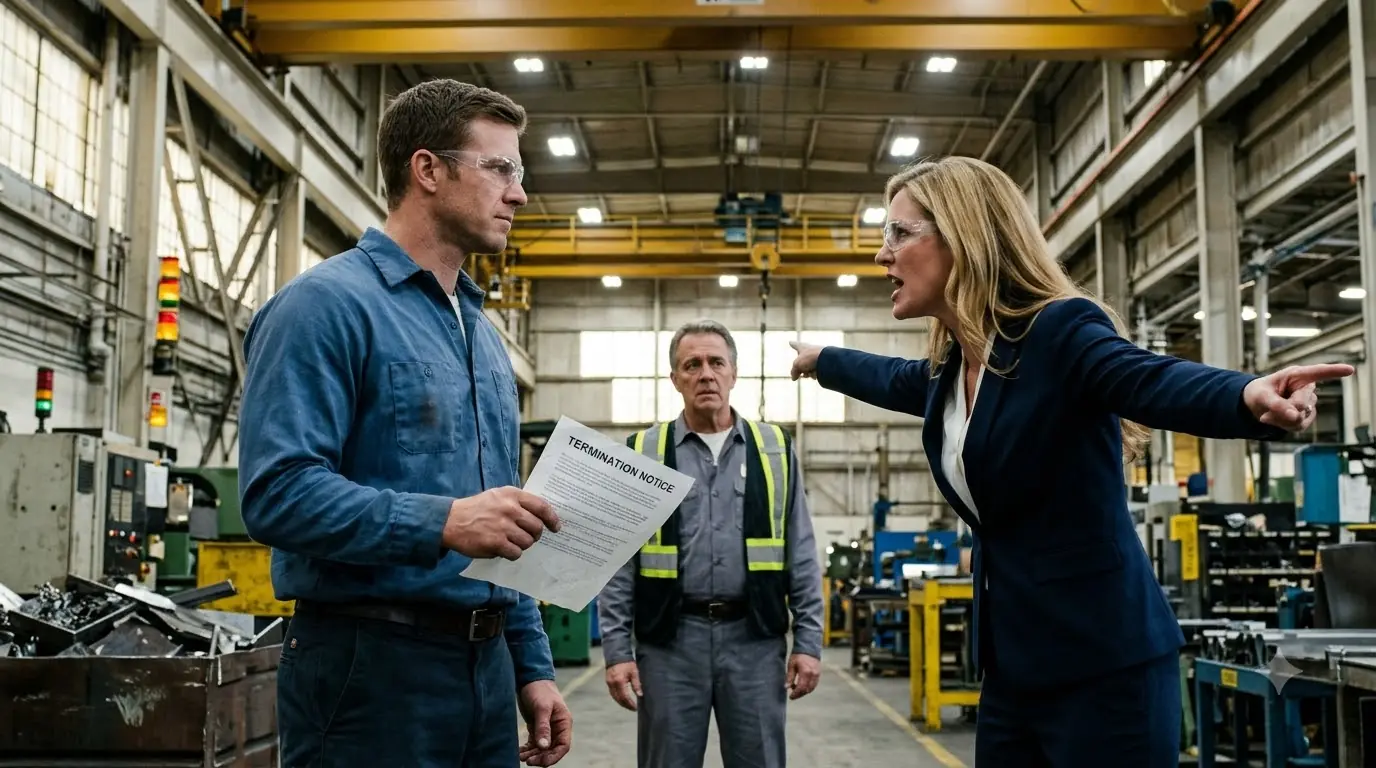
Nathan had been employed at Lakeview Components for three hours and seventeen minutes. By lunch, he would be unemployed again. He did not know either of those things as he stood beside Press Seven with a new orange safety vest over his work shirt and a pencil tucked behind his ear. What he knew was that a machine designed to protect its operator should not lurch forward after the guard was opened. He had repaired enough equipment over the years to recognize a warning when he heard one, and the sound from the press was a warning no experienced mechanic could mistake.
"Does that happen every cycle?" he asked.
The woman beside him did not answer immediately. She was arranging finished brackets in a steel bin, her movements quick and economical, and her name badge read MARLA SUTTON. There were faint burn marks on one sleeve of her shirt and an old scar on the back of her right hand. When the press cycled again, she glanced at the control cabinet as if it might be listening. "Sometimes," she said. "Not when anybody from upstairs is standing here. Funny how that works."
Nathan watched the light curtain, a row of sensors intended to stop the press when something interrupted the working area. The display blinked an error code, cleared itself, and went green without anyone touching it. A temporary jumper wire was visible behind the loose edge of the cabinet door. Perhaps it was part of an approved diagnostic setup, but no one had tagged it, and the daily inspection sheet on the clipboard beside the line was marked satisfactory. "Who's responsible for maintenance?" he asked.
"A man named Pete Wilcox, if they haven't worked him into the ground." Marla tightened her gloves. "And you should lower your voice."
He looked at her, surprised. "I'm not accusing anybody."
"That isn't what matters here."
A forklift sounded its horn at the intersection between the shipping area and the line. Beyond it the building extended almost a quarter mile, a landscape of orange safety railings, overhead cranes, flashing indicators, and people making a living between pieces of machinery that could hurt them in less than a second. Lakeview had once been called a miracle for the county. It built brackets, housings, and precision assemblies for agricultural equipment, delivery trucks, and industrial refrigeration systems, and its name appeared on the side of the high school scoreboard beside a promise about investing in local futures. Outside the fence, a visitor might have seen only steady work and prosperity. Inside, Nathan could feel the difference between a busy plant and a frightened one.