The first thing the men noticed was the fence. There were two hundred and eighty steel posts standing in lines that made no sense to anyone driving past the Whitaker farm, and between them ran temporary electric wire, white tape, and narrow lanes of fresh grass. The last corn had come off that ground six weeks earlier. Now a young woman was dividing a perfectly ordinary Iowa field into paddocks barely bigger than a suburban yard. On a gray March morning, with mud on her knees and a measuring reel hooked to her belt, she was preparing to turn fifty-six acres of exhausted row-crop ground into something her neighbors were already calling a very expensive mistake.
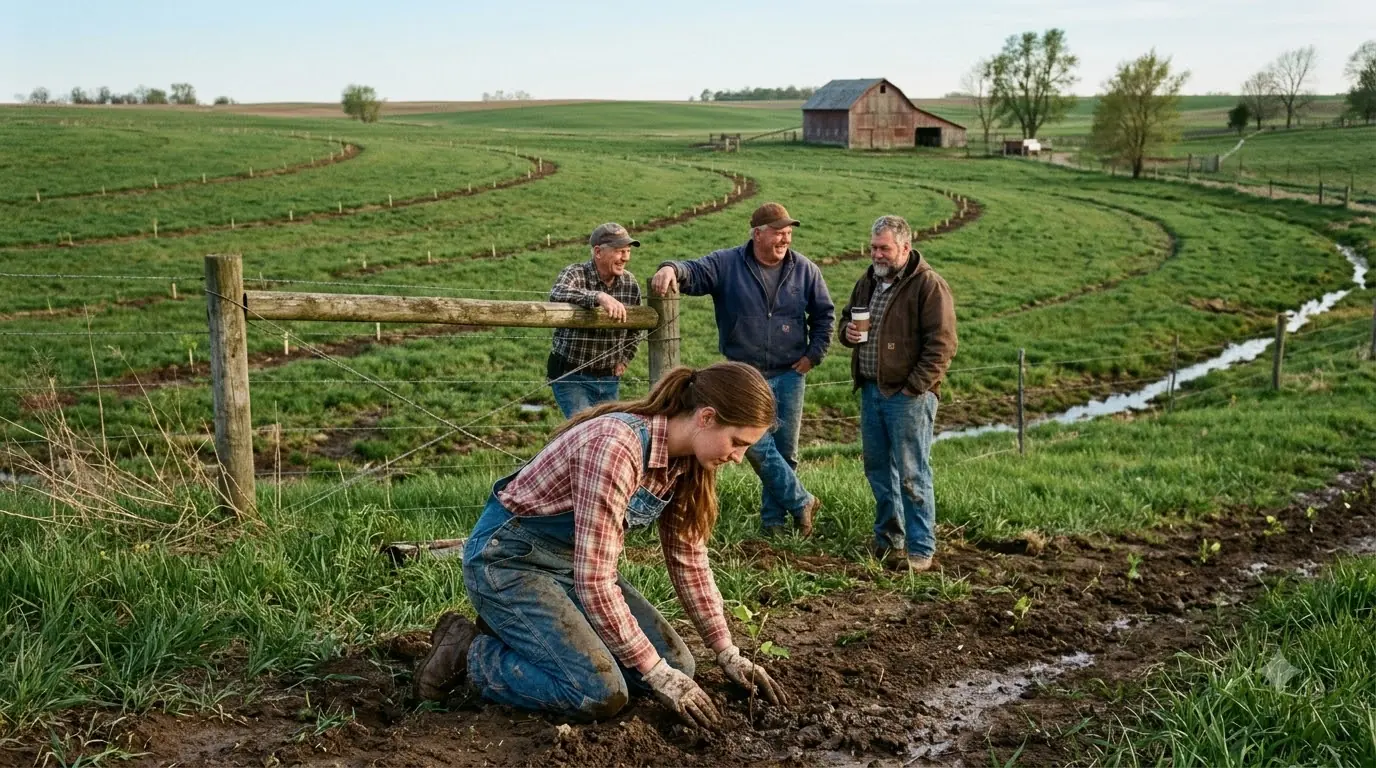
Everett Kline pulled his pickup onto the shoulder and watched for a minute before rolling down his window. He was sixty-three, a broad, weathered man who owned fifteen hundred acres on both sides of County Road F-17. Beside him sat his hired manager, Dale Pritchard, a former auctioneer who had opinions about everything from fertilizer prices to how other people raised their children. Everett waited until the woman lifted a third post from the back of her trailer. Then he called, "Maggie, please tell me those are temporary."
Margaret Whitaker drove the steel point into the soft ground with a hand-held post driver and looked up. At twenty-eight, she had been running the little farm alone for exactly eleven months. Her hair was the color of wheat straw, except in summer when the sun bleached it almost white, and she had the kind of freckles that never entirely faded in winter. She wore a navy work coat with a torn cuff, faded jeans, and boots heavy with clay. A cheap digital watch was strapped over her sleeve, where she could see it without taking off her gloves.
"They're supposed to be movable," she said. "That's the idea."
Dale leaned forward across Everett. "I counted thirty-eight separate little boxes from the road yesterday. Looks like you're building a prison for very small criminals."
"Forty-two paddocks when I'm done," Maggie replied. "And the criminals will be sheep."
Everett stared. "Sheep?"
"Hair sheep. No shearing, provided the breed and management work out. They graze forage, which is something the farm has plenty of when it isn't being sprayed or plowed." She nodded toward the pale hillside beyond the fence. "I need a way to keep living roots in that ground while I rebuild it."
Dale laughed. "You going to sell lamb chops to pay off a soybean mortgage?"
Maggie stopped working. "My financial plan is between me and my lender."
Everett's smile vanished at the word lender. He had been close to her father, or at least close enough to lend him a planter in a wet spring and argue with him the rest of the year. Everett knew how much the property owed because rural creditors talked and because he had made an offer on it twice. The offer was still sitting unanswered on Maggie's kitchen table. "I'm not your enemy," he said. "I can give you cash for that hillside. You can keep the house and a few acres. You'd have a way forward."