For several weeks, she and Jamie mostly avoided each other. Then one afternoon Carolyn walked past while Jamie was tightening a loose screw on the buddy bench. She stopped. “That one actually loose?” she asked. Jamie tested it again. “A little.”
Carolyn nodded. “Good that you checked.” Jamie waited for criticism that did not come. After a second, she continued walking. It was not redemption, and Jamie did not need it to be. Adults, he was learning, did not always change because someone proved them wrong. Sometimes they changed one inch at a time, and sometimes they did not. The important part was that children no longer had to depend on Carolyn’s private judgment to know whether they belonged at the playground.
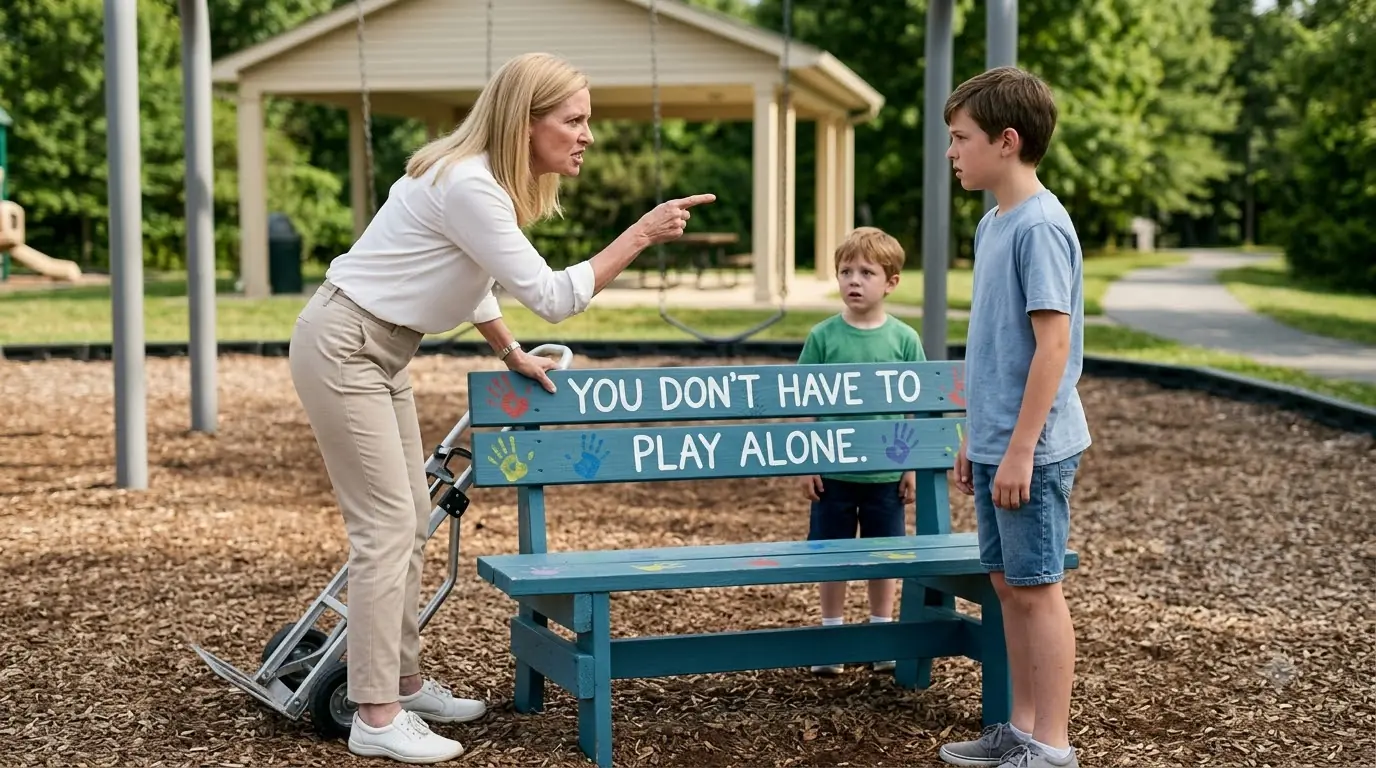
The policy changes mattered in quieter ways too. Raymond asked each committee chair to review what authority volunteers actually had, and the board replaced several vague phrases in its handbook with direct language about reporting hazards, contacting parents, and waiting for authorization before touching resident property. Paul Brennan also volunteered to run a short annual playground inspection walk so residents could see the difference between a real safety defect and something that simply looked unfamiliar. Ben liked that idea because it turned the argument into something useful instead of leaving everyone divided into teams.
Noah changed more slowly than the rules did. For the first week after the bench returned, he still looked toward the walking path whenever an adult approached, and once he stood up automatically when Carolyn passed even though she never spoke to him. Jamie noticed but did not tell him to sit back down. By the third week, Noah had stopped checking, and by the fourth he was the one explaining the bench to a younger boy who asked why anybody would sit somewhere just to find a friend.
“You don’t have to stay there long,” Noah told him. “It just tells people you want somebody to ask.” The younger boy considered that. “What if nobody asks?” Noah looked toward the basketball court, where Jamie and Marcus were arguing about a foul. “Somebody will.” Jamie heard him and pretended not to. That sentence meant more to him than any vote the board had taken. Noah no longer sounded like the boy who thought sitting on the bench had gotten him in trouble; he sounded like someone who expected the playground to make room for him.
Near the end of August, a moving truck appeared in front of a house on Sycamore Court. A family from Delaware moved in with two children, including a nine-year-old girl named Lucy. She came to the playground three days later with her father, stood near the pavilion, and watched a group playing tag. Jamie noticed her, but before he could walk over, someone else did.