The first time I heard the tires scream, I thought somebody had hit a child. The sound tore across our quiet street at six forty-two on a Saturday morning, followed by a furious blast of a horn that seemed to go on forever. I was standing on my front porch with a cup of coffee, looking over a fence that had not existed twelve hours earlier. Beyond the cedar boards, a white Cadillac Escalade sat crooked across the end of my driveway, its driver staring at the new barrier as though it had risen out of the ground to spite her personally. In a way, I supposed it had.
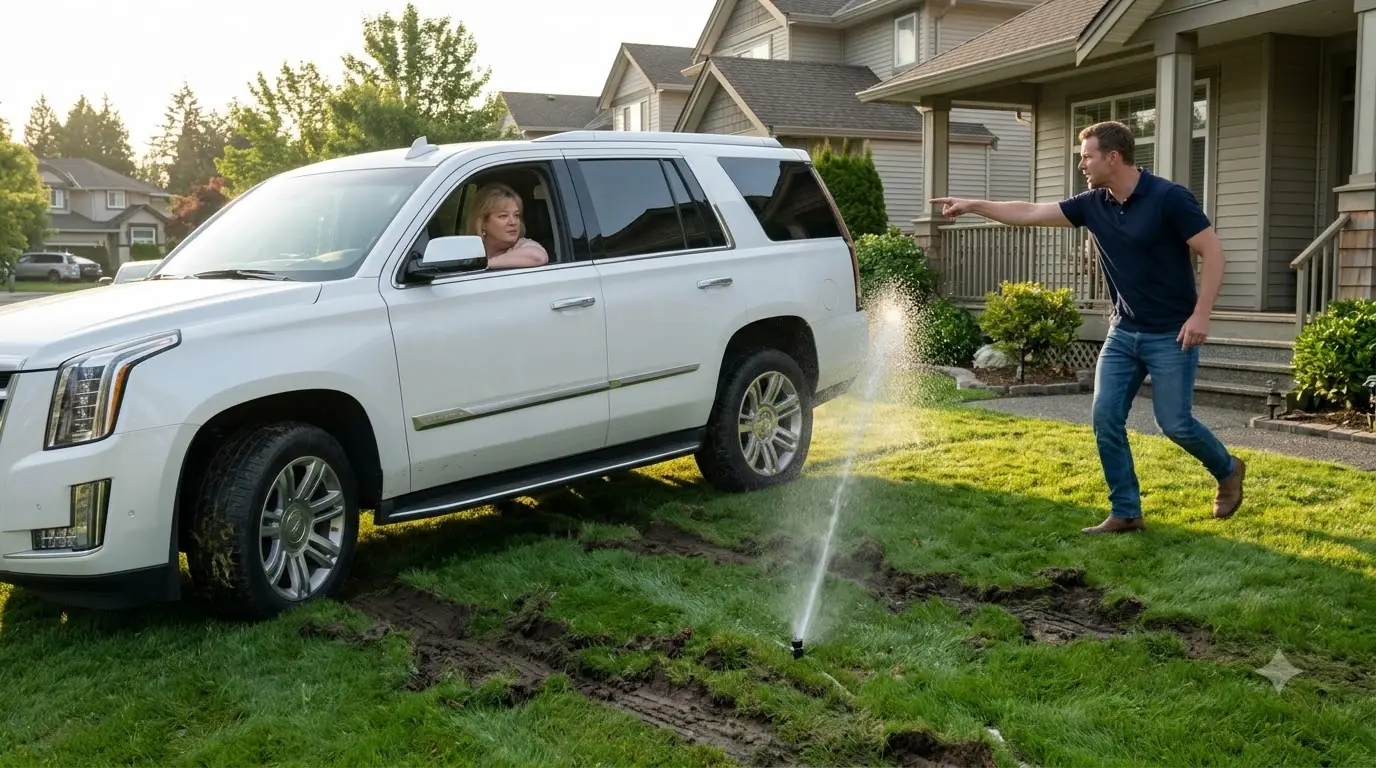
Patricia Voss climbed out, slammed her door, and marched toward me in white sneakers and a pink jogging jacket. She was fifty-six, president of the Briar Glen Homeowners Association, and accustomed to having people step aside whenever she lifted her voice. That morning she was particularly upset because, for the first time in ninety-four days, she could not drive across my lawn on her way to a secret service lane behind the neighborhood. She pointed at the cedar fence with a shaking finger and demanded to know who had authorized it. I took one careful sip of coffee before answering.
"The property owner," I said. "That would be me."
To understand why those four words mattered so much, you need to know what the previous year had been like. My name is Owen Mercer, and at thirty-nine I had finally managed to buy a house of my own. I was a software engineer working remotely for a medical logistics company, a job that required long hours and more patience than people might expect. I'd spent much of my twenties moving between rental apartments and helping my mother through an illness that made savings feel like something other people had. After she died, I used a modest inheritance and the money I'd carefully put away to buy a small brick house at the end of a cul-de-sac in a community called Briar Glen.
The real estate agent had described Briar Glen as a well-managed residential community. The photographs showed neat lawns, a modest clubhouse, flowering trees, and children riding bicycles near a small park. The monthly association dues were reasonable, and the declarations I received before closing did not seem unusually restrictive. I knew there would be rules about exterior alterations, common areas, and unpaid assessments. I'd even been willing to live with a little bureaucracy in exchange for a neighborhood where people maintained their properties and looked out for one another.
Then I met Patricia.
She arrived on my doorstep the morning after the movers left, wearing sunglasses although the sky was cloudy. She carried a clipboard with the association logo on top and introduced herself not merely as the president but as the person responsible for preserving Briar Glen's standards. She looked past my shoulder at a stack of unpacked boxes and asked whether I had filed a moving-day parking notice. I told her I hadn't known such a notice existed and asked where it appeared in the governing documents. She said it was an informal expectation and marked something on her clipboard anyway.