The first time Jonah Mercer saw the woman in the creek, he thought she was trying to drown a piece of timber. She stood knee-deep in dark mountain water, both arms wrapped around a beam too heavy for her to lift, while the November wind pushed strands of wet hair across her face. A little bay mare waited beneath a spruce tree with its reins looped around a branch, and a wagon stood empty on the far bank. The woman dragged the beam against the current, lost her footing, and vanished for a heartbeat into the freezing water. When she rose, coughing and reaching for the same stubborn piece of wood, Jonah pulled his horse off the trail and rode down to her.
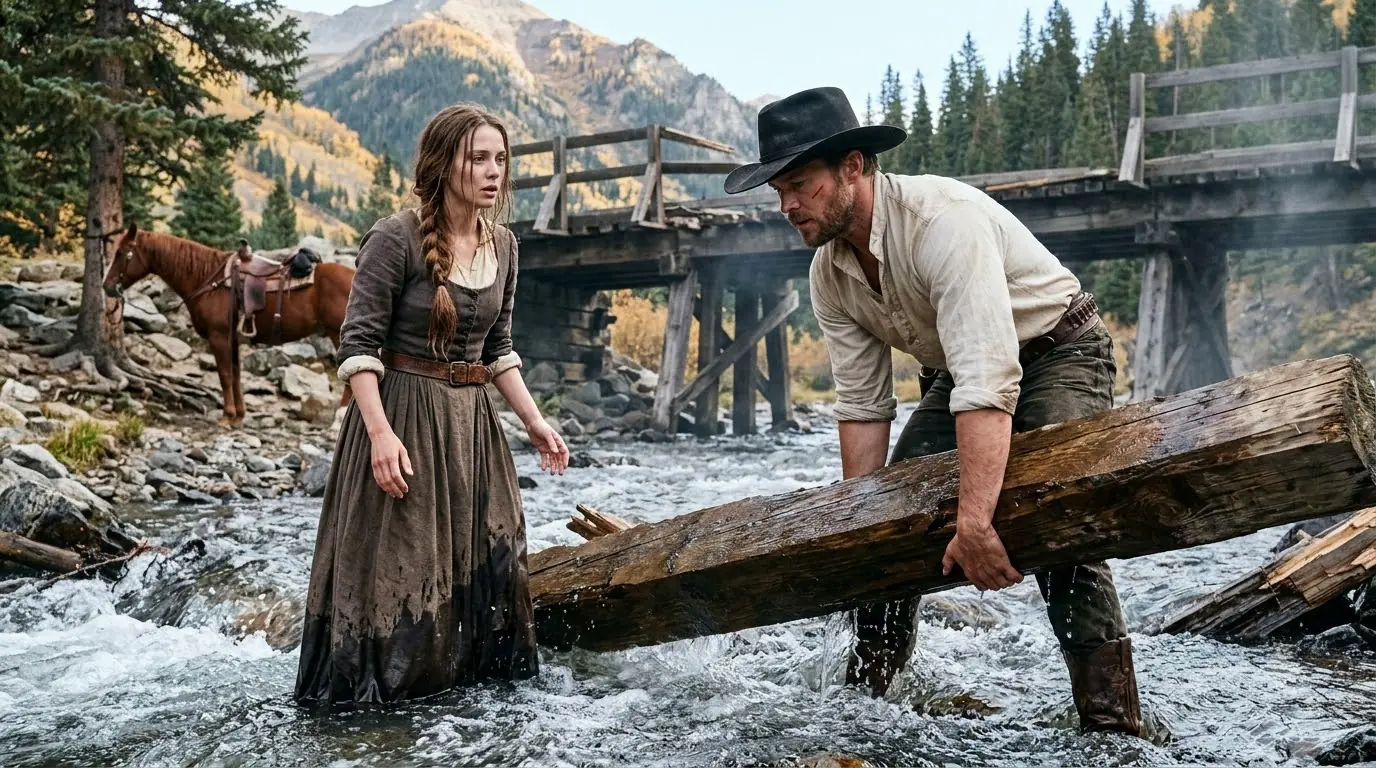
He had intended to cross the valley without speaking to anyone. He owned a modest cattle place west of Mercy Creek, Colorado, and he had come through the pass to collect a saddle from a leatherworker in town. The damaged bridge lay on the narrow road that connected the western ranches to the settlement, and its missing center section forced travelers onto a miserable detour around the mountains. Jonah had taken the longer trail enough times to know its ruts by memory. He knew, too, that a spring flood had broken the crossing, but he had not expected to find a lone woman trying to repair it in weather that threatened snow.
He dismounted above the bank and left his gelding where the ground was firm. "Ma'am," he called, "who promised to help you put this bridge back together?" She turned toward him, breathing hard, one sleeve dark with blood where a splinter had cut through the skin. For a moment he thought she would tell him to mind his own business. Instead she said, "Everybody, mister. Everybody promised. Nobody came."
Her name was Clara Whitfield. She was twenty-nine years old, a widow of less than a year, and the mother of a twelve-year-old boy who had begun waking at night to check whether she was still breathing. She had a farm of just over one hundred acres on the eastern approach to the crossing, thirty-six cattle, a vegetable garden that never produced as much as she hoped, and a mortgage note written in a careful banker’s hand. She had enough knowledge of timber construction to recognize when a beam was sound and enough determination to mistake exhaustion for something she could simply ignore. She also had a deepening belief that she would be allowed to fail in public so long as the people who watched could say they had once offered advice.
Her husband, Daniel, had been killed the previous winter while bringing construction timber down a steep mountain road. The logging wagon slipped on ice near a bend, and one wheel went over the edge before he could unhitch the team. The horses survived with cuts and bruises, but Daniel was pinned beneath