1. I wish I had the courage to live a life true to myself.
One of the most common end-of-life regrets is realizing that much of life was spent meeting other people's expectations instead of following personal values.
Psychologists describe this as the difference between intrinsic goals—living according to your own beliefs, passions, and purpose—and extrinsic goals, such as seeking approval, status, or social validation. Research consistently shows that people who align their lives with their personal values report greater life satisfaction and emotional well-being.
Living authentically doesn't mean ignoring responsibilities. It means making decisions that reflect who you truly are rather than constantly worrying about what others think. Over time, choosing authenticity often brings a greater sense of peace than chasing perfection.
2. I wish I hadn't worked so hard.
Meaningful work provides purpose, financial security, and personal growth. However, many people later realize that work gradually replaced time with family, friendships, hobbies, and personal health.
Long-term studies on happiness consistently show that close relationships contribute more to life satisfaction than career success alone. While professional accomplishments can be rewarding, missed birthdays, family dinners, vacations, and conversations cannot always be recovered.
Maintaining a healthy work-life balance allows people to build successful careers without sacrificing the relationships that often matter most later in life.
3. I wish I'd had the courage to express my feelings.
Many people spend years hiding emotions to avoid conflict, rejection, or vulnerability.
Yet psychological research shows that healthy emotional expression strengthens relationships, reduces stress, and improves mental well-being. Suppressing emotions for long periods may contribute to anxiety, resentment, or emotional distance.
Expressing feelings doesn't require dramatic conversations. Sometimes it simply means saying "I love you," apologizing when necessary, asking for help, or telling someone how much they mean to you.
Honest communication often creates deeper connections than silence ever can.
4. I wish I had stayed in touch with my friends.
As responsibilities increase, friendships often receive less attention. Careers, raising children, moving to new places, and everyday routines can gradually pull people apart.
However, decades of research have shown that strong social connections are among the most important predictors of both happiness and healthy aging. Close friendships provide emotional support, reduce loneliness, improve resilience during difficult times, and are even associated with better physical health.
Friendships rarely disappear overnight—they slowly fade without regular care. A simple phone call, message, or visit can strengthen bonds that may last a lifetime.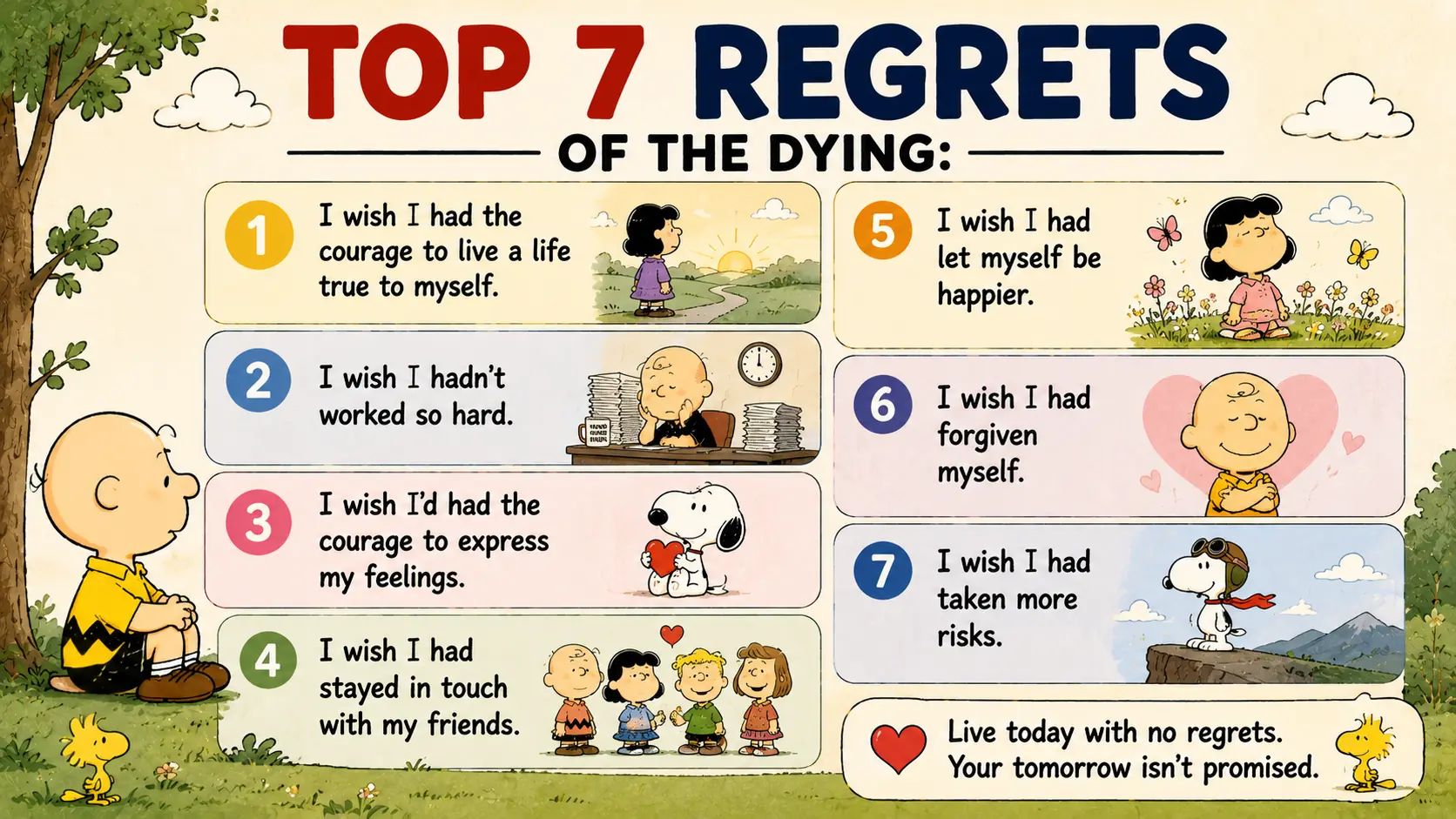
5. I wish I had let myself be happier.
Many people believe happiness will arrive after reaching the next milestone—a promotion, a larger home, retirement, or financial success.
Positive psychology suggests the opposite. Happiness is often built through daily habits such as practicing gratitude, maintaining meaningful relationships, spending time in nature, helping others, and appreciating ordinary moments.
Waiting for the "perfect time" can become a lifelong habit. Choosing to notice joy in everyday life is a skill that can be developed regardless of age or circumstances.
6. I wish I had forgiven myself.
Self-forgiveness is one of the most difficult forms of healing.
Everyone makes mistakes, experiences failure, or carries regrets from the past. However, continually replaying those moments often prolongs guilt without changing what has already happened.
Research in clinical psychology suggests that self-compassion and forgiveness are associated with lower stress, better emotional resilience, and improved mental health. Forgiving yourself doesn't excuse harmful actions—it means accepting your humanity, learning from mistakes, making amends when possible, and allowing yourself to move forward.
Growth becomes possible when we stop defining ourselves by our worst moments.
7. I wish I had taken more risks.
Many of life's greatest opportunities begin with uncertainty.
People often avoid change because they fear failure, rejection, or disappointment. Yet studies on regret suggest that, over time, people are more likely to regret opportunities they never pursued than mistakes they made while trying.
Taking healthy risks doesn't mean acting recklessly. It can mean applying for a new job, starting a business, learning a new skill, traveling somewhere new, ending an unhealthy relationship, or simply saying yes to experiences that encourage personal growth.
Progress rarely happens inside a comfort zone.
The Bigger Lesson
These reflections are not meant to create fear about the future. Instead, they offer an invitation to live more intentionally today.
A meaningful life isn't measured only by wealth, titles, or achievements. It is shaped by authentic choices, meaningful relationships, emotional honesty, personal growth, forgiveness, and the courage to embrace new opportunities.
None of us can rewrite yesterday, but every day offers another chance to choose what truly matters.
Small decisions made consistently over time often become the life we eventually look back on with gratitude rather than regret.