Three weeks after I bought my own house, my parents sued me. They claimed I owed them money for a family fund and my house could be used as compensation. I refused, hired a lawyer, and fought them in court. I am 28 years old.
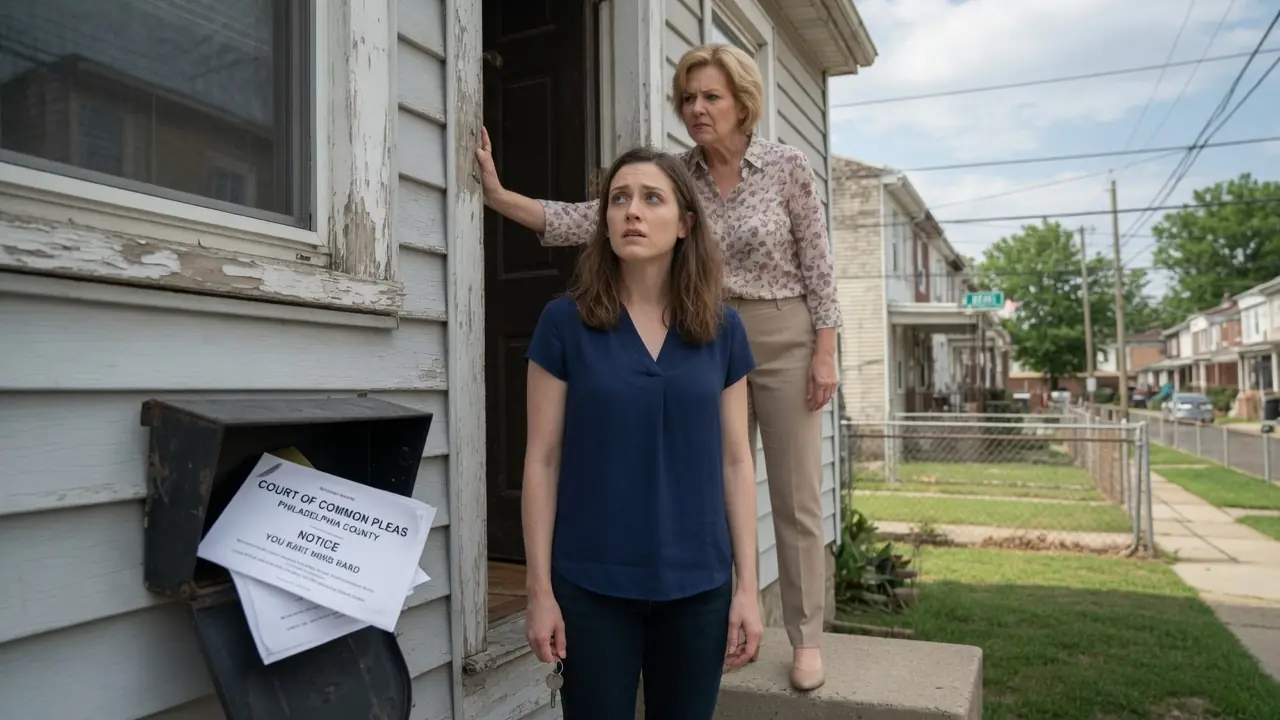
Last month, I achieved what I thought was the American dream. Buying my first home after 10 years of brutal sacrifice, 10 years of ramen noodles, declined invitations, and working until I could not keep my eyes open. When I finally got those keys, I felt like I had conquered the world. Then 3 weeks later, I found court papers in my mailbox. The plaintiffs were my own parents.
They were suing me for buying my house. Let that sink in. Growing up in a middle-class neighborhood in Boston, I never thought my childhood was particularly unusual. My parents, Karen and Robert Anderson, provided a comfortable life for me and my younger brother, Brian.
We had a nice house in the suburbs, took annual family vacations to Cape Cod, and never worried about putting food on the table. From the outside, we looked like the perfect American family, but beneath that picturesque surface was a different reality. My parents, particularly my mother, controlled every aspect of our lives, especially our finances.
When other kids got allowances they could spend however they wanted, mine came with spreadsheets. Literally, from age 10, I had to account for every penny I spent and justify my purchases to my mother during our weekly financial reviews. "Stephanie, you spent $7 at the mall last Saturday. What did you buy?" Mom would ask, peering over her reading glasses at my expense report.
"Just some hair clips, Mom. They were on sale." "Did you need new hair clips? I count 17 in your drawer already." This level of scrutiny followed me throughout my teenage years. When I got my first part-time job at 16, working at the local grocery store, my parents insisted I open a joint bank account with them so they could guide my saving habits.
What this really meant was they monitored every transaction and questioned anything they deemed unnecessary. My brother, Brian, 2 years younger than me, handled their financial micromanagement differently. He embraced it, internalized their values, and became the perfect financial protege.
While I dreamed of independence, Brian seemed comfortable with the oversight, often reporting my suspicious spending to our parents like some sort of financial hall monitor. When I was 17, I discovered my mother had been opening my mail, including college scholarship offers and financial aid information.
The confrontation that followed revealed her true intentions. "College is an unnecessary expense," she declared. "You can live at home, go to community college, and contribute to the family fund instead." The family fund was something my parents had mentioned with increasing frequency as we reached our teen years.
Apparently, every Anderson was expected to contribute a significant portion of their income to this collective pot that my parents controlled. Its purpose remained conveniently vague, but the expectation was crystal clear. That night, I made a decision that would define the next decade of my life.
I was going to break free from their financial control. Whatever it took, I applied for every scholarship available, worked extra shifts, and saved in a secret account I opened, using my friend's address for statements. When acceptance letters arrived, I chose a university three states away with the best financial aid package.
The night I told my parents I was leaving, my father's face turned a shade of purple I had never seen before. "You are throwing away everything we have built for this family," he said, his voice dangerously quiet. "If you walk out that door, do not expect our support."
My brother Brian watched from the staircase, his expression a mixture of shock and disapproval. "How could you be so selfish?" he asked later that night. "They just want what is best for us." But I knew better. The next morning, I left for college with two suitcases and barely enough money for my first semester's books.
What followed were four years of extreme financial hardship. I juggled full-time classes with two part-time jobs. I lived on the cheapest meal plan and picked up extra food from campus events. I never went home for holidays, working instead to earn time and a half pay.
My parents' prediction that I would come crawling back after experiencing real life never materialized. Instead, I graduated with honors, a mountain of student debt, and a fierce determination to build my own financial independence completely on my own terms. The cost was high.
By graduation day, I had not spoken to my parents in nearly 3 years. Brian attended my graduation ceremony, but spent most of the time trying to negotiate a reconciliation that always included the same stipulation. I needed to recognize my financial obligation to the family. I refused.
As I moved into my post-college life, I carried with me both the burden of being financially alone in the world and the determination that one day I would have something that was truly mine, something no one could control, monitor, or take away from me. Little did I know that this dream would eventually lead to facing my own family in court.
I rented a tiny room in a run-down house with three other roommates. My space was barely 9 ft by 7 ft. Essentially a converted walk-in closet, but it only cost $400 a month, including utilities. The communal bathroom was always dirty.
The kitchen perpetually smelled like someone had burned curry, and privacy was non-existent. But it was cheap, and cheap was what I needed. My daily routine was brutal. I woke at 5:30 in the morning to commute using the cheapest public transportation options, often walking several miles to save on bus fare.
My primary job ran from 8:30 to 5:30. But instead of heading home, I would work at a local coffee shop from 6:00 to 10:00 in the evening, three nights a week. Weekends were not for relaxation. They were for my retail job at a clothing store where I worked another 16 hours.
"You are going to burn yourself out," warned my roommate Tasha, who often came home to find me asleep on my laptop at our tiny kitchen table. "Life is not just about saving money." But for me, it was. Every dollar was meticulously accounted for.
My budget was a masterpiece of financial restriction. Rent $400. Utilities contribution included. Phone $25. Transportation $60. Groceries $120. Student loan payments $380. Health insurance $180. Internet split four ways $15. Miscellaneous necessities $50. That left approximately $850 each month to save, which I automatically transferred to a high interest savings account the moment my paycheck hit.
I never checked the balance. The temptation to spend would be too great. I just trusted the math and kept going. My meals were a rotating selection of the cheapest possible options. Breakfast was always oatmeal with a spoonful of peanut butter for protein.
Lunch was a peanut butter sandwich and an apple. Dinner was often rice with beans or eggs or instant ramen dressed up with frozen vegetables. Once a month, I allowed myself a $10 takeout meal as a reward for sticking to the plan.
Social invitations became a source of anxiety rather than pleasure. When colleagues invited me for happy hour or friends wanted to go to concerts, I became the queen of excuses. "Sorry, I have got a deadline for my freelance client," I would say, or "I am picking up an extra shift that night."
The truth that I could not justify spending $15 on a single cocktail when that money could go toward my house fund seemed too difficult to explain. Over time, the invitations dwindled and my social circle shrank to a handful of understanding friends who were okay with our hangouts being home movie nights where everyone brought their own snacks.
My wardrobe consisted of the same seven outfits rotated throughout the week, all purchased from thrift stores or clearance racks. I cut my own hair. I never took vacations. My one luxury was a $10 monthly subscription to a streaming service that I shared with my roommates.
Three years into this lifestyle, I received a promotion that bumped my salary to $42,000. Instead of upgrading my living situation or relaxing my budget, I simply increased my savings rate. When friends from college started buying new cars or taking European vacations, I remained focused on my goal.
The isolation was perhaps the hardest part. Dating was nearly impossible, not only because of the financial constraints, but because explaining my lifestyle to potential partners inevitably led to uncomfortable questions. "Are you in some kind of financial trouble?" one date asked after I suggested we meet at a free concert in the park rather than the restaurant he had proposed.
"No," I replied. "I am just saving for something important." Few understood the depth of my commitment, and fewer still were willing to adapt to my frugal lifestyle. Relationships rarely made it past the third date.
By year five, I had been promoted again and was making $55,000. I also expanded my freelance work, bringing in another $15,000 annually. My savings were growing faster now, but I maintained the same Spartan lifestyle. The only concession I made to my increasing income was upgrading my health insurance to a slightly better plan after a scary bout of bronchitis left me with unexpected medical bills.
Year 7 brought another significant professional milestone, a job offer from a larger marketing agency with a salary of $72,000. For the first time, I allowed myself a small celebration. I ordered takeout and ate it while sitting on my bed, calculating how this income boost would accelerate my timeline.
By the end of year 8, I had moved into a management position, earning $85,000 plus approximately $20,000 from my established freelance clients. My living situation had improved slightly. I now rented a small studio apartment for $750 a month, but otherwise, my lifestyle remained largely unchanged.
I still tracked every penny, still rarely socialized, still wore the same clothes until they wore out. The sacrifice was taking its toll. I developed insomnia, grinding my teeth at night. My brother Brian had gotten married the previous year. I learned about it through a distant cousin's social media post.
But the numbers in my savings account, which I finally allowed myself to check after year 9, made it all seem worthwhile. I had amassed just over $320,000. Combined with my excellent credit score from years of perfect payment history, I was finally approaching my goal.
At the 10-year mark, I reached the target I had set for myself, $350,000 in savings. Ten years and 2 months after graduation, I was ready to begin the house hunting process. The decade of sacrifice was about to pay off.
With my savings goal achieved, I allowed myself exactly one night to celebrate. I bought a bottle of champagne, not the expensive kind. Old habits die hard and sat on the floor of my studio apartment making a list of neighborhoods to consider.
For the first time in a decade, I felt the tight knot in my chest begin to loosen. The next morning, I began researching realtors. I needed someone who would understand my financial situation and respect the strict budget I had set for myself.
After interviewing three different agents, I chose Jessica Taylor, a straight talking woman in her 40s who specialized in first-time home buyers. "Most people come to me with champagne dreams and beer budgets," she said during our first meeting. "You are the opposite. Got a solid budget, but very modest expectations. We will find you something perfect."
Jessica's assessment of the market was honest but encouraging. With my budget, I could afford a decent home in several developing neighborhoods around Philadelphia. It would not be a luxury property, but it would be mine. "I do not need luxury," I explained. "I need solid construction, reasonable utility costs, and no major repairs needed in the next 5 years."
After a decade of saving, I was not about to sink my funds into a money pit. The house hunting process was both exhilarating and exhausting. Over the course of 2 months, I viewed 37 properties. Some were eliminated immediately, water damage in the basement, outdated electrical systems that would need complete overhauls or locations too far from public transportation.
Others were more tempting, but ultimately not right. A charming rowhouse with original hardwood floors, but plumbing that made Jessica wince. A spacious colonial with a beautiful yard, but in a flood zone that would make insurance prohibitively expensive.
"This is normal," Jessica assured me after yet another disappointing showing. "Finding the right house is like dating. You have to kiss a lot of frogs." Then on a rainy Tuesday, we visited a modest three-bedroom house in a neighborhood that was on the upswing.
It was not perfect. The kitchen needed updating. The backyard was small, and the previous owners had chosen some questionable paint colors, but the bones were good. The roof was only 5 years old. The furnace had been recently replaced, and the location was a 15-minute walk to the train station.
As I walked through the rooms, I could envision what they could become with some paint and simple renovations I could do myself over time. The asking price was $290,000 comfortably within my budget, even after setting aside funds for closing costs and an emergency repair fund.
"I want to make an offer," I told Jessica as we stood in what would potentially be my home office. "Are you sure? We still have five more houses to see this week." She reminded me. I nodded. "This one feels right."
We submitted an offer of $275,000 that evening. The next morning, the seller countered with $285,000. After a brief negotiation, we settled at $282,000. The inspection revealed no major issues, just the cosmetic updates I had already anticipated.
The mortgage approval process was smooth, thanks to my exceptional credit score and substantial down payment. I opted for a 15-year fixed rate mortgage rather than the standard 30-year, another way to save money in the long run.
The weeks leading up to closing were filled with paperwork, phone calls, and a growing sense of anticipation. I allowed myself to browse secondhand furniture websites during my lunch breaks, planning how I would gradually furnish my new home without breaking my budget.
Finally, closing day arrived. I sat at a table surrounded by strangers signing document after document until my hand cramped. When the seller's agent handed me the keys, I had to fight back tears. "Congratulations, homeowner," Jessica said, giving me a quick hug. "You did it."
That evening, I drove to my new house and spent that first night on an air mattress in the master bedroom. Too excited to sleep. I made lists of small projects I could tackle immediately. Painting the bedrooms, replacing the bathroom fixtures, cleaning the slightly musty basement.
In the morning, I would buy cleaning supplies and begin making this house my home. Over the next few weeks, my colleagues congratulated me. Though few understood the magnitude of what I had accomplished, my closest friend, Alicia, helped me paint the living room and kitchen, expressing amazement at my journey.
"I cannot believe you did this all on your own," she said as we applied a second coat of pale blue to the kitchen walls. "No family help, no inheritance, no partner to split costs with. Just you." Her words filled me with pride, but they also triggered a realization I had been avoiding.
I still had not told my family about the house. Despite our estrangement, some part of me had always hoped that achieving this milestone might bridge the gap between us. Perhaps they would finally understand that my rejection of their financial control was not about rejecting them as family.
After much deliberation, I decided to reach out. I composed a brief email to my parents with my new address and a photo of the house, adding that they were welcome to visit if they wished. To Brian, I sent a similar message with a bit more personal information, hoping my brother might serve as an intermediary.
Their responses would shatter any hope of reconciliation and set in motion events I could never have anticipated. Three days after sending those emails, my phone rang with my brother's number. It was the first time we had spoken in over 2 years, and my heart raced with nervous anticipation.
"What the hell do you think you are doing?" His voice was cold, controlled anger vibrating through each syllable. "Why? What?" "I just wanted to share my news with you." "And you bought a house. With what money, Stephanie?"
The question confused me. "With my money. I have been saving for 10 years." Brian's laugh was bitter. "Right. Because an entry-level marketing job pays enough to buy property these days." I tried to explain my journey of multiple jobs, the extreme frugality, the promotions, but he cut me off.
"Mom and dad want to see you this Sunday. Family dinner at 6:00." He hung up before I could respond. That Sunday, I drove the two hours to my parents' house with a knot in my stomach. The house looked exactly as I remembered, the same neatly trimmed hedges, the same beige siding, the same ceramic welcome sign my mother had painted at a community class years ago.
My father opened the door before I could knock. He had aged since I had seen him last, more gray in his hair, deeper lines around his mouth. "Stephanie." No hug, no smile, just my name as he stepped aside to let me in.
In the dining room, my mother was setting the table with the good china, the set reserved for Thanksgiving and Christmas. Brian and his wife, Emma, sat stiffly on the couch. No one seemed happy to see me.
Dinner was a tense affair. We ate my mother's pot roast in near silence, broken only by Emma's nervous attempts at small talk about the unusually warm weather. When my mother brought out apple pie for dessert, my childhood favorite, I foolishly thought it might signal a thawing.
As I took my first bite, my father cleared his throat. "So, Stephanie, tell us about this house." I described the property with cautious enthusiasm, mentioning the neighborhood, the small yard, my plans for renovations. "And how much did this house cost?" my mother asked, her fork poised halfway to her mouth.
"$282,000," I answered honestly. "That is quite a sum," my father said. "And you managed to save this all by yourself with no help." "Yes, I have been working multiple jobs and living extremely frugally. It has not been easy, but that is not possible," my mother interrupted, setting down her fork with a sharp clink against the china.
"Not with your salary and student loans." "I have been promoted several times and I do freelance work on the side," I explained, my appetite disappearing. "I can show you my savings records if you do not believe me." "What we believe," my father said, his voice dangerously quiet, "is that you have taken what is not yours."
The accusation hung in the air like a noxious gas. I looked around the table, my father's clenched jaw, my mother's thinned lips, Brian's refusal to meet my eyes. "What are you talking about? I have not taken anything from anyone."
My mother's laugh was brittle. "Ten years of not contributing to the family fund. Ten years of keeping what should have been shared. And now you flaunt your selfishness by buying property." I struggled to comprehend what she was saying.
"The family fund, but I have not lived at home or received any financial support from you since I left for college." "That is not how family works, Stephanie." My father said, "Everyone contributes. Everyone benefits. Your brother has been contributing 30% of his income since he started working. That fund was meant for all of our futures, including yours eventually."
"But you never told me what the money was for," I protested. "And I have been supporting myself entirely." "Which was your choice?" My mother snapped. "But the obligation remains. We calculate you owe approximately $95,000 to the family fund based on what your income should have been these past 10 years."
I nearly choked. "You expect me to give you $95,000 for what?" "For your family." Brian finally spoke, looking up with disappointment etched across his face. "Emma and I have delayed having children because we are contributing responsibly. We have put off buying our own home. Meanwhile, you have been hoarding money for yourself. That is not fair," I said, my voice rising.
"I worked three jobs at times. I lived in a closet-sized room with three roommates. I ate ramen noodles for years to save this money." "And now you will make it right," my father said firmly. "You will sell the house, contribute what you owe to the family fund, and we can put this unpleasantness behind us."
I stood up so quickly my chair tipped over backward. "I will not sell my house. That money is mine. I earned every penny through sacrifice you cannot even imagine." My mother's face hardened. "Then you leave us no choice."
Two weeks later, a courier delivered legal papers to my new home. My parents were suing me for $95,000, claiming I had misappropriated family resources and breached family financial agreements. They were demanding that the court place a lien on my new house until I paid what they claimed I owed.
I sat on my newly purchased secondhand couch, legal documents trembling in my hands as the full weight of their betrayal crashed over me. The family I had hoped to reconnect with was not just rejecting me. They were trying to take from me the one thing I had worked a decade to achieve.
The morning after receiving the lawsuit papers, I called in sick to work for the first time in my professional life. I spent hours researching online, trying to understand how my parents could possibly have legal grounds to sue me for money I had earned myself.
The concepts I encountered, constructive trusts, implied contracts, familial financial obligations, left me increasingly panicked. Could they really take my house? Could a decade of sacrifice be erased by some obscure legal principle I had never heard of?
By noon, I realized I needed professional help. I could not afford an expensive attorney, but I could not afford to lose my house either. After calling eight law firms and explaining my situation, I found Michael Rivera, a family law attorney who offered a free initial consultation.
"This is unusual," Michael said, reviewing the lawsuit documents in his modest office later that day. "Is it even legal?" I asked. "They have not given me any money since I was 18. How can they claim I owe them anything?"
Michael leaned back in his chair. "They are claiming something called a constructive trust. Essentially arguing that there was an implied agreement that you would contribute to this family fund. They are saying your ability to save money was only possible because of the advantages they gave you raising you, educating you, instilling financial discipline."
"But that is what parents are supposed to do," I protested. "I agree. But family law can get complicated. The good news is their case seems primarily built on emotional appeals rather than solid legal ground. The bad news is defending yourself will not be cheap or quick."
Michael's retainer was $3,500, money I had earmarked for painting the exterior of my house. I wrote the check with a shaking hand. The first major unplanned expense in over a decade.
Over the next few weeks, Michael helped me prepare my defense. We gathered every financial record I had, bank statements, paystubs, tax returns documenting my income and savings patterns for the past 10 years. I contacted former roommates who could testify to my frugal lifestyle, employers who could verify my jobs, even the college financial aid office for records showing I had received no parental support.
Meanwhile, the lawsuit was taking an emotional toll. I had trouble sleeping, often waking up in a cold sweat from nightmares where I was homeless again. I lost weight, my clothes hanging loosely on my already slim frame. Coworkers noticed my distraction, but I could not bring myself to explain that my own parents were trying to take my house.
Six weeks after receiving the lawsuit, we had our first court appearance, a preliminary hearing where both sides would present initial arguments. Walking into the courthouse, I spotted my parents and Brian sitting on a bench in the hallway.
My mother wore her church clothes, a conservative blue dress and pearl necklace. My father had on his only suit, the one he wore to funerals and weddings. They looked like respectable, concerned parents, exactly the image they wanted to project. They did not acknowledge me as I passed.
Inside the courtroom, their attorney, James Wilson, was an imposing man in his 60s with a perfectly tailored suit and an air of absolute confidence. As he spoke to the judge, he painted a picture of parents who had sacrificed everything for their children only to have one child selfishly refuse to participate in the family's financial collective.
"The Andersons created a family fund that all members contribute to, your honor," Wilson explained smoothly. "This has been a family tradition explicitly discussed since their children were teenagers. Brian Anderson has faithfully contributed his share. Stephanie Anderson not only refused to contribute, but has used family resources, including the financial education and support she received throughout her formative years to secretly amass wealth for herself alone."
The judge, an older woman named Judge Peterson, turned her sharp gaze to me. "And you are claiming there was no such agreement, Miss Anderson?" Michael stood. "Your honor, my client acknowledges that her parents mentioned a family fund, but there was never any agreement that she would contribute. More importantly, she has been financially independent since age 18, receiving no support from her parents during college or beyond. The money she saved was earned entirely through her own hard work, often working three jobs simultaneously while living in substandard housing to maximize her savings."
The judge reviewed some of the documents we had submitted. "You claim to have saved $350,000 for a house down payment while working entry-level jobs." "Yes, your honor," I replied, finding my voice. "I can document every dollar I earned and saved over the past decade."
"Impressive, if true," she mused before turning back to my parents' attorney. "Mr. Wilson, what evidence do you have of this alleged agreement beyond the family's verbal claim?" Wilson presented several exhibits. Birthday cards I had sent years ago mentioning being family-minded, a high school essay I had written about financial responsibility, family photos showing what he called a close-knit unit with shared values.
It seemed flimsy to me, but Judge Peterson took it all in without revealing her thoughts. "This case requires more detailed examination," she finally said. "I am scheduling a full hearing for next month. In the meantime, no liens will be placed on Miss Anderson's property, but she is ordered not to sell or refinance the property until this matter is resolved."
As we left the courtroom, I felt a momentary relief that my house was not immediately at risk, but the battle was far from over. "Round one to us," Michael said quietly as we gathered our documents, "but they are going to come back stronger. They will likely try to depose some of your friends, colleagues, maybe even your college roommates, looking for any statement you might have made about family financial obligations."
The next few weeks were a blur of preparations. I took unpaid time off work to help Michael prepare our case further, straining my now limited finances. We gathered additional documentation, letters from former employers praising my work ethic, statements from college financial aid officers confirming I had received no parental support, even receipts showing my extreme frugality over the years.
My parents' attorneys sent intimidating requests for documents. Everything from my childhood diaries to records of every conversation I had ever had about the family fund. Michael assured me these were largely scare tactics and helped me respond only to legitimate legal requests.
Two days before the full hearing, I received a text message from Brian. "It is not too late to settle this. Sell the house, contribute what you owe, and we can be a family again." I did not respond.
The morning of the hearing arrived with a knot of anxiety so tight in my stomach that I could not eat breakfast. I dressed in the most professional outfit I owned, a navy blue dress I had found at a consignment shop years ago, kept for important client meetings.
The courtroom seemed more crowded this time. My parents had brought several family friends as character witnesses. I recognized my aunt Martha's sister, who had always sided with my parents in any family dispute. There was Pastor Collins from their church and the Wilsons' longtime neighbors who had watched me grow up.
On my side of the courtroom sat two former roommates who had agreed to testify, my first boss Allison from the marketing firm, and Alicia, my closest friend, who had helped me paint my new house. The contrast was not lost on me, family versus chosen family.
The hearing began with my parents' testimony. My father spoke about the family's long-standing financial philosophy, claiming it had been clearly communicated to both children from an early age. "We always taught our children that family comes first," he said solemnly. "Financial resources are to be shared for the collective good. Stephanie understood this principle. She simply chose to reject it when it suited her."
My mother's testimony was more emotional. She described sacrifices they had made for my education, the financial wisdom they had tried to impart, and her heartbreak at my betrayal. "We only want what is fair," she said, dabbing at her eyes with a tissue. "Brian and Emma have delayed starting their family to meet their obligations. Stephanie needs to do the same."
Their attorney presented enlarged photographs of family dinners, holiday gatherings, and my high school graduation attempting to establish the image of a close conventional family with shared values and expectations. He introduced financial records showing Brian's regular contributions to the family fund and contrasted them with my absence of contributions.
When it was our turn, Michael started with a straightforward question to my mother. "Mrs. Anderson, you claim that Stephanie has an obligation to contribute to the family fund based on benefits she received growing up. Is that correct?" "Yes, of course." "And would you say providing food, shelter, education, and guidance are things parents are legally obligated to provide for their children?"
My mother shifted uncomfortably. "Well, yes, but..." "So you are seeking financial compensation for fulfilling your legal obligations as parents." "That is not fair. You are twisting my words," my mother protested.
Michael moved on to my father. "Mr. Anderson, did you provide any financial support to Stephanie during her college years?" "She chose to attend an expensive out-of-state university against our advice," my father replied stiffly. "We would have supported her if she had followed our financial plan."
"So that is a no," Michael clarified. "And since her college graduation, have you provided her with any financial assistance whatsoever, housing, health insurance, car payments?" "No." "Thank you. That is all I needed to establish."
My former roommate Tasha testified next, describing our cramped living conditions and my extreme frugality. "Stephanie never ate out, never bought new clothes, worked all the time. We used to worry about her because she never did anything fun. It was all work and save. Work and save."
Allison, my first boss, spoke about my work ethic. "Stephanie was always the first to volunteer for overtime. She took on projects no one else wanted for the extra compensation. Many times I found her working through lunch or staying late without even claiming the hours."
When it was my turn to testify, I felt strangely calm. The initial shock and hurt had crystallized into something harder, more resolute. "Miss Anderson," Michael began, "could you explain to the court how you saved enough money to purchase your home?"
I detailed my financial journey of multiple jobs, the tiny living spaces, the years of ramen noodles, and declined social invitations. I explained my budgeting system, the automatic transfers to savings, the promotions I had earned through dedication and hard work.
"Did your parents provide any financial assistance during this 10-year period?" Michael asked. "None," I said firmly. "I have been completely financially independent since I left for college at 18." "And was there ever an explicit agreement that you would contribute to this family fund?" "No. It was mentioned as something they expected, but I never agreed to it."
"After I left for college, they made it clear that I was on my own financially if I did not follow their plans." My parents' attorney's cross-examination was aggressive, attempting to trip me up by suggesting I had benefited from family financial wisdom and privileges that enabled my savings.
"Is it not true?" he asked with a smug smile "that the very financial discipline you used to save this money was instilled by your parents?" I paused, considering my answer carefully. "The financial discipline my parents taught me was about control, not independence. What I did, working multiple jobs, living in substandard conditions, sacrificing any quality of life for a decade, was not what they taught me. That I learned on my own out of necessity."
The turning point came during my mother's recall testimony. Attempting to strengthen their case, she made a critical mistake. "Stephanie has always been financially irresponsible," she claimed. "In college, she was constantly asking for money for emergencies. We helped her numerous times."
Michael pounced. "Mrs. Anderson, you previously testified under oath that you provided no financial support to your daughter during college. Now you are claiming you did. Which statement is true?" My mother flushed, looking to their attorney for help. "Well, there might have been a few small loans."
"Do you have records of these loans, receipts, bank transfers?" Michael pressed. "It was cash," my mother said weakly. "Family does not keep receipts." "No further questions," Michael said, sitting down with a satisfied nod to me.
In her closing statement, Judge Peterson's expression gave nothing away. She reviewed the evidence presented, noted the contradictions in my parents' testimony, and acknowledged that the money I saved was earned through my own labor without parental support or contribution.
"The plaintiff's claim is dismissed." She looked directly at my parents. "Mr. and Mrs. Anderson, while families may have their own internal expectations, this court cannot and will not enforce alleged agreements that have no legal basis and appear to be primarily about control rather than genuine family welfare."
The gavel came down with a definitive crack that seemed to echo the breaking of whatever tenuous family bonds had remained. The immediate aftermath of the judge's ruling was a blur. Michael shook my hand firmly, his usually serious face breaking into a satisfied smile.
"Congratulations, your house is safe." I should have felt triumphant. Instead, I felt hollow. I glanced across the courtroom to where my parents sat, my mother's face buried in her hands, my father's arm around her shoulders, his expression stony.
Brian stood nearby, whispering something to their attorney, occasionally shooting glances in my direction. As I gathered my documents, a court officer approached. "Miss Anderson, your family is being escorted out separately to avoid any confrontation. You can leave through the main doors in about 10 minutes."
I nodded numbly, thanking him for the consideration I had not thought to request. Michael helped me pack our evidence into my worn messenger bag, giving me practical advice about filing the judgment and ensuring the case was formally closed in the property records.
"Will they appeal?" I asked quietly. "They could try, but they do not have grounds. The judge was very clear," Michael assured me. "This is over, Stephanie. You won." Yet victory felt nothing like I had imagined.
As I waited for my parents to leave, I sat alone in the now empty courtroom, the magnitude of what had happened settling over me. I had not only fought my family in court, but had publicly exposed the dysfunction that had shaped my life. There would be no reconciliation, no happy family dinners in my new home, no healing of old wounds.
When I finally left the courthouse, I stepped into the bright afternoon sunlight, feeling both lighter and heavier, free from the immediate threat, but burdened by the finality of the family rupture. I was halfway to my car when I heard footsteps rapidly approaching from behind.
"Stephanie, wait." Brian's voice. I turned instinctively, tensing. He stopped a few feet away, his face flushed, either from running or emotion. "How could you do that to them? Do you have any idea how this makes them look? The embarrassment you have caused?"
I studied my brother's face, the familiar features contorted with an anger that seemed to come from a place of genuine hurt. For a moment, I felt a flicker of doubt. Had I been too harsh, too uncompromising? Then I remembered the past decade of sacrifice, the lonely holidays, the meals skipped to save a few dollars, the nights spent working until exhaustion while my peers built careers, relationships, lives, all leading to the moment when my own parents tried to take it all away through legal manipulation.
"How could I?" I repeated, my voice surprisingly steady. "How could they sue their own daughter for money she earned herself? How could you support them in this?" "It was never about the money," Brian insisted, lowering his voice as a couple walked past us on the courthouse steps. "It is about family loyalty, about putting the collective good above individual desires."
"No, Brian, it is about control. It always has been." He ran a hand through his hair, a gesture so familiar it made my heart ache despite everything. "You have always been selfish, always thinking just about yourself." "Is that what you really think?"
"You do not understand." "I understand perfectly," I interrupted. "I understand that Mom and Dad have convinced you that family means surrendering your autonomy, that love is conditional on compliance. That is not family, Brian. That is control."
His face hardened. "You think you are so much smarter than everyone else, so independent? But when you are alone in that house you bought with your precious money, who will be there for you? Who will care?" The question hit its mark, probing the fear that had haunted me through years of solitary saving.
But I had an answer now. "People who love me without conditions. Friends who support my dreams instead of trying to own them. That is the family I have built while you were busy being the perfect son." Brian stepped back as if I had physically pushed him.
"They are right about you. You are not just selfish, you are cruel." "I am sorry you feel that way," I said, and I meant it. "My door is always open if you ever want to have a relationship that is not defined by Mom and Dad's rules, but I will not apologize for building a life on my own terms."
He turned away without another word, walking quickly toward the parking lot where our parents presumably waited. I watched him go, the last fragile thread connecting me to my biological family, severing with each step he took.
That evening, I sat on the floor of my living room, surrounded by the sparse furnishings I had carefully selected for my home. The victory felt both profound and painful. I had defended my right to the fruits of my labor, but at the cost of any hope for family reconciliation.
I reached for my phone and called Alicia. "It is over," I told her when she answered. "I won." "That is amazing," she exclaimed. "We should celebrate. I will bring champagne, the good kind, this time." I found myself smiling despite everything.
"Could you also bring those friends you mentioned, the ones who are good at painting? I think it is time I finally finished making this house a home." Two hours later, my empty living room was filled with Alicia and four of her friends, all armed with paint brushes, pizza, and genuine congratulations.
As we worked on painting the hallway, the soft green I had carefully selected months ago, I realized something important. Family is not always who you are born to. Sometimes it is who you choose and who chooses you back.
The weeks following the court victory brought a strange mixture of peace and pain. With the legal threat removed, I could finally focus on truly settling into my home. I painted each room with colors I had meticulously researched for the perfect balance of calming and energizing.
I scoured thrift stores and clearance sales for furniture that expressed my personal style rather than just meeting minimal functional needs. Slowly, my house began to feel like a home earned through sacrifice and protected through determination.
But the emotional aftermath of the court battle lingered. I would wake up in the middle of the night, heart racing from dreams where I was back in that courtroom, my parents' accusations echoing off the walls. I would check my phone compulsively, part of me still hoping for a message from Brian that never came.
Alicia noticed my struggle during one of our weekly dinner nights, a new tradition where friends took turns hosting simple meals in their homes. "You won the case, Steph, but you are still fighting something," she observed as she helped me wash dishes after everyone else had left. "Have you thought about talking to someone professionally?"
I had resisted the idea initially. Therapy seemed like an unnecessary expense after a decade of extreme frugality, but the persistent emptiness inside me could not be filled with new furniture or fresh paint. After researching affordable options, I found Dr. Jennifer Garcia, a therapist who offered sliding scale fees for her services.
"Family estrangement is its own kind of grief," Dr. Garcia explained during our first session. "You are mourning not just the relationship you had, but the relationship you wished you could have had." Over the next several months, our weekly sessions helped me process the complex emotions I had suppressed during my 10-year saving journey.
I had not just been accumulating money. I had been building a wall around my heart, protecting myself from the conditional love that had shaped my childhood. "Your parents' attempt to control your finances was not really about money," Dr. Garcia suggested one afternoon. "Money was just the tool they used to demand compliance and punish independence."
"Then why do I still feel guilty?" I asked. "Like I have done something wrong by keeping what I earned." "Because they programmed that response in you from childhood. Questioning their authority even as an adult triggers that old guilt. That does not mean the guilt is justified."
Alongside therapy, I slowly expanded my social circle. The friends who had stood by me during the court case became regular fixtures in my life. We started a monthly dinner club that rotated between our homes. I joined a community garden three blocks from my house, finding unexpected joy in growing my own vegetables.
Six months after the court case, I received an unexpected text message from Brian. "Can we talk?" We met at a neutral coffee shop halfway between our homes. The conversation was awkward, stilted with unspoken hurt and lingering disagreements, but it was a start.
"I am not saying Mom and Dad were right," he said, staring into his coffee cup. "But I do not think you understand how your leaving affected them, affected all of us." "I did not leave the family, Brian," I replied carefully. "I left their control. There is a difference."
He did not agree, but he did not argue either. We parted with a tentative plan to meet again the following month. A small bridge beginning to form over the chasm between us. My parents remained distant. Through Brian, I learned they had told extended family that I had legal troubles, but did not specify the nature of the court case.
The family narrative had been rewritten to preserve their image while casting me as the problematic child. It hurt, but with Dr. Garcia's help, I was learning to separate their perception from my reality. "You cannot control their story about you," she reminded me. "You can only live your truth and let the results speak for themselves."
And the results were speaking. A year after winning the court case, I received a significant promotion at work. The house I had fought so hard to keep was increasing in value as the neighborhood continued to develop. I had even started a small emergency fund for others in situations like mine, people escaping financially controlling relationships who needed temporary support.
The most profound change, however, was internal. The anxious vigilance that had driven me through a decade of extreme saving had gradually softened. I learned to enjoy small pleasures without guilt. A meal at a nice restaurant to celebrate a work achievement, a weekend trip with friends to a nearby beach, flowers from my kitchen table just because they made me smile.
"Financial independence is not just about having money," I realized during one therapy session. "It is about having the freedom to use resources in alignment with your own values without seeking permission or approval." Eighteen months after the court case, Brian and his wife Emma had their first child, a daughter they named Lily.
The birth announcement came with an invitation to meet my niece, one I accepted with both excitement and trepidation. In their modest apartment, holding the tiny bundle that was my niece, I felt a new chapter beginning. Brian and I had established careful boundaries around topics like money and our parents, creating a fragile but growing relationship independent of the family dynamics that had separated us.
"She has your nose," I told him, smiling down at Lily's sleeping face. "Poor kid," he joked, a glimpse of the brother I remembered from before money and control had come between us.
As for my parents, the distance remained. I sent them a card with my niece's birth, expressing joy for the new addition to the family. They did not respond directly, but they did not return it either, a minute crack in the wall between us that might someday allow for more light to pass through.
Two years after purchasing my house, I hosted a home anniversary party, inviting the friends who had become my chosen family. As we gathered in the backyard where I had finally installed the garden I had dreamed about during those lean years, I looked around at the life I had built.
Not just the physical house, but the community, the career, the sense of self that no one could take away. Alicia raised her glass for a toast. "To Stephanie, who taught us all that home is not just a place you buy, but a space you create through courage and perseverance."
Later that evening, as the last guests departed, I sat alone on my porch swing, a birthday gift from my friends, and reflected on the journey that had brought me here. The decade of sacrifice, the painful family confrontation, the ongoing work of healing.
The hardest lesson had not been how to save money or how to defend myself in court. It had been learning that sometimes the people who should support you most are the ones you need to establish the firmest boundaries with, that true family is defined not by blood or obligation, but by respect and unconditional support.
That independence, financial and emotional, is not selfish, but necessary for authentic relationships. My house stood solid around me, sheltering not just my physical self, but the person I had become through adversity. A person who knew her worth, who understood the difference between sacrifice and surrender, who recognized that the most valuable thing she owned was not the property, but the freedom it represented.