The next morning he started making a list. He spent 8 months doing what he had to do, patching vehicles at a local impound yard, living on a tight budget, saving whatever he could after rent and groceries. He did not waste energy on bitterness or noise. He looked for opportunity, the way his father had taught him to look at broken engines, methodically, quietly, without the expectation that it would announce itself. He was 31 years old.
He had no debt beyond a small credit balance, and he had $18,000 in savings. Not enough to open a shop, but enough to start something if the right start appeared.
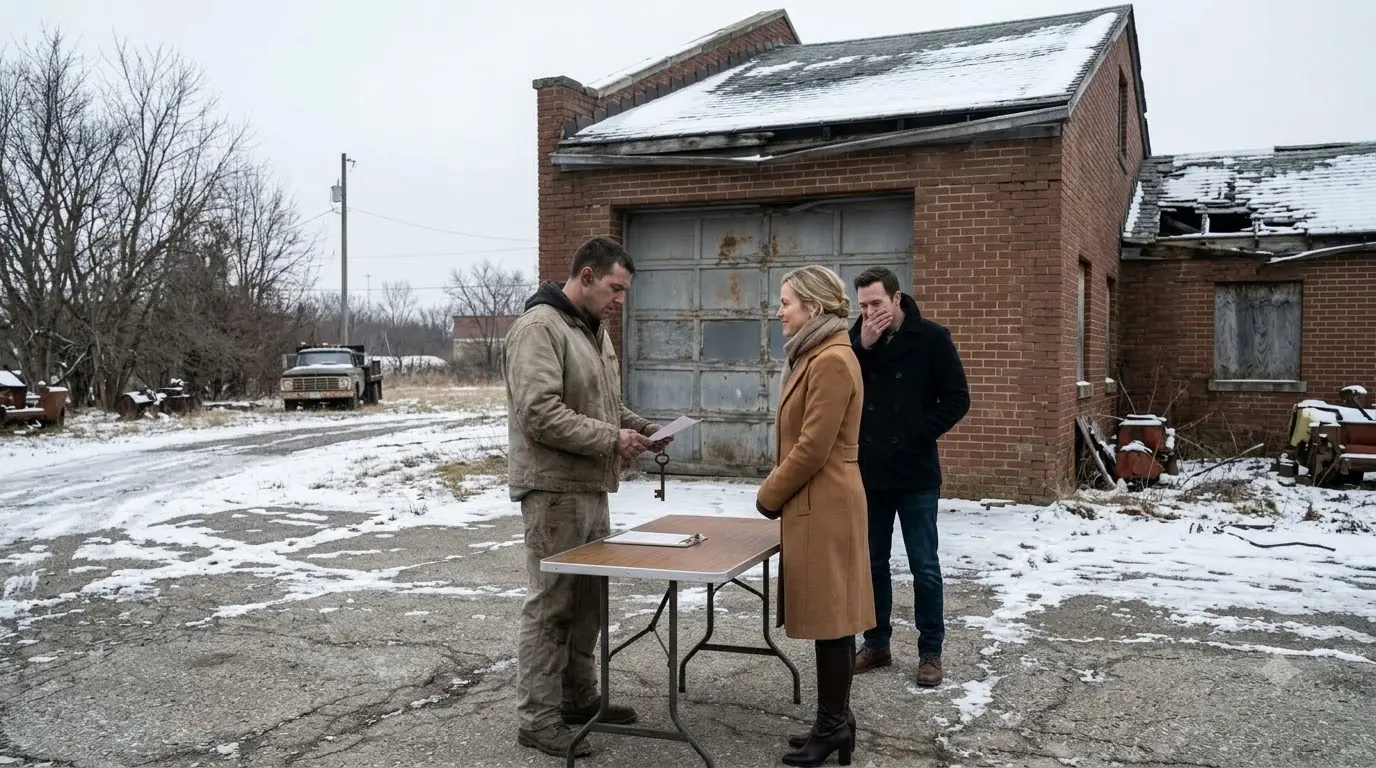
Giselle Harmon had never fixed anything with her hands in her life, and she would have told you that with no apology. She had a different kind of intelligence, financial, territorial, relentless. At 38, she ran Harmon Capital Group, a real estate firm she had inherited from her father at 29 and grown aggressively over the following decade.
Revenue had more than doubled. The company had moved from residential flips into commercial development, then into urban industrial redevelopment, buying old manufacturing land cheap, rezoning it, and selling it to developers at a significant premium. It was a business built on recognizing land value before others did, which made the irony of what was about to happen particularly sharp.
Giselle had a reputation for being direct to the point of cruelty, for cutting meetings short the moment she decided the agenda no longer served her, and for treating anything she did not immediately understand as something beneath her time. She had been called a visionary by her local Chamber of Commerce and a bulldozer by the people who negotiated against her. Both descriptions contained the truth. She was not cruel in the way that people who enjoy cruelty are cruel. She was indifferent, which is a different thing entirely, and in some ways harder to argue with.
Indifference does not bend to evidence the way that malice sometimes does. It simply does not register the evidence in the first place.
In January of that year, Harmon Capital acquired a 4-acre parcel of old industrial land on the northeastern edge of the city, a former light manufacturing zone that had been sitting dormant for over a decade. The plan was straightforward. Hold the land, push through a rezoning application for mixed commercial use, and flip the whole parcel to a larger development group within 2 years. On paper, the acquisition was clean. In practice, it came with a complication.