You're going to pay for it. The stranger said it over a dead gelding, and before that night was over, the richest family in the county would learn exactly what he meant. And no one who stood inside the Iron Horse Saloon that evening would ever forget it. Texas, 1886. The Calloway name owned more of the county than the county itself, and it had been a long time since anyone had made them answer for anything.
This is the story of the one night that changed and the quiet nameless rider who never raised his voice to do it. He had come down out of the Cap Rock 2 days before, riding a dark bay gelding he had owned for the better part of 7 years, and he had not spoken more than a dozen words to another living soul in that time. That was not unusual for him. Solitude was a kind of country he had learned to live in the way other men lived in houses, and the gelding was the only company he required because the gelding required nothing back except a steady hand and a fair trail, and did not ask him where he had been or where he was going. Questions he had stopped answering honestly a long time before anyone thought to ask them anymore.
The horse was a good horse, not flashy, not the kind of animal a man bragged about in a livery yard, but honest through the shoulder and even tempered in weather that soured lesser horses. The kind of animal that had learned a rider's weight and habits so thoroughly that the two of them moved as a single deliberate thing across open country. He had named the horse Solomon for no reason he had ever explained to anyone, and in 7 years the two of them had crossed more of the territory than most men crossed in a lifetime. And Solomon had carried him through weather and gunfire and the kind of nights a man does not talk about afterward, and had never once in all that time given him a reason to doubt him. There are men on the frontier who measure their lives by land, and men who measure it by money, and men who measure it by the number of people who fear them.
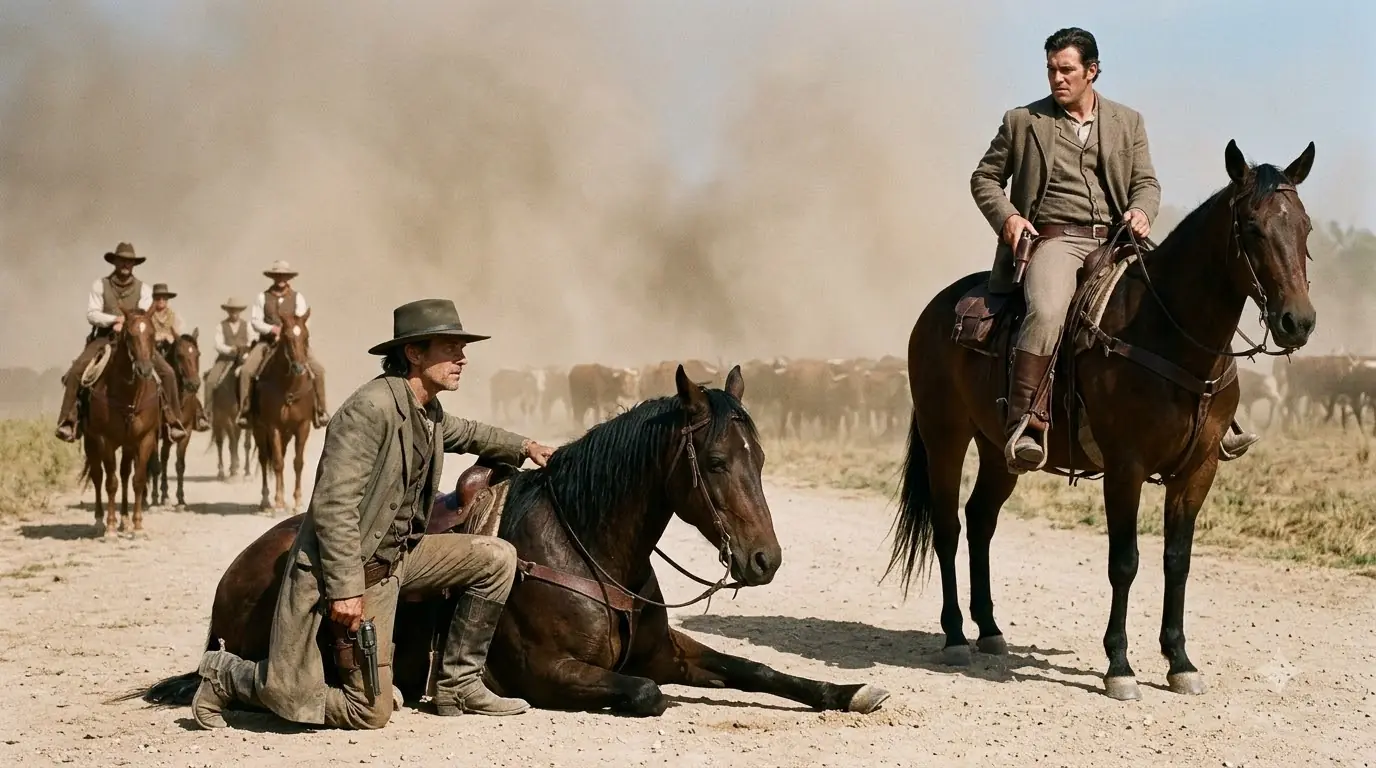
And this stranger belonged to none of those categories. Whatever he measured his life by, he kept it to himself. And the only evidence of it that showed on the outside of him was the care he took of the animal under him, and the particular patient discipline with which he moved through a world that had, more than once, given him reason to trust it a good deal less than he trusted a horse. Men who rode with him for a few miles, on the rare occasions any man did, came away remembering less about what he had spoken than about the quality of the quiet he carried. The sense that here was someone who had settled, a long time ago, into a version of himself that did not need explaining to anyone, and did not much care whether it was understood.