The first potato Vernon Pike picked up was crooked.
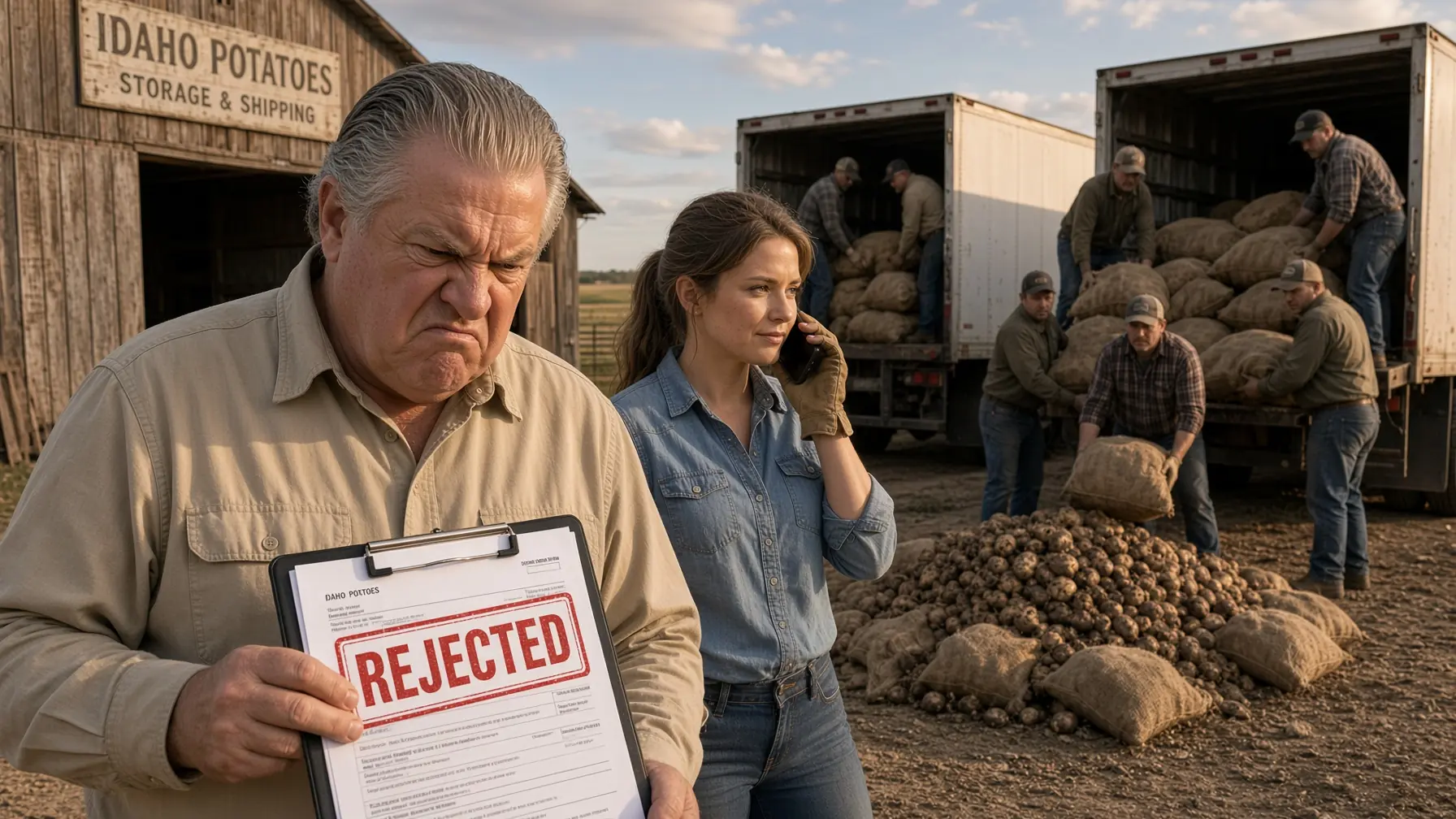
The second had a scar running across one side.
The third was barely larger than a golf ball.
Vernon held it between two thick fingers and laughed.
Several workers behind him laughed too.
Emma Carter did not.
She stood beside nearly fifty tons of potatoes she had spent an entire season growing and watched the packing-house manager examine them like trash.
Around them, Whitmore Produce Packing was already roaring through another workday.
Conveyor belts moved.
Forklifts beeped.
Washers sprayed.
Perfectly shaped potatoes rolled beneath bright inspection lights toward sorting machines that separated them by size.
Large.
Medium.
Small.
Premium.
Retail.
Processing.
And then there was Emma’s load.
Crooked.
Scarred.
Too small.
Oddly shaped.
Some had shallow marks left by rough soil.
Others had grown around stones.
A few had split slightly during a hot spell and healed before harvest.
None looked beautiful.
Vernon tossed the tiny potato back onto the pile.
“Crooked, scarred, and tiny.”
He looked at Emma.
“No store wants fifty tons of ugly garbage.”
One worker snorted.
Another muttered something about pig feed.
Emma ignored them.
She bent down and picked up one of the rejected potatoes.
Turned it slowly in her gloved hand.
The skin was ugly.
That much was true.
She pulled a small folding knife from her pocket.
Vernon raised an eyebrow.
“What are you doing?”
Emma sliced the potato in half.
The inside was clean.
White.
Firm.
No rot.
No hollow heart.
No discoloration.
Nothing wrong with it.
She held the cut potato toward him.
“They’re still perfectly good potatoes.”
Vernon looked at the flesh.
Then at her.
Then shrugged.
“Perfectly good doesn’t mean sellable.”
He took Emma’s delivery paperwork from the clipboard.
Reached toward a red stamp.
REJECTED.
The word hit the page with a dull slap.
Emma stared at it.
That stamp represented months of work.
Seed.
Diesel.
Fertilizer.
Irrigation.
Labor.
Fuel.
Truck rental.
Harvest crews.
Equipment repairs.
Fifty tons of potatoes were not just potatoes.
They were money already spent.
Money Emma had expected to recover.
Money she now apparently had sitting in a warehouse as something nobody wanted.
Vernon handed the paperwork back.
“Take them home and watch them rot.”
The workers laughed again.
Emma looked toward the massive pile.
Then back at the potato in her hand.
And something in her expression changed.
Not anger.
Calculation.
She pulled out her phone.
Vernon smirked.
“Calling your dad?”
Emma ignored him.
She scrolled through her contacts.
Found a number.
Pressed call.
A man answered after three rings.
“Tom.”
Emma turned slightly away from Vernon.
“How much vodka can you make from fifty tons of potatoes?”
The laughter behind her stopped.
Completely.
There was a pause on the phone.
Then Tom answered:
“If the starch is right…”
Another pause.
“Bring me every pound.”
Emma looked toward the workers.
Then toward Vernon.
“Load them back onto my trucks.”
Vernon frowned.
“What?”
“All of them.”
His expression shifted from amusement to confusion.
“You heard me.”
Emma slipped the phone back into her pocket.
“Every rejected potato.”
Emma Carter had grown potatoes since she was old enough to sit on the fender of her father’s tractor without falling off.
Her family farm sat outside a small Idaho town where irrigation pivots stretched across fields so flat they seemed to run forever.
Her grandfather had started with forty acres.
Her father expanded to one hundred and sixty.