The gavel had barely touched the auctioneer’s table when somebody in the back row laughed.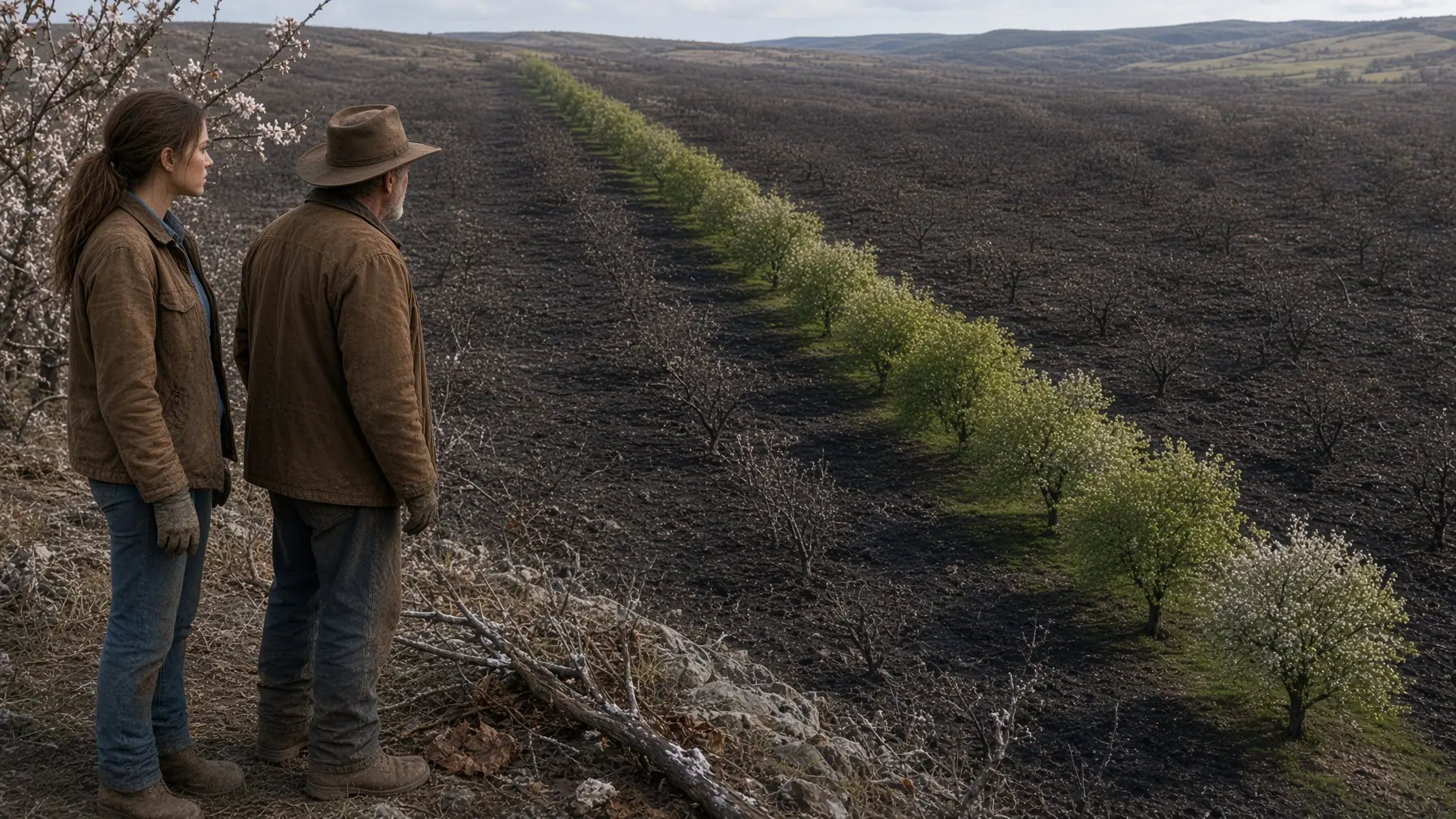
“Twenty-two thousand dollars.”
The auctioneer repeated the number slowly, looking over the rims of his glasses toward the young woman in the third row as though he suspected he had misunderstood either the bid or the bidder. Wren Holden kept her hand raised until he acknowledged her and looked for somebody willing to go higher. Nobody did. A folding chair creaked somewhere behind her. Boots scraped over the floor of the county meeting hall. Then an older man muttered loudly enough for half the room to hear, “She just bought herself a hundred and ten acres of heartbreak.”
A few people chuckled.
Wren lowered her hand.
She did not turn around.
At twenty-four, she had learned that certain people became uncomfortable if a young woman ignored their advice, but nearly offended if she ignored their jokes. Turning around would give them a conversation. Staying still gave them only themselves.
The auctioneer tried once more.
“Twenty-two thousand. Anybody at twenty-two five?”
Silence.
“Last call.”
Nothing.
“Sold.”
The gavel came down again.
Widow Creek belonged to Wren Holden.
At least, the portion financed by the bank did.
By the time the required down payment, legal fees, delinquent-tax adjustment, and closing costs were accounted for, Wren had slightly more than four thousand dollars remaining in savings. Her pickup had 214,000 miles on the odometer, mismatched tires on the rear axle, and a heater that worked better than the air-conditioning. Her dog Biscuit had no market value whatsoever unless enthusiasm could be appraised. Her farming résumé consisted of six years working other people’s ground for other people’s paychecks.
She did not have enough equipment.
She did not have enough capital.
And she certainly did not possess some secret understanding that all the experienced farmers in Hollis had somehow missed.
What she had was a question.
That question had cost her nearly everything.
Widow Creek Ranch sat eleven miles outside town, pressed against a long limestone ridge that rose behind the property like the spine of something enormous buried beneath the grass. The road-facing portion looked almost respectable from a distance. Forty acres of relatively flat ground stretched toward the creek, though the soil was pale and thin in places. Beyond that were uneven pastures, brush, gullies, and the ridge itself.
Up close, the deficiencies multiplied.
The perimeter fence sagged between cedar posts silvered with age. A rusted hay rake had been abandoned near the barn so long ago that bindweed grew through the wheels. The barn roof leaked in seven places Wren could identify and probably several more she could not. One door hung from a single hinge. The farmhouse leaned just enough to make rolling objects drift across the kitchen floor if they were perfectly round.
The previous three owners had all tried variations of the same idea.
Make the flat ground produce enough to justify everything else.
The Talmadges planted row crops.
The Kirbys tried cattle.
The last owner, a man from Oklahoma who lasted four seasons, put most of his money into fertilizer, reseeding, and machinery before the bank took the place back.
Nobody had made the numbers work.
The ridge was considered the worst part.
Too steep for conventional row cropping.
Too rocky for dependable pasture.
Too awkward for machinery.
“Pretty to look at,” old Grady Pruitt told Wren the first week after closing, “but pretty doesn’t make a mortgage payment.”
He had pulled his truck beside hers at the gas station, then leaned against the bed as though Widow Creek required an intervention.
“Can’t run enough cattle up that slope to matter. Can’t get a planter up there. Soil’s probably six inches deep before you hit limestone. Whoever sold you that ranch sold you the view and charged you for the rocks.”
Wren screwed the gas cap onto her pickup.
“Probably.”
Grady frowned.
He had expected resistance.
“You know three families already lost money out there.”
“I know.”
“The Talmadges had more equipment than you.”
“I know.”
“Kirby had his sons helping.”
“I know.”
Grady crossed his arms.
“So what are you planning?”
Wren looked toward the highway.
“I’m still working on that.”
His eyebrows rose.
“You bought it before you had a plan?”
“I had part of one.”
“What part?”
She smiled slightly.
“The part where I bought it.”
Grady stared at her.
Then shook his head and laughed.
“You’re either brave or crazy.”
Wren climbed into the truck.
“Otto says those look the same until harvest.”
That was true.
Otto Delacroix had taught her that.
Wren had gone to work on the Delacroix orchard and cattle spread at eighteen after leaving home with two duffel bags, six hundred dollars, and a belief that wanting to farm should qualify as experience.
It did not.
Otto taught her that within three days.
Her first month, she flooded an irrigation ditch because she failed to close a gate upstream. Two acres of young peaches stood in water before anybody noticed. Otto made her walk the entire ditch with a shovel until midnight helping repair the banks.
“You planning to fire me?” she asked afterward.
“No.”
“Why not?”
“You’ll never make that mistake again.”
He was right.
Another time, Wren backed a stock trailer into a gatepost while three ranch hands watched.
Nobody spoke.
That was worse than laughter.
She got out, inspected the damage, and said, “I’m going to pretend the post was leaning already.”
Otto answered, “Then I’ll pretend I didn’t see who hit it.”
She replaced the post.
She stayed six years.
During that time she learned livestock handling, pruning, irrigation repair, pest scouting, basic welding, tractor maintenance, grafting, soil sampling, sprayer calibration, fence building, and something Otto considered more important than all of it.
Observation.
“If you walk a field only when you’ve got a job to do,” he told her once, “you’ll only see the problem you came looking for.”
He walked land when nothing needed fixing.
That habit became Wren’s.
It was why she noticed the frost.
She had visited Widow Creek three weeks before the auction with a realtor named Martin Blake, who spent most of the tour apologizing for the property.
“The acreage sounds better than it looks.”
“I can see that.”
“House needs work.”
“I can see that too.”
“Ridge is basically recreational.”
“What does that mean?”
“Hunting.”
“So unusable.”
Martin smiled weakly.
“I wouldn’t say unusable.”
“Your face did.”
They had walked along an old lane toward the lower ridge when Wren stopped.
Two nights earlier, a radiational frost had settled across the valley. At Otto’s place, low orchard blocks lost peach blossoms despite frost protection. Apple buds in several neighboring orchards had been injured. Every low pocket Wren drove past that week showed the same signature: browned tender growth, damaged blossoms, wilted new leaves.
But halfway up Widow Creek’s lower slope, wild plum thickets were blooming.
Not every blossom.
Not perfectly.
But enough.
The contrast was visible.
A narrow horizontal band, perhaps fifty to eighty feet deep depending on the contour, remained noticeably less damaged than vegetation both below and in certain exposed pockets above.
Wren walked toward it.
Martin kept talking.
“Most buyers don’t even bother climbing this.”
She ignored him.
She touched a wild plum blossom.
White petals.
Yellow center.
Alive.
Twenty yards downhill, another thicket showed blackened petals around its edges.
Wren looked upslope.
Then down.
“What?”
Martin followed her gaze.
“What what?”
“These.”
“Plums?”
“The frost didn’t take them.”
Martin shrugged.
“Lucky spot.”
Wren did not answer.
She walked laterally across the hill.
The pattern continued.
Not perfectly straight.
Not magical.
But there.
A strip.
A thermal belt.
She had heard Otto use the term once while discussing orchard sites in hilly country. Cold air behaved like water during clear, still nights. Dense cold air drained downhill and pooled in low ground. Mid-slope positions sometimes escaped the worst freezing temperatures while valley bottoms became frost pockets.
Good fruit land could look worse than bad fruit land if you judged only slope.
Wren knew the concept.
She had never seen it revealed so clearly.
She returned alone two mornings later with three cheap thermometers borrowed from Otto’s storage room and one she bought herself.
She placed them at different elevations before sunrise.
The low flat ground measured several degrees colder than the mid-slope band.
One test proved nothing.
She came again.
Then again.
She walked the ridge three times before auction day.
One morning she found an old line of decayed fence posts crossing the slope through the same band of living plums.
That interested her.
Why fence a narrow strip on a hillside nobody supposedly used?
She found two ancient apple trees swallowed by brush.
Neither looked healthy.
Both appeared deliberately planted.
That was when the question became impossible to ignore.
What had somebody known about this hillside before everyone forgot?
She told Otto the night before the auction.
He listened without interrupting.
When she finished, he asked, “How much money do you have?”
“Enough for the down payment.”
“That wasn’t the question.”
Wren sighed.
“About eleven thousand total.”
“And after closing?”
“Maybe four.”
“Equipment?”
“My truck.”
“Tractor?”
“I can rent or hire.”
“House repairs?”
“Later.”
“Income?”
“I’m keeping three days a week here if you’ll let me.”
Otto rubbed his forehead.
“You want to buy a failed hundred-and-ten-acre ranch because wild plum blossoms didn’t freeze?”
“When you say it that way, it sounds bad.”
“It sounds exactly like what you said.”
Wren looked down.
Otto leaned back.
“Did you soil test?”
“Not yet.”
“Water?”
“Old well. Flow test looked decent for domestic use. Not enough for commercial irrigation.”
“Orchard without irrigation?”
“I’d start tiny.”
“What fruit?”
“I don’t know yet.”
“Market?”
“Don’t know.”
“Rootstock?”
“Don’t know.”
“Deer pressure?”
“High.”
“Drainage?”
“Probably good on the slope.”
“Probably?”
She looked at him.
“You finished?”
“No.”
He pointed toward her.
“You are not allowed to confuse noticing something interesting with having a business.”