1. Maintain a Regular Sex Life
Assessment: Potentially beneficial, but not essential for good health.
Sexual activity and physical intimacy may help some older adults feel more relaxed, emotionally connected, and satisfied with their relationships. However, there is no medically recommended frequency of sexual activity that everyone must follow to remain healthy or live longer.
Some people wish to remain sexually active, while others prefer nonsexual forms of intimacy such as hugging, holding hands, companionship, or meaningful conversation. Both are completely normal.
The most important considerations are:
-
Mutual consent and comfort
-
Protection against sexually transmitted infections when appropriate
-
Avoiding strenuous sexual activity when experiencing chest pain, severe shortness of breath, or unstable heart disease
-
Seeking medical advice for erectile dysfunction, vaginal dryness, pain during intercourse, or medication-related changes in sexual function
More accurate recommendation:
Maintain safe and mutually comfortable physical intimacy if desired and medically appropriate.
2. Limit Refined Carbohydrates and Fried Foods
Assessment: Partly correct. Carbohydrates do not need to be eliminated completely.
Carbohydrates are an important source of energy. The main concerns are the type of carbohydrate, portion size, and method of preparation.
Foods to limit include:
-
White bread, pastries, candy, and highly refined cereals
-
French fries and deep-fried foods
-
Foods high in added sugar, sodium, saturated fat, or trans fat
-
Excessively large portions of rice, pasta, or noodles without enough vegetables or protein
Healthier carbohydrate sources include:
-
Oats and other whole grains
-
Beans and lentils
-
Corn and potatoes prepared without excessive oil
-
Brown rice or other whole grains, if well tolerated
-
Fiber-rich vegetables
More accurate recommendation:
Limit refined carbohydrates and fried foods while choosing high-fiber carbohydrates in appropriate portions.
3. Do Not Regularly Eat Rice for Breakfast
Assessment: This restriction is not supported by medical evidence.
Eating rice for breakfast is not inherently unhealthy. A breakfast that includes rice can be nutritious when the portion is moderate and the meal also contains protein, vegetables, and healthy fats.
A balanced breakfast might include:
-
A moderate serving of rice
-
Eggs, fish, lean meat, tofu, or beans
-
Vegetables
-
Minimal fried food, sugary sauces, and excess sodium
The real concern is not the time of day when rice is eaten. The concern is consuming a large portion of refined carbohydrates without enough protein, fiber, or vegetables.
People with diabetes may need to monitor their total carbohydrate intake and blood glucose response, but this does not automatically mean that rice must be avoided at breakfast.
More accurate recommendation:
Rice can be eaten for breakfast in a moderate portion as part of a balanced meal containing vegetables and protein.
4. Do Not Begin Eating Until After Noon
Assessment: This should not be recommended for all older adults.
Waiting until noon to eat is a form of intermittent fasting. Some studies suggest that time-restricted eating may support weight loss or improve certain metabolic markers in some adults. However, evidence in older populations remains limited.
Older adults are particularly vulnerable to:
-
Muscle loss
-
Malnutrition
-
Low blood sugar
-
Dizziness
-
Weakness
-
Falls
-
Inadequate protein and calorie intake
Delaying food until noon may be unsafe for people who:
-
Use insulin or blood sugar-lowering medication
-
Frequently experience dizziness or low blood pressure
-
Are underweight, frail, or losing muscle
-
Have kidney, liver, or gastrointestinal disease
-
Are receiving cancer treatment
-
Must take morning medication with food
For many older adults, consuming enough calories and protein throughout the day is more important than following a prolonged fasting schedule.
More accurate recommendation:
Do not begin intermittent fasting without considering medications, nutritional needs, medical conditions, and professional medical guidance.
5. Avoid Eating After 7:00 p.m.
Assessment: The rule is unnecessarily rigid.
There is no universal medical reason why everyone must stop eating precisely at 7:00 p.m. A person who goes to bed at 9:00 p.m. has a different schedule from someone who goes to bed at midnight.
A more practical approach is to:
-
Avoid large meals within two to three hours of bedtime
-
Limit fried, spicy, sugary, or high-fat foods late in the evening
-
Avoid foods that worsen acid reflux
-
Keep evening portions moderate
-
Follow medication and blood sugar management instructions
People who use insulin or certain diabetes medications should not skip an evening meal without medical guidance because doing so may cause dangerously low blood sugar.
More accurate recommendation:
Avoid large meals close to bedtime rather than following a strict 7:00 p.m. cutoff.
6. Drink Water Equal to 3% of Your Body Weight
Assessment: This formula should not be applied to everyone.
For a person weighing 154 pounds, or approximately 70 kilograms, 3% of body weight would equal about 2.1 liters of water. That amount may be appropriate for some people, but it is not a universal medical formula.
Fluid requirements vary according to:
-
Body size
-
Biological sex
-
Physical activity
-
Climate and temperature
-
Amount of sweating
-
Food intake
-
Medications, especially diuretics
-
Heart, kidney, or liver function
Daily fluid intake also includes water obtained from soup, milk, other beverages, fruits, and vegetables.
Drinking too much water can cause electrolyte imbalances, including dangerously low blood sodium. People with heart failure, kidney disease, or certain liver conditions may need to restrict fluid intake under medical supervision.
More accurate recommendation:
Drink enough fluids to meet your individual needs, taking into account the weather, activity level, medications, and medical conditions. Do not apply the 3% formula rigidly.
7. Get at Least Seven Hours of Quality Sleep
Assessment: Generally correct.
Most older adults benefit from approximately seven to eight hours of sleep each night. Sleep quality is just as important as the number of hours spent in bed.
Adequate sleep supports:
-
Memory and concentration
-
Emotional regulation
-
Immune function
-
Metabolic health
-
Daytime alertness
-
Balance and fall prevention
A person may spend eight hours in bed but still have poor-quality sleep if they frequently awaken, snore loudly, stop breathing during sleep, experience morning headaches, or feel excessively sleepy during the day.
These symptoms may indicate sleep apnea or another sleep disorder and should be evaluated by a healthcare professional.
More accurate recommendation:
Aim for approximately seven to eight hours of consistent, restorative sleep and seek medical evaluation for persistent sleep problems.
8. Replace Sugar With Stevia
Assessment: Stevia may be useful, but it is not a complete solution.
Purified steviol glycosides are approved for use as sweeteners within established safety limits. Stevia may help reduce added sugar intake, especially for people trying to control blood glucose or calorie intake.
However, the healthiest long-term goal is to gradually reduce the preference for intensely sweet foods rather than replacing every sugary product with an artificial or non-nutritive sweetener.
Important considerations include:
-
Some products labeled “stevia” also contain sugar, dextrose, or other fillers.
-
Desserts made with stevia may still contain refined flour, saturated fat, and excess calories.
-
Sugar-free beverages should not replace plain water.
-
People with diabetes must still consider the total carbohydrate content of the entire meal.
More accurate recommendation:
Reduce added sugar. Stevia can be used in moderation when needed, but it should not be viewed as a health treatment.
9. Exercise Every Day for at Least 30 Minutes
Assessment: Good advice, but walking or running alone is not enough.
Regular movement is essential for healthy aging. However, an effective exercise program should include several types of activity:
-
Aerobic activity, such as brisk walking, swimming, or cycling
-
Muscle-strengthening exercises at least two days per week
-
Balance exercises to reduce the risk of falls
-
Flexibility and mobility exercises
Running is not suitable for everyone, particularly people with severe arthritis, unstable heart disease, balance problems, or a high risk of falling.
Walking for 30 minutes is beneficial, but the activity can also be divided into shorter sessions, such as three 10-minute walks. Older adults who have been inactive should begin gradually.
More accurate recommendation:
Stay active on most days and combine aerobic exercise with strength, balance, and flexibility training according to your ability.
10. Reduce Instant and Highly Processed Foods and Drinks
Assessment: Correct.
Many highly processed foods contain excessive amounts of:
-
Sodium
-
Added sugar
-
Saturated fat
-
Refined carbohydrates
-
Calories
They may also contain relatively little fiber, protein, or essential nutrients.
However, not every packaged food is unhealthy. Nutritious and convenient choices may include:
-
Frozen vegetables without added sauces
-
Low-sodium canned fish
-
Beans canned without excessive sodium
-
Plain oats
-
Unsweetened yogurt
The food label matters more than whether the food comes in a package.
More accurate recommendation:
Limit ultra-processed foods, sugary drinks, fast food, and products high in sodium, added sugar, and saturated fat.
11. Manage Stress and Maintain a Healthy Outlook
Assessment: Correct, but people should not feel pressured to remain positive at all times.
Chronic stress can negatively affect:
-
Sleep
-
Blood pressure
-
Appetite
-
Blood glucose control
-
Medication adherence
-
Emotional well-being
-
Immune function
Helpful stress-management strategies include:
-
Regular physical activity
-
Staying connected with family and friends
-
Meditation, prayer, or breathing exercises
-
Maintaining hobbies and meaningful routines
-
Limiting alcohol
-
Seeking professional help when necessary
A healthy mindset does not mean ignoring grief, fear, loneliness, or illness. Constantly forcing oneself to “stay positive” may discourage honest emotional expression.
Persistent sadness, anxiety, hopelessness, social withdrawal, or loss of interest should be discussed with a physician or mental health professional.
More accurate recommendation:
Develop healthy ways to manage stress, maintain social connections, and seek support when emotional difficulties persist.
12. Eat Vegetables Every Day
Assessment: Correct.
Vegetables provide fiber, vitamins, minerals, and beneficial plant compounds. A diet rich in vegetables is associated with better digestive health and a lower risk of several chronic diseases.
For the greatest benefit:
-
Eat vegetables of different colors.
-
Include leafy greens, cruciferous vegetables, tomatoes, mushrooms, squash, and legumes.
-
Choose steaming, boiling, roasting, or light sautéing rather than deep-frying.
-
Limit sauces that are high in sodium, sugar, or fat.
People taking warfarin usually do not need to eliminate green vegetables. Instead, they should maintain a relatively consistent vitamin K intake and follow their healthcare provider’s instructions.
More accurate recommendation:
Eat a variety of vegetables every day and prepare them with minimal added salt, sugar, and unhealthy fats.
13. Receive Regular Health Checkups
Assessment: Correct and extremely important.
Preventive healthcare may include:
-
Blood pressure measurement
-
Blood glucose and cholesterol testing when appropriate
-
Age-appropriate cancer screening
-
Dental, vision, and hearing examinations
-
Osteoporosis and fall-risk assessment
-
Medication review
-
Cognitive assessment when symptoms are present
-
Recommended vaccinations
Not every older adult requires the same tests every year. Screening decisions should be based on age, medical history, current health, family history, personal risk factors, and expected benefits.
Unnecessary tests may lead to false alarms, additional procedures, and avoidable anxiety.
More accurate recommendation:
Attend routine preventive appointments and follow an individualized screening, vaccination, and medication-review plan.
14. Eat Fruit Regularly, Especially Papaya
Assessment: Eating fruit is beneficial, but papaya is not medically required.
Papaya provides fiber, vitamin C, and carotenoids, but there is no evidence that it is the one fruit every older adult must eat.
Healthy fruit choices may include:
-
Papaya
-
Oranges and tangerines
-
Guava
-
Apples and pears
-
Berries
-
Bananas
-
Dragon fruit
-
Other seasonal fruits
Whole fruit is generally preferable to fruit juice because it contains more fiber and is usually more filling.
People with diabetes can still eat fruit, but they should pay attention to portion size and avoid large quantities of fruit juice, sweetened dried fruit, or fruit packed in syrup.
More accurate recommendation:
Eat a variety of whole fruits in appropriate portions. Papaya is a nutritious option, but it is not essential.
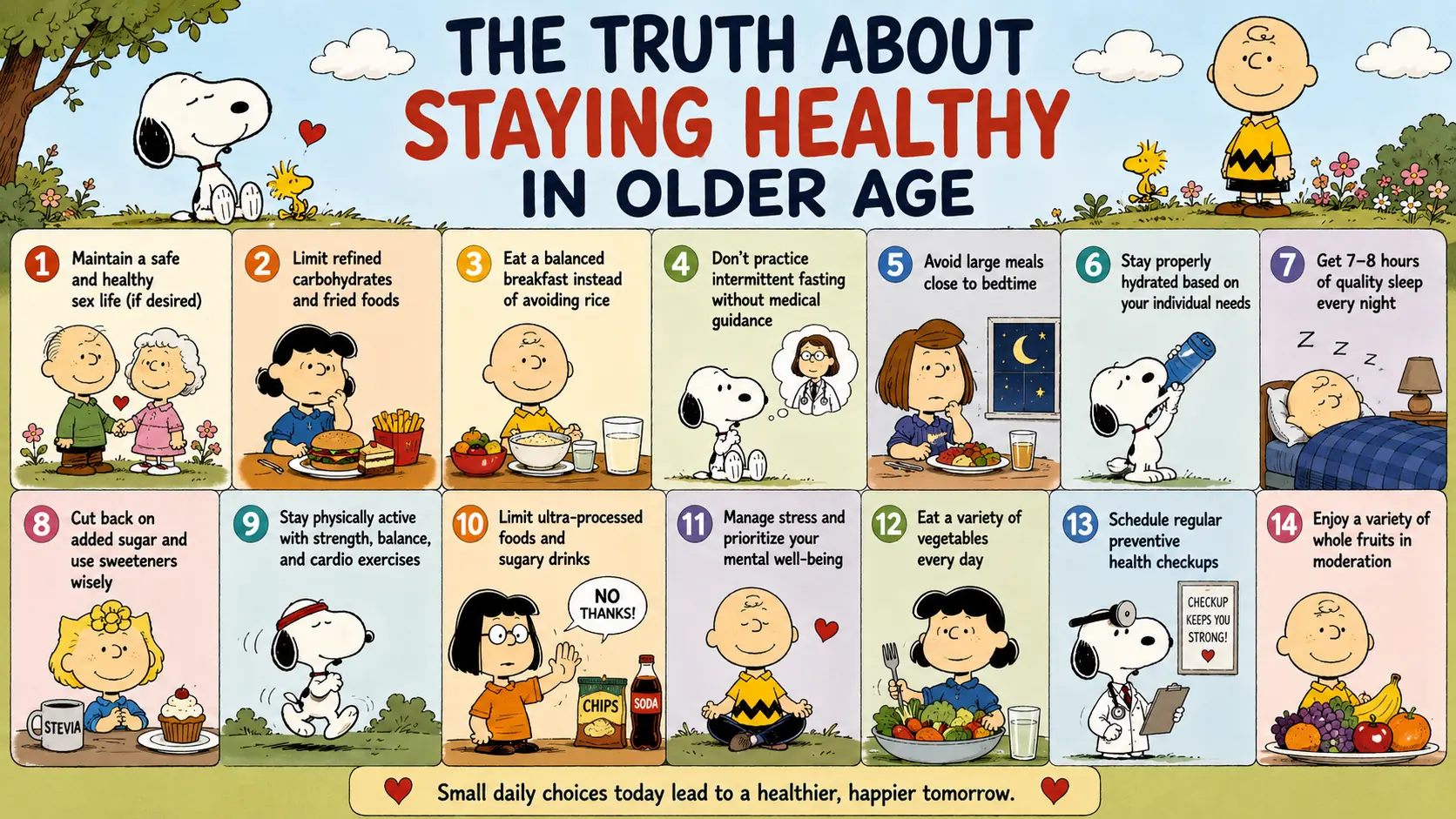
A More Medically Accurate Version of the List
-
Maintain safe and mutually comfortable intimacy if desired and medically appropriate.
-
Limit refined carbohydrates and fried foods rather than eliminating all carbohydrates.
-
Rice can be eaten for breakfast in a moderate portion with vegetables and protein.
-
Do not begin intermittent fasting without considering medications, nutritional needs, and medical conditions.
-
Avoid large meals close to bedtime instead of following a strict 7:00 p.m. rule.
-
Drink enough fluids according to your personal needs, climate, medications, and health conditions.
-
Aim for approximately seven to eight hours of restorative sleep.
-
Reduce added sugar; use stevia only as an optional substitute in moderation.
-
Combine aerobic activity with strength, balance, and flexibility exercises.
-
Limit ultra-processed foods, sugary drinks, and products high in sodium and unhealthy fats.
-
Manage stress, maintain social connections, and seek emotional support when needed.
-
Eat a variety of vegetables every day.
-
Attend regular preventive healthcare appointments and review medications and vaccinations.
-
Eat a variety of whole fruits in appropriate portions; no single fruit is required.
This information is intended for general education and does not replace individualized medical advice. Older adults with diabetes, heart failure, kidney disease, liver disease, malnutrition, or multiple prescription medications should consult a healthcare professional before changing their fasting schedule, meal timing, fluid intake, or diet.