They told me a woman my size had only two choices in the Colorado Territory: die an invisible spinster or marry a desperate, blind drunk. But when the richest, most dangerous man in the mountains rode into town, he didn't even look at my perfect sister. He looked at me. The town of Bitter Creek in the winter of 1879 was a place where beauty was a currency far more valuable than gold. It was a harsh, unforgiving settlement nestled at the jagged base of the San Juan Mountains, a place of biting winds, knee-deep freezing mud, and desperate people.
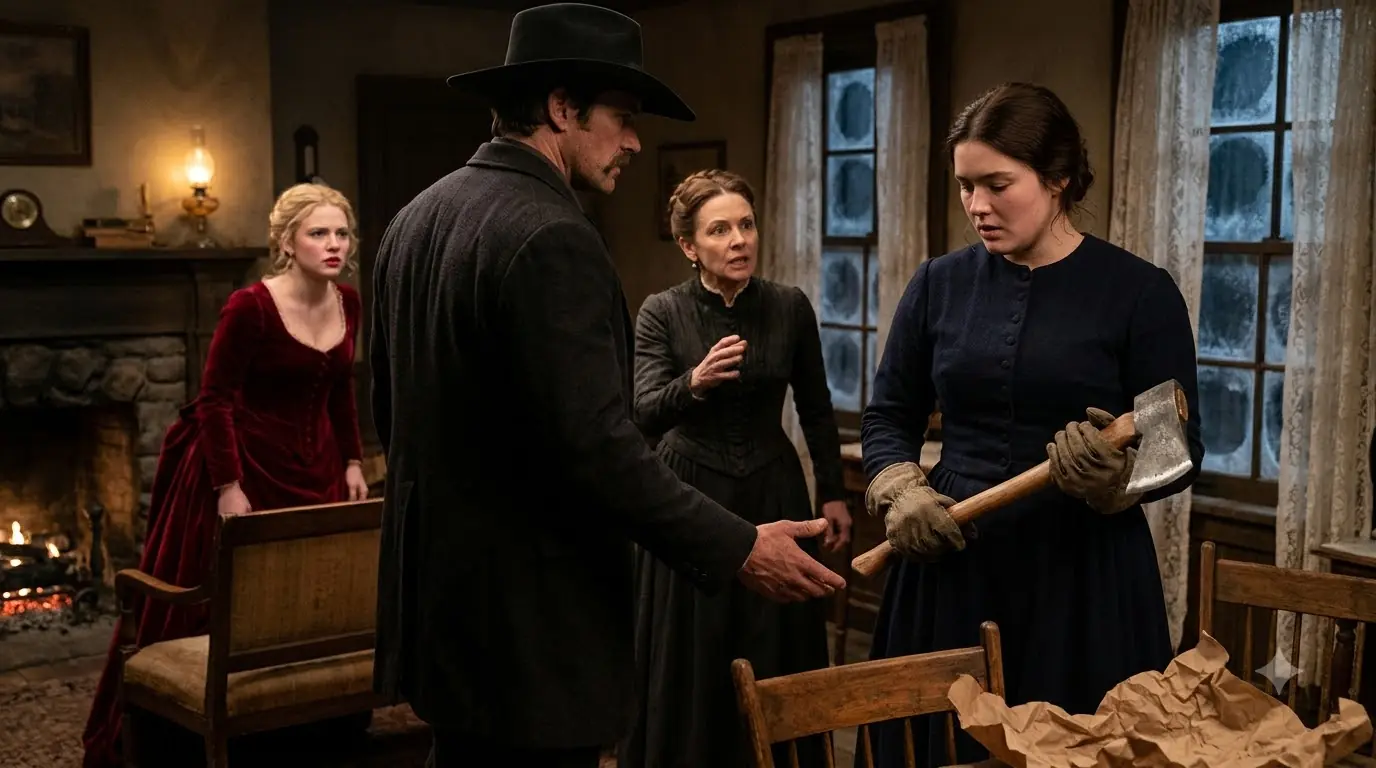
In our family, my younger sister Josephine was the gold mine. I was just the draft horse. My name is Clementine Sullivan. At 22 years old, I was a stark contrast to everything a Victorian woman on the frontier was supposed to be. Where Josephine was petite, porcelain-skinned, and possessed a waist you could encircle with two hands, I was built like the mountains themselves.
I was a heavy, broad-shouldered woman carrying over 200 pounds of solid weight on a tall frame. I had thick arms, a wide, sturdy waist, and legs built for bearing burdens, not for dancing the Virginia Reel. My mother, Ruth, had spent my teenage years trying to force me into steel-boned corsets, weeping as the laces snapped and the fabric strained. Eventually, she gave up, redirecting all her matrimonial ambitions toward Josephine, leaving me to the life of a laborer. I didn't mind it, truthfully.
While Josephine sat in the parlor doing needlepoint to keep her hands soft, I was out back in my oversized denim trousers and flannel work shirts, running the heavy labor of my father's failing hardware and lumber store. My father, Ezekiel, had a bad fall from a wagon three years prior, leaving him with a crushed hip and a permanent limp. Somebody had to haul the 100-pound sacks of grain. Somebody had to unload the iron stoves from the supply trains. Somebody had to chop the endless cords of wood required to keep our drafty house and the store warm through the brutal seven-month winters.
That somebody was me. I was invisible to the men of Bitter Creek. When they looked at Josephine, they took off their hats and stumbled over their words. When they looked at me, they just saw a piece of the scenery, a useful, sweat-stained fixture who could help them load a wagon faster than any farm hand. I had long ago made peace with my reflection.
I knew my cheeks were ruddy from the wind, my knuckles calloused and scarred, and my body too large to ever be considered fragile or delicate. I was entirely resigned to living out my days keeping the family business afloat so that Josephine could marry well and save us all from the crushing debts my father had secretly accrued. The debts were the whispering shadow over our household. Horace Albright, the ruthless owner of the Bitter Creek Bank and Trust, held the deed to our store and our home. He was a vulture of a man who looked at Josephine with hungry, calculating eyes, hinting that our debts might vanish if she were to become his bride.
My parents were terrified of him, but they held out hope for a better match, a savior from the outside. Then came the news that set the entire territory on fire. Beau Lawson was coming to town. Beau Lawson was a legend before he was a man. He had gone into the high peaks five years ago with nothing but a mule and a pickaxe.