Reginald Cass didn't bother lowering his voice when he said it. He stood at the center of the auction floor in Redstone Creek, Wyoming Territory, a thick man with a silver watch chain across his belly and the kind of smile that never reached his eyes. And he said it loud enough for the whole room to hear. Nobody's going to bid on a broke cowboy with two hungry brats. Might as well sign those papers now, Mercer, and save us all the embarrassment.
Wade Mercer stood 3 feet away, holding his daughter's hand so tightly she winced, but didn't pull back. His son stood at his other side, jaw set, staring at the floor. Wade said nothing. There was nothing left to say. Cass had already bought the bank note, already called in the debt, already arranged for the county to have paperwork drawn up removing the children from Wade's custody if he couldn't satisfy what he owed by noon.
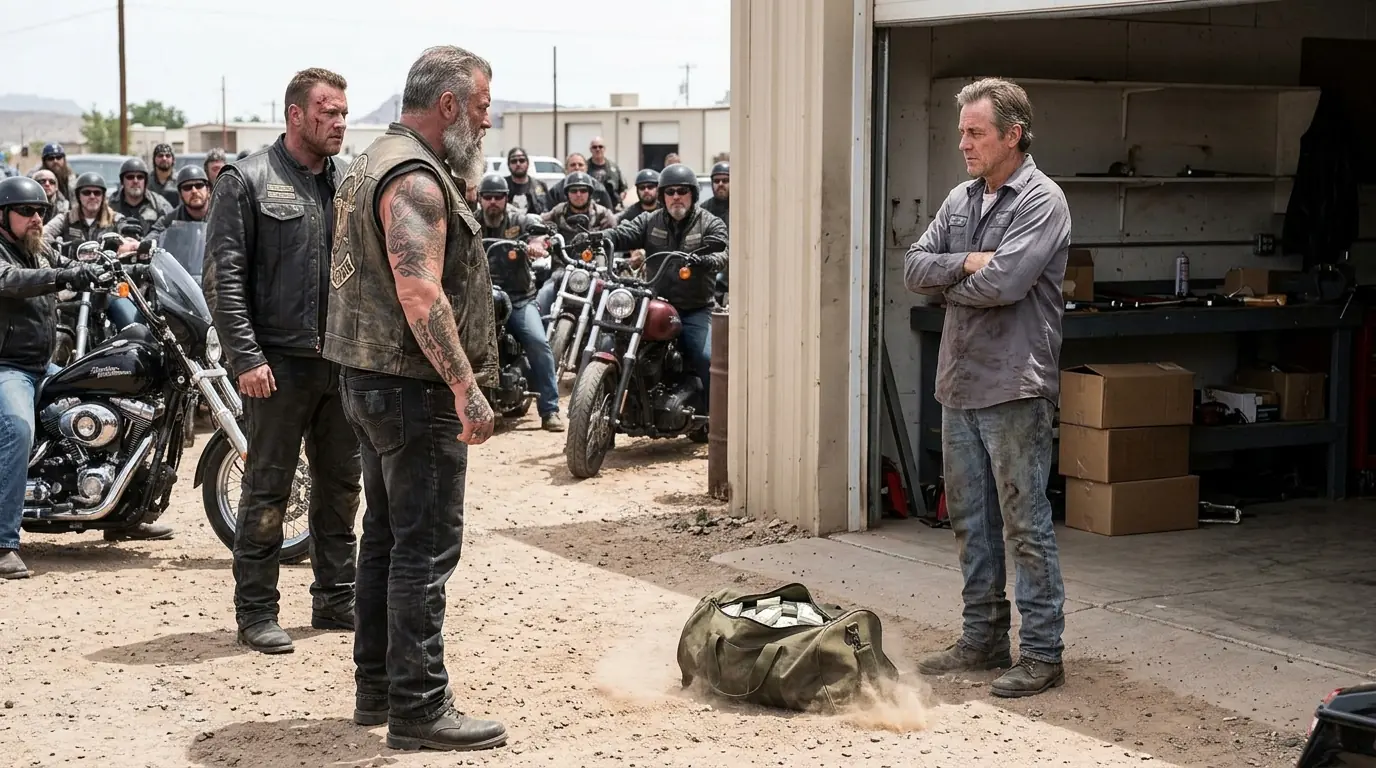
The clock on the wall behind the auctioneer read 11:42. If you've never watched a man stand in a room full of people and feel completely alone, you don't know what a quiet that sounds like. But today, someone in that room was about to do something nobody expected. The auction house in Redstone Creek was not a grand building. It was a converted feed warehouse on the south end of Main Street with split plank floors that groaned under weight and windows, so grimy the autumn light came through yellow and weak.
The smell of sawdust and old leather never fully left the walls. On an autoimmune Tuesday, men came here to bid on horses, on cattle lots, on parcels of equipment from failed homesteads. Redstone Creek had seen enough failed homesteads to keep the auctioneer busy most of the season. But this Tuesday morning in October was different. Word had gotten around the way.
Word always got around in a town of 400 people that Wade Mercer was going to lose his children. Not because he was a bad man. Not because he drank or gambled or ran. People knew Wade Mercer. He'd worked cattle in this valley for 11 years.
He'd built his small ranch from a single plot of leased land and three cows and a borrowed bull, working himself thin through the short summers and brutal winters that Wyoming handed to anyone stubborn enough to try. He was the kind of man who returned a borrowed tool with the blade cleaned and the handle wrapped. The kind who remembered your wife's name and asks after your mother. But the drought had come for 2 years straight. The way droughts do slowly at first, then all at once, and when the grass died and the water table dropped, and the bank sent its third letter, Wade had already sold the cattle he could sell and held on to the horses because he needed them to work.
And then one morning in August, Reginald Cass had appeared at his door with a county official and a stack of papers. And the numbers on those papers were not numbers Wade could argue with. The debt was real. Wade had signed for it years ago when the ranch was climbing and the future felt possible. He hadn't read every line the way he should have.
Most men didn't. Cass had read every line. The arrangement Cass proposed was dressed up in formal language, but the plain meaning was this. Wade would surrender his labor contract and his children's guardianship arrangement to whoever satisfied his outstanding debt at public auction. If nobody bid, the debt reverted to county enforcement and Wade's children 9 years old and Rosie.