The eagle was 22 years old, had not flown free in four years, ate as much as an eagle half his age, and required more attention than any three of the younger birds in the Fenwick aviary. And there was not a falconer in the county who would not have told the Duke that the sensible thing to do was to let him go, which in the language of the county meant selling him to someone who had use for an elderly eagle. Or if no such person could be found, the more final kind of letting go, that was the end of every eagle's life eventually, and was better done with kindness and intention than allowed to arrive on its own. The Duke had been told this by his master falconer, whose name was Sims, and who had been telling him various versions of it for 2 years, with the patient persistence of a man who knows he is right, and has accepted that being right is not always sufficient. He had been told it by his land agent, and by his neighbor to the north, who bred hunting birds, and knew their economics.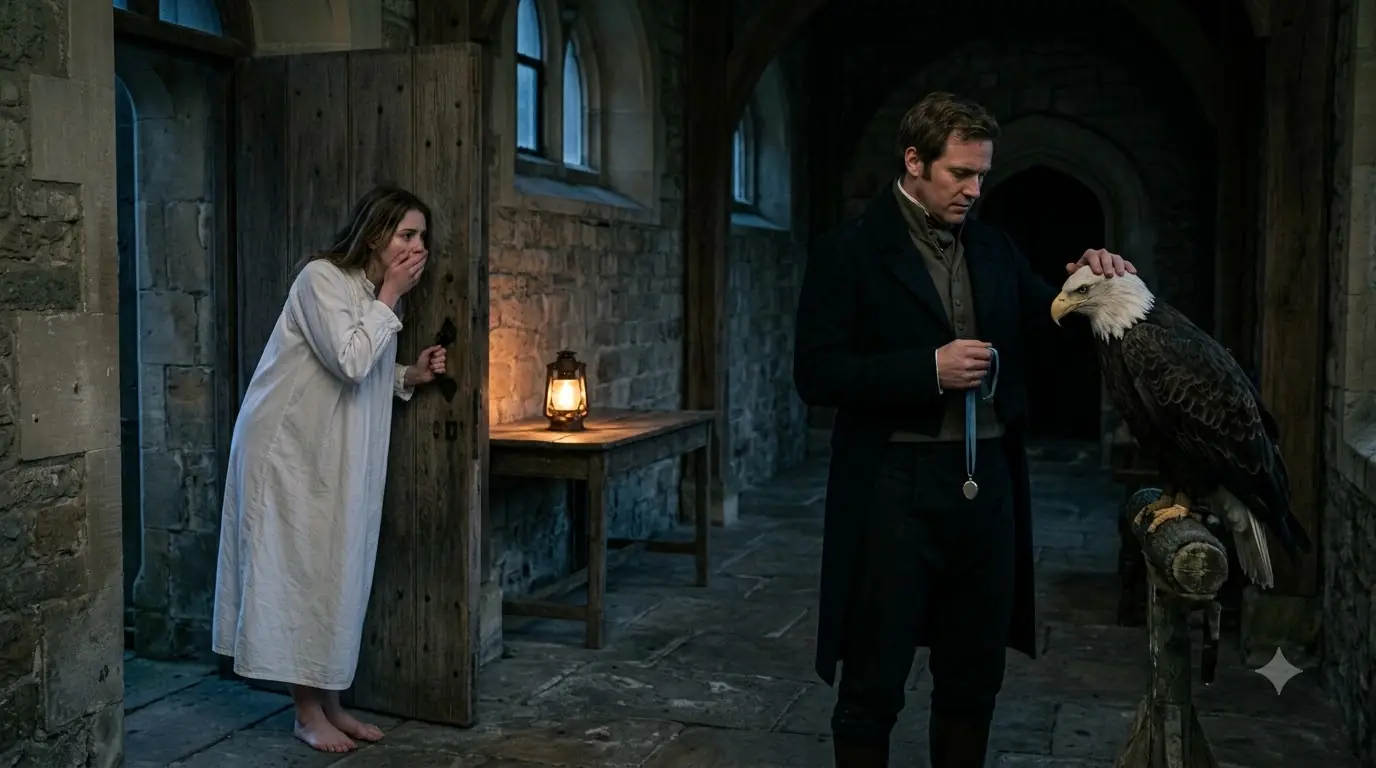
He had been told it in the indirect way by three different people at three different occasions who had mentioned the cost of maintaining a large aviary in the current climate which was the county's way of saying the thing without quite saying the thing directly to a man of his position. The Duke had heard all of this and had said each time in various words that amounted to the same word which was no. And the eagle remained in the Fenwick aviary, in the large enclosure at the end of the row that received the morning sun. And Sims continued to tell him, and he continued to say no, and the eagle continued to eat as much as an eagle half his age, and the subject had settled into the category of things that were known to be unresolvable, and were therefore no longer actively pursued. The eagle's name was Marlo, and his dark-brown plumage shone like mahogany in summer and softened in winter, with a white patch along his left wing.
His face had the quality of old eagles: a settled calm that came not from temperament alone, but from 22 years of having seen most of what the world was going to show him, and having decided it was manageable. He was not injured, and he was not ill. And there was nothing wrong with him except time, which was the thing that was wrong with everything eventually, and was not, in Marlo's case, as wrong as it might have been, because 22 was old for an eagle, but was not the end if the bird was healthy, cared for, and had morning sun in the enclosure at the end of the row. She was 19 and the daughter of the village falconer, which meant she had grown up around eagles in the practical way, not the decorative way that some young women were brought up around eagles, but the way that involved knowing which end was which, and what the difference was between a bruised footpad and a crack in a talon, and how to hold a leg that did not want to be held. She had been coming to the Fenwick aviary since she was 16, when Sims had needed an extra pair of hands for a difficult hatching season, and her father had sent her, and she had stayed because she was useful, and because Sims trusted her with the birds in the way he trusted very few people, which was without reservation on the things she knew, and with clear instruction on the things she did not.
She did not know the Duke. She had seen him at a distance in the way that village people saw the estate family across fields and from the lane and once at the harvest festival where he had stood at the edge of the tent and said the correct things and then left. And she knew his name and the general outline of his reputation, which was that he was a private man who managed the estate carefully, and was not known to cause difficulties for the people on it, which was a better reputation than many estates produced, and was sufficient for the village's purposes. She had not connected the Duke to Marlo until her fourth or fifth Tuesday, when Sims had told her to be careful with the dark-plumed eagle at the end of the row, because he was the Duke's particular eagle, and was to be handled with the same care you would handle a person of consequence, which Sims meant literally, and she took literally, and she had gone to Marlo's enclosure, and introduced herself to him in the way her father had taught her to introduce herself to eagles, which was slowly and from the side and without any sudden movements that would have caused a younger eagle to startle, and caused Marlo only to raise his head and look at her with the settled calm of an animal who has met a great many people, and has a well-developed sense of which ones were worth bothering about. She was apparently worth bothering about because he came to her hand within a minute of her arrival at the enclosure, which Sims told her afterward was not his usual behavior with unfamiliar people, and she had begun from that first Tuesday to give Marlo a portion of her time beyond what the regular aviary work required, checking his talons, feet, and plumage, and talking to him in the low, steady voice her father used with animals, which was not a performance of calm, but the real thing, and Marlo had settled into her visits with the ease of an old eagle who has found a new person he has decided to permit.
She did not know why the Duke kept him. She thought about it in the way she thought about most things that she noticed in the aviaries, which was practically from the standpoint of what she could observe and what the observation told her. And what she observed was that Marlo was well-kept and well-fed, and that the morning enclosure had not been assigned to him by accident, and that Sims treated the question of Marlo's future with the particular delicacy of a man who has been told the answer, and does not agree with it, but has accepted that he does not get to decide. She asked Sims on a Tuesday in October carefully because Sims was a man who answered careful questions and ignored careless ones.
She said, "How long has Marlo been here?"
Sims said, "22 years since he hatched."
She said, "He was hatched at Fenwick."
Sims said his mother was the Duke's mother's eagle. He said it with the particular shortness of a man who has said a thing that contains more than it says and is watching to see whether the person he has said it to picks up what is in it. She thought about this, she said. And the Duke has had him his whole life. Sims said, since he was a boy of 12.
Yes, she said. And he will not sell him. Sims said the Duke will not sell him. He said it with the flatness of a fact that has been established and is no longer being argued. She said nothing further and went back to work and thought about a boy of 12 and an eagle that was now 22 and the 22 years between those two points and what they might contain.
And she filed the thinking for later in the way she filed most things because later was when the understanding arrived and pressing it earlier did not help. She met the Duke on a Friday in November. She had not planned to meet him and he had not planned to be met which was the way most of the real meetings happened. She was in Marlo's enclosure doing the talon check she did on Fridays, the old eagle patient as always with the handling of his feet and talons, and she heard the aviary door at the far end, and heard a step she did not recognize, which was not Sims, and not any of the regular aviary lads, and she straightened up and looked over the enclosure gate, and the Duke was in the aviary passage looking at her. He was perhaps 30, which was older than she had expected from the general impression of him she had formed, with a face that was contained in the way that private people's faces were contained, not closed exactly, but not offered either, and he was in a working coat, not a fine one, which told her he had come to the aviaries for the purpose of coming to the aviaries, and not as part of something else.
He said, "You are Vetch's daughter," she said.
Yes, your grace, she said. Nora Vetch, he nodded. He came down the aisle to Marlo's enclosure, and the eagle shifted closer to the gate, and the Duke put his hand up, and Marlo lowered his head into the palm with the familiarity of 22 years. And she watched this and understood from the watching what the 22 years contained, which was everything that an eagle and a boy and then a man could contain between them across the whole of a shared life.
He said, "How are his feet and talons?"
He looked at her.
He said, "Sims did not mention that."
She said, "I did not tell Sims. I started doing it 3 weeks ago when I noticed it and I was waiting to see if it made a difference before I said anything."
He said, "And has it?"
She said, "Yes."
The crack beginning in one talon has not progressed, and the surrounding scales look better.
He said, "You noticed a talon crack beginning before it became a problem."
She said it is easier to prevent than to fix. He said yes. He said most people wait until it becomes a problem. She said most people are not examining the talons every week. He said no.
He looked at Marlo again, and the eagle turned his head toward him, and he put his other hand up and held the old bird's head between both hands for a moment in the particular way of a person who has held a particular face a great many times and knows the weight of it. She looked away because some things were not for looking at.
He said, "Sims tells me you come twice a week."
She said, "Tuesday and Friday."
He said, "He says you spend more time with this one than the work requires."
She said, "He is easy company."
He said, "Yes."
He said it with the complete quality, just the word, and she understood from it that Marlo was easy company for him too, and had been for 22 years, and that the word contained the whole of that.
She said, "He was your mother's eagle's offspring."
He looked at her.
She said, "Sims told me his mother was your mother's eagle."
He said, "Yes."
He said, "His mother died the spring he hatched."
She said, "The eagle?"
He said, "Yes."
He said, "My mother brought the eagle here when she married my father."
He said, "The eagle was hers, specifically hers, from before the marriage. And when she came to Fenwick, the eagle came with her and was kept in this aviary, in this enclosure. And when my mother died, the eagle was the last thing that was specifically hers and not the estates. And then the eagle laid the egg from which Marlo hatched. Afterward, the eagle died, and Marlo was what was left."
She was quiet for a moment.
She said, "How old were you when your mother died?"
"Twelve."
He said it without inflection, the way facts are stated after they have been stated so many times that they have ceased to require inflection, and she heard the 12-year-old in it, and the fact that the eagle in the enclosure was the same age as the grief, which was 22, and she thought this was the real reason, and it was both simpler and larger than the reasons the county had been trying to attach to it, which were about sentiment and impracticality, and the indulgence of old eagles, she said. And Marlo hatched that year.
"The same spring," he said.
Sims, at the time, was the assistant falconer, and he let me be there for the hatching because I had asked, and he thought it would be good for me, which it was.
"Marlo has been mine from the night he hatched," he said.
"And he is the last thing that was specifically your mother's."
He looked at her. She said it without softening it because the precise thing did not need softening. It needed saying.
He said, "Yes."
He said it simply, and she received it simply, and they stood on either side of the old eagle's enclosure gate in the November aviary, and the morning light came through the high windows, and lay in bars across the sanded floor. And the settling was the settling of a thing that has been said properly for the first time which is different from every other kind of settling.
She said, "The county thinks it is sentiment."
He said, "It is sentiment. I know it is sentiment."
He said Sims has told me twice a year for 2 years that the sensible thing to do is to let him go. And Sims is right about the sensible thing and I am doing the other thing which I am aware is not the sensible thing and which I intend to continue doing.
She said, "I do not think it is only sentiment."
He looked at her.
She said, "Sentiment is when you keep something because it makes you feel better to keep it."
She said, "This seems to me to be something else."
He said, "What does it seem to you?"
She said, "It seems to me to be keeping faith."
He said, "Keeping faith."
She said, "You were 12 years old and your mother died and everything that was specifically hers became the estates or was dispersed. And then this eagle hatched from an egg laid by her eagle and you have kept him for 22 years. And you are keeping faith with her through him, which is not the same as sentiment, which is about your feeling. Because keeping faith is about her, about the fact that she was here and had things that were hers, and that the fact of those things should not disappear just because she did."
He was very still. She had not planned to say all of that, and she had said it anyway, because it was what she had been thinking since November when she understood what the 22 years contained. And she said it in the same practical way she talked about cracked talons and dry scales, because it was a practical thing, really. It was a fact about what the eagle meant, and why he was still in the morning enclosure, and she was not going to dress it as less than what it was.
He said, "You are 19 years old."
She said, "Yes."
He said, "And the daughter of the falconer?"
She said, "Yes."
He said, "And you have worked out in 11 weeks what no one else in this county has worked out in 22 years."
She said, "They were not looking at the eagle every week."
He said, "No."
He said, "They were looking at the eagle and seeing an old eagle."
She said, "He is an old eagle."
He said, "Yes. He is also 22 years of being the last thing."
She said, "Yes."
He said, "You are the first person I have said that to."
She said, "I am the first person who asked."
He said, "Yes."
He looked at Marlo, who had dropped his head back to the food in the enclosure, with the comfortable indifference of an old eagle who has been the subject of discussion and has opinions about the quality of the meat that are more pressing than whatever the people outside his door are talking about.
She said, "He is healthy."
He said, "Yes."
She said, "There is no reason he cannot have another few years if the leg and talon are managed and he is not required to hunt or fly long distances."
He said, "I know."
She said, "The morning enclosure is the right one for him."
He said, "I chose it for the sun."
She said, "Yes, I know."
He said, "How do you know?"
She said, "Because an eagle kept for sentiment would have been put wherever was convenient."
The morning enclosure is the best enclosure in this aviary, and it was chosen for him specifically, which is the choosing of a person who has thought about what the eagle needs rather than what the care costs. He looked at her for a long time.
He said, "Nora Vetch."
She said, "Yes."
He said, "Your father is the best falconer in three counties."
She said, "I know."
He said, "And you have inherited his eye for birds."
She said, "I have inherited his habits, which includes examining the talons before they become a problem."
He said, "And the eagle before he becomes a problem."
She said, "Marlo is not a problem."
He said, "No."
He said, "He has not been a problem in 22 years."
She said, "He is remarkably gentle for his age."
He said, "He has always been gentle."
He said, "My mother would have liked that about him."
She said, "What do you mean?"
He said she had a theory about eagles which was that the gentle ones were gentle because they had decided the world was manageable and that the decision was made in the first year and set the character for life and that the first year depended almost entirely on who was with the bird. He said Marlo decided the world was manageable in his first year and I was the person who was with him.
She said, "Then you are the reason he is gentle."
He said, "And he is the reason I knew the world was manageable in that year."
He said it quietly, and she understood what he meant, which was the 12-year-old, and the spring, and the thing that was specifically his mother's, and then the eaglet that hatched from her egg, and the night in the aviary, when the assistant falconer let a grieving boy be present for something that was coming into the world rather than leaving it. And she thought that Sims at the time had known what he was doing, had known that a boy of 12, who had just lost his mother needed to be given something that was beginning rather than something that was ending, and that the beginning had been Marlo, and that 22 years of quiet mornings in the sunlit enclosure was the return on that one night in the aviary.
She said, "Sims knew what he was doing."
He said, "Yes."
He said, "Sims has always known what he was doing."
He said, "He just does not know why I will not sell the eagle, which I have never told him."
She said, "Why not?"
He said, "Because explaining it would make it into a story, and it is not a story. It is only the truth of what the eagle is."
She said, "Yes."
She said, "Stories make things into the past."
He looked at her.
He said, "Yes."
He said, "And Marlo is not the past."
She said, "No."
She said, "He is 22 years old and eating too much, and the left leg and talon need watching, and he is standing in the best enclosure in the aviary in the morning sun, and he is very much the present," he said.
"Yes," he said.
"That is exactly what he is."
They stood for a moment in the quiet aviary, and the eagle tore at his meat, and the light moved in the high windows, and she thought that the county had been trying to understand the eagle in terms of economics and sense, and had been using the wrong frame entirely, because the frame was not economics. It was a boy of 12 on the night something hatched when everything else was ending. And the frame being wrong meant every conclusion drawn from it was wrong and the Duke had said nothing to correct the frame because explaining it would make it into a story and it was not a story which was the most precise thing she had heard anyone say about grief that was still living which was that it was not a story because stories ended and this had not ended and was not going to end while the eagle was in the enclosure and the sun came through the high window in the morning. He said the Tuesday and Friday visits.
She said, "Yes."
He said, "I would like you to continue them."
She said, "Sims has not told me otherwise."
He said, "I am telling you directly, so there is no ambiguity about it."
She said, "Then I will continue."
He said, "And the talon."
She said, "I will keep applying balm on Tuesdays and check it on Fridays."
He said, "If the talon worsens, come to me directly and not to Sims."
She said, "I will."
He said, "Thank you, Nora Vetch."
She said, "Your grace."
He said, "James."
He said it with the particular quality of a man who has said his name to someone who has earned the saying of it. And she received it without making anything more of it than it was, which was a name offered in the morning light of an aviary in November to a falconer's daughter with balm on her hands, who had examined the talon before it became a problem, and had understood what 22 years contained without being told. She went back to the talon check, and he stayed for a while longer, with his hand on the old eagle's breast, in the way he had always put his hand on the old eagle's breast, the familiar weight of it, the 22 years of it. And then he went out through the aviary door, and she heard his step on the cobbles outside going back toward the house. And Marlo pulled another strip of meat and swallowed it with the comfortable deliberateness of an eagle who has nowhere else to be and knows it.
And she finished the talon check and noted that the surrounding scales looked better and that the crack in the talon was not progressing and that the balm was working. And she wrote it in the small notebook she kept for the aviary observations. And she wrote it in the practical way, the way of facts that were useful to know. And then she looked at the old dark-plumed eagle in the morning light, and she thought that there was a kind of keeping that was not about the past and not about the future, but was about the fact that something had been here and was still here. And the being still here was its own argument for continuing to be here, and that the Duke of Fenwick had understood this at 12 years old, on the night something hatched, when everything else was ending, and had been keeping faith with the understanding for 22 years, and that the county had called it sentiment and impracticality, and had been wrong about both, which was not surprising, because the county was always looking at the eagle and seeing an old eagle.
And she had looked at the eagle and seen what was specific and true about him, which was the morning sun and the left leg. And 22 years of the world being manageable, and the difference between those two kinds of looking was the whole difference. And she intended to go on being the second kind of person in this aviary on Tuesdays and Fridays, for as long as the eagle was in the morning enclosure, and the morning light came through the high windows and fell in bars across the clean perch and fresh meat, which she intended to be for a considerable time yet.