The Duke of Wexford laughed when his wife placed her wedding ring beside a sealed letter and told him she was leaving. He laughed until he saw the name written beneath the solicitor's red wax: Lady Serafina's mother, dead these eleven years, had left instructions that could ruin him. Beyond the tall windows of Blackthorn Hall, a carriage waited in the cold dawn. Serafina had spent half her life learning how to remain quiet in this house, but the silence she brought to her husband's study that morning was unlike anything he had ever heard.
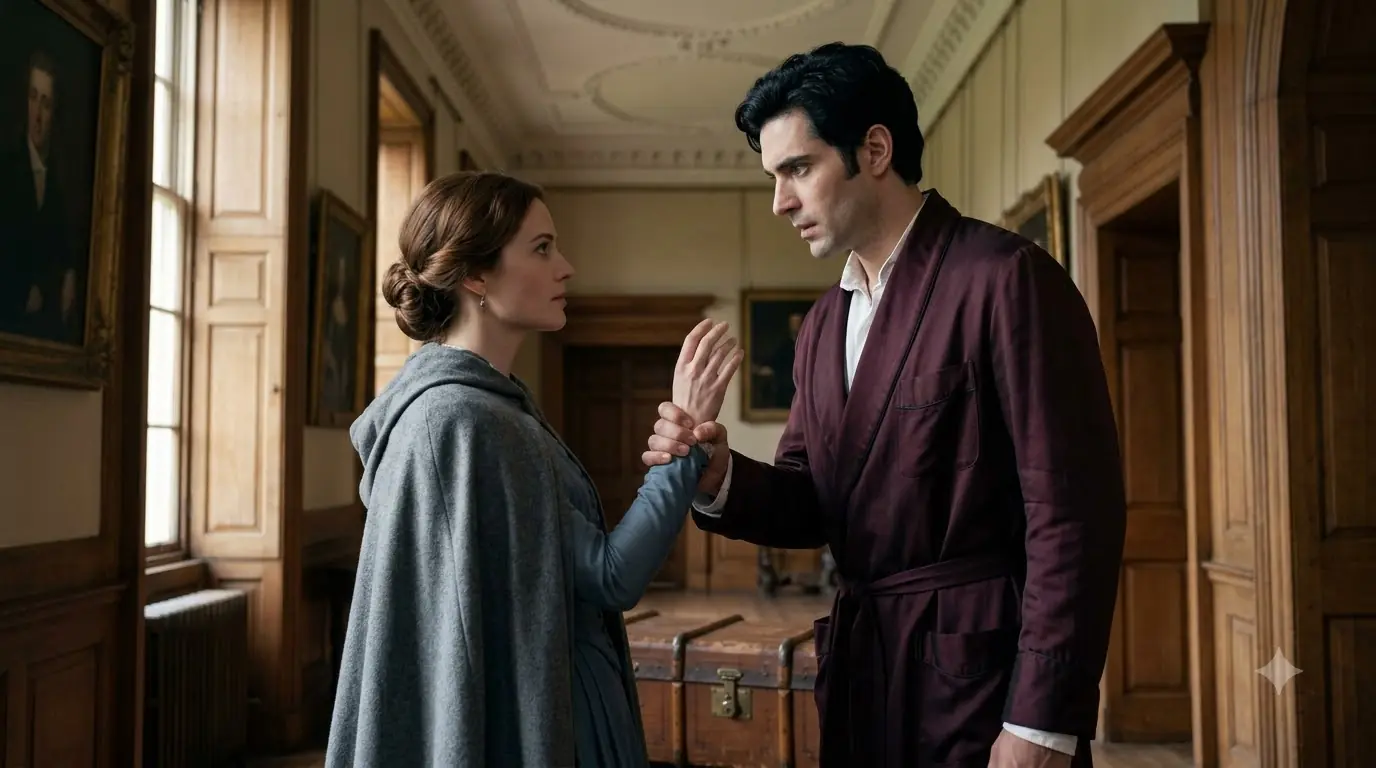
"You're being absurd," Edmund Vale said, without rising from behind his desk. At thirty-nine, the Duke of Wexford was still handsome in the precise, severe way society admired: dark hair brushed neatly back, straight shoulders, a face that seldom betrayed uncertainty. His wife stood opposite him in a plain traveling gown, her auburn hair pinned beneath a modest bonnet. He glanced at the ring, then at the single trunk visible through the open door, and smiled as though she were a child staging a harmless rebellion.
"I am leaving Blackthorn," she said. "I have already arranged where I shall stay." Edmund picked up the ring between two fingers and examined it. "You have no money, Serafina. You have no house. The title you enjoy comes from me, and your friends are my friends." She had once believed those words, and perhaps that was why he spoke them so easily. This morning she simply answered, "My mother left me a house. You have been collecting its income for eleven years."
The smile disappeared. Edmund set the ring down carefully, as though it had suddenly become dangerous. "Who has been filling your head with nonsense?" he asked. Serafina opened the letter and placed it beside his hand. It was a copy of an account prepared by his own estate steward, recording rents from the coastal property of Bellweather House and payments diverted to Blackthorn's creditors. At the bottom was a signature authorizing the arrangement, written in a hand that resembled hers but was not hers.
"You signed my name," she said. Edmund's jaw tightened. "I protected your inheritance. Bellweather was a useless burden, and the family needed funds." She looked around his study, at the hunting prints and polished cabinets, at the enormous desk where he had spent so many evenings making decisions about her life without inviting her into the room. "Then you should have asked your family," she replied. "Instead, you asked a clerk to pretend I had agreed."
He rose sharply, the chair scraping across the floor. "Do you understand what people will say if you leave me?" His voice was no longer amused. "A duchess walking out on her husband will become the entertainment of every drawing room in England." Serafina remembered eleven years of dinners where he had corrected her opinions before she finished speaking, and parties where he introduced her as though she were a painting he had purchased. "They have been entertained by my unhappiness for years," she said. "I shall survive their disappointment."