The first warning was not the sound of a child crying. It was the silence that followed. As the Duke of Alderwick crossed the threshold of his country house three days before anyone expected him, he heard a woman's voice rising from the morning room and the scrape of iron against the hearth.
Then a small boy said, so quietly that the Duke almost missed it, "Please don't hurt my brother." Edmund Vale stopped with rain dripping from his riding coat onto the polished floor. He had spent the long journey home imagining warm fires, a cup of tea, and two sons who would complain that he had been away too long. Instead he heard the woman he intended to marry promise that no one would believe the children if they told him what she had done.
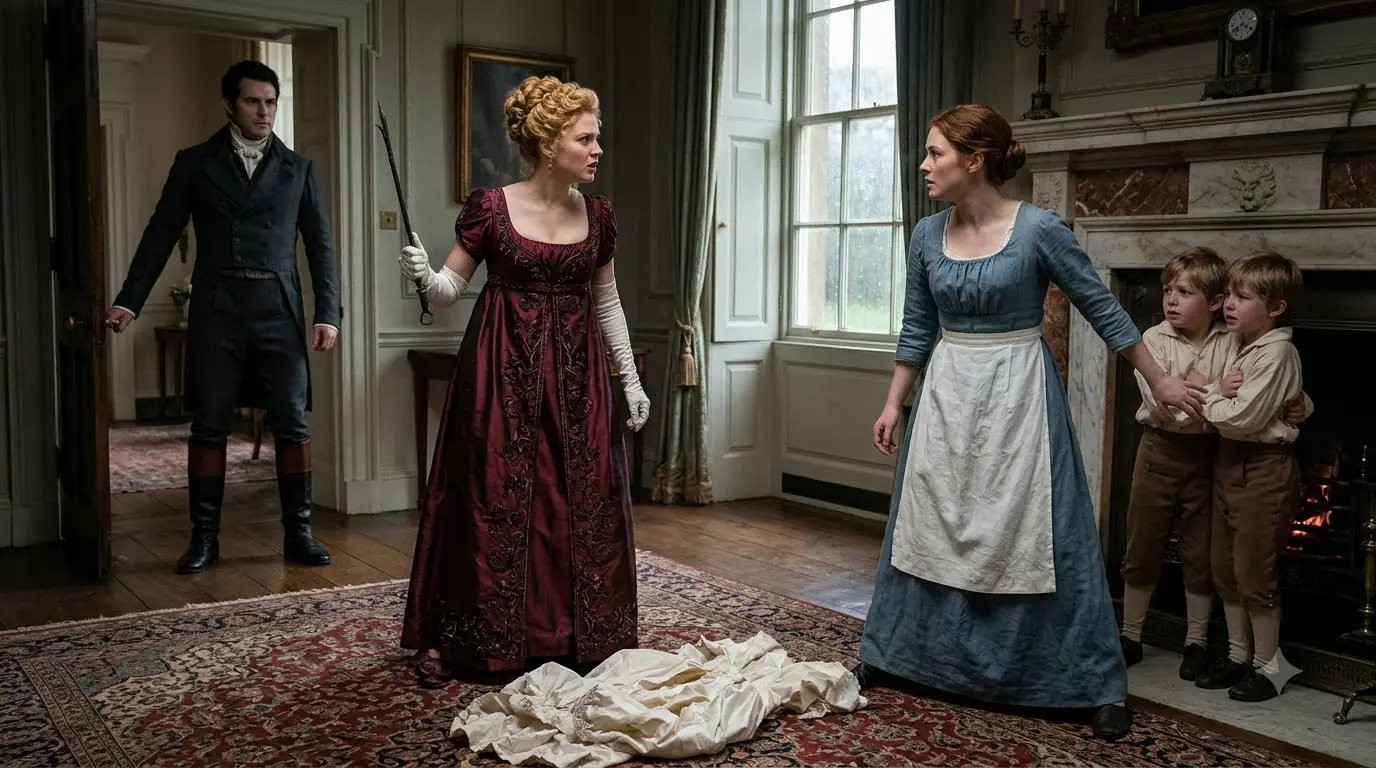
For ten terrible seconds Edmund stood outside the open door and listened. Those seconds would change his family more completely than his marriage settlement, his title, or all the years of grief through which he had tried to guide his household. The woman threatening his children was Lady Celia Harcourt, admired throughout London for the sweetness of her manners.
Between Celia and the boys stood a young nursery maid named Beatrice Rowan, her plain dress caught around her knees and her arms spread wide. Edmund saw a heavy fire poker trembling in Celia's hand, saw his younger son Oliver clinging to his twin Thomas, and understood how little he had known about the people he had invited into his home.
That afternoon had begun long before his unexpected return. It had begun with a funeral, three winters earlier, when Edmund had stood beside a coffin and listened to the church bells while his two three-year-old boys slept in their grandmother's carriage. His wife, Marianne, had been ill for only eight days. At first the physician had promised that a fever would break. Then he had become less certain, and at the end of the week he had drawn Edmund aside and spoken with the careful gentleness reserved for men who could purchase almost anything except another hour. Edmund had stayed beside Marianne until dawn, remembering afterward not her final words but the weight of her hand becoming still in his.
Before that winter he had thought of himself as a capable man. He knew the grain rents of his properties, the names of his chief tenants, the strength of the bridges on the northern estate, and the parliamentary arguments likely to matter during the coming session. He could settle a boundary dispute before breakfast and persuade a suspicious creditor to wait another quarter. Yet when Thomas asked why Mama did not come downstairs, Edmund discovered that no title gave him the language to explain death to a child. He said she was gone, then that she had died, then finally that she could never return. Both boys stared at him as though there must be another answer hidden behind his collar.