The laughter started before the fish ever touched the water.
That was the part Margaret Hale remembered most clearly. People later talked about the tilapia, the irrigation ditches, the record harvests, and the professors who came to study her farm. But Margaret remembered the county co-op meeting first. She remembered the rainy February afternoon, the smell of coffee in paper cups, the wet jackets hanging near the door, and the exact moment the whole room decided she had finally lost her mind.
The meeting took place inside the co-op conference room, where every chair was filled with farmers who looked tired before the discussion even began. Weather forecasts covered one wall. Commodity prices covered another. Fertilizer invoices sat in front of men who had stopped pretending the numbers made sense. The problem was soil, though no one liked saying it too directly. Their fields were not performing the way they used to.
Input costs kept rising. Fertilizer bills climbed every season. Yields stayed stubborn, and every year the land seemed to need more help just to give back the same crop. No one was happy, but everyone understood the problem. That was when Margaret raised her hand. Across the room, Dale Harper immediately leaned back in his chair.
“Oh no,” he said.
Margaret looked at him. “What?”
Dale pointed his coffee cup at her. “That look.”
“What look?”
“The idea look.”
The room laughed because everyone knew exactly what he meant. Margaret Hale only came to meetings when she wanted answers, or when she thought she had found one. Neither situation usually ended quietly. She was forty-two years old, stubborn, sharp-eyed, and too curious for the comfort of her neighbors. She farmed nearly six hundred acres of Missouri bottomland that had belonged to her family for three generations.
The co-op manager sighed and asked, “What are you thinking, Margaret?”
Margaret stood and walked toward the whiteboard. She picked up a marker and drew a ditch. Then another. Then several connecting channels. The room quieted just enough for curiosity to win over boredom. Then Margaret drew fish inside the ditches.
For one complete second, there was absolute silence.
Then Dale said, “No.”
Margaret turned around. “What?”
Dale pointed at the drawing. “No.”
“What?”
“Fish.”
“Yes.”
“Why?”
Margaret smiled slightly. “Good question.”
The room laughed again, louder this time. Margaret let it happen. She was used to people laughing before they listened. The Hale farm had always been called good land, rich bottomland that her grandfather Samuel Hale used to describe as black cake batter. Dark, soft, and alive. When Margaret was a girl, she thought soil was just dirt, something under boots and tractors. Samuel taught her otherwise.
One summer evening, when Margaret was fourteen, she followed him through a soybean field after heavy rain. The field looked wet from a distance, but Samuel knelt and scooped soil into his hands. He frowned. “Feel that,” he told her. Margaret took some in her palm. It felt strangely dry despite the rain.
“What’s wrong?” she asked.
Samuel tossed the soil aside. “Nothing.”
She looked confused.
“Not yet,” he added.
That answer stayed with her. Years later, she understood what he meant. Healthy soil behaved differently. It held water differently, supported life differently, and recovered differently after stress. The distinction mattered. By the time Margaret inherited the farm, the land was not ruined, but it had changed. Organic matter had dropped, water retention had weakened, and every drought exposed the same truth.
The soil was tired.
After Samuel passed, Margaret inherited not only the farm but his notebooks. There were hundreds of them, full of rainfall records, yield histories, field observations, weather patterns, and strange ideas written in his careful hand. One set of notebooks fascinated her more than the others. Samuel had been obsessed with biology. Earthworms, microbes, organic matter, natural nutrient cycles, and the unseen life beneath the surface. Compared to modern farming talk, the entries seemed old-fashioned at first. Then Margaret kept reading.
The more she read, the more she saw a pattern. Samuel had believed the farm’s future was not only in chemical inputs, but in living systems. He had written about soil as if it were a living creature, not a machine. Margaret started researching alternatives. Cover crops, composting, reduced tillage, and every soil restoration method she could find. Then one article changed everything, not because it gave her a complete answer, but because it gave her fish.
The article described integrated farming systems used in parts of Asia. Rice, water, fish, nutrients, plants, insects, and microorganisms all worked together in one system. Fish moved through shallow water, disturbed sediment, consumed algae, produced waste, and contributed to nutrient cycling. Margaret did not grow rice. But she had miles of irrigation ditches running through her farm.
Most people would have read the article, found it interesting, and forgotten it. Margaret did not. She went back to Samuel’s notebooks. She checked her irrigation maps. She studied flow patterns, ditch depth, water temperatures, and seasonal timing. She ran numbers late into the night at the kitchen table. Then she brought the idea to the co-op meeting.
Dale rubbed his forehead. “No.”
Margaret folded her arms. “Yes.”
“No.”
“Yes.”
The room laughed harder, but the co-op manager looked exhausted rather than amused. “Explain,” he said.
Margaret pointed at the whiteboard. “We move irrigation water through miles of ditches every year. Nobody argues with that.”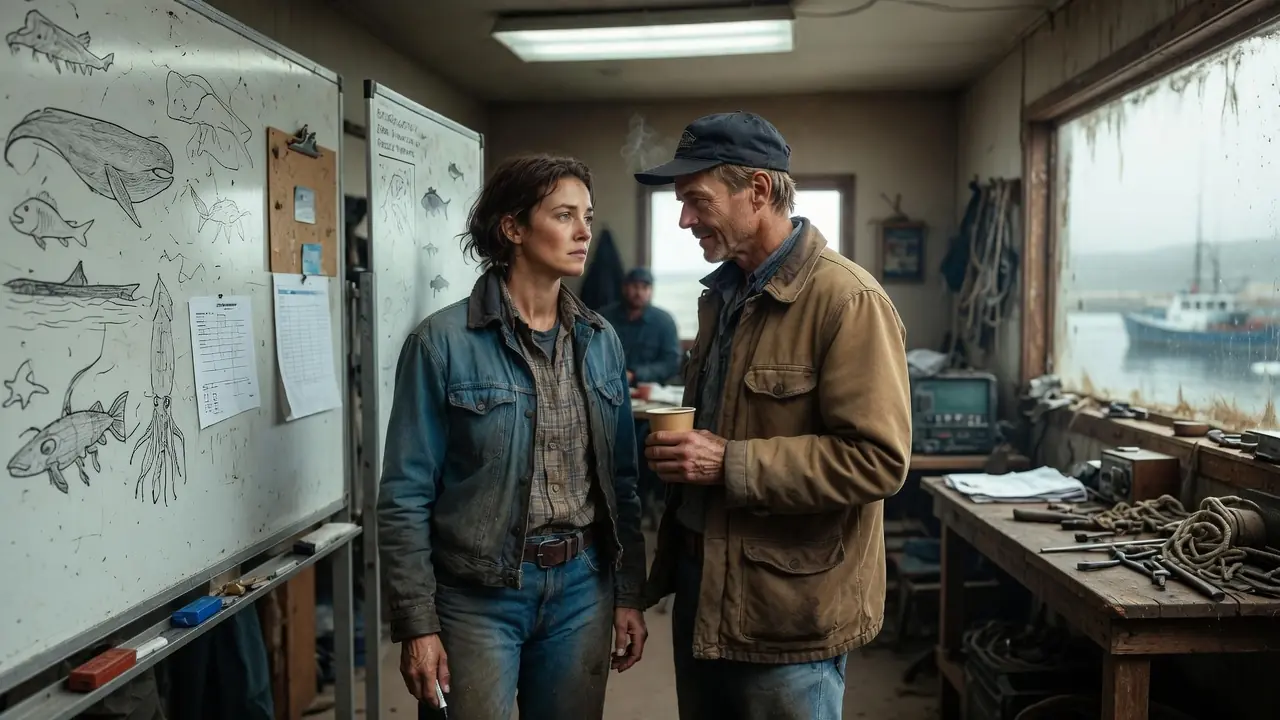
No one did, because it was true. Her farm relied heavily on those channels. The irrigation system carried water through field after field. Margaret pointed at the little fish she had drawn. “Fish produce nutrients. Fish waste feeds biology. Fish stir sediment. Fish consume algae. Fish contribute organic material.”
Dale stared at her. “So you want to put fish in ditches.”
“Yes.”
The room erupted. It was not angry laughter. It was worse than anger. It was amused dismissal, the kind of laughter people use when they do not think an idea is worth arguing against. Someone muttered that Margaret was opening a seafood farm. Someone else asked if she planned to sell catfish with her soybeans. Dale laughed so hard he had to set down his coffee cup.
Margaret sat down while the meeting moved on. But the jokes did not stop when the meeting ended. They followed her to the diner, the co-op, church parking lots, hardware stores, and the feed counter. Dale created new material every week. If Margaret walked into the diner, he would call out, “Good news, everybody. Margaret’s bringing fish to the cornfield.” The room would laugh. Margaret would keep drinking her coffee.
Mostly, she ignored them.
Privately, the idea would not leave her alone. The more she researched, the more it made sense. She was not imagining magic. She was imagining a biological loop inside a system that already existed. The ditches held water, the water moved across the farm, and the fish could influence that water. Maybe the effect would be small. Maybe it would be useless. But the farm was already losing resilience, and doing nothing was its own kind of failure.
The next spring, she ordered tilapia.
Not many at first, just enough for a test. But the delivery alone became an event. A specialized tank truck rolled into the Hale farmyard carrying thousands of juvenile fish, and somehow half the county appeared to watch. Dale Harper was there, naturally. He climbed out of his truck, stared at the tanks, then at Margaret, then back at the tanks.
“No,” he said.
Margaret smiled. “Morning, Dale.”
He pointed at the tanks. “No.”
“What?”
“The fish.”
“Yes.”
“Fish.”
“Yes.”
“On a farm.”
“Yes.”
Dale took a long breath. “You actually did it.”
Margaret nodded. “I did.”
The first stocking day looked ridiculous to the spectators. Workers released fingerlings into the irrigation channels. Water churned as silver bodies flashed beneath the surface. Children leaned over the banks to watch. Neighbors laughed from the gravel road. Dale looked almost delighted, as if Margaret had handed him enough jokes to last the entire year.
Small towns loved unusual things, especially if they could be mocked without consequence. Margaret knew that. She had grown up there. She knew how quickly stories traveled and how long they lasted. The fish in the ditches became the county’s favorite joke before sundown. By the next morning, someone at the diner had already asked if she planned to plant corn or tartar sauce.
That lasted until summer.
Then things became strange.
The fish survived. Not all of them, but enough. The irrigation ditches stayed cleaner than usual. Algae decreased noticeably. The water moved better through certain sections. Sediment did not collect as heavily in some places. Margaret noticed immediately, though she said little because she knew better than to announce results too early.
One evening, her niece Emily Hale stood beside a ditch watching hundreds of tilapia move through shallow water. Emily was twenty-two, practical, funny, and less easily impressed than Margaret would have liked.
“Still think this works?” Emily asked.
Margaret looked down into the water, then toward the nearby field, then back to the ditch.
“Maybe,” she said.
Emily smiled. “That’s optimistic.”
Margaret laughed softly. “No. The fish are optimistic.”
Summer became autumn. The fish grew faster than expected. The irrigation system functioned normally. Nothing catastrophic happened, which disappointed several observers, especially Dale. A dramatic failure would have been entertaining. Dead fish, clogged ditches, ruined irrigation, some disaster big enough to prove the county right. Instead, from the outside, nothing much happened.
But Margaret kept noticing small differences. Field sections closest to the irrigation network looked healthier. The color was slightly better. Moisture seemed to linger longer. Soil near certain ditch-fed areas seemed softer under her boots. None of it was dramatic enough to prove anything, but it was enough to keep her attention.
One September afternoon, a crop consultant walked the fields with her. He stopped near a ditch-fed soybean section, kicked lightly at the soil, and frowned. Margaret watched him kneel and scoop dirt into his hand. He rubbed it between his fingers, smelled it, and looked toward the irrigation channel.
“That’s interesting,” he said.
“What?”
“Have you changed something?”
Margaret hesitated. “Maybe.”
He looked across the field, then back toward the ditch. “You’ve got more biological activity here.”
Margaret felt her pulse quicken. “Really?”
He nodded. “Yes.”
“Why?”
The consultant looked toward the water, saw the fish moving beneath the surface, and said nothing. Margaret smiled slightly because she already knew what everyone would say. Fish could not improve farmland. Fish belonged in ponds, lakes, or dinner plates. Not irrigation ditches. That was exactly why nobody expected what happened next.
The following growing season, the numbers began arriving.
They came in July, and at first, Margaret thought they were wrong. Not wildly wrong, just suspicious enough to make her check again. The yield monitor showed stronger production in sections nearest the irrigation ditches. Not by a little. By enough to matter. She checked the data once, twice, and then a third time. The pattern held.
One afternoon, Emily found her standing in front of the computer screen in the farm office. Yield maps covered the display, color-coded across hundreds of acres. Margaret had not moved for nearly an hour.
Emily frowned. “Good staring or bad staring?”
Margaret pointed at the screen. “The ditch fields.”
Emily leaned closer. “What about them?”
Margaret zoomed in. The highest-performing zones followed the irrigation network almost perfectly, as if someone had traced the ditches with a marker. Emily looked at the screen, then looked again. The silence between them stretched.
Then Emily said, “Oh.”
Margaret nodded. “Exactly. Oh.”
That autumn, the harvest numbers became official. The ditch-adjacent fields produced some of the best yields on the farm. Not every acre, and not every section, but enough to be impossible to ignore. The county noticed because farmers always notice yields. They may mock ideas, dismiss experiments, and avoid admitting curiosity, but they notice when a neighbor’s grain cart fills faster than theirs.
One morning, Dale Harper walked into the diner carrying a harvest summary sheet. He sat heavily at his usual table. Rick Carlo looked up from his eggs.
“What happened?” Rick asked.
Dale slapped the paper onto the table.
“No,” he said.
Rick blinked. “What?”
Dale pointed at the numbers. “Fish.”
The table fell silent because nobody wanted that answer. Not really. They wanted weather, seed variety, fertilizer timing, or some hidden input Margaret had failed to mention. Anything would have been easier than fish. But the harvest summary said what it said.
The next year, Margaret expanded the experiment. More tilapia, more ditch sections, more monitoring, and more data. This time she documented everything. Water quality, soil biology, organic matter, moisture retention, earthworm counts, algae levels, and sediment accumulation. If people were going to criticize her, she wanted evidence so strong the laughter would have to work harder.
By midsummer, the improvements became difficult to dismiss. The irrigation channels stayed noticeably cleaner. Algae problems dropped. Sediment accumulation decreased in the stocked sections. The soil closest to the ditches continued improving, slowly but consistently. One crop consultant returned three separate times because he could not stop thinking about what he was seeing.
Finally, he stood beside a ditch watching tilapia move through the water and shook his head.
“You know what bothers me?” he asked.
Margaret smiled. “What?”
He pointed toward the water. “I don’t understand why this works.”
Margaret looked at the fish, then at the field. “Maybe because biology likes biology.”
The consultant stared at her for a moment, then laughed. The answer sounded too simple, almost silly, but it also sounded true. Margaret did not pretend she had solved every mystery. She had simply stopped treating the farm like a dead system and started treating it like a living one.
The real breakthrough came during a drought.
It was a serious one, the kind farmers would talk about for years afterward. Rain disappeared. Temperatures climbed. Every conversation in the county centered on moisture, or the lack of it. Fields across the region struggled. Leaves curled. Soil cracked. Irrigation pumps ran longer, and everyone worried about how far the season could be stretched before the land simply gave up.
One afternoon, Dale stood beside a fence overlooking one of Margaret’s fields. Then he looked across the neighboring properties. The difference was obvious, and he hated that it was obvious. Her crops were not perfect, but they were greener, healthier, and more resilient. The soil near the ditch line looked darker and softer when he kicked at it with his boot. It felt more alive than it should have felt in that kind of year.
Dale drove to Margaret’s farm that evening. Naturally, he found her standing beside a ditch. Tilapia moved through the water below, and the setting sun reflected across the surface. For several seconds, he simply stared.
Then he said, “No.”
Margaret laughed. “Evening.”
Dale pointed toward the fish. “No.”
“What?”
“This should not work.”
Margaret smiled slightly. “Apparently.”
Dale shook his head. “For three years, I’ve been waiting for this to fail.”
“Yes.”
“It’s getting annoying.”
That answer made Margaret laugh harder than she expected. It did not erase the jokes he had made, but it changed something between them. Dale was still Dale, stubborn and proud, but even he could not ignore a field that stayed green when others turned tired and pale. The tilapia were no longer only a joke. They had become a problem for everyone who had laughed too loudly.
By the fourth year, universities became interested. Then agricultural researchers. Then conservation groups. People started visiting the Hale farm, not only because of the record yields, but because of the system itself. They wanted to understand the combination of water management, fish movement, nutrient cycling, algae control, sediment disruption, and soil biology. One professor spent an entire afternoon studying ditch samples, then returned two more times.
Eventually, he looked at Margaret and said something she had never expected to hear.
“You may have stumbled onto something important.”
Margaret stared at him.
“Accidentally,” she said.
The professor smiled. “Most discoveries happen that way.”
The county’s attitude changed slowly. First people mocked the idea. Then they ignored it. Then they questioned it. Then they began quietly asking practical questions. How many fish per ditch? What about winter? What about water temperature? What about predators? What about flow rate? Margaret answered when they asked respectfully and smiled when they pretended not to be interested.
The funniest stage came last. Farmers started copying her.
Not publicly, of course. Farmers rarely admitted those things. But she noticed. Everyone noticed, especially Dale. One autumn afternoon, Margaret drove past Dale’s farm and saw him standing beside a newly stocked irrigation ditch. A small delivery tank sat nearby, and silver fish flickered in the shallow water.
Margaret stopped her truck, stepped out, and looked at the ditch. Then she looked at Dale.
Long silence.
“Fish,” she said.
Dale stared at her. “Leave.”
“You bought fish.”
“Leave.”
“You bought fish.”
Dale pointed toward her truck. “Get off my property.”
Margaret laughed all the way back to the road.
Five years after the first stocking experiment, the Hale farm looked different. Not dramatically different, not in a way that would impress someone driving by too fast, but healthier. The soil contained more life. Organic matter increased. Water infiltration improved. Earthworms returned in remarkable numbers. Input costs stabilized, and the fields handled stress better. Everything felt more resilient.
One evening, Margaret stood beside the same irrigation ditch where the first tilapia had been released years earlier. The water moved quietly through the channel. Fish darted beneath the surface, no longer looking absurd to her, if they ever had. Beyond the ditch, the fields glowed in the late light, full and steady. Emily walked over and stood beside her.
“You know what I find funny?” Emily asked.
Margaret smiled. “What?”
Emily pointed toward the water. “Everybody remembers the fish.”
Margaret looked across the fields and nodded slowly. “They should remember the laugh.”
Because that was where the whole thing began. Not with fish, not with yield maps, not with university researchers, and not with farmers quietly stocking their own ditches years later. It began with a room full of people laughing because something unfamiliar sounded foolish. It began with a woman standing at a whiteboard, holding a marker, drawing fish in an irrigation ditch while the county decided she had lost her mind.
But the land had not laughed. The water had not laughed. The soil had not laughed. They had simply responded, slowly and honestly, to a living system that gave them something they had been missing. Margaret understood that better than anyone now. Sometimes the ground does not need a louder machine, a bigger bill, or another chemical answer. Sometimes it needs life moving through it again.
Dale eventually admitted, in his own way, that he had been wrong. He never said it plainly. That would have been too generous. But one morning at the diner, someone made an old joke about Margaret’s seafood farm, and Dale did not laugh. He only lifted his coffee cup and said, “Careful. Fish might out-yield you.” The table went quiet for half a second, then laughed in a different way.
That was enough.
Margaret kept Samuel’s notebooks on a shelf in the farm office, beside her own binders of water tests, soil samples, yield maps, and fish stocking records. Sometimes, late in the evening, she would pull out his old notes and read the line that had followed her since childhood. Nothing. Not yet. She wondered what her grandfather would have said if he had seen tilapia in the ditches. He probably would have laughed first. Then he would have asked for numbers.
So she kept collecting them.
She recorded what worked and what failed. She adjusted stocking rates, studied seasonal survival, improved ditch flow, and learned which sections responded best. She shared what she could and admitted what she still did not understand. The system was not perfect. Some fish died. Some seasons performed better than others. Some fields responded more strongly than neighboring sections. But farming had never been about perfection. It was about paying attention.
That was the lesson Margaret carried forward. Pay attention to the soil. Pay attention to water. Pay attention to what survives, what struggles, what changes, and what returns. Pay attention even when people laugh. Especially when people laugh. Because laughter can be a useful warning that a new idea has arrived before people are ready for it.
Years later, when visitors asked Margaret how she had known it would work, she always told the truth.
“I didn’t,” she said.
That answer surprised people. They expected genius, certainty, or some secret formula. But Margaret had never been certain. She had been curious. She had been worried enough to try. She had inherited tired soil, old notebooks, and a family farm that needed more than another season of the same thinking. The tilapia were not a miracle. They were an experiment that grew into evidence.
And evidence, Margaret learned, was louder than mockery.
The county remembered the fish because fish were easy to picture. Fish in ditches sounded funny, and funny stories traveled faster than serious ones. But Margaret remembered the deeper story. She remembered soil that once felt like black cake batter. She remembered her grandfather’s hands holding rain-damp dirt that still felt too dry. She remembered the ache of rising fertilizer bills and the fear of watching the land lose strength year after year.
Most of all, she remembered standing in that co-op room while everyone laughed.
That memory no longer hurt the way it once had. It had become part of the harvest, part of the system, part of what fed her stubbornness when the idea looked ridiculous. The laughter had not stopped her. It had sharpened her. It had forced her to gather data, build proof, and let the fields answer for her.
The fields answered with cleaner ditches.
They answered with darker soil.
They answered with stronger crops.
They answered with record harvests.
And by the time the county finally stopped laughing, Margaret Hale had already moved on to the next question.