On June 18, 2011, a Saturday morning just after dawn, Mehmet Yilmaz stood in his sunflower field outside Edirne and felt the hydraulic line burst before he heard it. He was 61 years old. The Case IH 1255 he'd owned since 1994 shuddered once, then went silent. Hot oil spread across the dry soil beneath the rear axle. The sunflowers around him were 10 days from perfect harvest timing.
He shut off the engine and climbed down. The smell of burnt hydraulic fluid mixed with dust. He knew what had happened. He didn't know yet what it would cost. Mehmet had farmed 320 hectares of sunflower and wheat in the Edirne plains for 37 years.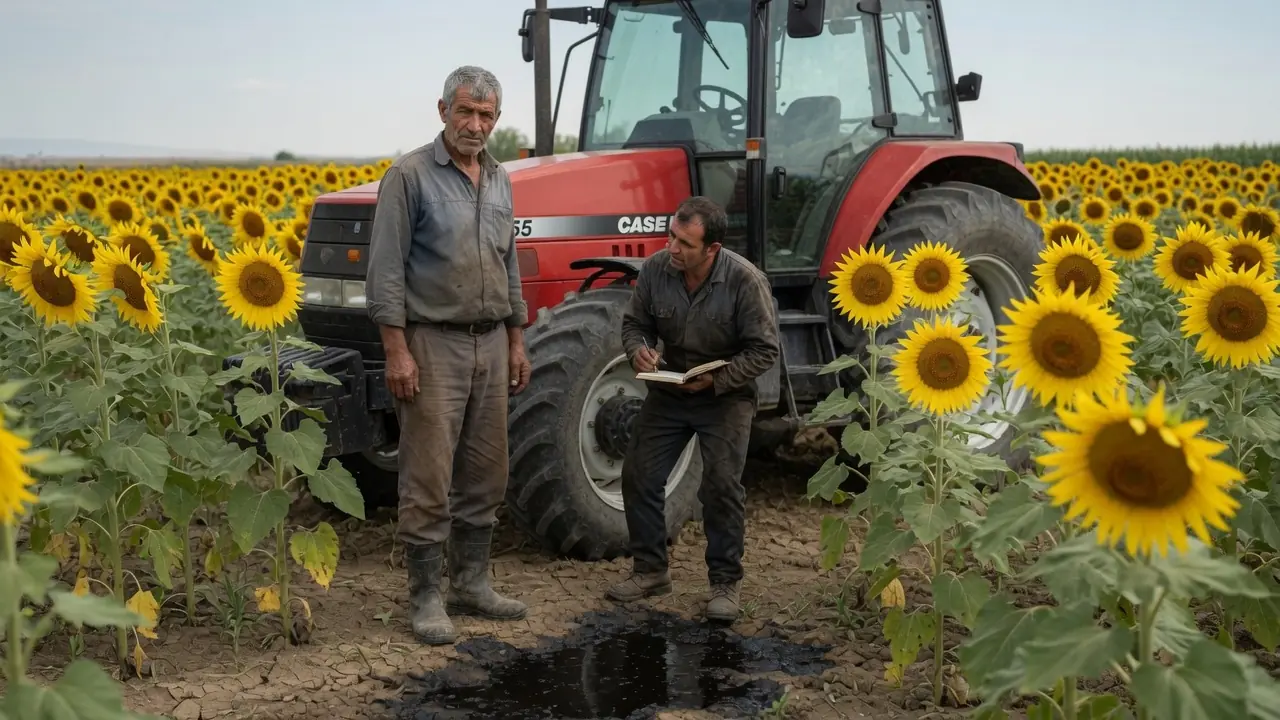
The Case IH 1255 had been with him for 17 of those years. He'd bought it used in 1994 from a dealer in Lüleburgaz for $22,000. It was already 6 years old then, but it had low hours and a solid service history. The previous owner had kept every receipt. Mehmet liked that.
He believed in documentation. He believed in doing things correctly, even when it cost more or took longer. That belief had shaped every decision he'd made with machinery, with money, with harvest timing. It was a belief his father had taught him. It was a belief that on that June morning he did not question.
The 1255 was not the biggest tractor in his region. It was not the most modern, but it was reliable in a way that mattered to him. It had mechanical simplicity. It had parts availability, or at least it used to. When something broke, you could see what broke.
You could explain it to a mechanic. You could order the part and know it would fit. That clarity had value. Mehmet did not trust improvisation. He had seen neighbors retrofit generic parts, weld cheap replacements, bypass systems to save money.
Some of those repairs worked for a season. Some failed within weeks. All of them, he believed, weakened the machine. He had never done that. Every part that went into the 1255 since 1994 had been original or dealer-certified.
He kept the receipts in a yellow folder in his kitchen. His wife used to joke that he cared more about those receipts than their wedding photos. Mehmet was born in 1950 in a village 12 kilometers west of Edirne. His father grew tobacco and barley on rented land. They had no tractor until Mehmet was 19.
Everything was done with horses or borrowed equipment. His father taught him that ownership was responsibility. If you owned a tool, you maintained it. If you borrowed a tool, you returned it cleaner than you found it. Mehmet learned to repair before he learned to operate.
The dealer sent a technician on Monday. The technician was a man named Hakan, 43 years old, who had worked for the dealership since 2003. Hakan spent two hours under the tractor. He came out with oil on his hands and a notebook full of part numbers. The hydraulic pump had failed, not partially, completely.
The internal seals had degraded. Metal shavings were in the oil. The pump itself needed replacing. So did the main hydraulic line. So did two valves that had been stressed by the pressure spike.
Hakan wrote everything down. He said he would call the parts department and get a quote by Wednesday. Wednesday came. Hakan called. The total cost for parts was $4,800.
All parts had to be ordered from Europe. The 1255 had been out of production since 1996. The parts were still available, but they were no longer stocked in Turkey. The lead time was 12 to 14 weeks—maybe 10 weeks if shipping went smoothly, or 16 if customs delayed anything. Hakan's voice on the phone was calm, but not optimistic.
He said there was another option. A mechanic in Edirne, not affiliated with any dealership, had called him. The mechanic had heard about the repair. He said he could retrofit a hydraulic pump from a different brand—not Case IH and not original, but compatible. He could do it in three days.
The cost would be around $1,200. Hakan did not recommend it. He said it might work. He said it might not. He said if it failed, the warranty on any future dealer repairs would be complicated.
Mehmet asked how long the original parts would last once installed. Hakan said 20 years, maybe more if maintained properly. Mehmet asked how long the retrofit might last. Hakan said he didn't know. Maybe five years, maybe five months.
Mehmet thanked him and hung up. He sat at his kitchen table. His wife asked what he was thinking. He said he didn't know yet, but he was thinking about resale value. He was thinking about the next breakdown.
He was thinking that if he put a generic part into the 1255 now, he would never be able to sell it honestly. He would have to disclose the modification. Buyers would walk away. Dealers wouldn't take it on trade. The tractor would lose value not because it was old, but because it had been compromised.
He was also thinking about the sunflowers. They were perfect right now. Another two weeks and they'd start to go. The heads would droop. The seeds would loosen.
Birds would come. If he waited three months for parts, he'd lose most of the crop. But if he retrofitted cheap parts and the hydraulics failed again in 2 years, he'd be in the same situation with a tractor no one wanted. He believed the right choice was clear. Wait for the original parts.
Protect the machine. Take the loss this season. Make sure the tractor stayed whole for the future. His son disagreed. His son was 34.
He lived in Istanbul and worked in insurance. He came home that weekend. He stood in the same field where the tractor had stopped and said his father was being stubborn. He said the sunflowers were worth $40,000 if they harvested in time. He said losing that income to save a 17-year-old tractor's resale value made no sense.
He said the retrofit was a risk, but waiting was a guarantee of loss. Mehmet listened. He did not argue. He said he'd made his decision. The son left on Sunday evening.
They did not talk about it again for 3 years. Mehmet called Hakan on Monday and ordered the original parts. Hakan confirmed the order. The parts would ship from a supplier in Italy. Estimated arrival in Turkey was late August, possibly early September.
Hakan said he'd call as soon as they cleared customs. Mehmet asked if there was any way to expedite. Hakan said not unless he wanted to pay for air freight, which would add another $2,000 to the cost. Mehmet said no. He would wait.
June passed. The sunflowers began to turn. The heads grew heavy. Mehmet walked the field every morning. He watched the seeds swell and darken.
He watched the petals dry and fall. By early July, the field was ready. Other farmers in the region were harvesting. He heard the combines running in the distance. He did not have a combine.
He rented one every year from a contractor in Lüleburgaz. The contractor called him in mid-July and asked when he wanted to schedule. Mehmet said he didn't know yet. The contractor said he was booking fast. If Mehmet didn't reserve a date, he might not get a slot.
Mehmet said he'd call back. He didn't call back. By late July, the sunflower heads were drooping. The seeds were loose. When the wind blew, you could hear them rattle.
Mehmet's wife asked if he'd heard from the dealer. He said no. She asked if he was going to lose the whole crop. He said maybe. She didn't say anything else.
She had been married to him for 39 years. She knew how he made decisions. She knew he would not change his mind, even if changing his mind would save them. In early August, a storm came through. Not a severe storm, just wind and rain for two days, but it was enough.
The sunflower heads bent. Some broke off. The seeds that didn't fall were soaked. Mold started in the outer rows. Mehmet walked through the field and felt something close to anger, but not quite.
It was more like resignation. He had made a choice. The choice had consequences. He had known that from the beginning. Hakan called on August 29.
The parts had arrived in Istanbul. Customs clearance would take another week, maybe 10 days. Mehmet asked if he was sure. Hakan said he was sure. The parts were in the country.
It was just paperwork now. Mehmet thanked him. He hung up. He walked out to the field. More than half the sunflowers were ruined.
The heads were covered with mold or empty where birds had eaten the seeds. He estimated he'd lose 60% of the crop, maybe more. The field that should have brought in $40,000 would bring in maybe $15,000 if he was lucky. The parts cleared customs on September 9. Hakan called that afternoon.
He said he could install them starting September 12. It would take two days. Mehmet said that was fine. Hakan arrived on September 12 with another technician. They worked in the field.
The weather was cooler now. The sunflowers that were still standing were brittle. The technicians replaced the hydraulic pump, the main line, the two valves. They flushed the system. They tested it.
Everything worked. The 1255 ran smoothly. Hakan handed Mehmet the invoice. $4,800 for parts, $600 for labor, $5,400 total. Mehmet paid with a check. Hakan gave him the receipts.
Mehmet put them in the yellow folder. He harvested what was left of the sunflowers in late September. The contractor came with the combine. It took four hours. The yield was 38% of what it should have been.
Mehmet sold the seeds for $14,200. After paying for the combine rental, fuel, transport, and the hydraulic repair, he netted $16,300 from 320 hectares. It was the worst season he'd had in 20 years. His neighbors asked what happened. He told them.
Some said he should have done the retrofit. Some said he was right to wait. One farmer, a man named Orhan, who ran 400 hectares of wheat, said Mehmet was insane. He said no tractor was worth losing a harvest over. He said machines were tools, not heirlooms.
Mehmet didn't argue. He said maybe Orhan was right. But he also said the 1255 still had its original systems. It still had value. It could still be sold or traded without lies.
Orhan asked if Mehmet planned to sell it. Mehmet said no. Orhan asked why it mattered then. Mehmet didn't answer. The following spring, Mehmet planted sunflowers again.
The 1255 ran perfectly. No breakdowns, no leaks. The hydraulic system was solid. He harvested in July 2012 without issues. The yield was strong.
He made back some of what he'd lost the previous year, but not all. The financial gap remained. His wife suggested selling some land to cover it. Mehmet said no. He said they'd recover over time.
She didn't push. In 2013, another farmer in the region, a man named Ibrahim, had a similar problem. His Case IH tractor, a newer model, needed a transmission part. The dealer quoted eight weeks for delivery and $3,200 for the part. Ibrahim chose a local mechanic who installed a rebuilt transmission component for $900.
It worked. Ibrahim harvested on time. He told Mehmet about it at a cafe in Edirne. He said Mehmet had been foolish to wait. He said the dealer's lead times were a scam to sell new equipment.
He said farmers couldn't afford to be purists. Mehmet listened. He said Ibrahim might be right. But he also asked how long Ibrahim planned to keep that tractor. Ibrahim said maybe five more years.
Mehmet said that was the difference. Mehmet planned to keep the 1255 until he stopped farming. By 2015, the 1255 was 21 years old. Mehmet was 65. He still farmed all 320 hectares himself.
His son had no interest in taking over. The tractor still ran well. Other farmers were upgrading to GPS-guided systems, larger machines, newer technology. Mehmet stayed with the 1255. People asked why.
He said it did what he needed. He said it had never let him down, except for that one summer, and that wasn't the tractor's fault. But something had shifted in him. Not regret, exactly. More like doubt.
He thought about the $26,000 he'd lost in 2011. He thought about the three months he'd waited while his crop rotted. He thought about his son's argument. He thought about Ibrahim's transmission. He wondered if doing it right had been the same as doing it smart.
He didn't talk about this with anyone. But the question stayed with him. In 2017, the 1255 needed another repair. A smaller one this time. A fuel injector failed.
The part cost $340. It took three weeks to arrive. Mehmet waited. The timing was off-season, so it didn't affect planting or harvest. But he noticed that the waiting bothered him more than it used to.
He noticed that the certainty he'd felt in 2011 was harder to summon now. In 2018, Mehmet turned 68. He started talking about retirement. His wife asked what he'd do with the land. He said he'd lease it.
She asked what he'd do with the tractor. He said he'd sell it. She asked if anyone would buy a tractor that old. He said yes. He said it had been maintained perfectly.
He said every part was original. He said the service records were complete. He said it would sell. He listed the Case IH 1255 for sale in early 2019. He asked $12,000.
Three people came to look at it. All of them were older farmers, men in their 60s who remembered when the 1255 was new. All of them appreciated the condition. All of them looked at the hours, the maintenance records, the hydraulic system that had been rebuilt with original parts in 2011. One of them asked why Mehmet was selling.
Mehmet said he was retiring. The man asked if the tractor had any issues. Mehmet said, "No. " The man asked about the 2011 repair. Mehmet explained it. The man nodded.
He said he'd think about it. None of them bought it. One said the price was fair, but he didn't need another tractor. One said his son wanted him to buy something newer with a cab. One said he was getting out of farming, too.
Mehmet lowered the price to $10,000, then $8,500. A dealer in Lüleburgaz, not the same dealer he'd bought it from, offered him $5,000 as a trade-in toward a newer model. Mehmet said no. The dealer said that was the best he could do. He said the 1255 was too old to resell easily.
He said the market wanted newer machines. Mehmet kept the tractor. He leased his land to a younger farmer who had his own equipment. The 1255 sat in his shed. He started it once a month to keep the engine from seizing.
His wife asked why he didn't just take the $5,000. He said because the tractor was worth more than that. She asked who would pay more. He didn't answer. In 2020, Mehmet's health declined.
Nothing severe, just age. His knees hurt. His back hurt. He stopped starting the tractor every month. It sat.
Dust collected on the hood. The tires softened. His son came home for a visit and asked if he'd sold it yet. Mehmet said no. His son said he should take whatever he could get.
Mehmet said maybe. In 2021, a neighbor asked if the 1255 was for sale. Mehmet said yes. The neighbor offered $4,000. He said he needed it for parts.
He had a 1455 and some of the components were interchangeable. Mehmet asked if he planned to use it whole. The neighbor said, "No. Just parts. " Mehmet said he'd think about it. The neighbor said the offer stood.
Mehmet never called him back. Mehmet Yilmaz died in March 2024. He was 74. The Case IH 1255 was still in his shed. His son inherited the property.
He sold the land to a developer. He sold the tractor to a scrap dealer for $1,200. The dealer hauled it away on a flatbed. Mehmet's wife watched from the kitchen window. She didn't say anything.
She thought about the summer of 2011. She thought about the sunflowers rotting in the field. She thought about her husband walking out every morning to check on them, knowing they were lost, unable to do anything but wait. She thought about the yellow folder full of receipts that he'd kept for 30 years. She found it in his desk after he died.
Every receipt was there. The hydraulic parts from 2011, the injector from 2017, every oil change, every filter. She didn't know what to do with it. She put it in a box with his other papers and stored it in the attic. The man who bought the 1255 for scrap didn't know its history.
He didn't know about the $4,800 repair, or the 91 days of waiting, or the $26,000 loss. He stripped the hydraulic pump and sold it to another dealer for $80. He sold the engine block for $150. He sold the rest as scrap metal. The tractor that Mehmet had protected for 17 years was gone in an afternoon.
Other farmers in the region remember that summer differently. Ibrahim, the man who'd installed the rebuilt transmission in 2013, sold his tractor in 2016 and upgraded. He never had a problem with the rebuilt part. He harvested on time every year. When people mention Mehmet's decision, Ibrahim shrugs.
He says Mehmet was stubborn. He says farming doesn't reward perfection. He says it rewards survival. Orhan, the man who'd called Mehmet insane in 2011, still farms. He's 70 now.
He's had four tractors since then. He's retrofitted parts on all of them. Some repairs lasted, some didn't. He's never lost a harvest waiting for original parts. When people ask him about Mehmet, he says Mehmet was a good farmer, but a bad businessman.
He says you can't farm like it's 1975 anymore. He says the world doesn't wait for people who wait. But there's another farmer, a younger man named Deniz, who heard the story and thought about it differently. Deniz is 42. He bought a used Case IH Maxxum in 2018.
It needed a repair in 2020. The dealer quoted six weeks for a part. A mechanic offered to retrofit something cheaper in three days. Deniz thought about Mehmet. He waited for the original part.
The repair cost him a week of planting time, but the tractor still runs perfectly. He doesn't know if he made the right choice. He just knows he made the choice he could live with. Mehmet's son never farmed. He never understood why his father waited.
He never understood why the tractor mattered more than the harvest. But years later, after his father died, he found a notebook in the shed. It was from 2011. His father had written in it every day during those 91 days. Most of the entries were short.
"Day 12: no call from dealer. Day 34: sunflowers turning. Day 58: mold starting in west section. " There were no complaints, no second-guessing, just observations. On day 91, in the final entry, his father had written, "Parts arrived. Tractor whole again.
Crop lost. Worth it. " The son read that line three times. He still didn't understand it, but he kept the notebook. The Case IH 1255 no longer exists. The parts that Mehmet waited 91 days for are scattered.
The hydraulic pump is in another tractor somewhere in Thrace. The engine block was melted down. The frame was sold as scrap. But the decision remains. It remains in the stories farmers tell.
It remains in the choices they make when a part fails and time is short and money is tight. Some of them wait. Some of them don't. None of them know for certain which choice is right. They only know what they can live with.
Mehmet Yilmaz waited. He lost the harvest. He kept the tractor whole. He never sold it for what it was worth.
He died believing he'd made the right choice. Maybe he did. Maybe he didn't. The only certainty is that the choice never stopped mattering.