The first thing Daniel Reed noticed about the penthouse was that the elevator would not open again. He had delivered hundreds of meals through the rain in Chicago, into office towers and hotel lobbies, to exhausted nurses, impatient executives, and couples celebrating anniversaries he could barely imagine affording. He had never heard a door close with such deliberate finality. The light above the private elevator changed from white to red, and when he touched the call panel, a small message appeared: ACCESS RESTRICTED. He stood with an empty insulated delivery bag in one hand and felt the old, familiar fear rising from his stomach into his throat.
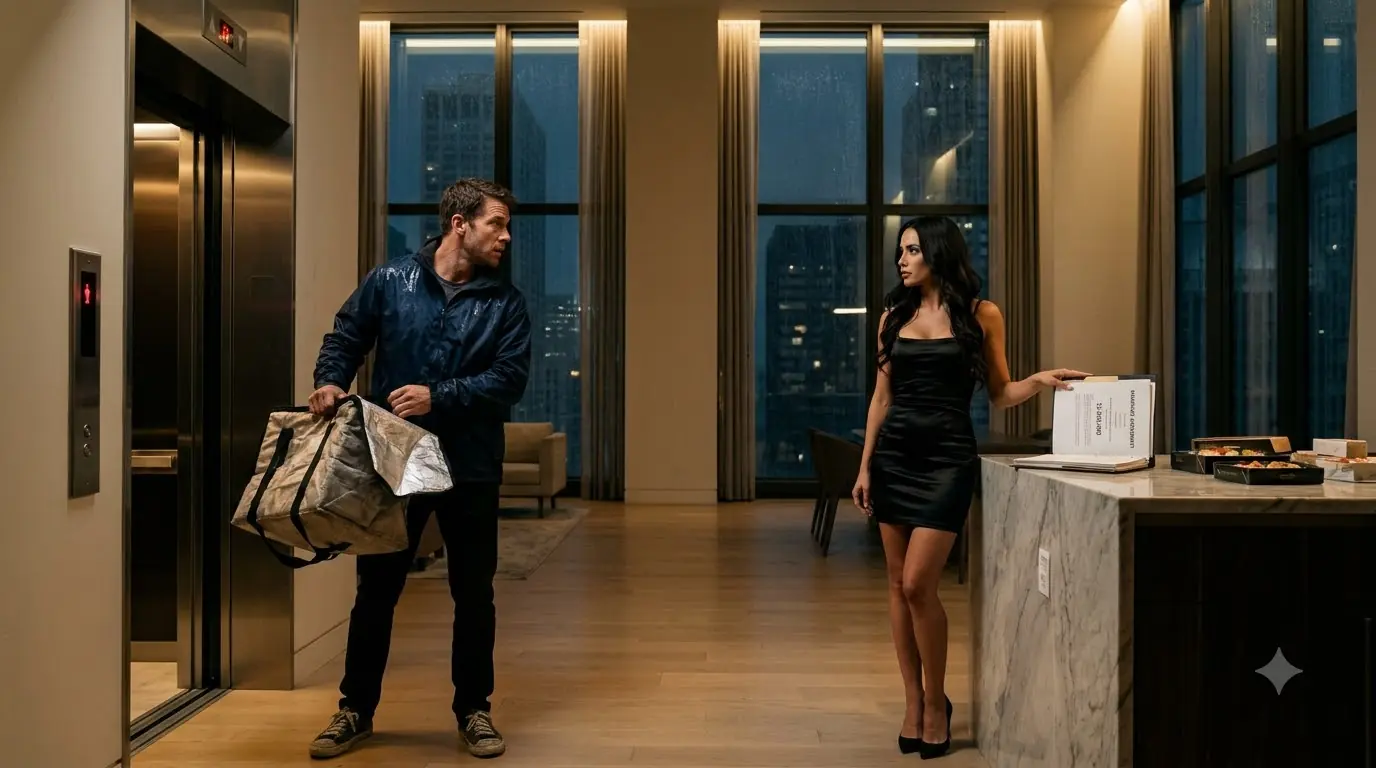
Behind him, a woman spoke from the enormous living room. “It is locked,” she said. “I had it locked.” Her voice carried without effort across the polished stone. Daniel turned to find her standing beside a wall of glass seventy stories above the storm. She wore a black evening dress, her dark hair arranged with a care that made his wet collar and mud-spotted shoes seem even more out of place. Evelyn Whitaker, chief executive of Whitaker Global Properties, was known throughout the city for acquiring troubled buildings and turning them into expensive addresses. She was also known for never giving an interview in which she answered a question she had not intended to answer.
Daniel looked toward the hall where he had left the sushi on a marble island. “I did my part,” he said. “I need to go home.” He was thirty-eight, a widowed father, and the father part mattered far more than the rest. His six-year-old daughter, Sophie, was waiting at the apartment of their neighbor, Mrs. Morales, while a portable oxygen monitor watched over her sleep. At nine that morning she had been cheerful enough to insist he braid her hair. At nine that evening she had been too tired to climb the short stairs to their own front door without stopping.
“I know about Sophie,” Evelyn said. She placed a folder on the counter, thick enough to contain the history of a small company. “I know about the hospital bills and the architecture license you have not renewed. I know your wife died three years ago and that you take deliveries after your day shifts because your daughter’s treatment costs more than one income can cover.” For a moment, his mind refused to assemble those sentences into anything useful. He thought of the photograph taped to his dashboard, the one showing Sophie on the lakefront in a yellow coat. He had never given Evelyn permission to know any of it.
“Who told you?” Daniel asked. Evelyn did not answer at once, and in that silence he saw the limits of her supposed composure. Her hand was clenched near her side. The room behind her was immaculate but unfinished in a strange human sense: not a shoe beside a sofa, not a book opened facedown, not one careless sign that its owner had ever come home happy. He recognized the quality from years of designing expensive spaces for clients who wanted admiration more than comfort. “Open the elevator,” he said, “and tell me who helped you do this.”