Ma'am, stop for a second. What are you doing here? I'm moving into my apartment. We've had reports of theft in the area. I'm going to need to see some proof.
What kind of proof? Open the box. Instead, hold on. Don't Special Agent Maya Lewis. At 4:47 p.m. a woman carries a cardboard box across an apartment courtyard.
The box is medium-sized, worn at the edges, labeled kitchen in thick black marker. Inside are plates, a pan wrapped in newspaper, two mugs clinking softly with every step. She has keys in her hand, a signed lease in her bag, a federal badge concealed beneath her jacket, but none of that is visible yet. What is visible to the officer watching her through a body-worn camera is a woman he does not recognize, and that is enough. Within minutes, she will be accused of stealing, questioned publicly, placed under suspicion in her own home.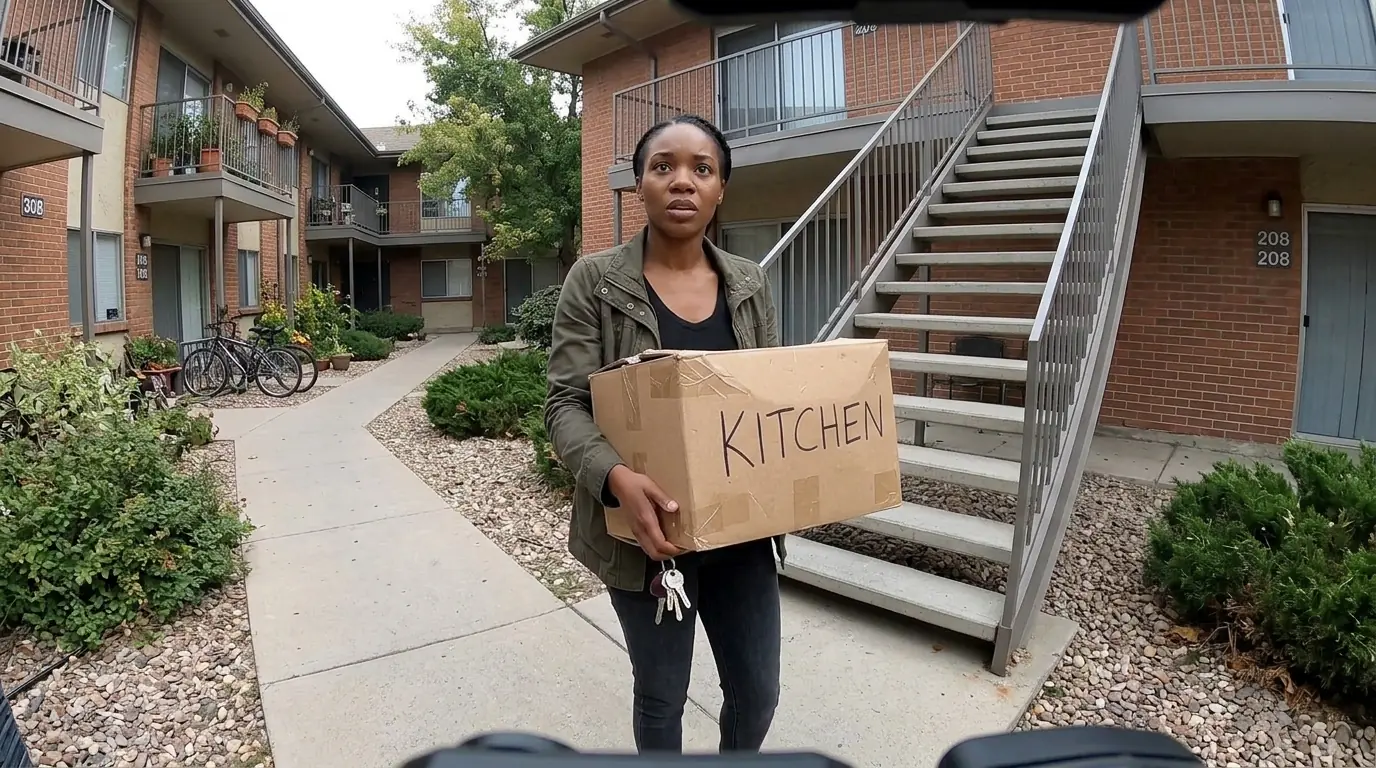
She works for the Federal Bureau of Investigation, not in public-facing roles, not on television, not in ways that attract attention. She investigates quietly, methodically. Her career is built on discipline. Early mornings, late nights, files stacked neatly, conclusions reached only after evidence is verified. She has been trained to remain calm under pressure, to de-escalate, to observe before reacting, to never give emotion the upper hand.
She believes in systems, believes that credentials mean something, that if you follow procedure, procedure protects you, that professionalism earns respect. She has spent her life earning it. Today, she is not here as an agent. She is here as a tenant. The apartment complex is quiet, not affluent, not neglected, just neutral.
Concrete walkways, trimmed hedges, a leasing office with faded posters promising community living. Late afternoon sunlight stretches shadows across the courtyard. Somewhere, a door closes. A dog barks once, then stops. Maya adjusts her grip on the box.
She is tired, not exhausted, but spent in the way moving always makes you. She is thinking about where the couch will go, about grocery runs, about finally unpacking. She is not thinking about being stopped. She is not thinking about suspicion, because she has keys, because she belongs here, because she followed every rule. A patrol car rolls in, slow, deliberate.
Tires crunch against loose gravel. The officer inside does not know Maya. He does not know her resume, her clearance level, her years of service. He sees movement. He sees property.
He sees a woman alone. The body cam activates automatically. A soft electronic click. A red light begins to blink. From this moment forward, everything is recorded.
Ma'am. The word cuts through the courtyard. Maya turns. She shifts the box slightly. "What's going on? " she asks.
Her tone is neutral, polite. The officer does not answer directly. Instead, he asks a question. "What are you doing here? " This is not curiosity. This is a challenge.
Maya answers plainly, "I'm moving into my apartment. " That should be the end. People move every day. Boxes do not signal crimes, but the officer's face remains unchanged. "We've had reports of theft. " The phrase is vague, no location, no description, no urgency, just enough justification to proceed. The officer steps closer.
The body cam shifts with his movement. The lens lingers on Maya's face longer than necessary. "I'm going to need to see some proof," he says. "Proof of residence, proof of permission, proof of legitimacy. " Maya blinks once. She sets the box down, carefully, slowly.
She knows this dance. Hands visible, movements deliberate. "What kind of proof? " she asks. The officer gestures toward the box. "Open it. " The request is irrational.
Opening a box does not prove ownership, but this is no longer about logic. It is about control. Maya does not argue. She does not raise her voice. She complies, because compliance is safer, but something inside her shifts.
She realizes this interaction will not end cleanly. She reaches into her jacket. The officer stiffens. His breathing changes. The body cam jolts.
"Don't," he says. His hand moves toward his holster. The courtyard feels smaller now, quieter. This is the moment where everything could tip. Maya removes a leather badge holder.
She flips it open, holds it up close to the lens. The camera struggles to Then the words sharpen. Federal Bureau Time slows. The officer freezes. No commands, no follow-up questions, just silence.
"I'm Special Agent Maya Lewis," she says. Her voice is calm, measured, professional. Now, she adds, "Can you explain why you stopped me? " The officer steps back. His posture changes. His tone softens.
This is not relief. It is recalibration. He is no longer in control. The body cam continues to record, every second, every breath. This footage will not vanish.
It will be reviewed by supervisors, by attorneys, by strangers online. The moment is over, but the record remains. Doors open, phones appear, neighbors glance, then stare. The private becomes public, not through violence, but through exposure. Maya retrieves her box.
She walks toward the stairwell. The officer remains behind, watching. Days later, the video surfaces, first on social media, then on the news. The headline spreads. Officer detains FBI agent during move-in.
The irony is irresistible. The comments are relentless. Some defend the officer. Others ask a simpler question. Why was proof required at all?
The department issues a statement. An internal review is announced. The officer is placed on administrative leave. Words like miscommunication and procedure appear. No mention of bias.
No admission of pattern. Just distance. Civil rights attorneys weigh in. Legal scholars analyze the footage. The case becomes a teaching tool, not because it is extreme, but because it is familiar.
This encounter ended peacefully, because Maya had credentials, because she had authority, because she could prove herself. But what if she couldn't? What if the box contained nothing but dishes and no badge? Why did respect arrive only after federal power appeared? Why was her word insufficient?
Why was belonging conditional? This is not about one officer. It is about perception, about who is believed and who must prove it. The box never changed. It was always harmless, always ordinary.
The suspicion came from somewhere else, and that is the story. Because the most dangerous assumption is not that someone is guilty. It's believing you already know. Maya moved into her apartment that day. She unpacked.
She lived her life. The officer returned to duty, eventually. The system absorbed the moment, but the footage remains, blinking, silent, asking one final question. If power had not revealed itself, how far would this have gone?