Ma'am, your son is dying. Naomi Ellis's voice cuts through the chaos of Bellamy's Diner dining room as 8-year-old Oliver Whitcomb collapses in his chair, his lips turning blue, gasping for air that won't come. His mother, Caroline Whitcomb, designer handbag clutched tight, diamonds glinting on her fingers, whirls around with venom in her voice. Keep your filthy hands off my child. I don't take orders from people like you.
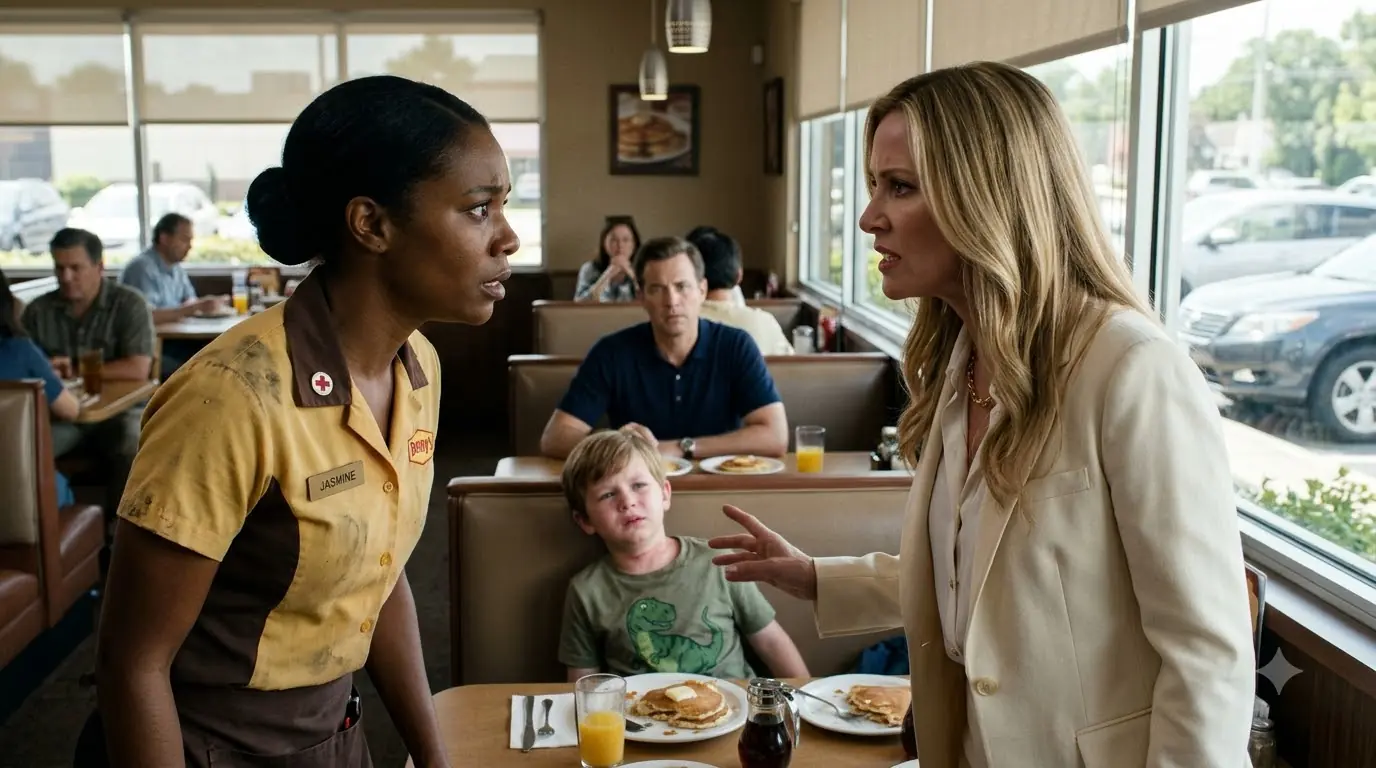
But Oliver's face is swelling like a balloon. Red welts spreading across his neck like wildfire. His desperate wheezing fills the restaurant as other diners begin to stare in horror. " Your son needs epinephrine right now or he'll die, " Naomi says, reaching into her apron and pulling out a medical injector that gleams under the fluorescent lights. " Touch him and I'll have you arrested.
You're nothing but a black waitress. " Caroline screams, stepping between Naomi and her dying child. Oliver's breathing stops completely for three terrifying seconds, then resumes with a horrible rasping sound that makes nearby diners gasp. Will Caroline's racism cost Oliver his life? The Sunday morning rush at Bellamy's Diner on Willow Road represents everything comfortable about suburban America.
On the morning the little boy nearly died, the woman who would save him had already spent an hour arguing with an insurance company. The representative on the telephone had a soft voice, a cheerful script, and no authority to restore the emergency medication that had disappeared from her daughter's pharmacy benefits. Naomi Ellis sat at the kitchen table in a faded blue uniform, with a yellow legal pad beside her and the kitchen clock moving toward seven. Her daughter, ten-year-old Tessa, sat across from her doing long division with a pencil whose eraser had been worn nearly flat. The girl knew the sound of a denial before the agent said the word.
"The plan recognizes the prescription," the representative explained. "What it does not recognize is the specific product without a new authorization." Naomi looked toward the refrigerator, where an emergency action plan was held beneath a magnet shaped like a red apple. The plan had been prepared by a pediatric allergist after Tessa's fourth serious reaction. It contained her diagnoses, the prescribed weight-appropriate epinephrine dose, emergency contact information, and instructions for adults who supervised her. It did not contain any sentence suggesting that a child could postpone an emergency while a billing department resolved a dispute. "How long does authorization take?" Naomi asked. The agent said three business days. Naomi had heard the same answer six days earlier.
She wrote down the reference number, thanked the woman, and ended the call before disappointment could turn into anger at somebody who had no control over the answer. Tessa pushed her worksheet aside. "We still have my two pens," she said. "We do," Naomi replied. "And we're going to make sure you keep two available wherever the doctor says you need them." The child studied her mother's face with unsettling seriousness. "You don't have to tell me we're fine if we're not," she said. Naomi reached across the table and laid her hand over the small fingers curled around the