What Is Sweet Potato Propagation?
Unlike many vegetables that are grown directly from seeds, sweet potatoes are most commonly propagated using slips. A slip is a young green shoot that emerges from a mature sweet potato. Once removed from the parent tuber and encouraged to develop roots, the slip becomes a completely independent plant capable of producing its own sweet potatoes.
This propagation method is widely used because it preserves the characteristics of the original variety. Since slips are produced from vegetative growth rather than seeds, the resulting plants remain genetically consistent with the parent sweet potato. This provides more predictable harvests and helps gardeners maintain desirable qualities such as flavor, color, and productivity.
Why Gardeners Prefer Growing Slips Instead of Seeds
Growing sweet potatoes from slips offers several practical advantages.
First, it is remarkably economical. Instead of purchasing multiple starter plants each season, one healthy sweet potato can generate numerous slips over several weeks. This allows gardeners to expand their vegetable garden with very little investment.
Second, slips usually establish more quickly than seedlings because they already contain active growing tissue. Once transplanted into warm soil, they rapidly develop extensive root systems and vigorous vines.
Finally, this method has been successfully used by home gardeners and commercial growers for decades, making it one of the most reliable ways to propagate sweet potatoes.
Choosing the Right Sweet Potato
Success begins with selecting a healthy sweet potato.
Look for a firm tuber without mold, soft spots, cuts, or signs of disease. A healthy sweet potato stores the carbohydrates and nutrients needed to support early root and shoot development.
Some gardeners prefer organic sweet potatoes because they are sometimes less likely to have been treated with sprout inhibitors. However, any healthy sweet potato may successfully produce slips under the right environmental conditions.
The larger and healthier the parent tuber, the greater the potential number of vigorous shoots it can produce.
How a Sweet Potato Produces New Plants
Sweet potatoes naturally contain dormant buds beneath their skin. When placed in a warm, moist environment, these buds begin to activate.
The first visible change is usually the development of roots near the lower portion of the tuber. Shortly afterward, green shoots begin emerging from the upper portion. These shoots continue growing upward while the root system expands below.
This process is powered entirely by the carbohydrates stored inside the sweet potato, providing enough energy for early growth before the new plant begins producing its own food through photosynthesis.
Starting Sweet Potato Slips in Water
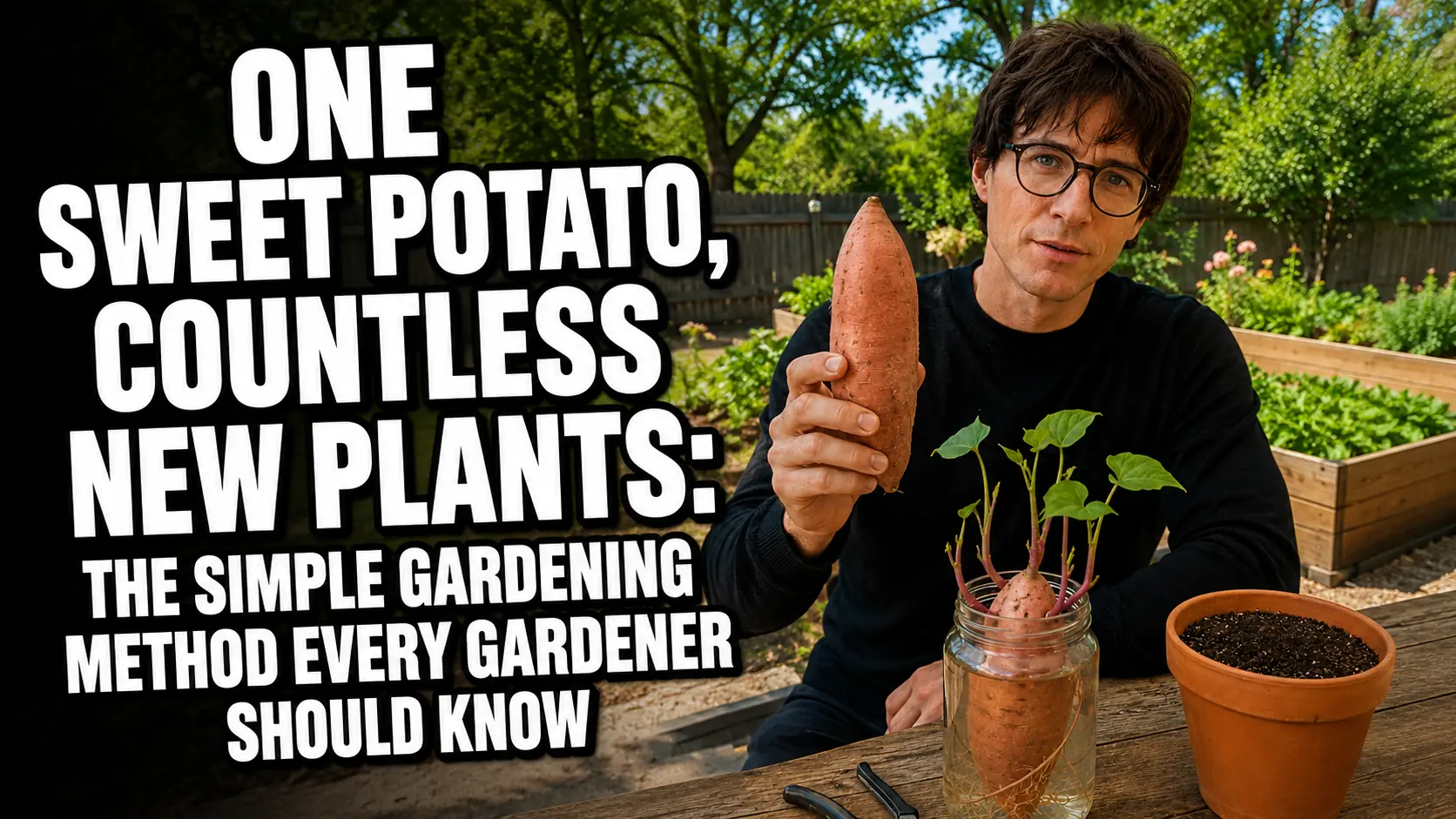
One of the simplest methods involves placing the lower half of the sweet potato into clean water while leaving the upper half exposed to the air.
Position the pointed end upward and keep the container in a warm, bright location with indirect sunlight. Replace the water regularly to maintain cleanliness and reduce the risk of bacterial or fungal growth.
Over time, roots begin forming beneath the waterline while leafy shoots emerge from the upper portion of the sweet potato.
Patience is essential. Depending on temperature and growing conditions, this process may take several weeks before vigorous slips appear.
When Should You Remove the Slips?
Timing matters.
Gardeners generally wait until the slips reach approximately 15 to 20 centimeters (6 to 8 inches) before separating them from the parent sweet potato.
At this stage, the shoots have developed enough strength to survive independently while still remaining flexible and easy to handle.
Using clean hands or sanitized scissors, gently remove each slip near its base without damaging neighboring shoots that may continue developing on the original sweet potato.
Interestingly, removing mature slips often encourages additional shoots to emerge, allowing one sweet potato to produce multiple generations of planting material throughout the season.
Helping Slips Develop Their Own Roots
After separation, the lower leaves are removed to expose several centimeters of stem.
The slips are then placed into fresh water or directly into moist potting compost. Within several days, tiny white roots begin emerging from the submerged stem.
These roots eventually expand into a healthy root system capable of supporting vigorous growth after transplanting.
Some gardeners prefer rooting slips directly in soil, while others begin in water because it allows root development to be easily monitored.
Both methods can be successful when warmth and moisture are maintained.
Transplanting Into the Garden
Once healthy roots have formed, the slips are ready for permanent planting.
Sweet potatoes thrive in warm temperatures, full sunlight, and loose, well-drained soil. Because the edible tubers develop beneath the soil surface, compacted or rocky ground may limit proper enlargement.
Plant each rooted slip deep enough to cover the lower stem while leaving the upper leaves above the soil.
Water thoroughly after planting, then keep the soil evenly moist while young plants establish themselves.
Caring for Sweet Potato Plants
After establishment, sweet potatoes require relatively simple care.
They perform best in full sun with consistent watering during dry periods, although excessive watering should be avoided because waterlogged soil may encourage root diseases.
As the vines spread, they naturally shade the soil, helping conserve moisture and suppress weeds.
Occasional monitoring for insect pests and plant diseases also contributes to healthier harvests, especially during warm growing seasons.
Depending on the variety and local climate, harvest generally occurs several months after planting, once the tubers have reached mature size.
Common Mistakes That Reduce Success
Many propagation failures occur because of a few avoidable mistakes.
Using damaged or diseased sweet potatoes often produces weak or unhealthy slips.
Allowing the water to become dirty may encourage mold or bacterial growth.
Separating slips before they reach adequate size can reduce survival, while transplanting into cold soil may slow growth dramatically because sweet potatoes are highly sensitive to frost.
Poor drainage is another frequent problem. Although young slips require consistent moisture, saturated soil may damage developing roots and reduce overall plant health.
The Benefits of Growing Your Own Sweet Potatoes
Growing sweet potatoes from slips provides much more than an economical source of planting material.
It allows gardeners to better understand plant biology, reduce gardening costs, preserve favorite varieties, and enjoy the satisfaction of producing food from a single tuber.
For families interested in home gardening, this project also offers an excellent educational activity for children by demonstrating root development, vegetative propagation, and the plant life cycle in a simple, visual way.
Most importantly, it transforms one ordinary grocery-store sweet potato into an entire season of productive gardening.
The Bottom Line
Growing sweet potatoes from slips is not a gardening shortcut or internet gimmick—it is a proven horticultural technique used around the world. By placing a healthy sweet potato in water, allowing shoots to develop, separating mature slips, encouraging root growth, and transplanting them into warm soil, gardeners can produce numerous healthy plants from a single tuber.
Although success depends on proper temperature, moisture, sunlight, and ongoing plant care, this simple propagation method remains one of the easiest and most rewarding ways to expand a vegetable garden naturally.
With patience, consistent care, and the right growing conditions, one sweet potato really can become many—and each new plant has the potential to produce an abundant harvest of its own.