I SEE THE WAY YOU SPEAK TO THEM
Words have enormous weight when they come from the people children love most.
You could use your authority to make them feel small.
Instead, I watch you try to guide them.
That does not mean you never become frustrated. Of course you do. Parenting asks more patience from a person than almost anything else. There are mornings when everyone is late, evenings when nobody seems to listen, and moments when the same instruction has been repeated so many times that calm feels nearly impossible.
You are human.
But I notice that you come back.
You explain.
You repair.
You try to speak to the behavior without making the child believe the behavior is their entire identity.
There is a difference between telling a child, “That was a careless choice,” and telling them, “You are careless.”
There is a difference between “You need to try that again respectfully” and “What is wrong with you?”
Children hear those differences.
They build themselves out of them.
And when you choose words that correct without crushing, you are doing something much larger than managing a difficult moment.
You are teaching them how to speak to themselves after you are no longer in the room.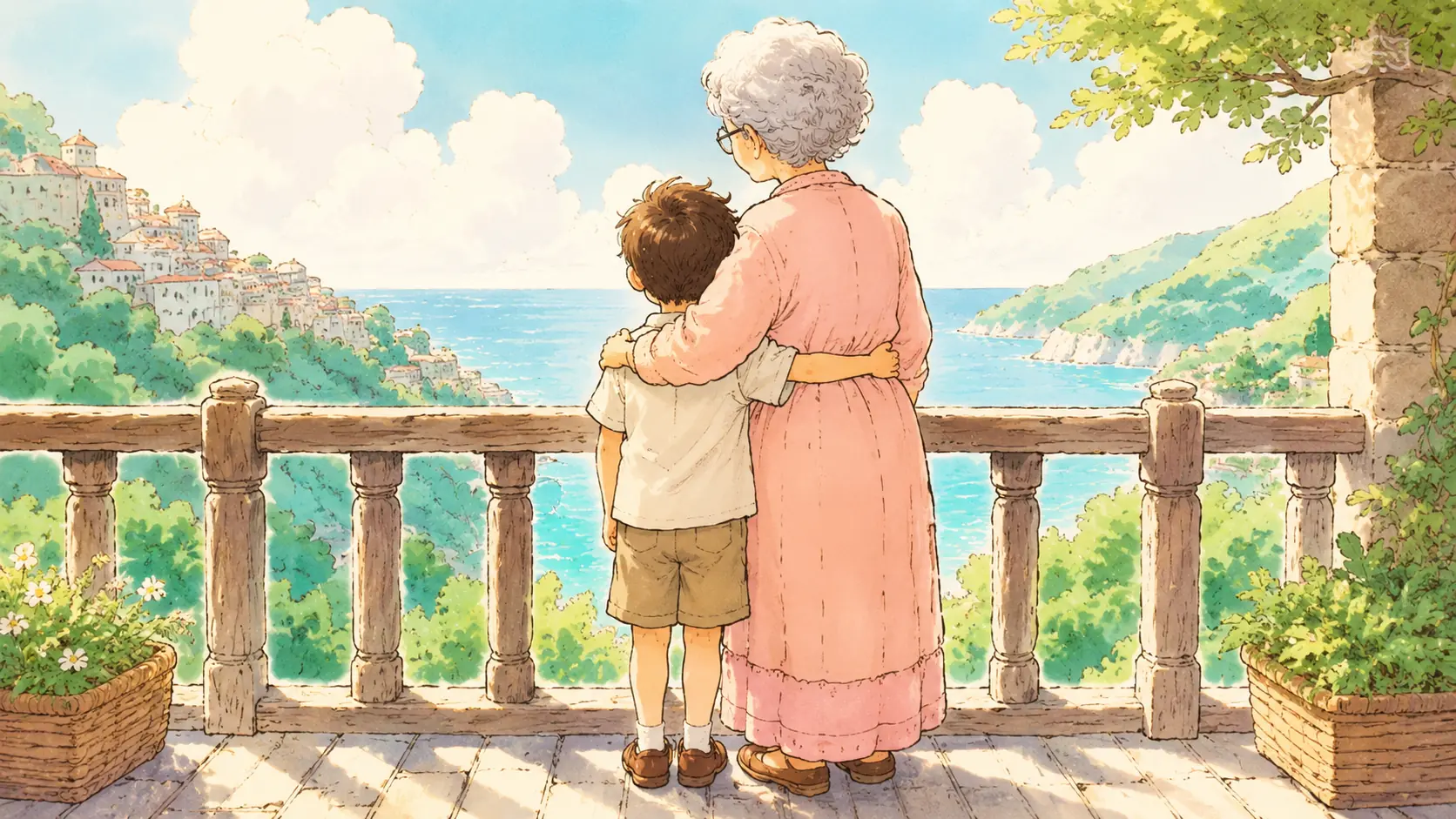
I SEE THE WAY YOU BELIEVE IN THEM
Sometimes children borrow confidence before they own it.
They look toward an adult when the task becomes difficult, almost as though they are asking, “Do you think I can do this?”
And I watch you answer.
Not always by rescuing them.
Sometimes by staying close enough for them to keep trying.
“You do the first part.”
“Try again.”
“What do you think would work?”
“I’ll help, but I’m not going to do it for you.”
That is a special kind of love.
It would often be faster to take over.
You could tie the shoe, solve the problem, speak for them, fix the project, or remove the frustration.
But every time you allow them to do what they are capable of doing, you give them evidence.
Evidence becomes confidence.
They begin learning, “I have faced hard things before.”
That is so much stronger than simply being told they are amazing.
They are discovering their own capability because you are giving them room to experience it.
I SEE THE SAFETY YOU ARE CREATING
Children need rules.
They need adults who will say no, stop unsafe behavior, insist on honesty, and expect kindness.
But children also need to know that love survives the moments when they get those things wrong.
I see you trying to give them both.
Structure and safety.
Correction and connection.
You are showing them that home can be a place where truth is safer than hiding.
That matters more than you may realize.
When children fear that mistakes will cost them affection, they become skilled at covering mistakes. When they know they will still be held responsible but will not lose their place in the relationship, honesty becomes easier.
A child who can say, “I did it,” without wondering whether love has disappeared is developing something important.
Integrity.
Not because there are no consequences.
Because consequences happen inside a secure relationship.
When you tell them, “I’m upset about what happened, and I still love you,” they are learning that accountability and belonging can exist together.
Someday that may shape every close relationship they have.
I SEE YOU GIVING THEM SOMETHING MANY OF US HAD TO LEARN LATER
Our generation did many things well.
We taught responsibility. We worked hard. We showed up when life was difficult. We understood sacrifice and loyalty.
But some of us grew up believing strength meant hiding feelings.
Some learned that adults did not apologize to children.
Some learned to perform well before expecting praise.
Some learned that saying no was disrespectful, asking for help was weakness, and making mistakes was something to be ashamed of.
We carried those lessons because they were what people knew.
Then we grew older.
And many of us realized there were things we wished we had learned sooner.
How to set boundaries without guilt.
How to rest without believing we were lazy.
How to say, “That hurt me.”
How to apologize without losing dignity.
How to disagree without destroying a relationship.
How to know that our worth was larger than our achievements.
So when I watch you teaching your children some of these lessons now, I feel something difficult to describe.
Part of it is pride.
Part of it is gratitude.
And perhaps part of it is healing.
You are not rejecting everything that came before you.
You are taking what was good and adding what you have learned.
That is how families grow.
I KNOW YOU WONDER WHETHER YOU ARE DOING ENOUGH
I know because parents always wonder.
There will always be someone with another method, another opinion, another list of things you should be doing.
There will always be a day when you lose patience and think about it after everyone is asleep.
There will be moments when another family looks calmer from the outside.
You may worry that you are getting too much wrong.
But from Grandma’s chair, I see a bigger picture.
I see children who come to you with stories because they believe you will listen.
I see them testing independence because they know there is somewhere safe to return.
I see them becoming frustrated and then recovering.
I see them making mistakes and discovering that mistakes can be repaired.
That does not happen because parenting is perfect.
It happens because connection is strong enough to survive imperfection.
Please do not underestimate that.
AND I SEE THE MOMENTS YOU THINK NOBODY NOTICES
I see the way you answer one more question when you are tired.
The way you show up.
The way you remember something they mentioned days ago.
The way you change your approach when something is not working.
The way you apologize when you know your own words went too far.
The way you protect their dignity in front of other people.
The way you celebrate something that may seem tiny to an adult but feels enormous to a child.
Most parenting happens without applause.
No one gives you an award because you stayed calm during the meltdown.
Nobody sees the ten ordinary conversations that helped a child become brave enough for the eleventh.
There is no photograph of the moment you decided not to say the harsh sentence that came into your mind.
But those invisible choices count.
I see more of them than you probably realize.
YOU ARE TEACHING THEM THAT CAPABILITY DOESN’T MEAN DOING EVERYTHING ALONE
One thing I especially admire is the balance between helping and rescuing.
Confidence is not built by making children believe they should never need anyone.
Real confidence includes knowing when to try independently and when to say, “I need help.”
When you let them solve what they can solve but remain available when the problem becomes too large, they learn both independence and trust.
They learn:
“I can try first.”
And also:
“I do not have to face everything alone.”
That balance may protect them someday from two painful extremes—helplessness on one side and isolation on the other.
They can become adults who are capable without believing they must carry the whole world by themselves.
YOU ARE SHOWING THEM THAT LOVE DOESN’T HAVE TO BE EARNED THROUGH PERFORMANCE
Children receive messages about achievement everywhere.
Grades.
Sports.
Popularity.
Appearance.
Awards.
Comparison.
It would be easy for them to begin believing their value rises and falls according to how impressive they are.
But then they come home.
And you remind them that success is wonderful, effort matters, and character matters even more.
You celebrate them when they win.
But I also see you love them when they lose.
That may be one of the most important things you ever do.
Because someday life will hand them a failure you cannot remove.
They will need to know that disappointment does not erase worth.
The child who has been loved on an ordinary, messy, unsuccessful day has somewhere inside themselves to stand.
YOU ARE SHAPING HOW THEY MAY ONE DAY TREAT OTHER PEOPLE
A child who experiences respectful correction learns that authority does not require humiliation.
A child whose boundaries are respected learns to notice other people’s boundaries.
A child who receives apologies learns that love can repair.
A child who feels safe telling the truth is more likely to create relationships where truth is safe for others.
This is how your parenting travels forward.
You may think you are simply handling breakfast, homework, bedtime, or another sibling disagreement.
But underneath those ordinary moments, your children are forming ideas about what love looks like.
Someday they may become partners, friends, parents, teachers, leaders, or caregivers.
And the way you treat them now may become part of the way they treat people then.
That is an enormous responsibility.
But it is also an extraordinary legacy.
I HOPE YOU KNOW I AM PROUD OF YOU—NOT BECAUSE YOU DO IT PERFECTLY
I do not want my pride to become another pressure.
I am not watching you and expecting you to get everything right.
I know how impossible that would be.
I raised children too.
I remember the fatigue, uncertainty, and nights when I replayed my own mistakes.
So when I tell you I am proud, I do not mean, “You never get it wrong.”
I mean I see how much you care about getting back to what matters.
I see you learning.
I see you trying.
I see the kind of relationship you are building with your children.
And I am proud of the courage that takes.
Sometimes parenting differently from the way you were raised requires tremendous strength.
Sometimes continuing traditions requires wisdom.
Sometimes letting go of traditions requires even more.
You are figuring out which is which.
AND I WANT YOU TO KNOW SOMETHING ELSE
You are still my child.
I know you are grown.
I know you have people depending on you now.
I know you no longer need me in the same way.
But there are moments when I look at you comforting your child and briefly see every age you have ever been.
The toddler.
The teenager.
The young adult trying to find a place in the world.
And now, the parent.
It is strange and beautiful to watch.
There are things I wish I had done differently when you were young. There are lessons I understand more clearly now because time has given me another perspective.
But watching you become the parent you are becoming does not make me think only about what I got wrong.
It also makes me incredibly grateful.
Something kept growing.
Love kept learning.
Our family did not stop developing when you became an adult.
We are still becoming.
ONE DAY, YOUR CHILDREN MAY UNDERSTAND WHAT I SEE NOW
Today, they may not understand the effort behind your patience.
They may not appreciate the boundary.
They may complain when you ask them to try again.
They may think you are unfair because you said no.
That is childhood.
Children usually cannot see the whole architecture of the home being built around them.
They simply live inside it.
One day, perhaps, they will look back.
They may realize how often you listened when you were tired.
How many times you held a boundary because saying yes would have been easier.
How often you believed in them when they were ready to give up.
How many ordinary days you spent creating the emotional safety they once assumed simply existed.
Maybe they will become parents themselves.
Then one day, a child will look at them with complete trust, and suddenly they may understand you differently.
They may hear themselves saying one of your phrases.
They may stay calm because you showed them calm.
They may apologize because you taught them that adults can apologize.
They may tell a struggling child, “I know you can try again,” because somebody once said it to them.
And perhaps, in that moment, part of what you are building today will move into another generation.
THAT IS WHAT I WANT YOU TO HEAR FROM ME
I don't know if I say this enough, but one of my favorite parts of being a grandparent is watching the confidence you are building in them.
The way you speak to them.
The way you believe in them.
The way you show them, again and again, that they are safe, capable, and loved.
You are not simply getting them through childhood.
You are helping shape the voice they may carry into adulthood.
You are teaching them what to expect from love.
You are giving them a place where they can make mistakes and still belong.
You are helping them discover that strength does not mean never struggling. It means knowing that struggle can be faced.
I see it.
Even on the days you cannot.
Even when the house is messy, everyone is tired, and you are wondering whether you handled anything correctly.
I see the bigger picture.
And from where Grandma is standing, it is one of the most beautiful things to witness.