The man in the charcoal suit arrived ten minutes before closing, when Henry Bennett had already turned off half the lights in the bakery and begun deciding which three loaves he could still sell the next morning without feeling ashamed.
He did not look like the kind of customer who came to Bennett's Bread & Market anymore. His shoes were too clean for Maple Avenue, his coat was tailored, and the silver watch at his wrist probably cost more than Henry had made in the last three months. He paused just inside the door, studying the nearly empty shelves, the handwritten price cards, the old pastry case with only two oatmeal cookies left, and the yellowed photographs on the wall.
Henry forced a smile from behind the counter. "Afraid you caught us at the end of the day. Not much left."
The stranger looked toward the bread rack. "Looks like the end of more than a day."
Henry's smile faded.
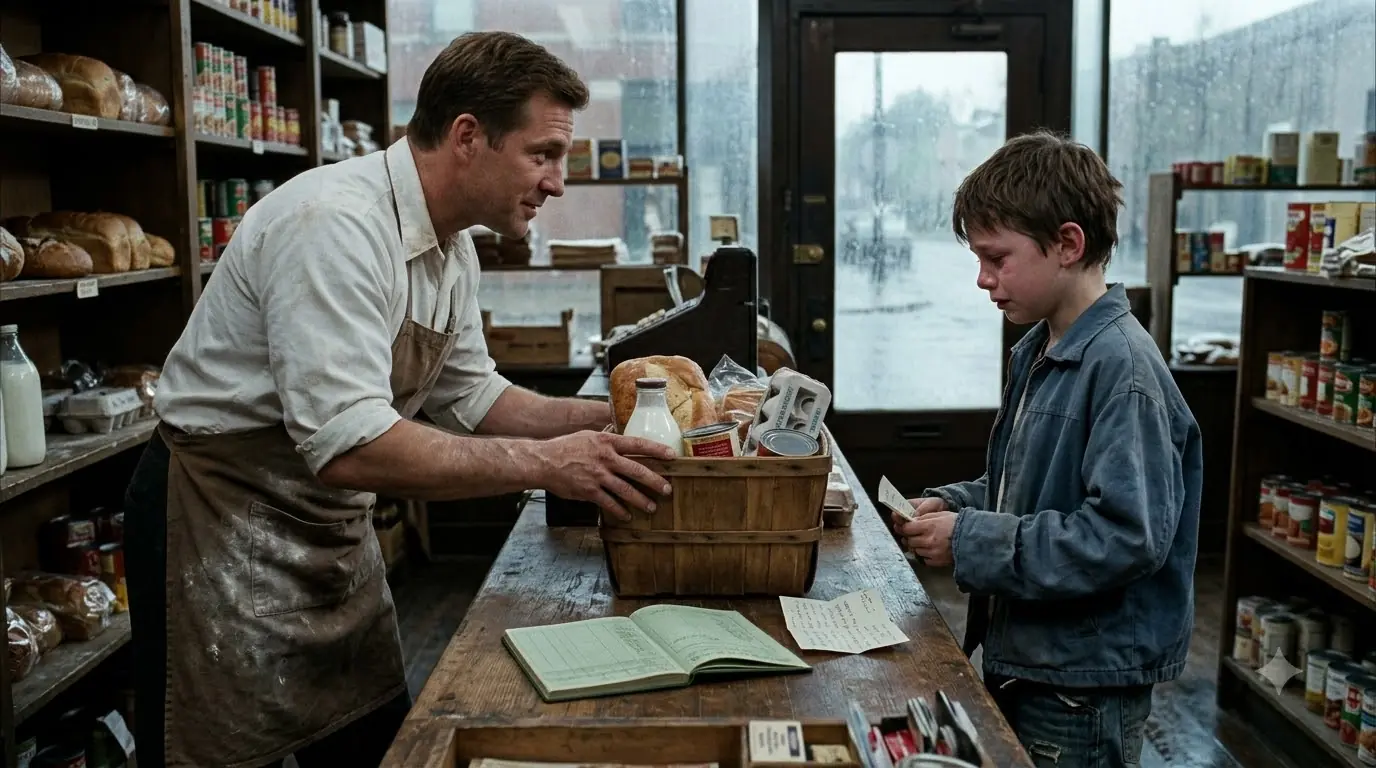
Outside, rain slid down the front windows of the old brick storefront in narrow silver lines. A city bus hissed at the corner, then pulled away, leaving the street quiet again. Twenty-six years earlier, on another rainy afternoon, a ten-year-old boy had stood in almost the same spot with wet shoes, an empty stomach, and a promise Henry had long ago stopped expecting anyone to remember.
Back then, Bennett's Bread & Market had been busy enough that Henry barely noticed the bell above the door when it rang. The bakery sat in a working-class neighborhood on the south side of Columbus, Ohio, wedged between a laundromat and a barber shop. Henry was thirty-eight, strong-backed, impatient with broken equipment, and still young enough to believe the bakery would always smell like fresh bread and warm cinnamon by six every morning.
His wife, Margaret, ran the register three days a week, and his father still came in every Sunday to complain that Henry shaped rolls too large. The shelves held flour, canned soup, eggs, rice, milk, vegetables, and basic groceries for families who did not want to take a bus to the larger supermarket. At the end of the counter sat a thick green ledger where Henry kept handwritten tabs for regular customers who came up short before payday.
He knew that ledger was bad business. His father reminded him constantly.
"You are running a store," the older man would say. "Not a bank."
Henry always answered the same way. "Banks charge interest."
The boy who entered that rainy Tuesday was named Caleb Reed. Henry knew him by sight, though not well. Caleb's mother, Teresa, had been shopping at the bakery for about a year. She cleaned offices at night and sometimes paid part of her grocery bill on Friday, then the rest the following week.
That afternoon Caleb stood near the door longer than most children did. His coat was too small at the wrists, and rain had darkened the shoulders. He kept one hand in his pocket and the other wrapped around a folded piece of notebook paper.
Henry glanced toward the street. "Your mother coming in?"
Caleb shook his head.