On Our 25th Anniversary, My Wife Confessed the Affair That Destroyed Our Marriage
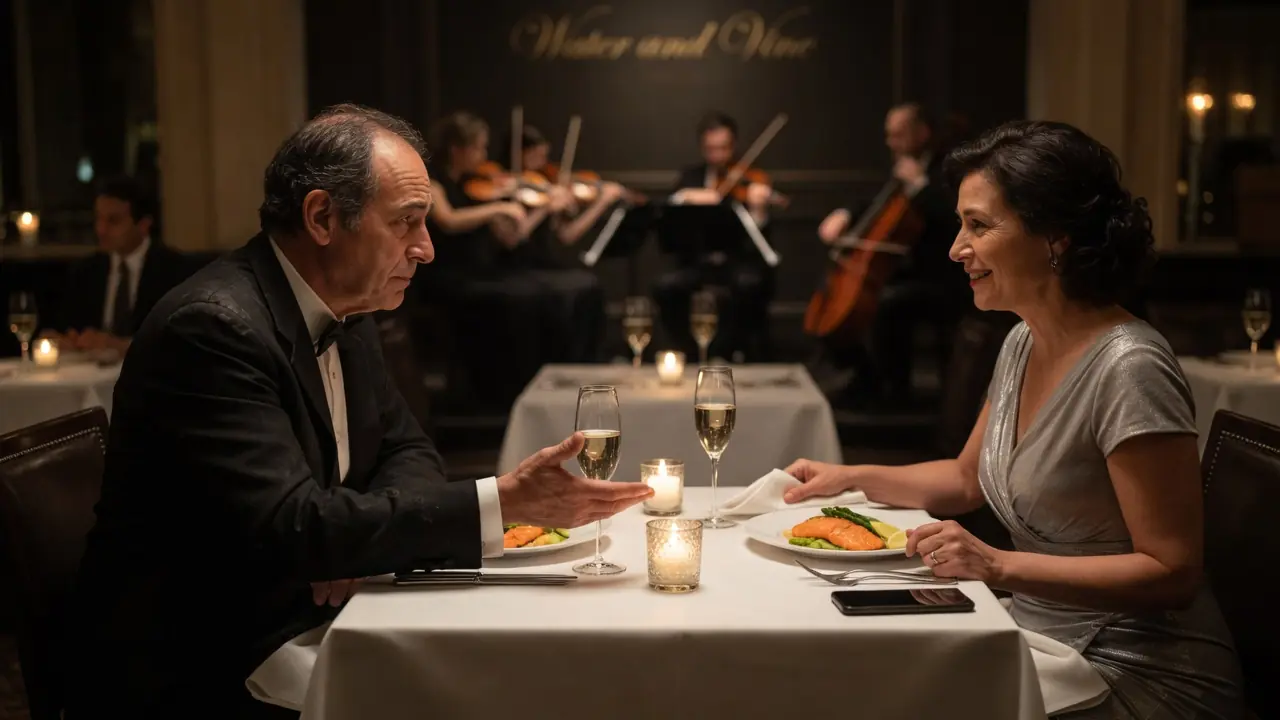
Anniversaries are supposed to be soft focus memories. Linen napkins, a welltimed toast, the feeling that two people survived all the ordinary storms. I booked a table at Water and Vine because that's where we went the year we paid off the minivan and felt like kings. The place glowed the way nice restaurants do. Candles breathing light on silverware.
A quartet worrying a familiar Sinatra tune. Waiters gliding like they were on invisible tracks. I wore the tux I hadn't put on since Josh's graduation. Laura showed up in a silver dress that made everyone else look like they were in black and white. For a split second, seeing her in the doorway, biting her lip the way she did when she was nervous.
I believed the night would rewrite the last few strange months. We did the ritual. Small talk about the kids. Maddie finishing her capstone. Josh thinking about moving to Austin.
About the dog's arthritis, about the neighbor who insists on mowing at dawn. We laughed in that old easy way you earn only by living together long enough to share a catalog of the ridiculous. But she kept turning her phone face down. She didn't lean into me when I reached across the table. Her smile was the kind you put on when someone points a camera at you and you feel obligated to smile.
I told myself to ignore it. That had been my strategy lately. Pretend the flickers in my peripheral vision were headlights on the wall from a car that would keep driving. I ordered champagne. The server came with the little silver bucket and asked if we were celebrating.
25 years, I said, expecting the room to applaud. He said congratulations with a reverence usually reserved for priests. We clinkedked glasses to us, I said. To honesty, she whispered barely above the violin. It landed oddly, but I let it go because a stake was arriving because the world was bright and warm and I wanted it to stay that way.
She didn't touch her salmon. She folded her hands in her lap like she was waiting to be called into the principal's office. After the second glass, she set her napkin down very carefully, as if not to disturb anything, and looked at me with that far away expression I'd started to fear. "I need to tell you something," she said. I tried to make a joke.
"You're finally ready to admit you like pineapple on pizza." Her mouth trembled. I've been seeing someone, she said, for a while. The quartet kept playing. A couple at the next table laughed, forks chiming. My body got very still, like a deer in a field when a branch snaps.
The little details sharpened. The ring of condensation on her water glass, the candle burning down into a crater, a tiny thread loose on her sleeve. Seeing someone, I repeated like I'd never heard the words before. How long? She looked at her hands at the ring we'd bought at a mall in 99 when we were too broke to breathe.
2 years, she said. I could not find air. I thought about our summer road trip, the fireworks by the lake, the night she cried over a cheesy episode of This Is Us. And I kissed her forehead and told her we were the lucky ones. I thought about the Saturday she said she had a work retreat and came home with a tote bag and a sunburn I hadn't given her.
The violin slid in to fly me to the moon. I stood up so fast my chair nearly went down. She reached for my wrist. I stepped back like the touch would burn. Why tonight?
I asked. My voice sounded like it was walking on gravel. Why here? Because you deserve the truth, she said. Because I couldn't lie to you on this night.
On this night, I said, and I almost laughed because the timing felt like a sick joke written by someone who hates anniversaries. I'm sorry, she said. And then something worse. I love him. The word detonated, love, our word.
Too much money. Like a bribe to the universe to reset the scene. I walked out into the cool night air and heard the door hush closed behind me. Somewhere a valet sprinted past. I drove without knowing where my hands told the wheel to go.
Past our starter house where we once painted a nursery yellow because we didn't yet know if Maddie was a Maddie. Past the high school baseball field where Josh struck out with the bases loaded and we ate ice cream in the car and promised failure was just an awkward dance step on the way to something better. I ended up in the dark lot behind St. Bridges where we said our vows 25 years ago. The church looked older like everything else in our lives.
I remembered the moment the priest told us to speak up so the folks in the back could hear our promises. Laura squeezed my fingers and grinned and said, "I do." With such bright certainty, it felt like it could light a city. I sat there in the idling car until the engine rattled my teeth. The glassy word for what Laura had become came unbidden, ugly, but accurate. My cheating wife.
It didn't fit the woman who sang to the radio while making pancakes. Who saved movie ticket stubs in a jar, who cried at graduations, who knew exactly how I took my coffee. But truth rarely asks permission to fit. I went home at dawn because home was still home, even if every shadow looked like a question mark. The house smelled like lemon cleaner and the faint ghost of last night's roast chicken.
On the fridge, a magnet held up a photo from the big years ago Christmas when we rented matching pajamas and pretended to enjoy it. Our teenagers, now adults, grinned with red Santa hats tilted to the side. I stared at that frozen past and waited for the sunrise to show me a way through. All it showed me was dust moes dancing in a square of light and a kitchen table where very soon I'd have to say out loud what had happened. The steak I paid for sat somewhere in a metal bin growing cold.
In the silence, the clock in the hallway ticked like a metronome, counting down to something I didn't know how to survive. I had the irrational thought that if I could make it through the morning without saying the words again, maybe the confession would evaporate and we'd get to start over. Then I saw Laura's car turn into the driveway. The spell broke. Life, stubborn and ordinary, came inside with her.
"Can we talk?" she asked. "Apparently, that's all we do now," I said. And my voice had steel in it I didn't know I possessed. Outside the world carried on. Trash trucks bellowing, joggers passing in neon shoes because the world does not pause for a broken anniversary.
 Inside, we took our places at the table where we had planned vacations and balanced checkbooks and listened to Maddie practice persuasive speeches. We faced the math of what had been done and the candle lit promise of the night before. The soft music and the tuxedo and the silver dress felt like props left over after the play had ended. The rule of grief is that it doesn't arrive in neat waves. It hits like Midwestern weather.
Sun one minute, a black wall of storm the next. That morning, after her confession, Laura spoke carefully, as if each word had to pass a test. She kept saying she never meant to hurt me, which I understood the same way I understand a car accident you cause. While texting, "You didn't mean to, but you did, and the dent exists." I asked questions because questions are a way to hold a slippery thing. Who?
How? Where? She had answers that sounded like read aloud depositions. His name is Daniel. He used to do contracting work for the nonprofit she consults for.
He is divorced. They started with lunches that were just harmless. The kind of adjective people use like duct tape. Sticky but inadequate. The harmless lunches became coffee in the park.
Became an overnight at a conference. Became a second phone line. Became a secret life. I'm not proud of how I spoke. I weaponized specifics.
Was it on the weekend you told me you were doing the women's retreat? Was it the night we watched Maddiey's video when you said you were tired? I wanted her to feel cornered because I felt annihilated. She nodded, cried, said, "I know. I know.
So many times the words lost shape." After she left for a shower, I stood in the backyard and considered the grass. I know that sounds ridiculous, but after a truth like that, your brain claws for anything ordinary. Sprinkler lines, the smell of wet dirt, whether the mower needs a spark plug. Our dog Moose limped up and leaned against my shin so hard I nearly fell over.
He looked up at me with cataract eyes that said, "I don't know what's wrong, but I know you are hurting." I buried my face in his neck and then laughed because I was crying into a dog who mostly cares about squirrels and rotisserie chicken. The phone rang. It was my brother Ryan. I almost didn't answer because saying something out loud makes it more real, like wet concrete hardening. But I picked up.
"You okay?" he asked like he could see through the phone. I told him in three sentences, then in 10, then in the rambling way you tell a story you wish belonged to someone else. He swore low. Come stay here, he said. Take the guest room.
We'll grill something that clogs arteries. I didn't pack right away. I wandered the house like a tourist in a museum of my own life. The souvenirs of us were everywhere. The framed map with pins in every place we'd gone.
The dent in the hallway drywall from the time we moved the old armwire and misjudged the turn, the ugly lamp we found at a flea market in Asheville and loved because it was ugly and ours. Every object was a little coin of memory that now felt counterfeit. At noon, Laura came down with wet hair and a red nose. She asked if I wanted coffee. It was strange, like two co-workers trying to act professional in a conference room after a public scandal.
I wanted to scream. I wanted to collapse. I wanted to rewind time to the night years ago when we danced in the kitchen to a Springsteen song. And she tucked her chin into my shoulder and whispered, "Promise me will always be this version of us." But the only time machine we get is memory. And memory, I was learning, can be a cruel editor.
We sat across from each other like negotiators. Are you ending it? I asked. She looked away. I don't think I can, she said.
I didn't come to confess because I was done. I came because I couldn't keep lying. The honesty was almost worse than another lie. My chest tightened. So, on our 25th anniversary, I said slowly, "You told me you were in love with someone else, and you want to keep being in love with him." "I don't know what I want," she said.
"I just know what I feel." I gathered a duffel bag with the day's deficiency of someone packing for a trip he didn't plan. Jeans, a handful of t-shirts, socks without pairings, the old Mets hoodie the kids hate. I left my wedding ring on the dresser because it felt dishonest to keep it on. The way you take off your cap in church because you respect the sacred. Laura stood in the doorway and watched like a person at an airport window.
Small and helpless. Please don't hate me, she said. I don't, I said, and it was true in a confusing way. Hate is easy. This was not easy.
But I can't live here right now. I drove to Ryan's in a drizzle that turned the streets reflective. His place smelled like bacon and bachelorhood. He hugged me with both arms and an awkward slap on the back, then handed me a beer because when you don't know what to do, you default to the handbook of brothers. Meet beer.
Silence until words return. We watched a noon sports center without absorbing a single stat. Finally, he said, "What's your plan?" survive today," I said. "Then we'll see about tomorrow." That night, in his guest room with the two firm mattress, I drafted a text to Maddie and Josh and didn't send it. I typed and deleted because how do you tell your kids that the floor under their family picture is buckling?
I scrolled my phone with that sick compulsion you get when you know you'll find pain, but you keep looking anyway. I searched Daniel's name. He was easy to find. A public Instagram with photos of a boat, a golden retriever, a middle-aged man who could probably still play pickup basketball at the Y and not embarrass himself. There he was at a barbecue, arm around a woman you could only see in profile.
The caption was a dumb joke about burnt ends. I zoomed and zoomed like the modern fool I am, trying to see if that profile was my wife. It didn't matter. I threw the phone on the dresser and turned off the lamp. Sleep came in jerks.
At 2:00 a.m., the guest room ceiling turned to a planetarium of whatifs. What if I'd been more romantic last year? What if we'd taken that trip to Santa Fe we kept talking about? What if? What if?
A mean little voice sang a chorus. Your cheating wife. Your cheating wife. The phrase felt tabloid, ugly, and sensational, but it was also the simplest label for a complicated wound. I hated it.
I used it anyway because sometimes the only way to step into the truth is to call it by its wrong name until the right one appears. By morning, the plan was simple. Tell the kids, find a lawyer, breathe. Somewhere under the rubble, I'd have to locate the man I used to be, or maybe build a new one, piece by piece, like a contractor named Daniel might build a house. The irony wasn't lost on me.
I got up, made bad coffee, and called my daughter first because she's my oldest, and because I knew she'd want to be the first to know. When she answered bright and sleepy, I remembered the way her little hand used to grip my finger and pull. I took a breath and stepped into the day that would teach our family a new unwanted vocabulary. Telling Maddie and Josh felt like lowering a flag to half mast. I kept it simple.
Your mom has been seeing someone for a while. We're separating while we figure out what comes next. There's no version of that sentence that doesn't kick your kid's knees out. Mattie went quiet, then furious, then tearful. Josh cursed into the phone in a way that told me he was trying on adult anger and it didn't quite fit yet.
Both of them directed their pain toward Laura. I didn't correct them. I didn't defend her. I just said, "I love you. That doesn't change and repeated it until they stopped arguing with me and started believing me." By afternoon, the ache had congealed into a kind of purpose.
I wanted to look the man in the eye. Everyone tells you not to do that, that it's messy and beneath you, and what good could possibly come of it? Maybe they're right, but there is a primitive switch in a husband that flips when his marriage gets invaded. You go from spreadsheets and Costco runs to something older and uglier, and the civilized thing you call yourself wants to stand in front of the threat and make sense of it with your fists or your words. I didn't want a fight.
I wanted a face. I called the number Laura finally gave me. He picked up on the second ring. "Daniel," I said, and the way he said, "Yeah," told me he knew which husband I was. My throat tightened, but my voice found steel.
"I want to meet," he sighed. The sound of a man who has written a story where he's the good guy and the world keeps handing him edits. There's no reason to, he started. There's every reason, I said. You've been sleeping with my wife.
Meet me. Silence stretched so long I heard the faint clatter of dishes wherever he was. Okay, he said finally. There's a coffee shop on Third and Maple. 2 hours.
Ryan offered to come with me. I said no because this wasn't a bar brawl. It was a Monday at a coffee shop that serves latte art to people tapping on laptops. The place smelled like baked sugar and ambition. Daniel arrived in a Navy pullover in jeans.
A man with the posture of somebody who used to be a high school athlete and still cares about posture. He was handsome in the unremarkable way of a thousand suburban men who pay for a gym membership they actually use. He extended a hand and I let it hang there. He nodded as if to say fair. We sat.
I watched him order an Americano like not a single neuron in his brain was troubled. I wanted to hate him. Some parts of me did, but mostly I felt like I was meeting a ghost who had been haunting my house for 2 years. I don't know what you want me to say, he began. We didn't plan for this.
You keep using we like you're on a team. I said, "My team is my family. You don't get to be on it." He looked at the table. "I didn't try to break up your marriage. You don't have to try." I said, "All you have to do is answer the phone." He flinched barely.
"Good. I needed him to feel 1% of the quake he'd helped author." He set his coffee down and folded his hands. I care about her, he said. She cares about me. Do you care about my kids?
I asked. Do you care about what happens to a family when a cheating wife decides a new love story is worth more than the old one? He opened his mouth and closed it. I don't know them, he said. But I'm not your enemy.
Then who are you? I asked. Mistakes have faces, Daniel. I wanted to see yours. We sat in the neon quiet of a cafe that didn't know it was a battlefield.
He told me his version, his lonely nights after his divorce, the way Laura made him feel like the cracked parts of him could still be polished. He used words like connection and inevitable. I pictured the prayers Laura and I had said into our pillows during hard seasons. The little vows we whispered after fights, how mundane and heroic long love is, how uncinematic. I felt a strange grief for the ordinary we'd lost.
The grocery lists and Saturday chores and the way she'd slide her cold feet under my legs on the couch. People throw away ordinary like it's trash until they don't have it anymore. Then it's treasure. I'm not going to beg you to disappear, I said finally. I can't control what you two do, but you should know the cost.
Not just to me, to her. To everyone who thought we were the kind of family we said we were. I leaned forward. And if you think love is fire that only burns the people outside of it, you've never stood too close to a blaze. He didn't have a good answer.
There isn't one. He said, "I understand." In the tone of a man who understands the theory of hurricanes because he watched a documentary. We left without shaking hands. Outside, a mother buckled a toddler into a car seat. The world remained indignantly normal.
Back in the car, I punched the steering wheel once, hard enough to make my knuckles throbb, not hard enough to break anything. I breathed until my vision stopped tunneling. Then I called Laura. I met him, I said. I know, she said.
He texted me. The fact of that, his text blipping on her screen, me becoming a character in their private novel, made me dizzy. We're done, I said. I met with the limbo with waiting to see if she'd pick us. "I'm calling a lawyer," she inhaled sharply.
"Can we slow down?" "We slowed down for 2 years," I said. "We're done slowing." That night at Ryan's, I stared at the Stuckco on the ceiling until the Stuckco stared back. I thought about every man I'd ever known who discovered a betrayal and became a story told quietly at backyard barbecues. I pictured myself in those stories and didn't like the roles available. The sucker, the rage monster, the saint.
I wanted a fourth option. I didn't know what to call it. Not revenge, not forgiveness. Something like survival with dignity. I wrote the phrase on a junk mail envelope, survive with dignity.
It felt both too small and precisely right. I fell asleep with the TV on, some late night host making jokes about a politician's scandal. The audience laughed and clapped, and for the first time in days, the sound didn't feel like a different species of weather. It sounded human. I let it carry me to mourning.
The next week was paperwork and logistics and the kind of public performances marriage forces on you when it's ending. We crafted the statement for our kids that we were taking space to re-evaluate. We decided who got moose during the first stretch. We divided the calendar. Holidays, birthdays, who would host Thanksgiving, a list that looked like a battle plan for a war where the territory is your family's calendar.
Telling our parents was cruel in a different way. My mother is the sort of church lady who has never missed a casserole rotation for a funeral. When I told her, she made a sound I'd never heard out of her, thin and unbelieving, and then asked, as all mothers do, what she could cook. Laura's mom, retired in Florida, reacted like I'd handed her a defective appliance. She wouldn't do that, she said, and I almost envied her denial.
It was a place to rest, however briefly. Our friends went weird. There's a sorting that happens when a marriage cracks. Some people lean in with grace and some people stiff arm because they're afraid breakage is contagious. The guys from my Thursday night poker texted me jokes, clumsy but kind.
The couples we'd gone on double dates with sent long messages about loving us both and refused to take sides in a way that looked admirable on paper and felt like abandonment in practice. The PTA moms had a group chat about us. I know because one of them accidentally added me. I read the thread like a sociologist until it got mean. Then I left it because there's only so much humiliation you can ingest and still stand up.
Maddie drove home from campus with a duffel bag and questions that made me proud and sad in equal measure. She wanted to know if I was okay. I told her I was surviving. She wanted to know if she should be mad at her mom. I told her anger belongs to her and she can spend it how she wants, but it won't buy what she thinks.
She crawled into my lap like she was six again and then laughed because she is 22 and I am not small. I'm going to be fine, I lied, because parents lie in service of the larger truth that kids deserve steadiness even when the ground shakes. Josh called from his apartment and asked if he should come home. Stay, I said. Go to work.
Eat real food. Text your sister. He sniffed and said he hated Daniel. And I didn't correct him because if hating a stranger bought him a little ballast, fine. At night, he sent me memes.
Stupid ones involving raccoons and sandwiches. And sometimes I laughed so hard I had to sit down. God bless memes. The dark internet art that keeps us from drowning. One afternoon, I went back to the house to get winter clothes before the first cold snap.
Laura had packed a box for me labeled with my handwriting in her careful block letters. The domesticity of it knifed me. The civilized splitting of a life, the way we were still trying to be fair, even after fairness had been torched. Moose thumped his tail and trotted between us like a diplomat. Laura offered me coffee.
I said no and stood in the doorway of our bedroom where the bed looked like an island halfade half unmade. I miss you, she said. The audacity of it stung. But I understood the paradox. People can miss what they are simultaneously killing.
I don't think you miss me, I said. I think you miss the part of you that was good with me. She nodded like a student taking notes in a class that hurt. When I left with the box, she followed me to the driveway and said he wants to meet the kids. I held the box tighter.
"No," I said. "Not now. Not for a long time. Maybe never." She flinched. And I hated myself a little for the power that gave me.
But boundaries are not revenge. They are fences around a garden you still hope will grow something. At church that Sunday, I sat with Ryan because our old pew with Laura felt haunted. I'd worried people would whisper. They did.
But after service, Pastor Jim, who has been through enough funerals and rehab returns to know what to say, gripped my shoulder and said, "You're seen." That was it. Not advice, not theology, just you're seen. I went home and ugly cried in the shower because sometimes kindness is a knife that slices the knot in your chest. The lawyer looked like a man who keeps spare ties in his car. He explained the process with the practice calm of someone who lives in the hallway between love and law.
Mediation, financial disclosures, division of assets. The words turned our years into line items. He was professional and in his way kind. When he asked for grounds, I said the word I'd been practicing like a curse and a catechism. Infidelity.
He nodded without looking triumphant or sad, which made me trust him more. At night, revenge skittered along the edges of my mind like a raccoon in the alley. I imagined printing photos and tacking them to telephone poles. Have you seen this man? He steals wives.
I pictured walking up to Daniel's job site and reading him a list of the names of the people he'd hurt like a roll call of the wounded. I drafted a Facebook post in my head so scathing it would set the culde-sac ablaze. Then I remembered what my grandfather said when I was 10 and angry at a kid who cheated me in whiffle ball. Don't set yourself on fire to get rid of a few mosquitoes. I deleted the imaginary post.
I bought a punching bag and hung it in Ryan's garage. When the bag swung into my ribs, it hurt in a way that made sense. That week, Laura texted, "Can we talk?" And I replied, "Email me." It sounded cold because cold was the climate required. In the emails, we were bureaucrats of heartbreak. We discussed the Honda and the savings account with the overly cheerful bank logo.
We were efficient. We were boring. I grieved the kind of boredom that used to mean safety. Arguing about leftovers, the excruciating decision of whether to watch a prestige drama or a sitcom. Now our boredom was transactional.
That's its own grief. On Thursday night, I went to poker and lost 20 bucks because my head was mush. The guys were gentler than I expected, but not patronizing. Between hands, Kevin, who never says anything deeper than a weather report, said, "My dad cheated on my mom when I was in high school. He stared at his cards.
I thought I'd never forgive him. Then I did. Then I didn't again. It's not a straight line. We played and the room smelled like beer and onion dip and the mundane holiness of friends showing up.
When I got home, I stood in the dark kitchen and ate cold leftover pizza over the sink like a cliche. I whispered into the empty room. We're going to be okay. I didn't know who we was anymore. Me, I guess, the kids.
Whatever future version of us learned to carry this without dropping it on our feet. It was not a battlecry. It was a stubborn prayer. Mediation is the world's most civilized knife fight. The mediator was a woman with gentle eyes and a spine of rebar.
She sat at the head of the conference table and set a clear agenda like it was a staff meeting. Assets, debts, retirement, the house. Laura and I sat across from each other, pens lined up like utensils, our lawyers at our elbows like translators in a foreign war. There is a moment in mediation where you look at the person you shared a bed with for two and a half decades and realize you now communicate through reading glasses and legal pads. We were polite.
We were careful. At one point, Laura reached for the bottle of water and our hands almost touched. I moved mine because if I let kindness in the room, it would build a bridge I wasn't ready to walk. When the house came up, I thought my chest would split. The house was more than wood and equity.
It was the red Sharpie marks on the kitchen doorframe, the afterprom photos on the porch, the box of baby clothes we kept in the attic like a shrine to the versions of us who were brave enough to attempt parenting with no manual. Laura wanted to keep it, at least for now. The kids would come home for holidays. Moose knew the layout. The logic hurt because it was good logic.
I agreed to a buyout and immediately felt like I'd sold a national park to a developer. Afterward, I drove to the park by the river where the trail loops through cottonwoods. Late October leaves skittered across the path like gossip. I sat on a bench, the kind old men sit on when they want the sun to thaw their bones. A couple joged past, sed breathing, matching shoes.
I watched them like a tourist from a country where that used to be my language. My phone buzzed. It was a text from an unknown number. This is Daniel. My stomach dropped like an elevator.
I wanted to say, "I'm sorry." The message read for the pain. I stared at the screen so long the phone dimmed. I typed, "Don't text me." and erased it. I typed, "You don't get to narrate this." and erased it. I typed nothing and locked the phone.
There's dignity in refusing to be recruited into someone else's absolution. Therapy became a weekly appointment with a woman named Ruth, who wore soft sweaters and asked questions that found the brown glass bottle in my chest, where I store the things I don't want to feel. She did not let me get away with saintthood. When I told her about the revenge fantasies, she didn't flinch. Of course, she said, like I told her, I crave salt on popcorn.
Anger wants a job. Let's give it a good one. What's a good job for anger? I asked. Protection, she said.
Boundaries, truthtelling without cruelty, keeping you moving when grief insists on the couch. She asked me what I missed that had nothing to do with sex or romance. I said, the way she laughed at sitcom tag scenes, the single word language of long marriage. Keys, purse, yep, the alignment of errands, the draft under the bathroom door when she blow dried her hair. Saying those things hurt like pressing on a bruise, but the pain informed me.
I wasn't just grieving a cheating wife. I was grieving a civilization we built together and then carelessly toppled. I tried dating too early because friends insisted it would be good for me. The app felt like a carnival. Bright lights and cotton candy and a lingering nausea.
I drank coffee with a kind teacher who told me about her garden and smiled at my worst jokes. I wanted to feel a spark. All I felt was loyalty to a ghost. I walked her to her car and said, "I'm not ready." She squeezed my arm. "Of course you're not," she said, gentle like a nurse.
"Heal." One night, Ryan and I grilled steaks and watched a Chiefs game. In the third quarter, he muted the TV and said, "You know, you're allowed to be mad and still be a good man." I nodded, but I didn't know how. Then he said, "You're also allowed to not be okay. That's not a failure. That's Tuesday." We unmuted and yelled at a holding call the ref missed, which felt like a reasonable substitute for yelling at life.
In the quiet hours, I wrote letters I never sent. One to Laura that started, "I love the whole of you, even the parts you didn't love." One to Daniel that started, "I'm not your cautionary tale. I'm the man who will survive this." One to my kids that started, "When you marry, pick the person you can be bored with for 50 years. Boredom is underrated, and the act of writing became a way to move the storm through my body." Words were the only thing that didn't ask me to pretend. There was a morning weeks in when I woke up and for 5 seconds forgot.
I lay there in that foggy mercy between sleep and day and thought about pancakes. Then the memory came back like a cupboard door slamming. I almost reached for despair. Instead, I got up and ran 2 miles on the treadmill because motion is a kind of prayer when your mouth can't find the words. On the bathroom mirror, I had taped the envelope where I'd written, "Survive with dignity." I added a second line.
"And don't let bitterness be your only souvenir." Our divorce was finalized on a Tuesday that could have been written by a film school sophomore. Low gray clouds, courthouse steps shining with rain, the world going about its errands while two people sawed through a knot with pens. The judge had the weary kindness of a man who has watched a thousand vows preside over their own undoing. He asked if we understood the agreement if we signed without coercion. We said yes because the technical word for a broken heart is still yes.
Laura wore a navy dress and a coat I bought her on sale last winter. I wondered if Daniel had told her it looked good. I wondered why my brain still made space for wondering. We sat through the ritual, and I signed my name until it stopped looking like my name. When the judge banged the little gavl, more a polite tap than a bang, I felt something in me exhale and collapse simultaneously.
25 years had been translated into a decree and a case number. It was obscene and merciful. Outside, under the courthouse portico, Laura opened a black umbrella. The rain hiccuped on its surface. "Thank you for not destroying me," she said.
"The line startled me. I wanted to say I had imagined it and chosen another road. I wanted credit. Instead, I said, we destroyed enough by ourselves." She nodded and looked at the wet steps. "I'm sorry," she said again, not mechanically this time, but like the word had finally warmed in her mouth.
Not just for the cheating, for the lying, for letting us rot while I pretended we were okay. There was a time when that sentence would have cracked me in half. Standing there damp and tired, I felt a sadness that didn't beg for rage. I'm sorry for my parts, too, I said. For the ways I stopped paying attention to your loneliness, for assuming momentum equals love.
We stood like that for a few rainy seconds. Rook and bishop stranded on opposite sides of a chessboard with no pieces left to move. Then Daniel's car pulled to the curb. Of course it did. Of course, this is how the scene ends.
She looked at me an apology that didn't require translation and walked toward the car. I watched her get in the same way I'd once watched her walk toward me down a church aisle. The book ends of a life are rarely symmetrical. I went to the diner. We took the kids to after school concerts, red vinyl boos, a menu laminated so heavily it could survive a flood.
Gloria, who has been slinging coffee there since the first Bush administration, topped off my cup without asking and said, "You look like a man who needs pie. Pie is a sacrament. Pie is a I ate cherry not because I wanted it, but because sweetness is a small act of rebellion." The radio played Tom Petty and a teenager in a marching band hoodie flirted with a girl who rolled her eyes and smiled anyway. Life kept doing life. That felt like an insult and a promise.
In the afternoon, I drove to the house because I had a box of my dad's tools to pick up. Laura wasn't home. The quiet rooms hummed. I walked to the bedroom and stood in the doorway like an archaeologist decoding a sight. The bed was made with new sheets.
The framed photo of our honeymoon in Charleston was gone. On my side of the nightstand, a ring-shaped circle lingered where my water glass had sweated over a thousand nights. I touched the faint watermark, and because grief is strange, I smiled. I left a note on the kitchen island. Utilities transferred.
I'll come by Saturday for the last of the garage. Tell Moose I'll take him to the park on Sunday. I paused, wrote. I hope you're okay. And crossed it out.
Not because I don't, because it's not my job. That evening, Maddie facetimed from her apartment kitchen. She was making soup like a person who believed soup could heal. "How was it?" she asked, and I told her. She scrunched her nose in that way.
That means she's thinking about crying and choosing not to. I'm proud of you, she said, for not becoming a monster we don't recognize. I told her I was trying. Try less, she said. Just be just.
She has become the kind of woman who can say lines like that without irony. I don't know how. Maybe we didn't ruin everything. I went back to Ryan's and stood in the driveway in the damp air. The smell of wet asphalt is the smell of every summers storm of my childhood.
I thought about the boy I was at 16, leaning under the hood of a junky car with my dad, learning the names of parts. Timing belt, distributor cap. Words that make engines go. I wondered what part I am now. Maybe not an engine.
Maybe a frame. I can hold weight. I can be repainted. I can carry new things. Inside, I pulled the envelope off the mirror and wrote a third line under the first two.
Survive with dignity. Don't let bitterness be your only souvenir. Choose the next brave thing. I didn't know what that next brave thing would be. Call a friend and ask him to meet me at the batting cages.
Say yes to a volunteer shift at the shelter where moose came from. Learn how to cook something more complicated than scrambled eggs. All of those sounded like small rebellions against the gravity of a life that had tried to keep me face down. Before bed, I opened a new document and wrote the first paragraph of a letter I will someday give the woman I haven't met yet. It wasn't a wish list or a manifesto.
It was simple. I am a man who knows what he can lose. I am also a man who knows how to stay. I will not ask you to be a rescue boat. I will bring my own orars.
I saved it without a name. Then I texted Laura. Sunday 10:00 a.m. The park. Moose deserves the big loop.
She replied with a thumbs up. Emojis are a ridiculous language. Sometimes ridiculous is enough. When the lights were off, I lay still and listen to the rain audition for a greater storm and then wander off. Somewhere across town in a house that used to be mine, a woman I loved was learning the measurements of a bed that fit too in a new way.
Somewhere else, a man who was never going to be my friend washed his coffee cup and checked the locks. In my brother's guest room, I turned onto my side, put my palm under my cheek, and did not rehearse the old scenes for once. I pictured a trail I haven't walked yet. Moose tugging at the leash, leaves making that small applause they make when wind bothers them. Not a triumph, not an ending, just the stubborn, ordinary beginning of whatever comes next after a cheating wife confesses on your 25th anniversary.
And you decide as gently and fiercely as you can to.