The first orange flag went into the ground just as the three men beside the pickup started laughing. By the time Abigail Turner planted the fortieth, the wind had turned the flags into a trembling line across the worst field in Wexler County, Iowa, and the men were no longer laughing quite so loudly. They had come expecting a young woman to perform one more desperate stunt before the bank took her father's land. Instead, she was making a map of something none of them had bothered to notice in twenty-three years.
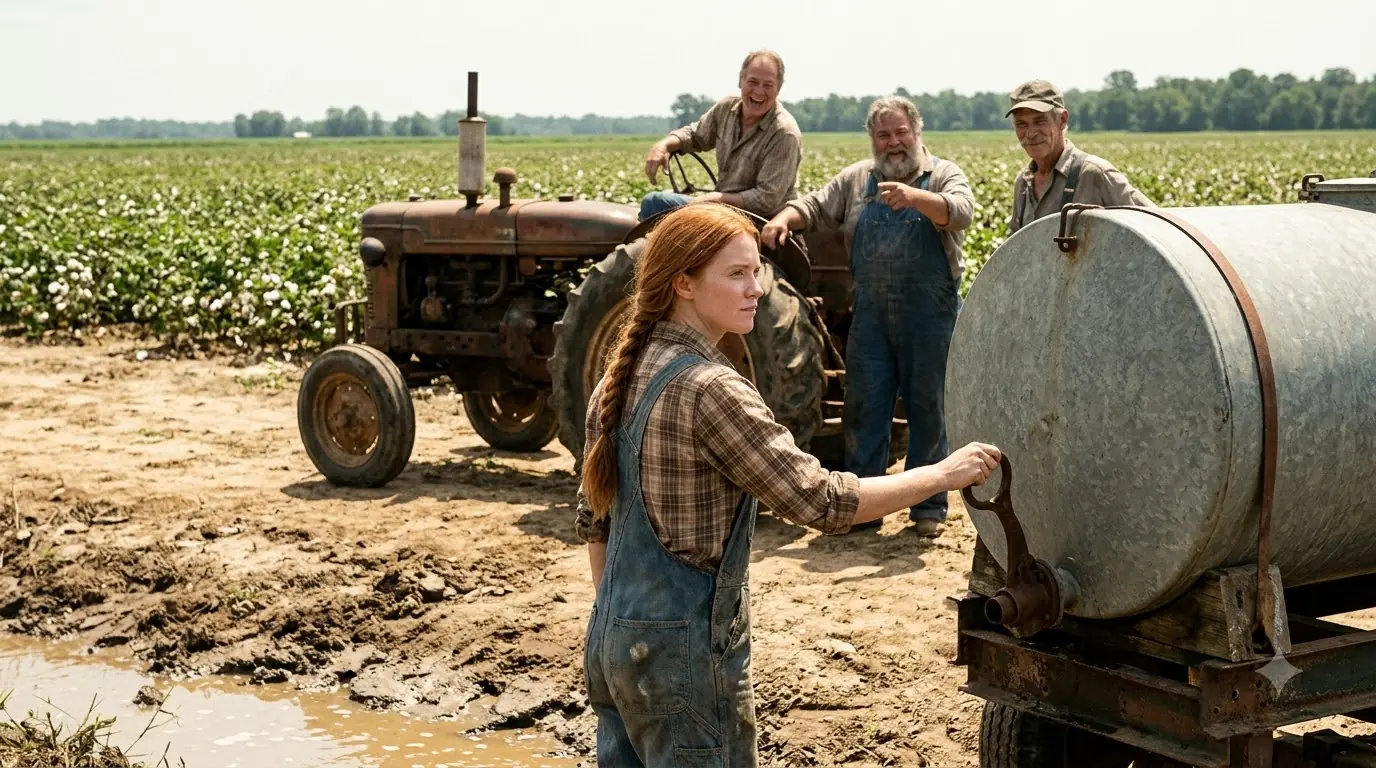
"You planning to grow flags now?" Hank Pritchard called. At sixty-four, Hank owned a thousand acres, two combines, and the sort of confidence that came from surviving enough bad harvests to mistake familiarity for certainty. His friend Dale Kruger leaned against the tailgate, arms folded over his stomach. The third man, retired drainage contractor Lloyd Mercer, kept looking not at Abigail but at the shallow depression cutting across the corn stubble. Abigail saw that and drove another flag into the soil.
"I'm trying to find where the water goes," she said. Hank gave the kind of laugh a farmer saves for a city reporter asking whether corn grows on trees. "Water goes downhill, Abby." She looked at the flag line, the small cracks in the dark earth, and the pale residue around the dead roots. "Then why does the hill stay wet while the bottom dries out?" Hank opened his mouth, closed it, and turned toward Lloyd as if the older man ought to answer. Lloyd only pulled his cap lower.
The Turner farm lay nine miles south of Maple Junction, a place small enough that everybody knew who had missed church, who was struggling with a mortgage, and whose combine had broken down three days before harvest. One hundred and eighty-six acres of corn and soybeans surrounded a white farmhouse with a sagging back porch and a red barn whose south doors never quite closed. Abigail was twenty-nine, with dark blond hair usually confined beneath a seed-company cap, a scar across one knuckle from a grain auger repair, and the weary eyes of somebody who had spent the last year calculating how much family history a banker would accept as collateral. It wasn't much.
Her father, Thomas Turner, had died in February after a stroke that came while he was clearing snow from the lane. He was sixty-one. For thirty years he had paid bills with whatever crop survived hail, drought, price swings, and the ordinary indifference of machines. He had a habit of sharpening pencils at the kitchen sink and storing every field map in the same dented green cabinet. In the days after his funeral, people arrived carrying casseroles, pies, and stories about him. By March, they arrived carrying offers to buy his land.
Abigail had worked as an agricultural equipment service technician in Des Moines before returning when her father's health worsened. She could troubleshoot a planter monitor, change hydraulic fittings, and recognize a bad bearing by its sound. None of that made her an expert in soil drainage, and she knew