Sir, you match the description of a robbery suspect. You're under arrest. I'm in a wheelchair. I'm paralyzed. How am I supposed to rob anybody?
You blind or something? Nice try. You're not fooling anyone. Stand up right now or I'll take you out of that chair myself. Stand up right now.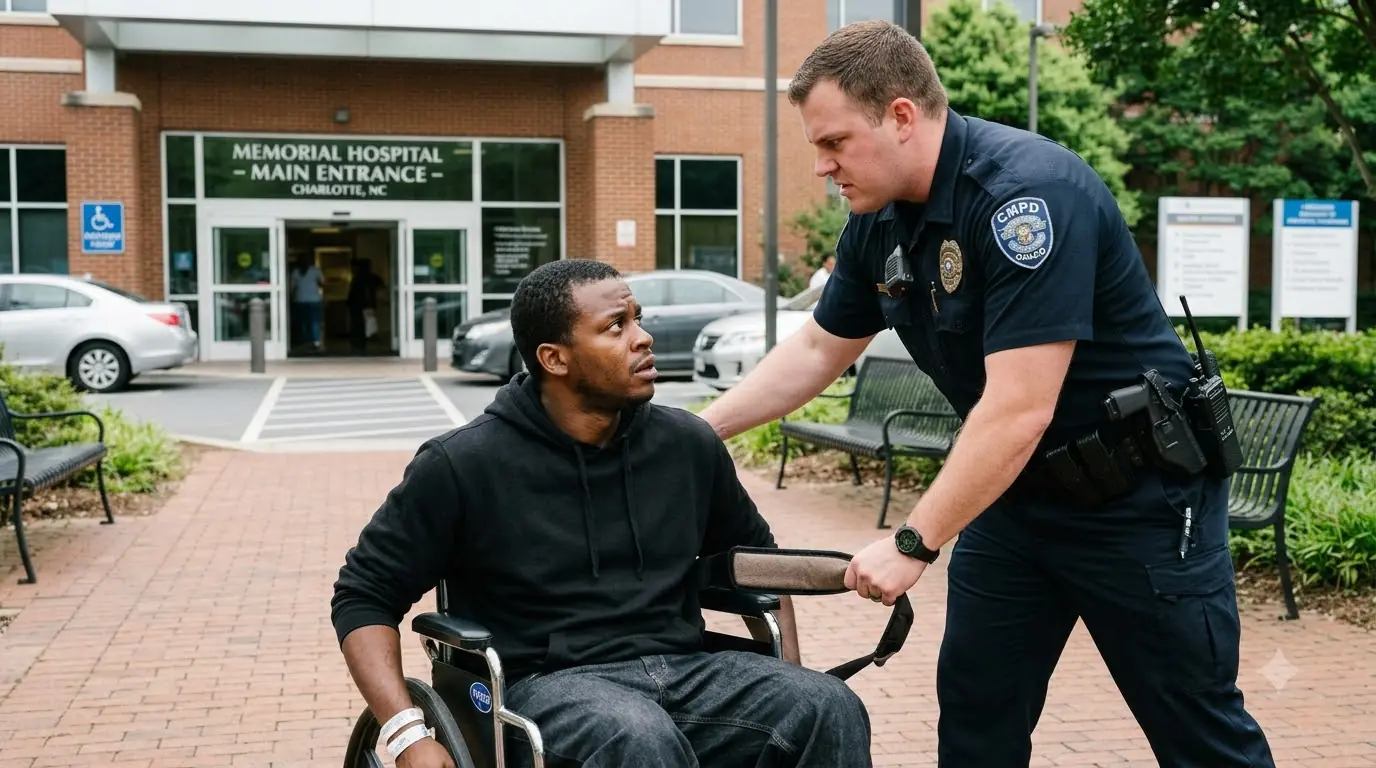
All right, you're coming out. Hands behind. Officer Matthew Reynolds responded to a 911 call about a robbery at Memorial Hospital's Park, heard the description, Black male in a hoodie, and the moment he arrived and saw Leonard Vaughn, a 34-year-old paralyzed Army veteran sitting in his wheelchair waiting for his driver. Reynolds walked straight toward him, ignored the fact that Leonard was clearly in a wheelchair, and accused him of being the robber. When Leonard told him he wasn't the robber and that he was actually the victim who had just been robbed moments earlier, and that he was paralyzed from the waist down, Reynolds dismissed it as a lie.
Told Leonard to stop fooling around and get up, and when Leonard asked how he could possibly be a robber when he was paralyzed, Reynolds said, "Exactly, because you're not paralyzed. " And grabbed him to drag him out of the wheelchair. Leonard fell to the ground in pain, and shouting that he couldn't walk, Reynolds didn't stop. He cuffed Leonard on the pavement, ignored bystanders who told him Leonard had been robbed and was paralyzed, and kept him pinned to the ground and cuffed him. What Officer Matthew Reynolds didn't know, what he was about to learn after dragging a paralyzed veteran out of his wheelchair and leaving him on the pavement in handcuffs, was that his actions were witnessed by a dozen people with cameras, that Leonard Vaughn was a decorated Army veteran who had lost the use of his legs serving his country, and that his refusal to listen would cost him his badge and result in a $10.1 million lawsuit that would become one of the largest excessive force settlements in the state's history.
Before we go further, what city or country are you watching from? Drop it in the comments. We love seeing where you're tuning in from. And if you believe a paralyzed veteran should never be dragged out of his wheelchair by a cop who refused to listen, like this video and subscribe. Memorial Hospital on a late Tuesday afternoon had the rhythm of controlled chaos that all hospitals have.
Ambulances pulling in and out of the emergency bay, visitors coming and going through the main entrance, staff moving between shifts, and in the small park area just outside the main doors, a handful of people sat on benches waiting for rides, making phone calls, or just taking a moment to breathe outside the sterile air of the building. Leonard Vaughn wheeled himself out through the automatic doors at 4:47 p.m., the same time he did every Tuesday after his weekly checkup. He was 34 years old, a former Army specialist who had served two tours in Afghanistan before an IED explosion outside Kandahar in 2018 changed his life in a way that no amount of physical therapy would ever fully reverse. The blast had left him paralyzed from the waist down, and for the past six years he had lived his life from a wheelchair, navigating a world that wasn't always built for people like him. He came to Memorial Hospital every week for checkups related to his spinal injury, and the routine had become familiar enough that he didn't think about it much anymore.
Park in the accessible spot near the entrance. Wheel himself in. See the doctor. Wheel himself back out. Wait for his driver to pick him up.
Today was no different. He wore a black hoodie against the slight chill in the air, jeans that hung loose over legs he couldn't feel, and sneakers he couldn't tie himself. The medical wristband from today's appointment was still on his left wrist. His phone was in his hand. His bag was on his lap, holding his wallet, his VA medical card, and a folder of paperwork from the appointment.
He positioned his wheelchair near a bench in the park area, pulled out his phone and texted his driver to let him know he was ready. The driver replied that he was 15 minutes out. Leonard put the phone back in his lap and looked around, watching the people coming and going, waiting the way he had waited a hundred times before. That was when he saw it happen. About 30 feet away, near the other side of the park, a man in a black hoodie walked up behind a woman sitting on a bench.
The man grabbed her purse off the bench, yanked it out of her hands, and took off running toward the parking lot. The woman screamed. Other people turned to look, but no one moved fast enough to stop him. Leonard didn't hesitate. He pulled his phone back out and dialed 911.
The dispatcher asked. Black male, hoodie. Leonard was focused on getting the information out quickly, watching the man disappear between rows of parked cars. He's heading east toward the parking structure. While Leonard was still on the phone, the robber looked back over his shoulder, saw Leonard sitting in his wheelchair with the phone to his ear, and realized immediately what was happening.
Leonard was calling the cops, and Leonard was in a wheelchair, which meant he would be easy. The robber changed direction mid-run and came straight toward Leonard. Leonard saw him coming, but there was nothing he could do. The robber reached him in seconds, grabbed the bag off Leonard's lap with one hand, snatched the phone out of Leonard's other hand mid-call, and took off running again without saying a word. Leonard shouted after him, "Hey, stop!
" But his voice didn't carry far enough, and the robber was already gone, disappearing into the parking lot with Leonard's bag, his phone, his wallet, and everything else he had on him. Leonard sat in his wheelchair breathing hard, his hands empty, and looked around at the other people in the park. The woman who had been robbed was still sitting on the bench crying. A couple of bystanders had gathered around her. No one had chased the robber.
No one had stopped him. And Leonard couldn't chase him either. He sat there, paralyzed in more ways than one, and waited for the police to arrive in response to the call that had been cut off. Six minutes later, Officer Matthew Reynolds pulled up in his patrol car. Reynolds was 31 years old with six years on the Charlotte Police Department.
He worked patrol in the downtown district, and over those six years he had built a reputation that his supervisors had documented but never addressed. Four formal complaints from black men over the years, all claiming Reynolds had used excessive force, made assumptions based on race, or escalated situations unnecessarily. All four complaints had been investigated and dismissed. The pattern was there, written into his personnel file, but no one had ever done anything to stop it. When the dispatch call came in that afternoon, all Reynolds heard was this: Robbery in progress at the Memorial Hospital Park.
Suspect described as Black male in a hoodie. He drove over without asking for more details. Reynolds pulled into the hospital parking lot, scanned the park area, and his eyes locked onto Leonard Vaughn sitting in his wheelchair near the entrance. Black male. Hoodie.
Sitting right there in the open. Reynolds got out of his car and walked straight toward Leonard without speaking to anyone else, without asking the woman on the bench what had happened, without observing the scene for even 10 seconds. He had already decided what he was looking at. He stopped in front of Leonard's wheelchair and looked down at him with an expression that said he had found exactly what he was looking for. "You.
You're under arrest. " Leonard looked up, confused, and caught completely off guard. What? I'm not Reynolds cut him off, his voice loud and aggressive. You match the description, Black male in a hoodie.
Get out of the chair, now. Leonard's heart started pounding. This wasn't right. This wasn't what was supposed to happen. Officer, I'm not the robber.
I'm the one who called 911. The robber just robbed me, too. And I'm paralyzed from the waist down. I can't stand. Reynolds crossed his arms, his expression hardening.
Yeah, right. Sure you are. You can't fool me. Dispatch was clear. Black male, hoodie.
You match the description perfectly. Leonard tried again, his voice steady but urgent. Officer, I was just waiting for my driver after coming out of the hospital. I saw the robbery happen, and I called it in. Then the guy robbed me.
I'm paralyzed. I can't walk. Reynolds leaned in closer, his tone turning sharp and condescending. "Shut up and stand up before I drag you up myself. " Leonard felt panic starting to rise in his chest.
He didn't have his phone. He didn't have his bag. The robber had taken everything, and now he had no way to prove who he was. "I don't have my phone or my bag. The robber took them, but you can verify my story inside the hospital.
I just had an appointment. They have all my records. " Reynolds ignored him completely. "How are you going to be a robber when you're paralyzed? " Leonard thought for a second that maybe Reynolds was starting to understand, that maybe the question meant he was listening.
"Exactly. That's what I'm trying to tell you. I can't Reynolds interrupted him, his voice flat and certain. "Exactly, because you're not paralyzed. I need you to Reese.
Stop fooling around. " Leonard stared at him in disbelief. "What? " Reynolds reached for his radio and called for backup. Then he turned back to Leonard, his hand moving to rest on his holster.
"Get up, now. " A woman nearby, who had seen the whole robbery happen, stepped forward, her voice shaking but clear. "Officer, he's telling the truth. He got robbed, and he's in a wheelchair. He's clearly paralyzed.
" Another bystander joined in. "We saw the whole thing. The guy in the hoodie robbed him and ran that way. " He pointed toward the parking lot. Reynolds turned toward them, his voice hard.
"Stay out of it. I have this under control. " He turned back to Leonard, and his voice dropped to something colder. "Get up, now, or I'm dragging you out of that chair myself. " Leonard's voice rose, desperation cutting through.
"I'm paralyzed. I can't get up. " And that was when Matthew Reynolds lost whatever patience he had left. He grabbed Leonard by the arm and yanked him forward with enough force to pull him out of the wheelchair. Leonard's body-camerae forward, but his legs didn't respond.
They couldn't. He fell hard onto the pavement, his legs twisting beneath him in ways that would have hurt if he could feel them, and pain shot through his lower back where his injury was. He hit the ground and immediately shouted, his voice breaking, "I can't walk. This is assault. " Reynolds didn't stop.
He flipped Leonard onto his stomach, pulled his arms behind his back, and cuffed him roughly on the pavement. Leonard's face was pressed against the concrete, his wheelchair tipped over beside him, and bystanders were shouting now, some of them pulling out their phones to record. Backup sirens were already getting closer. And Leonard Vaughn, a decorated army veteran who had lost the use of his legs defending his country, was handcuffed on the ground outside the hospital where he had just finished his weekly checkup, being treated like a criminal by an officer who refused to listen to a single word he said. Leonard lay on the pavement with his face pressed against the concrete, his hands cuffed behind his back and his legs twisted beneath him in positions that would have been painful if he could feel them.
His wheelchair was tipped over three feet away, one wheel still spinning slowly from where it had fallen. Officer Matthew Reynolds stood over him with one hand on Leonard's shoulder, keeping him pinned to the ground. And Leonard could hear the backup sirens getting closer with every second that passed. The bystanders who had witnessed everything were still shouting. A woman near the bench was yelling at Reynolds to let Leonard go, telling him that Leonard had been robbed and was clearly paralyzed.
An older man was holding up his phone, recording the whole scene and telling Reynolds that he was making a huge mistake. Another person was trying to explain to Reynolds that the real robber had run toward the parking structure and was long gone by now. Reynolds ignored all of them. He kept Leonard pinned on the ground and waited for backup to arrive. The backup cruiser pulled up less than 2 minutes later and Sergeant Mike Dawson stepped out.
Dawson was 43 years old with 15 years on the Charlotte Police Department and he was Reynolds' senior officer. He had seen a lot of situations go wrong over the years and he had developed an instinct for recognizing when something didn't add up the moment he stepped out of his car and saw the scene in front of him. A man in a wheelchair tipped over, another man handcuffed on the pavement and a crowd of bystanders yelling at Reynolds that instinct kicked in hard. Dawson walked over quickly, his eyes moving between Reynolds, Leonard and the wheelchair. "What's going on here, Reynolds?
" Reynolds looked up at him, his expression defensive but confident. "Suspect matches the description, Sarge. Black male in a hoodie. He's resisting. " Leonard turned his head as much as he could from his position on the ground, his voice strained but clear.
"Sarge, I'm paralyzed. I'm a veteran. I was robbed. My name is Leonard Vaughn. My bag was stolen.
That's why I don't have my ID on me. But you can verify everything inside the hospital. I just had an appointment today. They have all my records. " Reynolds cut in before Dawson could respond.
"He's lying, Sarge. He matches the description perfectly. Black male in a hoodie. That's what dispatch said. " Dawson looked down at Leonard and his eyes moved to Leonard's legs, which were lying at awkward angles on the pavement in a way that didn't look natural.
He looked at the tipped wheelchair. He looked at the medical wristband still visible on Leonard's left wrist. Then he looked back at Reynolds. "Did anyone else see what happened? " Dawson asked, raising his voice slightly so the bystanders could hear.
The woman who had been robbed first spoke up immediately, her voice shaking but angry. "I saw everything. That man right there. " She pointed at Leonard. "He got robbed.
The guy who robbed me came back and robbed him, too. He took his phone and his bag and he's paralyzed. He's been in that wheelchair the whole time. " The older man holding his phone up added, "The real robber ran that way. " He pointed toward the parking structure.
"That guy on the ground didn't do anything. He called 911. He's the victim. " Another bystander, a younger woman who had been sitting on a bench nearby, stepped forward. "I watched the whole thing.
The robber took his stuff and ran. This officer showed up and went straight to him without asking any questions. He dragged him out of his wheelchair. We all saw it. " Dawson's jaw tightened.
He looked at Reynolds again. "You dragged him out of his wheelchair? " Reynolds' confidence wavered for just a second, but he pushed through it. "He was resisting. He wouldn't stand up when I told him to.
" Leonard's voice came from the ground again, louder this time and edged with pain. "I told him I was paralyzed. I told him I couldn't stand. I can't walk, Sarge. My legs don't work.
" Dawson crouched down next to Leonard, close enough to see the strain in his face and the way his legs weren't moving at all despite the awkward position they were in. Dawson had been a cop long enough to know what real paralysis looked like. And this wasn't someone faking it. This was someone who genuinely could not move his lower body. Dawson stood back up and looked at Reynolds with an expression that was no longer questioning.
It was certain. "Stay here. Don't move him. " Reynolds opened his mouth to say something, but Dawson was already walking toward the hospital entrance. Dawson pushed up through the automatic doors and walked straight to the front desk where a nurse was sitting behind the counter.
He pulled out his badge and held it up. "I need information on a patient, Leonard Vaughn. He says he had an appointment here today. " The nurse looked at the badge, then at her computer screen and typed in the name. A few seconds later she nodded.
"Leonard Vaughn. Yes, he had a physical therapy appointment this afternoon at 3:30. He's a regular patient here, has been for about six years. " Dawson leaned forward slightly. "Can you tell me why he's a patient here?
" The nurse looked at the screen again. "Spinal injury. He's paralyzed from the waist down. He's a veteran. The injury happened during his service.
" Dawson felt his stomach drop. He looked back toward the automatic doors, toward the park where Reynolds still had Leonard pinned on the pavement in handcuffs. "Thank you," he said quietly, and then he turned and walked back outside. When Dawson came back through the doors, Reynolds looked up expectantly, like he was waiting for confirmation that he had been right all along. But the expression on Dawson's face told him immediately that he was about to hear the exact opposite.
Dawson walked straight to Reynolds and his voice was low but hard enough to cut through a steel. "Uncuff him right now. " Reynolds blinked. "What? But Sarge, he "I said uncuff him now.
" Reynolds hesitated for just a second too long and then Dawson's voice got louder. "That's an order, Reynolds. Uncuff him immediately. " Reynolds finally moved. He pulled out his keys, crouched down and unlocked the handcuffs from Leonard's wrists.
Leonard brought his arms forward slowly, wincing as circulation came back into his hands. Dawson stepped in to help him sit up. Dawson crouched down next to Leonard and spoke quietly, his voice carrying a weight that wasn't anger but something closer to regret. "Mr. Vaughn, I am deeply sorry for what just happened to you. This should never have occurred.
" Leonard was breathing hard, his hands shaking slightly as he rubbed his wrists where the cuffs had been. "He dragged me out of my chair. I told him I was paralyzed. I told him I was robbed. He didn't listen to a single word I said.
" Dawson nodded. "I know. I've verified everything with the hospital. You're a patient there. You're paralyzed.
You're a veteran. And you were robbed. " He looked over his shoulder at Reynolds who was standing a few feet away looking like he had just been hit by a truck. This was wrong, all of it. Dawson helped Leonard back into his wheelchair, righting it first and making sure it was stable before carefully lifting Leonard and positioning him back into the seat.
Leonard settled into the chair with visible relief, his legs finally in a position that didn't put pressure on his injured spine. Reynolds tried to speak, his voice defensive and stammering. "I didn't know. He should have made it clearer from the beginning. I was just following the description.
" Dawson turned on him and the look on his face made Reynolds stop talking immediately. "You assaulted a paralyzed veteran in front of witnesses. All of this is on camera. " He pointed at the bystanders who were still holding up their phones, still recording. "You dragged a disabled man out of his wheelchair because you refused to listen when he told you the truth.
" Reynolds looked around at the phones, at the bystanders staring at him with expressions ranging from anger to disgust, and the reality of what he had just done started to sink in. Dawson pulled out his radio and called for EMS to come check Leonard for injuries. Then he turned back to the bystanders and asked them to stay so he could take their statements. Several of them agreed immediately and offered to send him the videos they had recorded. Leonard sat in his wheelchair, his wrists still red from the handcuffs, his back aching from being pulled out of the chair and thrown onto the pavement.
He looked at Dawson and said quietly, "I want to file a formal complaint and I want his body-camera footage. " Dawson nodded. "You'll have it. I'm making sure this gets reported exactly as it happened. " Reynolds was still standing there, looking like he wanted to say something that would make this situation go away, but there was nothing he could say that would undo what had just been recorded by a dozen phones and his own body-camera.
Dawson told Reynolds to return to his vehicle and wait there. Reynolds walked away slowly and Leonard watched him go, knowing that this was far from over. The EMS team arrived a few minutes later and checked Leonard for injuries. They found bruising on his wrists, scrapes on his arms from being dragged across the pavement and recommended he go back inside the hospital to get his spine checked to make sure the fall hadn't caused any additional damage. Leonard agreed, but before he went back inside he looked at Dawson one more time.
"This happens to people every day, doesn't it? People who don't have a hospital right behind them to verify their story. People who don't have witnesses with cameras. " Dawson didn't have an answer for that. He just nodded.
And Leonard wheeled himself back toward the hospital entrance, knowing that what had just happened to him was going to follow Matthew Reynolds for the rest of his life. Leonard went back inside Memorial Hospital and the EMS team wheeled him directly to the emergency department to have his spine checked. The doctors ran a series of tests to make sure the fall hadn't caused any additional damage to his already compromised spinal cord. The x-rays came back showing no new fractures, but the bruising on his back and the strain on his lower spine meant he would be in significant pain for the next several days. They gave him medication, wrapped his wrists where the handcuffs had left deep red marks, and told him to follow up with his regular physician within the week.
While Leonard was being examined, Sergeant Mike Dawson stayed outside in the park collecting statements from every witness who had seen what happened. He spoke to the woman who had been robbed first, who described the actual robber in detail. Taller than Leonard, younger, different build, wearing a dark gray hoodie, not black. He spoke to the older man who had recorded the entire interaction on his phone, who showed Dawson the footage of Reynolds dragging Leonard out of his wheelchair and throwing him to the ground. He spoke to the younger woman who had been sitting on the bench, who told Dawson that Reynolds had walked straight to Leonard without asking a single question to anyone else first.
Dawson collected contact information from six different witnesses, and all six of them said the same thing. Leonard Vaughn had been sitting in his wheelchair minding his own business waiting for his ride. The real robber had stolen the woman's purse, then come back and robbed Leonard. Leonard had called 911, and Officer Matthew Reynolds had arrived, ignored all the evidence in front of him, and assaulted a paralyzed man because he fit a vague description. By the time Leonard came back out of the hospital two hours later, Dawson had already filed his preliminary report and flagged the incident for internal affairs review.
He had also requested that Reynolds's body-camera footage be secured immediately, and that it not be deleted or altered in any way. Dawson met Leonard at the hospital entrance as Leonard wheeled himself back out. Leonard's driver had finally arrived and was waiting in the pickup area, but Leonard stopped when he saw Dawson and rolled his wheelchair over to him. "How are you feeling? " Dawson asked.
Leonard's face was tired, and there was a tightness around his eyes that hadn't been there before. "I've been better. They said no new damage to my spine, but my back is going to hurt for a while, and my wrists" he held them up they were wrapped in bandages are going to bruise pretty badly. Dawson nodded. "I've collected statements from everyone who saw what happened.
I've also secured the body-camera footage from officer Reynolds. Everything he did is on camera. Everything you said is on camera, and I've already flagged this for internal affairs. " Leonard looked at him for a long moment. "What happens now?
" Dawson took a breath. "Honestly, this is going to go all the way up. Reynolds assaulted a disabled veteran. He ignored multiple witnesses. He refused to verify your story even when you told him exactly how to do it.
He violated your rights, and he caused you physical harm. That's not something the department can sweep under the rug, especially not with this much evidence. " Leonard's jaw tightened. "Good. Because I'm not letting this go.
" Dawson met his eyes. "You shouldn't. What he did to you was wrong, and I'm going to make sure my report reflects every detail. " Leonard nodded slowly. "I want to file a formal complaint, and I want a copy of everything.
The body-camera footage, the witness statements, all of it. " "You'll have it," Dawson said. "I'll make sure it's sent to you within the week. " Leonard wheeled himself toward his waiting driver, but before he got into the van, he turned back to Dawson one more time. "I served two tours in Afghanistan.
I got blown up defending this country. I lost the use of my legs, and today I got dragged out of my wheelchair and thrown on the pavement like a criminal because a cop saw a Black man in a hoodie and decided that was all the evidence he needed. " Dawson didn't respond. There was nothing he could say that would make that statement any less true. Leonard continued, his voice steady but carrying a weight that made every word land hard.
"My wheelchair wasn't enough. My medical wristband wasn't enough. Me telling him I was paralyzed wasn't enough. The witnesses telling him I'd been robbed weren't enough. Nothing was enough except what he had already decided about me the second he saw my skin.
" He paused, looking past Dawson toward the spot on the pavement where he had been handcuffed less than 3 hours earlier. "I'm filing a lawsuit. Federal civil rights violation, excessive force, disability discrimination, assault, all of it. And I'm going to make sure everyone knows what happened here today. " Dawson nodded.
"You have every right to do that. " Leonard looked at him one more time. "I don't want an apology from him. I don't want him to say he's sorry. I want accountability.
I want him to lose his badge, and I want the department to understand that this can't keep happening. " He wheeled himself to the van, and his driver helped him transfer from the wheelchair into the passenger seat. Dawson watched the van pull away, and then he turned back toward his cruiser where Matthew Reynolds was still sitting, waiting, probably hoping that this would somehow blow over. It wouldn't. By that evening, the videos had already started to spread.
The bystanders who had recorded the incident posted the footage online with captions like cop drags paralyzed veteran out of wheelchair and officer assaults disabled man for sitting in a park. The videos were shared hundreds of times within the first few hours. By the next morning, they had been viewed over 3 million times. Matthew Reynolds's name was attached to every single one. And Leonard Vaughn's face, the face of a man who had served his country, lost the use of his legs, and then been treated like a criminal for sitting in a wheelchair while Black, became the face of a story that people couldn't look away from.
The Charlotte Police Department issued a statement the next day calling the incident under investigation and promising transparency. But the videos didn't lie. The witnesses didn't lie. And the body-camera footage that Dawson had secured showed every single second of what Reynolds had done. Leonard hired a civil rights attorney within 48 hours.
The attorney reviewed the evidence body-camera footage, bystander videos, witness statements, medical records from Memorial Hospital confirming Leonard's paralysis and his status as a patient and told Leonard that this was one of the clearest cases of excessive force and disability discrimination he had seen in his career. The lawsuit was filed one week later. And Matthew Reynolds, who had dragged a paralyzed veteran out of his wheelchair because he refused to believe that a Black man could be telling the truth, was about to learn exactly how expensive his assumptions were going to be. The videos went viral faster than anyone expected. Within 72 hours, the footage of Officer Matthew Reynolds dragging Leonard Vaughn out of his wheelchair and throwing him onto the pavement had been viewed over 20 million times across multiple platforms.
Every major news outlet picked up the story. The image that spread everywhere was a freeze frame from one of the bystander videos. Leonard on the ground, his legs twisted beneath him, his wheelchair tipped over, and Reynolds standing over him with handcuffs in his hand. The headlines wrote themselves. Cop drags paralyzed veteran out of wheelchair.
Officer assaults disabled Army vet after robbery. Paralyzed man handcuffed on pavement for fitting vague description. The Charlotte Police Department tried to control the narrative with carefully worded statements, but nothing they said could undo what millions of people had already seen with their own eyes. Matthew Reynolds was placed on administrative leave within 48 hours of the incident. The internal affairs investigation moved quickly because the evidence was overwhelming.
Reynolds's body-camera footage showed everything. Leonard telling him repeatedly that he was paralyzed, Leonard explaining that he had been robbed, bystanders shouting that Leonard was the victim, and Reynolds ignoring all of it and physically dragging Leonard out of his wheelchair anyway. The investigation also pulled Reynolds's personnel file, and what they found made the situation even worse. Over his 6 years on the force, Reynolds had been the subject of four formal complaints from black men, all claiming he had used excessive force or made racially motivated assumptions. All four complaints had been documented and dismissed without serious consequences.
The pattern had been there the entire time, written into his record, and the department had done nothing to address it. Three weeks after the incident, Matthew Reynolds was terminated. The official finding stated that he had violated departmental policy on use of force, demonstrated a pattern of racially biased policing, committed assault on a disabled person, and failed to verify facts before taking an action. He was 31 years old with six years of law enforcement experience, and no other police department in the state would hire him. His name was permanently attached to one of the most widely shared examples of police brutality and disability discrimination ever caught on camera.
Leonard Vaughn filed a federal civil rights lawsuit against Reynolds and the Charlotte Police Department. The lawsuit alleged excessive force, unlawful detention, violation of the Americans with Disabilities Act, failure to accommodate a disability, assault and battery, and deliberate indifference to Leonard's civil rights. The city's legal team reviewed the evidence body-camera footage, multiple bystander videos, six witness statements, and medical records from Memorial Hospital and made the decision to settle rather than go to trial. They knew that no jury would side with an officer who had dragged a paralyzed veteran out of his wheelchair in front of a dozen cameras. The settlement was finalized for $10.1 million, one of the largest excessive force settlements in the state's history.
Leonard used a portion of the settlement to establish the Vaughn Foundation, a nonprofit organization that provides legal support and resources to disabled veterans who experience discrimination or abuse. He became a vocal advocate for police reform, disability rights, and accountability in law enforcement. He testified before city councils and state legislatures about the need for better training on disability awareness and the dangers of racially biased policing. The Charlotte Police Department implemented sweeping reforms in the aftermath. All officers were required to complete mandatory training on disability rights and the Americans with Disabilities Act.
New protocols were established requiring officers to verify claims and gather evidence before using physical force. An independent civilian review board was created to handle complaints of excessive force and discrimination. Body cam footage was audited quarterly to identify patterns of biased behavior before they escalated into violence. Three other officers with complaint histories similar to Reynolds were quietly removed from active patrol and reassigned to administrative duties. The real robber who had stolen Leonard's bag and his phone was caught two weeks after the incident during an unrelated arrest.
He was identified through surveillance footage from the hospital parking lot and was found in possession of stolen items from multiple victims, including Leonard's phone. He was charged with multiple counts of robbery and sentenced to eight years in prison. Leonard's belongings were recovered and returned to him. Five years later, Leonard Vaughn still lives in Charlotte. He still goes to Memorial Hospital every week for his checkups.
He still uses a wheelchair, and he still remembers every second of the day he was dragged out of that wheelchair and thrown onto the pavement for the crime of being black and fitting a description that never actually fit him at all. Matthew Reynolds has not worked in law enforcement since his termination. He appealed his firing twice and was denied both times. He tried to find work in private security and was rejected repeatedly once background checks revealed his history. His name is still the first result when you search for examples of police violence against disabled people.
The case became a landmark example used in police academies and civil rights training programs across the country. It is shown as a clear demonstration of what happens when officers ignore evidence, refuse to listen, and let bias override judgment. The lesson is simple, but it cost $10.1 million, one man's career, and a paralyzed veteran's dignity to teach it. A wheelchair is not invisible. Paralysis is not a lie.
And refusing to listen costs more than anyone should ever have to pay. If you believe a decorated veteran should never be dragged out of his wheelchair for sitting in a park while black, share this story. What reforms do you think every police department needs to protect disabled people from this kind of violence? Drop your answer in the comments.