In the spring of 1973, on a dusty ranch road outside of Jordan, Montana, a 41-year-old woman named Evelyn Crane paid $180 for a mixed band of 47 Rambouillet ewes that nobody else in Garfield County wanted. The sheep were a problem. The previous owner, an old widower named Henry Voss, had died in his bed the February before, and his nephew from Billings had driven up in March to settle the estate and found himself the reluctant owner of a flock of sheep in a county that did not want sheep. Not in 1973. Not in cattle country.
The nephew was a bank manager. He did not know one end of a ewe from the other. He had called three livestock buyers and been told, politely, that there was no market for old Rambouillet ewes in Eastern Montana in the spring of 1973. Wool prices had been dropping for a decade. The sale barn in Miles City would take them, but he would be lucky to clear the hauling bill after commission.
The hay was running out. The ewes were five and six years old, past their prime for lamb production. Every day Henry’s flock stayed on that ranch cost the estate money the nephew did not want to spend. Evelyn heard about the Voss estate from Hollis Reed, her foreman, who had heard about it from a man at the feed store, who had heard about it from the neighbor who was watering the sheep twice a day out of obligation to a dead man he had respected.
She drove up to the Voss place on a Tuesday morning in April. The nephew was there with his wife going through Henry’s kitchen, making piles of what to keep and what to throw away. He came out into the yard in dress shoes. She introduced herself. “I heard about your uncle’s sheep. I’m sorry for your loss.”
He nodded. He was relieved to be talking about anything other than what was in his uncle’s kitchen. “You want to buy the sheep?” “I might.” The nephew looked at her the way a man looks at a lifeline he did not expect to see. He had been dreading the sale barn, the hauling, the phone calls, the commission he would not recover.
“You’re the first person who has come up here who wanted them.” “Let me walk through them first.” She spent two hours in the lot behind Henry’s barn. She put her hands on every ewe. She looked at their teeth. She looked at their feet. She looked at their fleece.
She walked out into the pasture where a few were grazing and watched how they moved. Hollis stood by her truck with his hands in his pockets and did not say a word. The nephew stood on the porch and smoked two cigarettes. When Evelyn came back to the truck, she had a number in her head.
“There are four ewes here I do not want,” she said to the nephew. “Old mouths. One of them has a bad foot. The rest of them are sound. What do you want for the 43?” The nephew had no idea what to ask. “What do you think they are worth?”
“I think I can pay you $180 for the 43 sound ewes. Plus, I will take the four old ewes off your hands for free, so you do not have to haul them. I will bring a trailer tomorrow morning. You will not have to feed them again after Wednesday.” The nephew did the math in his head. $180 was less than he had hoped for.
It was also $180 more than he had expected to get, and the prospect of being done with the sheep by Wednesday afternoon was worth something to a man who was trying to close out an estate and drive back to Billings before the weekend. “Deal,” he said. They shook hands in the yard. Evelyn drove home and told Hollis to find the stock trailer.
The ewes were on her ranch by Wednesday evening. Her foreman, a thin old cowboy named Hollis Reed, stood at the back of the trailer after they unloaded and watched the last ewe walk into the holding pen. He had been working for the Crane family since Evelyn’s father was alive, and he had learned in 30 years that certain questions were worth asking and certain questions were not.
He asked this one anyway. “Miss Crane,” he said, and then he stopped. “Say it, Hollis.” “Miss Crane, you already run 340 head of cattle on that country. What in the world are you going to do with 47 sheep?” “Run them with the cattle?”
Hollis took off his hat and looked at her. Then he put his hat back on. “Run them together.” “Yes.” “In the same pasture.” “In the same pasture.”
Hollis was quiet for a long moment. He had been a cowman his entire working life. His father had been a cowman. His grandfather had come up the trail from Texas in 1884 with a herd bound for the Powder River. In Hollis Reed’s world, cattle and sheep did not share pasture.
They competed for it. They fouled it for each other. They belonged to different kinds of men, and they ran on different kinds of land. “Miss Crane,” he finally said, “I don’t know that I’ve ever heard of anybody doing that on purpose.” “I know, Hollis.”
“Mind if I ask why?” “I’ll tell you when it’s working.” They walked back to the house in silence. By the end of that week, Eastern Montana had a new story to tell. Evelyn Crane bought Henry Voss’s sheep, paid $180 for 47 old ewes nobody wanted, going to run them with her cattle.
The story traveled the way all stories travel in ranch country, from the feed store to the cafe, from the cafe to the branding pens, from the branding pens to the co-op in Jordan. And at every stop, the story got a little funnier. Because Evelyn Crane was not the kind of person Eastern Montana expected to be running sheep.
Let me tell you about Evelyn Crane, because what she did with those 47 ewes over the next 15 years only makes sense if you understand who she was and where she came from. Evelyn was born in 1932 on a 4,400-acre ranch south of Jordan, Montana, in the rolling short-grass country between the Big Dry and the Missouri Breaks. Her father, Matthew Crane, ran about 500 head of Hereford cattle on country that had been in the family since 1901, when Evelyn’s grandfather had homesteaded the original section and added to it through three decades of drought, wind, and patience.
Matthew Crane was not a conventional rancher. He read books. He subscribed to agricultural journals from as far away as New Zealand and Scotland. He kept a weather log that went back to 1908, begun by his father, continued by himself, with daily notations on rainfall, temperature, wind, and the condition of the grass.
In Matthew’s world, the ranch was a living system, and his job was to understand it, not to fight it. He believed that most of the men running cattle in Eastern Montana were doing it wrong. Not carelessly, not lazily, just wrong.
They were running too many cattle on too little grass, overgrazing the preferred species, letting the less palatable plants take over, and then blaming the weather when their pastures thinned out. Matthew ran fewer cattle than his neighbors. He rotated them more carefully.
He kept un-grazed reserves that he called drought pastures, stretches of country he would not touch in a normal year, held back specifically for the dry years he knew were coming. The first dry years always came. Evelyn was the middle of three children and the only one who stayed.
Her older brother, James, went to law school in Missoula and never came back except at Christmas. Her younger sister, Margaret, married a banker from Billings and moved to town at 22. Evelyn stayed, not because she had to. She had gone to Montana State for 3 years and had the grades to finish.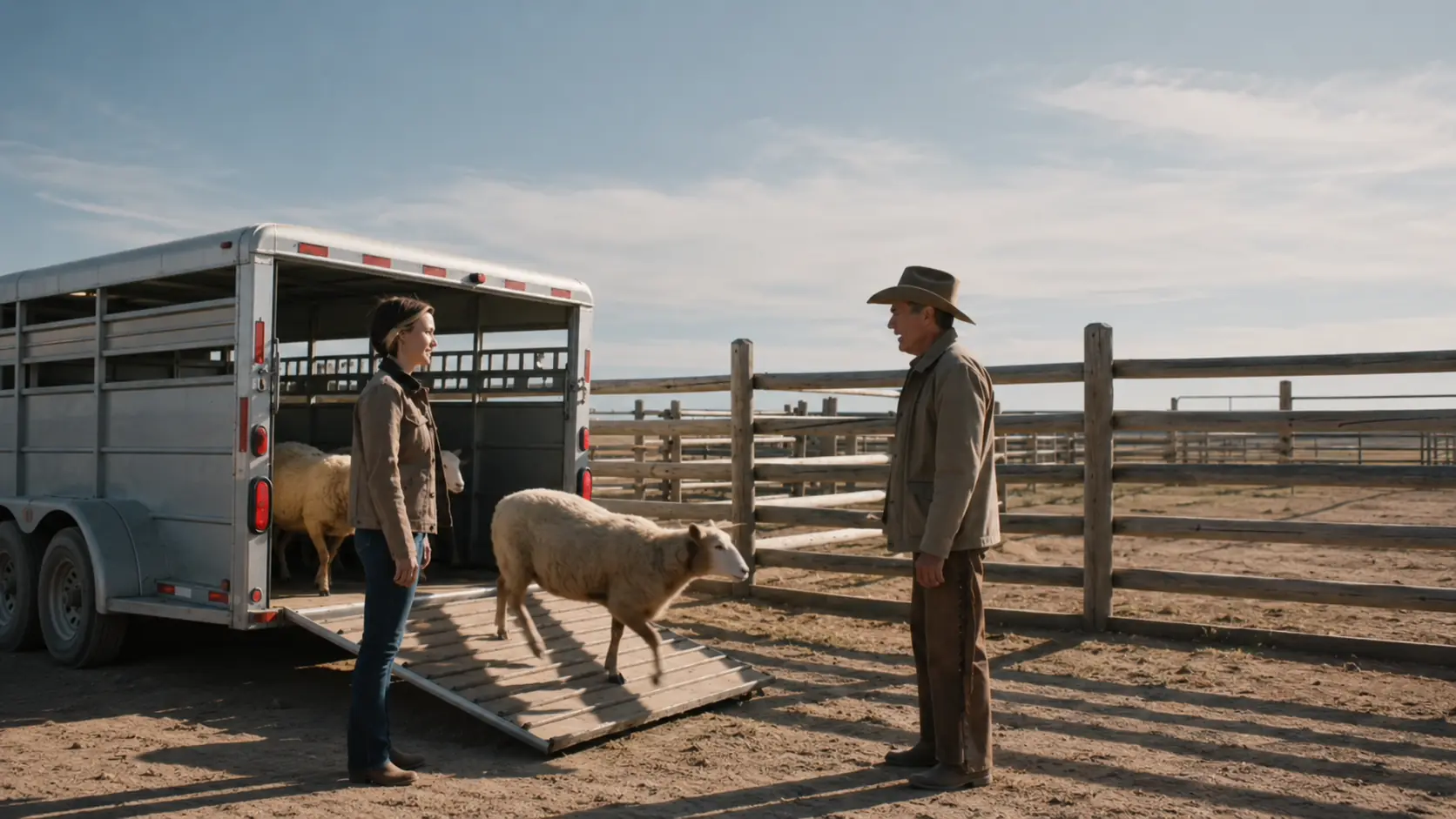
She had had a suitor in Bozeman, a geology student from Butte, who had wanted her to move with him to a field posting in Wyoming. But in the fall of 1952, her father had broken his hip in a fall from a horse on the breaks, and the doctor in Miles City had said he would never ride hard again. Evelyn came home for the winter to help.
Winter became spring. Spring became summer. The geology student wrote for a while, and then he stopped writing. Evelyn never went back to Bozeman. She took over the daily operation of the ranch in stages.
First the horse work, then the cattle decisions, then the books, then the weather log her grandfather had started in 1908. By 1960, when she was 28, Evelyn was running the ranch in everything but name, while Matthew sat on the porch with a blanket over his knees and watched his daughter make decisions he would have made, only faster and with less hesitation.
Matthew died in 1966. Evelyn was 34. He left her the ranch, the cattle, a small savings account, and four filing cabinets full of rainfall records, breeding logs, and grass condition notes going back three generations. Her brother signed the papers without argument. Her sister sent a card.
Evelyn was the sole owner of a 4,400-acre ranch with no mortgage and no partners, and for the first time in her life, no one to check her thinking against. She ran cattle the way Matthew had taught her for the first 7 years, conservative stocking, careful rotation, drought pastures held in reserve. Her yields were modest. Her losses were lower than the county average.
Her operation was quietly profitable in years when her neighbors were losing money. And she never said anything about it at the cafe in Jordan because Matthew had taught her that a rancher who brags about good years invites bad ones. Now, the sheep.
Here is what Evelyn knew that Eastern Montana did not. The grass on her ranch was not one kind of grass. It was dozens of kinds, a mosaic of species that her grandfather had cataloged in the early 1900s, and her father had continued to study. Western wheatgrass, blue grama, needle and thread, June grass, the sedges in the wet draws, the four-wing saltbush on the dry ridges, the silver sage, the snowberry, the skunkbush sumac in the brakes.
Cattle grazed some of these plants eagerly. They ignored others entirely. The plants cattle ignored were not weeds. They were perfectly good forage, full of protein and mineral content, and they grew on the same country that produced the grasses cattle preferred.
Over the years, Matthew had watched those ungrazed plants slowly take over pastures, crowding out the grasses cattle wanted, reducing the carrying capacity of the land one season at a time. He had called this the slow disease. It had no cure that he knew of.
You could spray, which was expensive and temporary. You could burn, which was risky and weather-dependent. You could plow and reseed, which destroyed the native stand and invited erosion. Or you could live with it and watch your grass disappear over 30 years.
Evelyn had been reading for a long time. Not the American journals, which mostly said what the neighbors said. She had been reading papers from Australia, from New Zealand, from South Africa, from Scotland, countries where sheep and cattle had run together for hundreds of years, and where agricultural researchers had been quietly documenting what any Basque shepherd in 1600 could have told them.
Sheep and cattle do not compete for the same forage. They complement each other. Cattle eat grass. Sheep eat forbs and browse, the very plants that cattle ignore, the very plants that were slowly choking Matthew Crane’s pastures.
A ranch that ran sheep and cattle together in the right proportions did not lose half its carrying capacity to either species. It gained because every acre produced two kinds of income from two kinds of forage that had been growing together on that country since before the first white man crossed the Missouri. The Australians had a word for it. They called it complementary grazing.
Evelyn had been studying the idea for 4 years before she ever drove up Henry Voss’s driveway. That is why nobody understood the purchase. They were watching a woman buy sheep on a whim. They were actually watching a woman execute a plan she had been researching since 1969 when she heard that Henry Voss had died and that his nephew did not want the flock.
She had known within a day what she was going to do. The sheep had not been an opportunity that created a decision. The decision had been made for 4 years, and Henry Voss’s death had provided the sheep. Let me tell you about the first 5 years because this is where Evelyn Crane proved that reading, patience, and willingness to be laughed at are worth more than conventional wisdom and a full barn.
She started in April of 1973 with 47 ewes and no rams. She kept the ewes in a small trap pasture near the home place for the first 3 weeks so they would bond to the country and not try to walk home to Henry Voss’s old place in Garfield County. She ran them through the chute, wormed them, inspected their feet, culled the four old ones she had told the nephew about, and put the remaining 43 on the west pasture with 120 heifers.
Hollis Reed watched the ewes walk into that pasture with the look of a man attending a funeral. “Miss Crane, I will tell you right now, those cattle are going to stomp those sheep.” “They will not.” “They will. I have seen it.”
“You have seen cattle introduced to strange sheep in small corrals, Hollis. These sheep have 640 acres to move. They will figure out the cattle, and the cattle will figure out them, and by Friday you will not be able to tell they are not one herd.” Hollis said nothing.
He had been told by Evelyn’s father years before that the worst thing a cowman could do was tell Evelyn Crane she could not do something. Matthew Crane had meant it as advice and warning both. By Friday, the sheep had found their own corner of the pasture.
By the end of the month, they were mixing with the heifers at the water tank without incident. By June, the whole west pasture was grazing like one organism, cattle on the grass, sheep on the broadleafs and the brows, neither species interfering with the other, both species using water and salt from the same sources without trouble.
Evelyn drove out to the west pasture every evening that first summer. She parked her truck on the ridge above the water tank and watched the herds spread across the grass in the long yellow light. She noted what the cattle ate. She noted what the sheep ate.
She marked plants the cattle walked past that the sheep grazed eagerly. She marked plants the sheep ignored that the cattle clipped short. She was building a map in her head, the way her grandfather had built his grass maps in 1910, the way her father had updated them in 1940, the way she was extending them now into 1973.
Knowledge that was not in any American agricultural journal, accumulating slowly in one woman’s notebook on one ranch in Eastern Montana. In September, she bought two Rambouillet rams from a breeder in Wyoming. $400 for the pair, which was real money in 1973 for sheep.
She bred the ewes in October. In March of 1974, she had 38 lambs on the ground from 43 ewes, which was a respectable lamb crop for a bunch of old ewes in rough country. She sold the wool clip that spring for $312. She sold the lambs in the fall for $1,240.
Her total income from the sheep enterprise in year one was $2,252 against operating costs of roughly $400 for feed, shearing, and veterinary. Net from 43 ewes, $1,852. Not life-changing money on a ranch that grossed over $90,000 from cattle, but the sheep had paid for themselves in 1 year, and Evelyn had not spent a dime on new fencing, new water development, or new hired help to run them.
They were riding for free on infrastructure that already existed. Now, here is the part that mattered, the part Evelyn had been watching for. By the end of the second summer, the west pasture looked different. Not dramatically. Not in any way a casual observer would have noticed.
But Evelyn, who had been walking that country since she was 6 years old, could see it. The silver sage was not advancing the way it had been. The snowberry patches were holding at their old boundaries instead of creeping into the grass.
The fringed sage that had started to dominate the southern slope was thinner than it had been in 1972. The cattle had not touched any of those plants. They never would.
The sheep were grazing them quietly, steadily, a mouthful here and a mouthful there, and the plants cattle ignored were no longer winning the slow war against the grass. The grass itself responded. Not in the first year. In the second year, and more in the third.
Western wheatgrass stands that had been shrinking for a decade began to thicken. Blue grama that had been overgrazed on the south slope came back in patches. By the summer of 1976, Evelyn estimated that the carrying capacity of the west pasture had increased by roughly 15%.
She could not prove it with a scale and a stopwatch. She could see it with her eyes and feel it under her boots. In 1976, she bought 80 more ewes directly from a sheep man in Fergus County who was getting out of the business. She paid $6 a head.
In 1977, she bought another 100 ewes from a ranch in South Dakota that was liquidating, and she added a second flock on the north range. By 1978, Evelyn Crane was running 340 head of cattle and 420 head of sheep on 4,400 acres, and her total carrying capacity had increased by roughly 20% over what the ranch had supported under cattle alone.
She had added another income stream, wool and lamb, that was paying her approximately $12,000 a year net, and she had, without ever mentioning it at the cafe in Jordan, quietly reversed a trend of pasture deterioration that her father had considered incurable. The word got around. Not fast. Not the way the joke had gotten around in 1973.
This was different. This was neighbors driving past her pastures and noticing that her grass looked better than theirs. Ranchers who knew grass could see it from the highway, and ranchers who saw it from the highway came up the drive and asked to see it closer.
Evelyn was polite to everyone. She showed them the pastures. She showed them the sheep and the cattle grazing together in a way nobody in Eastern Montana had believed was possible. She did not lecture.
She did not quote the Australian papers. She let them walk the country and draw their own conclusions. A few of them drew the right ones. Most did not.
A cattleman in Eastern Montana in 1978 had three generations of conviction telling him that sheep and cattle did not belong on the same ground, and a week of pleasant conversation with Evelyn Crane was not going to overturn that. The men who listened were mostly younger men, men under 40, men who had not yet calcified into their father’s certainties. Two of them, Dale Wickham and Roy Perkins, started running small bands of sheep with their cattle in 1979 and 1980.
Their neighbors laughed at them the way they had laughed at Evelyn. Let me tell you about the spring of 1988 because this is where 15 years of quiet, patient work met a test nobody in Montana saw coming, and most of the state failed. The winter of 1987 to 1988 came in dry and stayed dry.
The snowpack in the Rockies was the lightest anyone could remember. The Missouri was running low by March. The grass did not green up in April the way it usually did. It greened up slowly, thinly, in patches.
By mid-May, a rancher standing on a ridge in Garfield County could look west and see country that should have been emerald going pale yellow. The rain did not come in May. It did not come in June. It did not come in July.
July of 1988 was the driest July ever recorded in Eastern Montana at that point. Temperatures in the high 90s for 18 days straight. Wind out of the southwest that dried the grass where it stood. The Yellowstone fires were burning by then, and the smoke turned the sky orange for weeks.
Ranchers started selling cattle in July. First the culls, then the old cows, then the pairs. Prices collapsed. You could not give away a thin cow in Montana in August of 1988.
Pastures that had carried 40 cows on a section in a normal year were bare dirt and stubble. Hay was $140 a ton if you could find it, and most people could not find it. The Army Corps of Engineers was releasing water from Fort Peck to try to keep the lower Missouri navigable.
By late August, Garfield County had lost an estimated 35% of its cattle inventory to forced liquidation. Neighboring Petroleum County had lost more. Some outfits that had been running for three generations were done.
Their herds sold into a bottom market. Their grass gone. Their banks unwilling to extend another operating line. Evelyn Crane did not sell a cow.
She did not sell a ewe. Her ranch was dry. Her ranch was as dry as every other ranch within 200 miles, but her grass, the grass she had been building quietly since 1973, held. Here is why.
For 15 years, the sheep had been eating the plants the cattle ignored. For 15 years, those plants had been losing ground to the grasses. For 15 years, the grasses had been thickening their root systems in soil that had more organic matter and deeper moisture reserves because the plant mix had shifted towards species that built soil rather than species that consumed it.
When the drought came, Evelyn’s pastures did not turn to stubble and dust the way her neighbors did. They turned dry and brown the way grassland is supposed to turn in a drought, but the crowns of the grasses were still there, dormant but alive, protected by a plant community that had been slowly rebuilt over a decade and a half. Her stocking rate helped.
She had never run more cattle than her grass could carry in an average year, which meant she was not entering the drought with pastures already pushed to their limit. Her rotation helped. The pastures she had rested in the spring of 1988 still had standing forage in August when everything else was gone.
But the sheep were the key. The sheep were eating plants nobody else’s animals would touch. In late August of 1988, when her neighbors were hauling the last of their cattle away at a loss, Evelyn’s sheep were grazing Russian thistle and kochia and fringed sage across country that had been written off as useless forage by every cattleman in the county.
Plants that cattle could not digest, would not eat, and could not survive on were feeding 420 head of sheep through the worst drought in living memory. Hollis Reed was 71 years old that summer. He had worked for the Crane family for 44 years, first for Matthew, then for Evelyn.
He had argued against the sheep in 1973, quietly, because Hollis did not argue loud with anyone, and he had stopped arguing against them in 1976, and he had become, somewhere around 1980, one of the best sheep hands in Garfield County, which was a thing he would not have said out loud under any circumstance. In September of 1988, Hollis and Evelyn were standing on the ridge above the west pasture in the middle of the afternoon. The smoke from Yellowstone was still thick on the horizon.
The cattle were lying up in the shade of a cottonwood stand near the water tank. The sheep were working the south slope, spread out across ground that looked like brown dust to a stranger and like feed to a shepherd. “Miss Crane,” Hollis said.
“Yes, Hollis.” “I was wrong in 1973.” “I know.” Evelyn did not look at him when she said it.
She said it the way her father would have said it, quietly, without making a point of it. Because there was no need to make a point of something both of them had known for 12 years. They stood there for a while.
Matthew Crane had been dead for 22 years. Hollis had known him for 37 years before that. He was thinking about Matthew now, the way old men think about other old men who are gone.
“Your father would have liked this,” he finally said. “He would have told me the ewes were too old.” Hollis laughed. It was the first time he had laughed about the sheep project in a way that was not sad.
The Jordan Tribune ran a story in October of 1988 about the ranchers who had come through the drought with their herds intact. Evelyn Crane was one of three operators in Garfield County the reporter interviewed. The other two had been conservative stockmen with large hay reserves and good water.
Evelyn had something neither of them had, a flock of sheep that had been converting unusable forage into wool and lamb through the worst 2 months anyone had ever seen on that country. The reporter asked Evelyn how she had done it. Evelyn said, “I read some papers from Australia in 1969.”
Then she asked him if he wanted more coffee. Let me tell you how this ends because the ending is the part Matthew Crane would have understood without a word of explanation. Evelyn ran cattle and sheep together on that ranch until 1997 when she was 65.
She handed the operation to her niece, Rebecca, James’ daughter, who had spent her summers on the ranch since she was 10 and knew the grass, the stock, and the weather log the way Evelyn had known them. Rebecca runs the ranch today. The sheep are still there. The cattle are still there.
The Rambouillet flock has been bred up over three decades and now numbers around 600 ewes. The cattle herd is around 380 cows. The weather log that Evelyn’s grandfather started in 1908 is in its 118th year.
Rebecca added her first entry on January 1st, 1998. The west pasture grass in 2003, the last year Evelyn personally walked every section, was thicker and more diverse than Matthew Crane had ever seen it in his lifetime. Four generations of Cranes, each one adding to what they were given.
In 2004, the Montana Stockgrowers Association invited Evelyn to speak at their annual convention in Billings. She was 72 years old, retired, and had never spoken publicly about anything in her life. She almost said no. Rebecca convinced her.
Evelyn stood at the podium with a single index card. She read from it once, then put it in her pocket, and spoke without notes. “People have asked me for 30 years why I started running sheep with cattle. That is the wrong question. The question is why everyone else stopped.”
She paused. “Basque shepherds in Spain were running sheep and cattle together in 1500. Scottish crofters were doing it in 1600. Australian graziers have been doing it since the 1850s. Every one of those cultures figured out that cattle and sheep used different forage on the same ground, and every one of them built their operations around that fact.”
“Americans are the only people in the developed world who decided around 1880 that you could only run one or the other on the same country. We decided that and then we forgot we decided it and then we started believing it was a law of nature. It is not a law of nature. It is a cultural habit and it is the most expensive cultural habit in Western livestock production.”
She paused again. “In 1988 my neighbors lost one cow in three to a drought my ranch barely noticed. Not because my country was better. My country was the same country. I had 15 years of sheep and cattle grazing together to thank for the difference.”
“15 years of eating the right plants in the right proportions at the right times until the land remembered what it was supposed to be. That was not genius. That was reading.” She stepped down.
The room was quiet for a moment and then it was not. Dale Wickham was in the audience. He was 68 years old, retired, and he had been running cattle and sheep together on his ranch in Rosebud County since 1979.
He had come through the 1988 drought with 94% of his herd and had never told another cattleman in Rosebud County that it was the sheep that had saved him because he had learned from Evelyn that some lessons arrive only when a man is ready for them and rushing them does no good. After the speech, Dale found Evelyn in the lobby of the hotel. “$180,” he said.
“$180 for 47 old ewes.” She said nothing. “Everyone laughed at you.” “I know.”
“You knew why you were doing it in 1973.” “Yes.” “Your father knew, didn’t he?” “Not about the sheep. The sheep were my idea. He knew about the grass.”
“He knew the country was talking to him and he knew that listening to it was more important than telling it what to do. That is what he taught me.” Dale nodded slowly. He took off his hat and looked at it the way old men look at things they have worn for 30 years.
“Ms. Crane, what do you see when you look at a pasture full of silver sage and fringed sage?” “Most cattlemen see wasted grass. Most cattlemen see something they have to fight.” “I see lunch for a thousand sheep.”
Dale laughed. “I see the same thing now.” “You didn’t see it in 1979.” “I didn’t see it in 1979, but I watched you for 6 years and I saw it by 1979 and that was enough.”
Evelyn smiled. “That is how it works. One rancher at a time, one drought at a time.” Let me ask you something. What do you see when you look at 47 old ewes in a widower’s pasture?
Most people see nothing. Sheep too old to produce well in a county that does not want sheep at a time when wool prices have been falling for a decade. The nephew saw a bill the estate had to pay to make the problem go away. The neighbor saw an obligation to a dead man.
The county saw a joke. A widow from Jordan buying Henry Voss’s leftovers to run with her cattle. A punchline waiting to happen. Evelyn Crane saw a living tool her grandfather had never owned and her father had never tried.
47 animals that would eat the plants her cattle could not eat on country that was slowly losing its grass to those plants. She saw an ecosystem that had been out of balance for three generations because every rancher in Eastern Montana was running only half of the grazing pair their country was built to support. She saw $180 and a Tuesday morning and 15 years of patience. Everyone else saw garbage.
That is the difference between someone who sees what is and someone who sees what could be. Evelyn Crane paid $180 for sheep nobody wanted. She ran them with cattle on 4,400 acres of country that every neighbor said could only support one species or the other. She increased her carrying capacity by 20%.
She reversed 30 years of pasture deterioration in 10 years of complementary grazing. She came through the 1988 drought with her herd intact while her county lost a third of its cattle. She built a flock that is still running on her ground in its fourth decade. They said nobody ran sheep with cattle in Montana.
She ran them. And when the drought of 1988 finally came, not the drought of 1973, not the drought of 1977, but the drought that tested every rancher in the northern plains at once, they understood what Evelyn had known from the beginning. A pasture is not a thing you harvest. It is a relationship you build between grass and forbs, between cattle and sheep, between what the country wants to grow and what you are willing to graze.
$180, 47 old ewes, a rancher’s daughter. The sheep nobody wanted on the ranch of the woman nobody understood until they saw what her grass looked like in the worst August anyone could remember.