Laura Bennett did not buy the house on Brookhaven Lane because of the kitchen.
The kitchen was terrible.
Its yellow wallpaper had tiny lemons printed across it in rows, the cabinet doors hung crooked, and the vinyl floor had curled at the corners as if trying to escape. The roof needed patching, the deck had three boards soft enough to bend under a boot, and the backyard pool had been left under a ripped cover long enough for the water beneath it to turn the color of pea soup. Any sensible buyer would have seen repair bills.
Laura saw late-afternoon light.
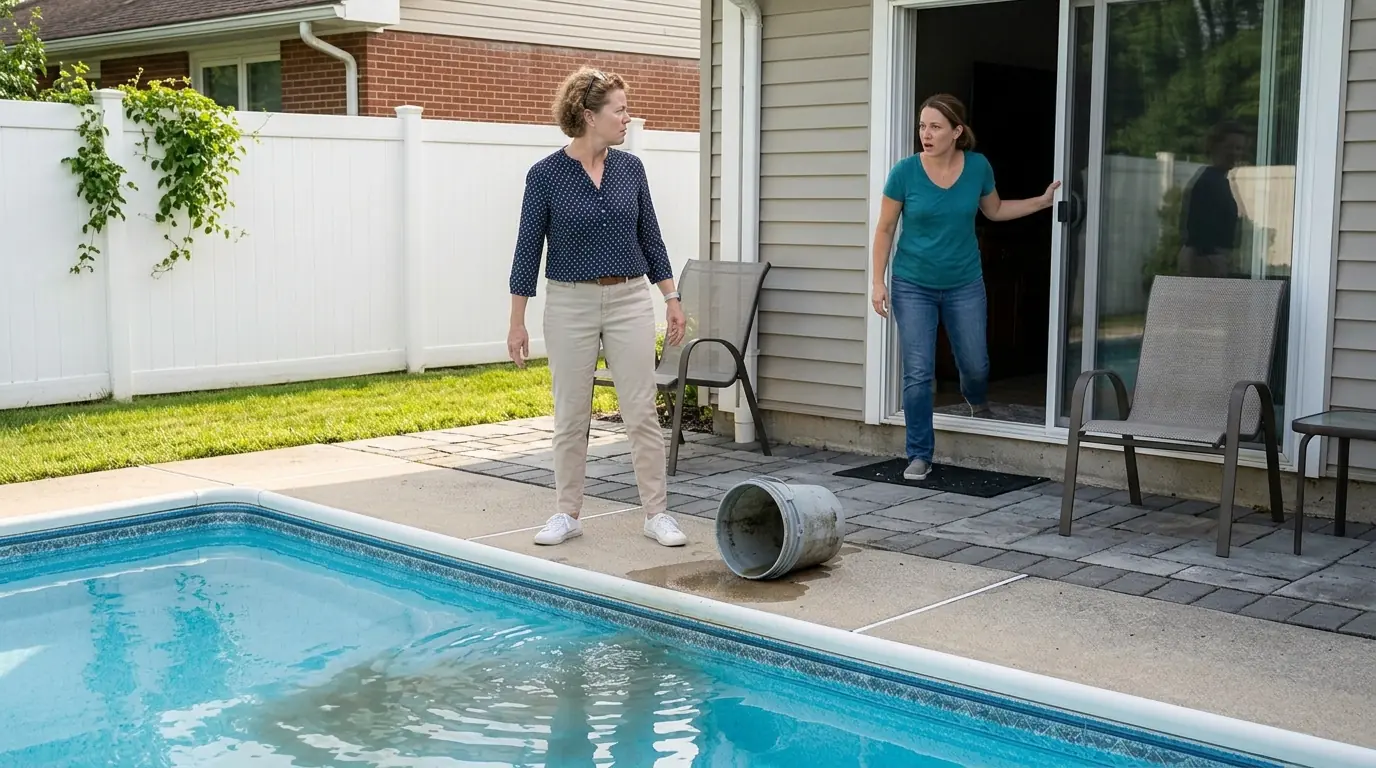
At four-thirty in June, sunlight came through the maple trees behind the house and broke into gold bands across the patio. Her nine-year-old daughter Hannah called them fairy steps the first time they toured the property. Laura remembered standing beside her in the cracked concrete yard, listening to the realtor explain the plumbing, while Hannah stretched both arms into the light and spun slowly as if the house had already chosen them.
After two years of divorce court, medical debt, and moving between rentals, Laura wanted a place that could become permanent.
That mattered more than countertops.
Her father, Henry Bennett, helped with the down payment from money he had saved through forty years of delivery routes, overtime, and refusing to replace anything that could still be fixed with wire, glue, or profanity. On closing day, he walked through the empty living room, pushed his thumb into a water stain on the ceiling, and nodded.
“Well,” he said, “it’s got bones.”
Laura laughed. “Dad, that’s what people say when a house is falling apart politely.”
Henry shrugged. “Then we’ll be polite and fix it.”
And they did.
Weekends became workdays. Henry repaired the deck while Laura stripped lemon wallpaper. Hannah painted smooth stones with flowers and lined them around the maple tree. They replaced two broken windows, cleaned gutters, patched plaster, and slowly turned the backyard from an abandoned mess into the place Hannah had imagined from the first visit.
The pool took the longest.
The filter motor was unreliable. The ladder bolts were corroded. The liner had a tear near the shallow end. Laura watched hours of repair videos, learned how to test chlorine and pH, borrowed tools from Henry, and spent almost every extra dollar that spring bringing the water back.
When it was finally clear, Hannah stood at the edge in her purple swimsuit and looked down.
“It looks like the sky fell into our yard,” she whispered.
Laura wrapped both arms around her.
“It does.”
That was the happiest day they had experienced in the house.
It was also the first day Patricia Wells came over.
Patricia lived two houses down in a cream-colored colonial with perfect boxwood shrubs, black shutters, and a brass pineapple on the front door. At fifty-five, she carried herself with the neat efficiency of someone who believed most problems existed because other people had failed to organize themselves properly. Her blond hair was always shaped. Her sneakers were always white. Her smile was always ready before anyone had said something worth smiling at.
She was chair of the Brookhaven HOA Standards Committee.
She also ran the neighborhood social page, organized holiday decorating rules, coordinated annual landscaping inspections, and had somehow become the person everyone called when garbage bins stayed out too long after collection.
Patricia arrived carrying banana bread wrapped in cellophane.
“Welcome officially,” she said, stepping onto the porch before Laura could invite her.
“That’s kind of you.”
Patricia’s eyes moved past Laura into the hallway.
“You’ve got quite a project.”
“We’re getting there.”
Patricia glanced toward the lavender mailbox by the curb. Hannah had painted yellow stars across it the week before.
“Creative.”
“My daughter did that.”
“How sweet.”
The word sounded wrong somehow.
Patricia handed over the banana bread.
“I always tell new residents Brookhaven is a community of standards. People move here for order.”
Laura smiled politely. “I like order.”
“Good. The last owners struggled with that.”
“What happened?”
Patricia’s gaze moved toward the backyard.
“Some people simply aren’t a good fit.”
Then she smiled again.
At first, Laura told herself she was imagining the tone.
HOA neighborhoods came with personalities like Patricia. That was practically part of the paperwork. Laura had lived through enough real problems that she did not want to manufacture one out of a neighbor who cared too much about shrub height.
So she remained civil.
When Patricia emailed that the deck chairs were visible from the side street, Laura moved them.
When Patricia mentioned the hedge was half an inch beyond the recommended edge line, Laura trimmed it.
When a notice arrived about the mailbox color, Laura filled out the variance request without complaining.
But the mailbox mattered to Hannah.
That was the first line Laura refused to erase.
At the standards meeting, Patricia sat at the end of a folding table with a binder open in front of her.
“The approved exterior palette does not include lavender,” she said.
“It’s a mailbox,” Laura replied.
“It is a street-facing fixture.”
“My daughter painted it.”
“Children’s creativity is wonderful.”
Patricia looked directly at Hannah, who was sitting beside Laura because the babysitter canceled.
“But standards protect property values.”
Hannah lowered her eyes.
Laura noticed.
“I’ll submit a variance.”
Patricia smiled.
“You can submit anything you like.”
The request was denied.
No explanation.
Only the phrase aesthetic inconsistency.
The first fine was twenty-five dollars.
Laura paid it while appealing because she was afraid of late fees.
Then came a pool notice.
Unapproved patio furniture visible from neighboring property.
Then fallen leaves on the front steps.
Then “temporary outdoor storage,” which turned out to mean the hose reel beside the garage.
Laura corrected each item.
She saved every email.