Harold Mercer was standing outside the front entrance of Miles Mercer’s middle school when he saw his son for the first time in eleven years. The February afternoon was cold enough to make the air sting, and the brick school building behind them looked ordinary under the pale daylight, with glass doors opening and closing as students spilled out with backpacks, band cases, and winter jackets half zipped. Parents waited along the curb, a yellow school bus idled in the distance, and the flag near the walkway snapped lightly in the wind. Harold had come, as he did every weekday, to pick up the boy he had raised since he was two years old.
Miles was thirteen now, taller than Harold expected every time he looked at him, with sandy-brown hair that never stayed flat and blue eyes that looked so much like his late grandmother Norma’s that Harold still had to pause sometimes. He came out of the school doors with his backpack over one shoulder and his trumpet case in one hand, already looking toward the pickup area for his grandfather’s old brown jacket. When he saw Harold, his face relaxed in that small teenage way that pretended not to be relief. Then his eyes shifted past Harold’s shoulder, and the relaxation disappeared.
Derek Mercer stood near the walkway with a lawyer’s folder tucked under one arm. He was thirty-five, leaner than Harold remembered, dressed in a neat dark jacket and clean jeans, his hair combed carefully like someone had told him how to look responsible. There was a smugness in his face that did not match the nerves in his eyes. He looked like a man who had practiced a speech in the mirror but had not practiced seeing the child he abandoned.
Harold’s hand tightened around the yellow manila envelope he had brought from home. Inside were school records, medical forms, immunization papers, tax documents, certified mail receipts, and one old letter from 2014 that might be the only thing standing between him and losing the boy beside him. He had not expected Derek to show up at the school, not here, not in front of Miles, not with children and parents walking past as if this were just another pickup. But Derek had always had a gift for choosing the cruelest possible timing and calling it necessity.
“Pop,” Miles said quietly, stepping closer to Harold.
Harold put one steady hand near the boy’s shoulder without pulling him back. “It’s all right,” he said, though his own chest felt tight. Derek smiled when he heard the word Pop, but it was not a soft smile. It was the kind of smile a person uses when they have decided love is something to mock because they cannot compete with it.
“Well, look at this,” Derek said, waving the lawyer’s folder once in the air. “The old-man hero routine, right outside the school. You really did build yourself a whole little story, didn’t you?”
Harold looked at his son and felt a grief so old it almost had no temperature. “Derek.”
“That all you’ve got?” Derek asked, still smiling. “After eleven years, just my name?” He shifted his attention toward Miles, then back to Harold, as if deciding how much performance the boy deserved. “I figured you’d at least thank me for giving you something to do with your retirement.”
Miles stiffened beside Harold. The boy did not speak, but Harold felt the change in him, the way his breathing grew shallow, the way his fingers curled around the trumpet case handle. Harold had promised himself years ago that he would never poison Miles against his father. He had told the truth in small pieces, never more than the boy could carry, never less than honesty required.
Derek took one step closer. “You had him long enough, Pop.”
Harold’s face stayed still, though the words hit him hard. “You left him with me when he was two years old.”
“And now I’m back,” Derek said. “People change.”
“People do,” Harold said. “But years don’t disappear because you say so.”
Derek laughed under his breath and looked around at the school entrance, the passing students, the parents pretending not to stare. “You always did talk like a man who thought being tired made him wise.” He lifted the folder again. “My attorney says you have no legal right to keep my son from me. Blood matters. The court understands that, even if you don’t.”
Miles moved half a step behind Harold, not hiding exactly, but placing himself where he had always known safety existed. Derek noticed, and irritation flashed across his face. That small movement from Miles did more damage to Derek’s performance than anything Harold could have said. It proved that a boy’s body remembered who had shown up.
Derek’s eyes sharpened. “That’s your fault.”
Harold felt the old wound open, but he did not raise his voice. “You were gone.”
“You made him yours.”
“I raised him.”
“You filled his head.”
“I packed his lunches,” Harold said. “I took him to the doctor. I signed his school forms. I sat in the bleachers when he wrestled. I listened when he cried because he lost his first tooth and thought something was wrong with him.”
Derek sneered. “Congratulations. You babysat.”
Miles looked up sharply. “He is not my babysitter.”
For the first time, Derek truly looked at him. Not glanced. Looked. His face softened for half a second, maybe from shock, maybe from guilt, maybe from seeing Norma’s eyes in the boy’s face. But then pride returned and sealed the opening shut.
“You don’t understand this yet,” Derek said to Miles. “Adults made things complicated. But I’m your father.”
Miles swallowed, but his voice stayed clear. “You left me when I was two.”
Derek’s jaw tightened. “You don’t know the whole story.”
“I know you weren’t there.”
That sentence cut through the cold afternoon more cleanly than any accusation could have. A few students slowed near the doors, then hurried on when a teacher guided them away. Harold wished this conversation were happening anywhere else. He also knew Derek had chosen this public place because he believed it would make Harold weaker.
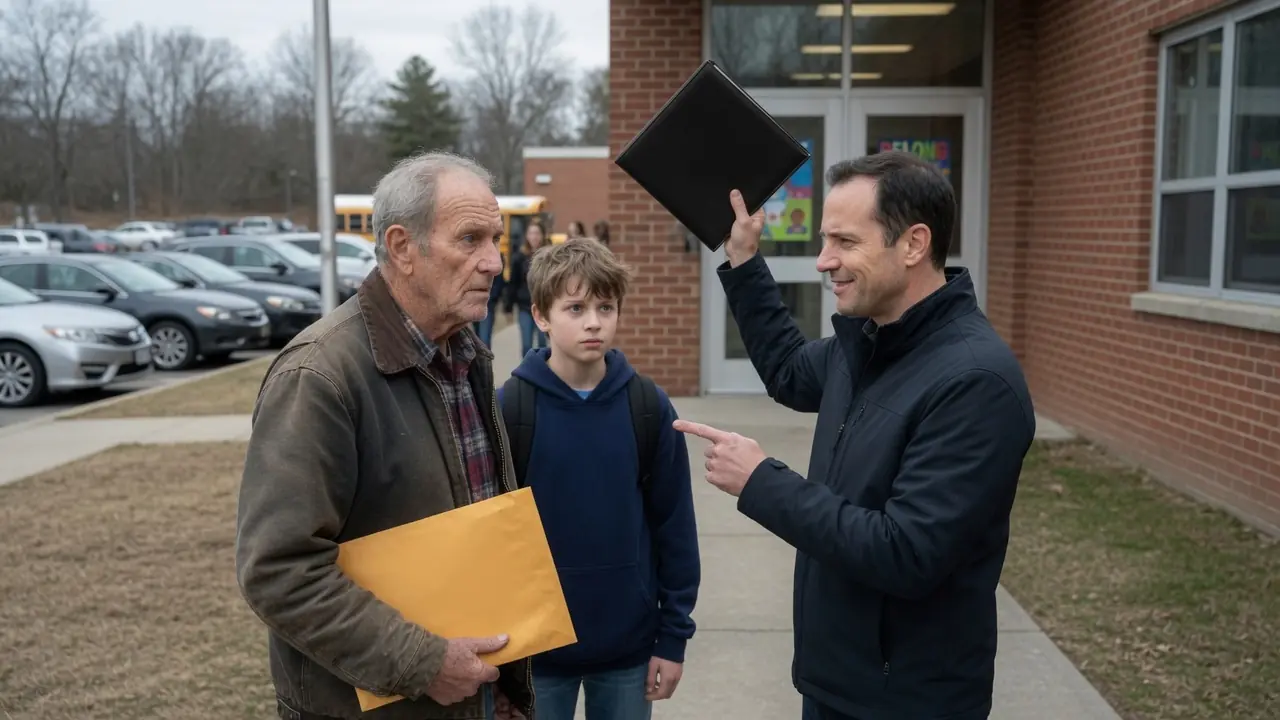
Derek pointed toward the folder. “The law is on my side.”
Harold lifted the manila envelope slightly. “Then I guess the court should see what you signed eleven years ago.”
Derek’s face changed. The smugness did not vanish, but it cracked. “What are you talking about?”
“A letter,” Harold said. “Certified mail. Sent to your last known address three months after you left Miles in my kitchen.”
Derek stared at the envelope. “I never signed anything giving him to you.”
“You signed for the letter,” Harold said. “You had thirty days to object. You never answered.”
“That doesn’t mean anything.”
“It means you knew where he was,” Harold said. “It means you knew I was raising him. It means you were given a chance to speak, and you disappeared again.”
The wind moved across the school walkway. Miles stood close enough that Harold could feel him trembling, though the boy held his face with surprising strength. Derek looked from the envelope to Harold, then to Miles. For a moment, he seemed less like a father reclaiming a child and more like a man realizing a door he thought was open had been locked from the inside years ago.
Then he recovered. “You think a bunch of old papers beats blood?”
“No,” Harold said. “I think eleven years beats a speech.”
Derek’s mouth twisted. “That’s cute.”
“It isn’t meant to be.”
Derek leaned closer, lowering his voice but keeping it sharp enough for Miles to hear. “You got comfortable playing dad with another man’s kid. I get it. It made you feel useful. But he is not your second chance at raising me.”
Harold’s face tightened then. Derek had finally found the place he meant to strike. There was truth buried somewhere under the cruelty, not the truth Derek wanted, but enough to hurt. Harold had failed his son in ways he still carried, though not in the simple way Derek would have liked to claim.
“I never used Miles to fix what broke between us,” Harold said.
Derek laughed. “Sure you didn’t.”
Miles stepped forward now, no longer behind Harold. “Stop talking to him like that.”
Derek blinked. “Miles.”
“You don’t get to come here and make fun of him,” Miles said. “You don’t get to act like he stole me when you left me.”
Several parents nearby had stopped pretending not to listen. One mother slowly pulled her younger child closer. A teacher near the front doors watched with concern, phone in hand, ready to call someone if the confrontation turned worse. Harold noticed everything, but his eyes stayed on Miles.
Derek looked embarrassed now, and embarrassment made him meaner. “You’re a kid. You don’t know what happened.”
“I know who came to my band concert,” Miles said. “I know who taught me to ride a bike. I know who signs my permission slips. I know who makes cereal with the right amount of milk because he remembers how I like it.”
Derek’s face flushed. “That doesn’t make him your father.”
Miles’s voice shook, but he did not stop. “It makes him my home.”
Harold closed his eyes for one second. He had heard Miles say he was not going anywhere, heard him say Derek did not know him, but this was different. This was not a reaction to fear inside their kitchen. This was Miles standing in public, in front of the man who had vanished, naming the truth of his own life.
Derek swallowed hard, and for the first time Harold saw something close to pain. It passed quickly. “My lawyer is going to handle this,” he said.
Harold nodded. “Then let him.”
“You think you’re going to win?”
“I think Miles has had a home for eleven years.”
Derek lifted the folder again, but the gesture had lost its power. “You are interfering with my parental rights.”
Harold looked at the boy beside him. “Your rights slept somewhere for eleven years while your son grew up.”
Derek took a hard breath through his nose. “You always made me sound like trash.”
“No,” Harold said. “You did that part yourself.”
The words surprised even him. He had not meant to say them, not like that, not in front of the school. But once they were out, he did not regret them. Derek’s face darkened, and Miles reached for Harold’s sleeve as if bracing him against whatever came next.
“You don’t know what I went through,” Derek said.
“You’re right,” Harold replied. “I don’t know all of it. I know some. I know your mother died and you never recovered right. I know you drifted. I know you hurt. I know I probably failed you in ways I still don’t know how to name.” His voice lowered. “But none of that explains leaving your child on my kitchen floor and turning eleven years into my responsibility.”
Derek looked away first.
That was the closest thing to surrender Harold had ever seen from him. Not surrender of the legal fight, not yet, but surrender of the performance. The crowd around them, the school doors, the folder, the rehearsed lines, all of it seemed suddenly too thin to cover the truth.
Miles spoke again, quieter this time. “Why now?”
Derek looked at him. “Because I’m stable now.”
Miles shook his head. “No. Why now?”
Derek opened his mouth, but nothing came out quickly enough. Harold watched his son search for a fatherly answer and fail. That failure told Miles something too.
“I have a place,” Derek finally said. “A job. I’m doing better.”
“That’s good,” Miles said.
Derek looked surprised.
Miles continued, “But that doesn’t mean you get to take me.”
Derek’s voice softened now, not entirely fake. “I’m trying to be your father.”
“You missed that,” Miles said.
The sentence was not shouted. It did not need to be. It landed with the weight of every birthday, every school morning, every wrestling match, every night Harold had sat on the edge of the bed reading until the boy fell asleep. Derek flinched as if it had struck him physically.
Harold wished, suddenly and strangely, that Norma were there. She would have been furious, hotter than Harold could ever manage, and then later she would have cried for both of them. She had been able to carry anger and mercy in the same heart. Harold was not sure he could.
A school staff member approached carefully. “Is everything all right here?”
Harold turned to her. “We’re leaving now.”
Derek stepped forward. “This isn’t over.”
“No,” Harold said. “It isn’t.”
He took Miles gently by the shoulder, not pulling, just guiding. They walked toward Harold’s old Ford parked along the curb. Miles did not look back until they reached the passenger door. When he did, Derek was still standing near the school entrance, folder hanging at his side, no longer waving it.
Inside the truck, Miles set his trumpet case between his feet and stared straight ahead. Harold started the engine but did not pull away immediately. The heater rattled, then began pushing tired warmth into the cab. For a long moment, neither of them spoke.
“I meant what I said,” Miles said finally.
“I know.”
“He’s not taking me.”
“I know.”
Miles turned toward him. “Do you really know?”
Harold looked at him then. He wanted to promise with the confidence of a stronger man, wanted to say no judge, no lawyer, no father with paperwork could ever separate them. But Harold had lived long enough to know love and law did not always move together. So he told the truth.
“I’m going to do everything the right way,” Harold said. “And we have proof. A lot of it.”
Miles looked down at the manila envelope on Harold’s lap. “That’s the stuff?”
“School records. Doctor records. Tax forms. Certified letter from years ago.”
“The one he signed?”
“Yes.”
Miles nodded slowly. “Good.”
Harold drove home with the window cracked even though the air was cold. He needed the sharpness of it. He needed something that reminded him he was still in the world, still moving, still holding the wheel. Miles sat quietly beside him, one hand resting on the trumpet case.
The next two weeks were the worst Harold could remember. Derek’s attorney filed the custody petition. Two county child services workers came to the house and asked careful questions about routines, finances, bedrooms, meals, medical care, school transportation, and emotional bonds. They were polite and professional, but Harold hated every second of strangers measuring the life he had built with Miles like it was a structure that might not pass inspection.
Miles spoke to them separately in the living room. Harold sat in the kitchen during that interview, hands flat on the table, staring at the grain in the wood. He could hear low voices but not words. That was worse somehow. The boy’s life was being discussed ten feet away, and Harold had to sit still like a man waiting outside an operating room.
When the workers left, Miles came into the kitchen and sat across from him. “I told them I’m not going anywhere,” he said.
Harold nodded. “All right.”
“I told them he doesn’t know me.”
Harold looked at him. “That was honest.”
Miles stared at the table. “I don’t hate him.”
“I know.”
“I just don’t know him.”
Harold swallowed. “That’s fair.”
They left it there because sometimes the truth is too big to keep talking around after it has finally been said. Harold made dinner. Miles did homework. The house moved through its ordinary evening, but everything felt sharper: the sound of dishes, the hum of the refrigerator, the scrape of a chair, the boy’s footsteps upstairs.
The hearing came the following month. Gus drove Harold because Harold did not want to think about parking garages, meters, or which entrance to use. Gus had been Harold’s friend for over twenty years, and he had the good sense not to fill silence with useless comfort. He sat beside Harold outside the courtroom and said only, “You’ve got the envelope.”
Harold nodded.
Derek arrived twelve minutes before the hearing with his attorney, Clifton Webb. Clifton wore expensive shoes and the expression of a man who thought life was usually decided by whoever sounded most confident. Derek looked coached again, but the confidence Harold had seen outside the school was thinner now. When his eyes met Miles’s, he looked away.
Inside the courtroom, Judge Hargrove listened without much expression. Derek’s attorney spoke first, using phrases like paternal bond, biological rights, and reunification. He talked about Derek’s recovery, his apartment, his job, and his desire to rebuild what had been lost. He made eleven years sound like a rough patch.
He also called Miles “the child.”
Not Miles. The child.
Harold saw Ruth, his attorney, write something down.
When Ruth stood, she did not perform. She opened the yellow manila envelope and laid the documents out with calm precision. The 2014 letter. The certified mail receipt. Derek’s signature. The thirty-day window that passed without objection. Eleven years of school records, medical forms, report cards, immunizations, tax records, and every document that showed Harold had been the adult who showed up.
Then Ruth placed another printed communication on the table. “Your Honor, I’d also like to note that the plaintiff’s counsel privately suggested this matter could be resolved without litigation if my client agreed to pay forty thousand dollars as compensation for child care expenses.”
The courtroom went still.
Judge Hargrove looked at the document, then at Clifton Webb. “Counselor?”
Clifton’s confidence changed shape. Derek turned toward him with open confusion, and in that moment Harold understood something important. Derek had not known about that demand. His attorney had tried to turn the boy’s life into leverage without even telling the father he represented.
The judge recessed for twenty minutes.
When she returned, she was brief. She cited documented long-term voluntary abandonment, Derek’s failure to respond to the 2014 letter, the consistency of Miles’s stated preference, and the troubling evidence of attempted financial coercion. Then she looked over her glasses and said the sentence Harold would remember for the rest of his life.
“This child has a home. He has had a home for eleven years. The court sees no reason to disturb that.”
Harold put both hands flat on the table because he needed to feel something solid.
Afterward, Gus drove him to the diner on Route 9. Harold ordered coffee and did not drink it. Gus ordered a patty melt. After ten minutes, Harold ordered one too because his body remembered hunger before his mind did.
They talked about the reservoir road, Gus’s daughter’s new house, and whether April paving would finally happen. They did not talk about court until the food was nearly gone. Then Gus looked out the window and said, “You know, I keep thinking about what would’ve happened if you didn’t have that envelope.”
Harold had been thinking the same thing.
He thought about the version of himself who might have done nothing in 2014, who might have assumed love would be enough if trouble ever came. He thought about Pette, the lawyer who had told him to put everything in writing, send it certified, and keep a copy. He thought about how thin the line can be between keeping your family and losing everything.
“That’s why you write things down,” Gus said.
Harold nodded. “That’s why.”
That evening, Harold told Miles enough. Not all of it, not the uglier parts, not the forty thousand dollars, not the attorney’s face when the judge questioned him. He told him the court ruled in their favor. He told him he was not going anywhere. He told him their home was still their home.
Miles sat with that for a while. Then he asked, “What about my dad?”
Harold took a breath. “He’s alive. He’s out there. The door doesn’t have to be closed forever.”
Miles looked at the floor. “I don’t hate him.”
“I know.”
“I just don’t know him.”
Harold nodded. “That’s still fair.”
That night, after Miles fell asleep, Harold went into the garage and stood in the dark for a long time. He thought about Norma, about Derek as a boy, about Miles on the linoleum floor with a plastic dinosaur the day Derek drove away. He thought about Miles at the band concert the night before the letter arrived, searching the bleachers until he found Harold’s face. He always found it.
The next morning, Miles made cereal with the exact amount of milk he liked, and Harold drove him to school with the radio on low. At the curb, Miles opened the door, grabbed his backpack and trumpet case, and said, “Later, Pop,” without looking back in the way thirteen-year-old boys do when they know they are safe enough not to make a scene. Harold watched him walk into the building until the glass doors closed behind him.
That was eleven years.
That was diapers, bike rides, homework, dentist appointments, band concerts, fevers, lunches, bad dreams, wrestling matches, cereal bowls, and quiet drives.
That was a life built by showing up.
And nobody had taken it away.