My son yelled, “Except my wife as a partner, or you’re out of my company.” Everyone at dinner watched as I stood up and walked over to her. She smirked, certain I would give in. I looked her in the eyes and spoke one sentence. The silence was total.
And minutes later, they realized who I really was. My name is Paul and at 63 years old, I never thought my own son would destroy me in front of the people who mattered most. The conference room at Meridian Construction felt different that Tuesday evening. The mahogany table that had witnessed countless successful deals now seemed like an execution block.
Around it sat 12 of our most important clients, men and women who had trusted my company with millions of dollars over the past four decades. The chandelier cast a warm glow over faces I had known since they were junior executives. People who had become more than clients. They had become friends.
I should have seen it coming. The signs had been there for months. Henry’s increasingly bold challenges to my decisions. The way Autumn would smirk whenever I spoke during family dinners. The whispered conversations that stopped abruptly when I entered a room.
But nothing could have prepared me for what happened that night. We were celebrating the completion of the Riverside Plaza project, a $28 million commercial complex that had taken 3 years to finish. It was supposed to be a triumph, a testament to everything I had built from nothing.
The clients were toasting our success, sharing stories about their own businesses when Henry suddenly stood up. At 35, my son cut an imposing figure, 6'1" tall, broad-shouldered from his years in the military, with the kind of confident bearing that commanded attention. But when he opened his mouth that night, the words that came out made my blood run cold.
“I think it’s time we addressed the elephant in the room,” he said, his voice carrying across the suddenly quiet conference room. “My father has been running this company like it’s 1985. The industry has evolved, but he hasn’t.” I felt my chest tighten. The conversations around the table died instantly.
Margaret Phillips from Philips Development set down her wine glass with a soft clink that seemed to echo in the silence. Robert Chen from Chen Industries shifted uncomfortably in his chair. These people had known me for decades. They had watched me build Meridian from a one-man operation working out of my garage to a company worth over $50 million.
Henry, I said quietly, trying to keep my voice steady. This isn’t the time or place. Actually, Dad, it is exactly the time and place. His voice was louder now, more aggressive. Behind him, I could see Autumn sitting at the smaller table where family members had been placed.
She wasn’t looking at me with embarrassment or concern. She was smiling. That smile told me everything I needed to know. For too long, this company has been held back by outdated thinking, Henry continued, gesturing broadly as if he were addressing shareholders rather than insulting his father in front of our most valued clients.
We need fresh blood, new perspectives. We need leadership that understands modern business. I wanted to remind him that this outdated thinking had put him through private school and college, had paid for his wedding, had given him a comfortable life from the day he was born. Instead, I gripped the edge of the table and tried to maintain what was left of my dignity.
What exactly are you proposing, son? The word son tasted bitter in my mouth. Henry straightened his tie, a gesture I recognized from his childhood when he was about to ask for something he knew I wouldn’t want to give him. But this wasn’t a request for a bigger allowance or permission to stay out late.
This was something far more devastating. I’m proposing that Autumn becomes a full partner in this company. She has an MBA from Stanford. She’s worked at three Fortune 500 companies, and she understands what it takes to compete in today’s market. He paused, letting his words sink in before delivering the final blow.
And if you won’t agree to that, then maybe it’s time you stepped aside entirely. The silence that followed was deafening. I could hear the distant hum of the air conditioning, the soft tick of the grandfather clock in the corner, the barely audible sound of someone’s nervous breathing.
Margaret Phillips looked like she wanted to disappear through the floor. Robert Chen was staring at his hands as if they held the secrets of the universe, but it was the look on Autumn’s face that hit me hardest. She wasn’t surprised. She wasn’t embarrassed. She was triumphant. This had been planned.
I thought about the company I had built from nothing. 42 years ago, I had been a 21-year-old kid with a high school diploma, a beat up pickup truck, and a burning desire to create something meaningful. My first job was helping an elderly widow fix her back porch for $60. I remember the pride in her voice when she told her neighbors about the young man who had done such good work.
From that $60 job, I had built an empire. I had survived recessions, industry downturns, the death of my beloved wife Sarah when Henry was only 12. I had worked 16-hour days, missed family dinners, sacrificed my health and my social life to create something that would outlast me, something I could pass on to my son.
And now that son was taking it away from me in front of the people who had made it all possible. Henry, I said, my voice barely above a whisper, you’re asking me to hand over 42 years of my life’s work to someone who has been in this family for less than 2 years. I’m asking you to recognize talent when you see it, he shot back.
Autumn’s ideas could revolutionize this company. But you’re too stubborn and too set in your ways to see it. I looked around the table at faces I had known for decades. These people had trusted me with their dreams, their projects, their money. They had watched me honor every contract, meet every deadline, deliver every promise.
And now they were watching my own son destroy me. Margaret Phillips cleared her throat softly. Perhaps this is a conversation that should happen privately. No, Henry said firmly. Everyone here deserves to know what direction this company is heading. They deserve to know that change is coming whether my father likes it or not.
The cruelty in his voice was like a physical blow. This wasn’t just about business anymore. This was personal. This was about power, about control, about a young man who had been given everything deciding that it wasn’t enough. I slowly pushed back my chair and stood up.
The room seemed to spin slightly, and I had to grip the table for support. 42 years of building, of dreaming, of sacrificing, and this was how it ended. Not with a celebration or a peaceful transition, but with public humiliation orchestrated by my own flesh and blood.
You know what, Henry, I said, my voice surprisingly calm. You’re right about one thing. Change is coming to this company. I looked directly at Autumn for the first time that evening. Her smile faltered just slightly when our eyes met. There was something in my expression that she hadn’t expected, something that made her shift uncomfortably in her chair.
But it might not be the change you are expecting. That night, I sat in my home office until 4:00 in the morning, staring at the photographs that lined the walls. Each one told a story of sacrifice, of dreams built from nothing, of a father who had given everything for his son.
The oldest photograph showed a younger version of myself standing next to Sarah in front of our first tiny office. She was holding baby Henry while I held the keys to what would become Meridian Construction. Sarah had been 8 months pregnant when I signed the lease on that 400 square foot space above Murphy’s delicatessen.
The smell of pastrami had drifted up through the floorboards during our first business meetings. You’re going to build something amazing, Sarah had whispered that day, kissing my cheek while Henry gurgled in her arms. I can feel it. She never got to see how right she was.
The next photograph showed Henry at 5 years old wearing a tiny hard hat and pretending to operate a toy bulldozer at one of our job sites. He had insisted on coming to work with me that Saturday morning, and I had spent the entire day explaining how buildings were made, how foundations were laid, how something permanent could rise from empty ground.
Daddy, when I grow up, can I build things too? he had asked, his small hand slipping into mine as we watched the crew pour concrete. You can do anything you want, son, I had told him. But if you want to build things, I’ll teach you everything I know.
Now at 63, I wondered when that eager little boy had disappeared. The photographs continued chronologically. Henry’s first day of school, his graduation from elementary school, middle school, high school. In each one, I could see myself aging, my hair growing grayer, my face more lined with stress and exhaustion.
But I could also see something else, the gradual distance that had grown between us. By high school, Henry was looking at the camera instead of at me. By college, he was standing slightly apart from Sarah and me in family photos. By his graduation from State University with a degree in business administration, he was already questioning my methods, my decisions, my way of running the company that had paid for everything he had ever wanted.
Dad, you’re thinking too small, he had said during his graduation dinner at Romanos, the expensive Italian restaurant where we celebrated all our family milestones. Meridian could be twice as big if you just embraced modern management techniques. I had smiled and nodded, proud that my son was thinking about the business, about our future together.
I thought his criticism came from ambition, from a desire to help us grow. I never realized it was the beginning of his contempt. Sarah’s death when Henry was 12 had changed everything. The photograph from her funeral showed Henry and me in matching black suits, my arm around his thin shoulders as we stood beside her casket.
I could still remember the weight of his grief, how he had sobbed in my arms that night, asking me why God had taken his mother away. We only have each other now, I had whispered into his hair. But that’s enough. We’re going to be okay. For a few years, we were.
Henry threw himself into school and sports, and I threw myself into work with a desperation that bordered on obsession. Every contract I signed, every building I completed, every dollar I earned was for him, to give him security, opportunity, a future free from the financial struggles I had known growing up.
I worked 18-hour days during his high school years. I missed football games and parent teacher conferences and school plays because I was building something bigger than myself. I told myself that the money I was making would matter more than my presence at his soccer matches.
I convinced myself that providing for his future was more important than being there for his present. Maybe that was my first mistake. The photographs from his college years showed a different Henry. Confident, well-dressed, surrounded by friends from wealthy families.
He had joined the right fraternity, dated the right girls, made the right connections. But when he looked at me during our monthly dinners, I could see something new in his eyes, something that looked uncomfortably like embarrassment. Dad, you don’t have to tell people you started as a handyman, he said one evening during his junior year.
We were at the country club where I had recently been accepted as a member, something I had worked toward for years, so that Henry could have access to the social circles I had never known. It’s not necessary to mention the blue collar stuff. The blue collar stuff. As if the work I had done with my hands, the sweat I had shed, the decades of physical labor that had built our fortune were something shameful.
Son, I had said carefully, that blue collar stuff paid for your education. It paid for this dinner. It’s paying for everything you have. He had looked around the elegant dining room with its crystal chandeliers and white tablecloths and shrugged. I know, Dad. I’m grateful. I just think we need to focus on where we’re going, not where we came from.
After college, Henry had surprised me by enlisting in the army. Four years of military service, he said, would give him leadership experience and discipline. I was proud of him for choosing service over immediate gratification, for wanting to earn his place in the world rather than simply inheriting it.
When he returned, he seemed different, harder, more focused, more critical of what he saw as my old-fashioned approach to business. But I was happy to have him back, ready to teach him everything I had learned about construction, about managing people, about building something that would last.
That was when he met Autumn. I pulled out a photograph from two years ago, Henry’s wedding day. I was standing between him and his new bride, all three of us smiling for the camera. But looking at it now, I could see what I had missed then. Autumn wasn’t looking at Henry with love or joy.
She was looking at something beyond him, something that had nothing to do with matrimony and everything to do with opportunity. She had targeted him, I realize now, a young man from a wealthy family, recently returned from military service, ready to take over a successful business.
She had studied him, manipulated him, convinced him that his father was the only thing standing between him and his destiny, and it had worked. Over the past 2 years, she had systematically poisoned his mind against me. Every suggestion I made was outdated. Every decision I reached was short-sighted.
Every success we achieved was despite my leadership, not because of it. She was smart about it. She never attacked me directly in front of Henry. Instead, she asked innocent questions that planted seeds of doubt. Don’t you think the company could expand faster with a different approach? Wouldn’t new leadership appeal to modern clients?
Why do you think your father is so resistant to change? Slowly, carefully, she had turned my son into a stranger. I picked up the last photograph on my desk, a picture of the three of us at last year’s company Christmas party. Autumn was wearing a red dress that probably cost more than most people’s monthly salary.
Henry was looking at her with obvious adoration, and I was looking at both of them with an expression I now recognized as worried resignation. Somewhere deep down, I had already known this day would come. The clock chimed 4:00 a.m., and I realized I had been sitting in darkness for hours.
Outside my window, the city was beginning to stir. Delivery trucks rumbled past on their way to morning routes. Early commuters walked past with coffee cups and briefcases. Soon Henry and Autumn would wake up in the house I had bought for them as a wedding present.
They would have breakfast in the kitchen I had renovated with my own hands. They would plan their day around taking over the company I had built from nothing. But they had made one crucial mistake. They thought I was just a tired old man who would surrender without a fight.
They thought 42 years of building, of sacrifice, of careful planning had taught me nothing about protecting what mattered most. They were about to discover just how wrong they were. The next morning, I did something I had never done before in 42 years of business. I called in sick.
Margaret Phillips answered her phone on the second ring, her voice carrying the professional warmth that had made her one of my favorite clients. Paul, I was hoping you’d call about last night. Margaret, I need to ask you a favor. I interrupted, settling into the leather chair in my home office.
It’s going to sound strange, but I need you to trust me. There was a pause. Margaret and I had done business for over 20 years. She had trusted me with her first commercial development when she was just starting out, and I had helped her build a real estate empire worth over $100 million.
If anyone would help me without asking too many questions, it would be her. What do you need, Paul? I need you to hire a private investigator, the best one you know, and I need you to have them look into my daughter-in-law’s background, everything. Her previous marriages, her employment history, her financial records, everything.
Another pause, longer this time. Paul, are you sure about this? Family matters can be difficult. Margaret, in all the years you’ve known me, have I ever asked you for anything like this? No, she admitted quietly. You haven’t. Then trust me when I say I wouldn’t be asking if it wasn’t important.
She sighed. I’ll make some calls. Give me 24 hours. 24 hours felt like 24 years. I spent the day walking through my house, seeing it with new eyes. Every room told a story of sacrifice and love. The kitchen where Sarah had cooked countless family dinners.
The living room where Henry had played with his toys while I worked on construction plans at the dining room table. The basement workshop where I had taught him to use tools, to measure twice and cut once, to take pride in work done with his own hands. When had he stopped listening to those lessons?
Margaret called me at exactly 6:00 p.m. the following evening. Paul, you need to sit down. I was already sitting, but her tone made my stomach clench. What did you find? Her name isn’t Autumn Matthews. It’s Autumn Riley, and she’s been married three times before.
Three times, Paul? All to older men with successful businesses. I gripped the phone tighter. What happened to the husbands? The first one, Robert Chen. Wait, Robert Chen? You mean Robert Chen from Chen Industries? The man who was sitting at our conference table two nights ago.
The same one. Apparently, Autumn was married to his younger brother, David, for 6 months in 2015. David owned a chain of auto repair shops in California. After the divorce, he lost half his business to her in the settlement. My blood ran cold.
Robert had been doing business with me for over 15 years. He had never mentioned having a brother, let alone a brother who had been married to my daughter-in-law. But now I understood the look on his face during Henry’s outburst. It wasn’t just discomfort at witnessing a family argument. It was recognition.
Go on, I said, my voice barely above a whisper. The second husband was Thomas Bradley, a contractor in Arizona. Similar story. They were married for 8 months in 2017. She convinced him to make her full partner in his construction company. 6 months later, she filed for divorce and walked away with half of everything he had built over 20 years.
I thought about Thomas Bradley, a man I had never met, but whose story was beginning to sound terrifyingly familiar, a contractor who had worked hard to build something meaningful only to have it taken away by a woman who saw marriage as a business opportunity.
And the third husband, Marcus Webb, a real estate developer in Texas, married in 2019, divorced in early 2021. Same pattern. She became involved in his business, gained his trust, then took half of everything when she left. Three marriages, three divorces, three successful businessmen destroyed by the same woman who was now sitting in my living room every Sunday, eating dinners I paid for, planning to take over the company I had spent my life building.
Margaret, there’s something else, isn’t there? I can hear it in your voice. She sighed heavily. Paul, she didn’t just take money from these men. She systematically destroyed their relationships with their families. David Chen hasn’t spoken to his brother Robert in seven years because of things she told him about Robert trying to sabotage their marriage.
Thomas Bradley’s daughter won’t have anything to do with him because Autumn convinced him that his children were only interested in his money. Marcus Webb’s son moved to another state and changed his name. The pattern was becoming horrifyingly clear. Autumn didn’t just want money or business ownership. She wanted complete control.
She isolated her targets from their families, poisoned their relationships, made them dependent on her and her alone. Then, when she had everything she needed, she disappeared, leaving behind destroyed lives and broken families. How did she meet Henry? I asked, though part of me already knew the answer would be devastating.
That’s the worst part, Paul. It wasn’t a coincidence. She researched him for months before they met at that charity function. She knew about his military service, his family’s business, his relationship with you. She knew exactly what she was doing when she targeted him.
I thought back to that charity function 18 months ago. Henry had been so excited to introduce me to the beautiful, intelligent woman he had met. She had seemed perfect, charming, educated, interested in our business. She had asked all the right questions about construction, about leadership, about family.
I had thought she was genuinely interested in getting to know us. Now I realized she had been conducting research. There’s more, Margaret continued. The investigator found financial records. She has debts. Serious debts, credit cards maxed out, personal loans in default. She owes over $300,000 to various creditors.
$300,000. No wonder she was in such a hurry to become a partner in Meridian Construction. She wasn’t just looking for a comfortable life. She was looking for a way out of financial ruin. Margaret, I need copies of everything. Every document, every photograph, every piece of evidence your investigator found.
Paul, what are you planning to do with this information? I stared out my office window at the house across the street where an elderly couple was working in their garden together. They had been married for over 50 years, had built a life based on mutual respect and genuine love.
They had probably never imagined that marriage could be used as a weapon, that love could be counterfeited so convincingly. I’m going to save my son, I said finally, even if he hates me for it. That night, I spread all the documents across my dining room table, financial records, marriage certificates, divorce papers, court filings, private investigator reports.
The evidence painted a picture of a woman who was not just manipulative but dangerous. But it also revealed something else. In each of her previous marriages, there had been warning signs, unexplained absences, secretive phone calls, meetings with lawyers that her husbands didn’t know about.
If I looked carefully enough at Henry’s behavior over the past few months, I was certain I would find similar patterns. I picked up my phone and scrolled through my recent calls with Henry. Over the past 6 months, our conversations had become shorter, more business focused, more strained.
He had stopped calling just to chat, stopped asking for advice about anything other than company matters. When we did talk, he seemed distracted as if he were thinking about something else or someone else. I thought about Autumn’s behavior at family dinners, the way she would steer conversations away from personal topics, the way she would interrupt whenever Henry started telling stories about his childhood or his mother.
She was systematically erasing his past, replacing his memories with her version of reality, and she was doing it so skillfully that Henry didn’t even realize it was happening. I gathered all the documents and locked them in my safe. Tomorrow, I would begin implementing a plan that had been forming in my mind since Margaret’s first phone call.
Autumn thought she was playing a game where she held all the cards. She thought she understood the rules, the players, the stakes. She was about to learn that some games have more than one level, and that a man who had spent 42 years building something from nothing might know a few things about strategy that weren’t taught in business school.
But first, I needed to protect what mattered most. Not just the company, but my son, even if saving him meant destroying the illusion of love he thought he had found, even if it meant he would never forgive me for showing him the truth. The next morning, I walked into Meridian Construction with a plan that would either save my company or destroy it completely.
But first, I had to play along with their charade. Henry was already in the conference room when I arrived, sitting across from Autumn and three lawyers I didn’t recognize. Partnership agreements were spread across the table like battle plans. Autumn looked up at me with a smile that didn’t reach her eyes.
Good morning, Paul, she said sweetly. I’m so glad you’ve decided to be reasonable about this. I took my seat at the head of the table, the same chair where I had made thousands of decisions over the decades. Before we discuss anything, I said calmly, I’d like to understand exactly what you’re proposing.
One of the lawyers, a sharp-faced woman in an expensive suit, opened a folder. Mrs. Matthews will become a 50% partner in Meridian Construction with full voting rights on all major business decisions. In exchange, she’ll contribute her expertise in modern business practices and help transition the company into the 21st century.
50%. They weren’t just asking for a partnership. They were asking for equal control of everything I had built. And what happens to my shares? I asked. Henry shifted uncomfortably in his chair. Dad, you will retain 40% ownership. As the founder, you will still have significant input on major decisions.
40%. In one conversation, they were reducing my life’s work to a minority position in my own company. I see, I said, keeping my voice neutral. And the remaining 10%? That will go to Henry, Autumn said quickly, as recognition of his contributions and his future role in leading the company.
The obvious mathematics were elegant in their cruelty. Autumn and Henry together would control 60% of Meridian Construction. I would become a minority stakeholder in the company I had created from nothing. But as I listened to them explain their terms, I realized something important. They were amateurs.
Over the past 42 years, I had negotiated hundreds of contracts, navigated countless business relationships, survived recessions and boom periods and industry upheavals. I had learned that the most dangerous opponents were often the ones who underestimated their competition. Autumn thought she was playing chess with someone who only knew checkers.
These terms seem reasonable, I said carefully. But I’ll need some time to review everything with my own lawyers. Autumn’s smile tightened almost imperceptibly. She had expected immediate surrender, not careful consideration. Of course, she said. Take all the time you need. We’re in no rush.
That was a lie, and we both knew it. The financial records Margaret’s investigator had uncovered showed that Autumn’s creditors were becoming increasingly aggressive. She needed this partnership to happen quickly before her house of cards collapsed entirely. I should have an answer by the end of the week, I said, standing up from the table.
As I walked toward the door, Henry called after me. Dad, you’re making the right choice. This is going to be good for everyone. I turned back to look at my son, seeing him clearly for perhaps the first time in months. He genuinely believed what he was saying. In his mind, this wasn’t a hostile takeover. It was progress.
Autumn had convinced him that forcing his father into a minority position was somehow an act of love. I hope you’re right, son, I said quietly. That afternoon, I began implementing the most complex business strategy I had ever attempted. The first step was protecting our most valuable assets.
Over the past four decades, Meridian Construction had developed relationships with premium suppliers, exclusive subcontractors, and high-end clients that couldn’t be easily replaced. But those relationships were based on personal trust, not corporate contracts. I started with our suppliers.
Jake Morrison had been selling us concrete and steel for over 20 years. His company, Morrison Materials, had grown alongside Meridian, and we had weathered several industry downturns together. Jake, I said, sitting across from him in his cluttered office that afternoon. I need to ask you a personal favor.
Jake leaned back in his chair, studying my face. Paul, in all the years I’ve known you, you’ve never asked for a personal favor. What’s going on? I’m going to tell you something in confidence, and I need your word that it won’t leave this room. He nodded seriously.
My son and his wife are planning to force me out of my own company. They think they can run Meridian better than I can. I paused, letting the implications sink in. Jake, how long do you think a construction company lasts when it’s run by people who have never actually built anything?
Jake’s expression darkened. He had started Morrison Materials with his own hands, just as I had started Meridian. He understood the difference between theoretical knowledge and practical experience. What do you need from me? He asked. I need you to know that any contracts signed after this week may not be honored by the new management.
I need you to be very careful about extending credit to Meridian Construction if I’m not directly involved in approving the arrangements. Jake was quiet for a long moment, processing what I was telling him. Paul, are you saying what I think you are saying? I’m saying that Jake Morrison and Paul Davis have been friends for 20 years, but Jake Morrison and Autumn Matthews have never met.
He smiled grimly. I understand. I had similar conversations with every major supplier we used. Tom Bradley at Bradley Electrical, Maria Santos at Santos Plumbing, David Kim at Kim Roofing. Each conversation was carefully crafted, never explicitly asking them to refuse service to the new management, but making it clear that their long-standing relationships were with me personally, not with Meridian Construction as an entity.
The second step was securing our client relationships. This was more delicate because I couldn’t appear to be sabotaging my own company. Instead, I focused on protecting the relationships that mattered most. Margaret Phillips was my first call. Margaret, I need you to know that if anything happens to me at Meridian, you can reach me directly at my personal number.
Our friendship and business relationship exists independent of any corporate structure. Paul, are you in some kind of trouble? Not yet, I said, but I want to make sure that if trouble comes, it doesn’t affect the people who have trusted me over the years. I made similar calls to Robert Chen, despite knowing about his connection to Autumn’s past.
I called Patricia Williams from Williams Development, Frank Murphy from Murphy Properties, and dozens of other clients who had worked with me for years. To each one, I delivered the same subtle message. Paul Davis was separate from Meridian Construction. If they needed someone they could trust, someone who would deliver on his promises, they should call me directly.
The third step was the most complex. I began quietly transferring the most valuable aspects of Meridian Construction to a new entity. Working with lawyers Autumn had never heard of, I established Davis Construction Solutions as a sole proprietorship. Then I began licensing to this new company all of the intellectual property that made Meridian valuable.
Our project management systems, our quality control processes, our safety protocols, even our client contact list. The licensing agreements were structured so that Meridian Construction could use these assets only as long as I remained actively involved in the company’s operations. If I were to be forced out or removed from decision-making authority, the licenses would automatically terminate.
On paper, Autumn would be getting 50% ownership of a company worth $50 million. In reality, she would be getting 50% ownership of a corporate shell that couldn’t function without my continued cooperation. But the most important step was the one that required the most careful timing. I had discovered something in the financial records that Margaret’s investigator had uncovered.
Autumn’s debts weren’t just personal credit cards and loans. She had borrowed money from some very serious people. The kind of creditors who didn’t accept late payments or excuses. According to the investigator’s report, she owed $75,000 to Vincent Carelli, a businessman who operated several legitimate enterprises, but was rumored to have connections to less legitimate activities.
The debt was 90 days past due, and Carelli’s representatives had been making increasingly aggressive contact attempts. That gave me an idea that was either brilliant or incredibly dangerous. Friday afternoon, I called Henry and Autumn and asked them to meet me for dinner at Romanos, the same restaurant where we had celebrated all of our family milestones.
It seemed appropriate that this milestone should be celebrated there as well. I’ve reviewed the partnership agreements, I told them over appetizers, and I’m prepared to accept your terms. Autumn’s relief was visible. Her shoulders relaxed for the first time in days, and her smile became genuine rather than calculated.
You won’t regret this, Henry said, reaching across the table to squeeze my hand. We’re going to do great things together. I’m sure you are, son, I replied, meaning something entirely different than what he thought. We should sign the papers Monday morning, Autumn said, unable to contain her eagerness.
I’ve already scheduled meetings with several potential new clients for next week. Actually, I said, cutting into my steak. I was thinking we could sign them tonight. I have the documents in my car and there’s a notary public who works late at the office building next door. Why wait?
Autumn blinked, clearly not expecting such immediate cooperation tonight. Unless you’d prefer to wait, I said, giving her an out I knew she wouldn’t take. I just thought you might be anxious to get started. She glanced at Henry, who nodded encouragingly. No, tonight would be perfect. I appreciate your enthusiasm, Paul.
Two hours later, we sat in a sterile conference room while a sleepy looking notary public witnessed the signing of documents that would change all of our lives forever. As Autumn signed her name with a flourish, she had no idea that she was also signing her name to responsibility for every debt, every liability, and every obligation that Meridian Construction had accumulated over 42 years of business, including some very recent obligations that she knew nothing about.
Congratulations, I said, shaking hands with my new business partners. I think this is going to be a very educational experience for all of us. Monday morning arrived with a kind of crisp autumn air that had always reminded me why I love construction work. There’s something about building in the fall, the way the light hits unfinished structures, the promise of completion before winter sets in.
But this Monday felt different. This Monday I wasn’t building anything. I was watching something fall apart. I arrived at the office early, as I had for over four decades, and found Henry and Autumn already there. They had rearranged the conference room, moving my chair from the head of the table to the side.
Autumn sat where I used to sit, a stack of files in front of her, looking like she belonged there. Good morning, partners, she said brightly. I’ve been reviewing our current projects, and I think we need to make some immediate changes. I poured myself coffee from the machine Sarah had bought for the office 15 years ago, taking my time, letting them establish their new dynamic.
Henry looked uncomfortable with his wife’s obvious eagerness to take charge, but he said nothing. What kind of changes? I asked mildly. Autumn opened her first file. The Henderson Shopping Center project is behind schedule and over budget. I think we need to bring in new project managers, people with more modern experience.
The Henderson project, a $12 million shopping center that we were building for the Henderson family, who had trusted me with three previous projects over the past decade. The project was exactly on schedule and exactly on budget, but Autumn had no way of knowing that. Interesting suggestion, I said. Have you spoken with the Hendersons about your concerns?
I plan to call them this afternoon, she said confidently. I’m sure they’ll appreciate our proactive approach to quality control. I almost felt sorry for her. The Hendersons were the kind of old school clients who valued relationships over spreadsheets, who had chosen Meridian Construction precisely because they trusted my judgment.
They were not going to react well to a woman they had never met questioning my competence. You should definitely call them, I agreed. I’m sure that conversation will be very educational. My phone buzzed with a text message. It was from Vincent Carelli. Need to discuss Miss Matthews account today. Perfect timing.
The morning passed quietly. Autumn made phone calls to clients, introducing herself as the new partner and explaining her vision for modernizing Meridian Construction. I listened to her side of the conversations, watching her confidence slowly erode with each call. The Henderson family was polite but firm.
They had worked with Paul Davis for 10 years and saw no reason to change their approach. Patricia Williams from Williams Development was more direct. She had hired Meridian Construction because of Paul’s reputation, and if that was changing, she might need to reconsider her current projects. Frank Murphy actually hung up on her.
By lunchtime, Autumn was looking less like a conquering executive and more like someone who was beginning to realize she might be in over her head. Maybe I came on too strong, she said to Henry as they sat in the conference room reviewing the morning’s disasters. These people seem very set in their ways.
They’re not set in their ways, I said quietly from my desk. They just know the difference between experience and ambition. Henry looked up sharply. Dad, if you’re not going to be supportive... I’m being completely supportive, I replied. I’m letting Autumn handle client relations exactly the way she wants to. Isn’t that what you asked for?
Before anyone could respond, my office phone rang. I glanced at the caller ID and smiled. Excuse me. I need to take this. Paul Davis. Mr. Davis. This is Detective Maria Santos with the fraud division. We need to speak with you about some irregularities in your company’s financial records.
I had been expecting this call, but I made sure my voice carried just enough surprise to sound genuine. Irregularities? What kind of irregularities? We’d prefer to discuss this in person. Can you come to the station this afternoon? Of course, detective. Is there anything I should be concerned about? Just bring any financial records from the past 6 months, particularly anything related to new partnerships or changes in ownership.
I hung up the phone and sat quietly for a moment, letting the weight of the conversation settle over the room. Henry and Autumn had stopped talking and were staring at me. What was that about? Autumn asked, her voice carefully controlled. The fraud division wants to review our financial records, I said, keeping my tone neutral.
Apparently, there are some irregularities they need to investigate. Henry’s face went pale. What kind of irregularities? They didn’t say, but Detective Santos seemed particularly interested in recent changes to our partnership structure. Autumn’s hand trembled slightly as she reached for her coffee cup. I’m sure it’s just routine.
These things happen when ownership structures change. I’m sure you are right, I agreed. Though I have to admit, the timing is interesting. 3 days after you become a partner, the fraud division calls. The implication hung in the air like smoke. Henry looked back and forth between his wife and his father, confusion and worry competing for control of his expression.
My phone rang again. This time it was Margaret Phillips. Paul, I just got a very strange call from someone claiming to represent your new partner, a man named Vincent Carelli. He said he needed to discuss a debt that was now Meridian Construction’s responsibility. I put the call on speaker phone.
Could you repeat that, Margaret? I want to make sure my partners hear this clearly. He said that since Autumn Matthews is now a partner in your company, her personal debts have become corporate obligations. He mentioned something about $75,000 that’s been outstanding for several months. Autumn shot to her feet so quickly that her chair toppled backward.
That’s not how it works. Personal debts don’t transfer to business partnerships. Actually, I said calmly, that depends on how the partnership is structured and according to the agreements you signed Friday night. You accepted full responsibility for all existing debts and obligations related to Meridian Construction.
Henry grabbed the partnership documents from the table, frantically flipping through pages he clearly hadn’t read carefully. Debt? What are you talking about? What debts? I opened my desk drawer and pulled out a folder I had been saving for this moment. Well, there’s the matter of the $200,000 loan I took out last Thursday to cover some cash flow issues, and the $150,000 line of credit I opened Friday morning to purchase new equipment.
Both loans list Meridian Construction as the borrower, which means all partners are jointly and severally liable. Autumn’s face had gone white. You took out loans without telling us? I took out loans as the sole owner of Meridian Construction, I corrected. The same way I’ve been running this company for 42 years.
The fact that you became a partner after those loans were established doesn’t change the company’s obligations. Henry was still reading the partnership agreement, his expression growing more horrified with each page. Autumn, did you read this before you signed it? Of course I read it, she snapped, but her voice lacked conviction.
My phone rang a third time. This time I recognized Vincent Carelli’s voice even before he identified himself. Mr. Davis, I believe you know why I’m calling. I’m afraid I don’t, Mr. Carelli, but I have you on speaker phone with my business partners, so please feel free to explain. Your partner, Mrs. Matthews, owes my organization $75,000. The debt is now 4 months overdue.
Since she’s become a partner in your company, we consider this a business obligation. Autumn grabbed for the phone, but I held it away from her reach. Mr. Carelli, I said pleasantly, I think there may be some confusion. Mrs. Matthews just became a partner on Friday. Her personal debts wouldn’t automatically become company obligations.
Actually, Mr. Davis, according to my lawyers, the partnership agreement she signed makes all partners jointly responsible for any debts that could affect the company’s operations. Miss Matthews’ debt to us definitely affects her ability to function as a business partner. Henry slammed the partnership documents down on the table. It’s true, he said, his voice barely above a whisper.
Section 12, paragraph 4. All partners accept joint responsibility for any personal obligations that could impact their professional judgment or the company’s reputation. Autumn snatched the papers from him, reading frantically. I watched her face as she found the relevant clause, watched her realize that she had signed away far more than she had gained.
This is a setup, she said finally, her voice shaking with rage. You planned this whole thing. I planned to protect my company, I replied calmly. You planned to steal it. The difference is that my plan was legal. The conference room erupted in chaos. Autumn screamed accusations. Henry demanded explanations.
And my phone kept ringing with more calls from creditors, clients, and concerned business partners. But through it all, I sat quietly at my desk, thinking about a conversation I had had with my wife Sarah just before she died. Promise me something, she had whispered from her hospital bed. Promise me you won’t let anyone destroy what we built together. Not for money, not for family, not for anything.
I promise, I had told her, holding her hand as her breathing grew shallower. 23 years later, I was finally keeping that promise. Autumn was frantically making phone calls, trying to reach lawyers who could explain why the partnership agreement she had been so eager to sign was now destroying her instead of enriching her.
Henry sat in stunned silence, slowly realizing that his father’s 42 years of business experience might have taught him a few things about protecting what mattered most. As the afternoon wore on, the full scope of Autumn’s situation became clear. Vincent Carelli’s debt was just the beginning. She owed money to credit card companies, personal loan providers, and several other individuals whose patience was wearing thin.
As a partner in Meridian Construction, she had just made all of those debts the company’s problem. But the company itself was no longer the valuable asset she thought she was acquiring. The licensing agreements I had established with Davis Construction Solutions meant that Meridian Construction could no longer operate without my direct involvement.
The supplier relationships that kept our projects moving were based on personal trust that didn’t extend to new management. The client relationships that generated our revenue were similarly tied to my reputation rather than the company’s name. Autumn had succeeded in becoming a 50% partner in a company that was worth significantly less than the debts she had brought to it.
As the sun set outside my office windows, I realized that the most difficult part of my plan was still ahead of me. I had to decide whether my son could be saved or whether he was too far gone to deserve redemption. 3 weeks later, I sat in my new office overlooking the city, watching the morning sun illuminate the skyline I had helped build.
Davis Construction Solutions occupied the top floor of a building I had constructed 15 years ago. And through my windows, I could see six other projects that bore my company’s signature. The phone on my desk rang constantly. Suppliers wanting to establish relationships with my new company.
Clients eager to move their projects away from the chaos that Meridian Construction had become. Young contractors and project managers asking if I was hiring. I was rebuilding, but this time I was building something different, something smaller, more personal, more aligned with the values that had driven me when I started with nothing but a pickup truck and a dream.
The intercom buzzed. Mr. Davis, your 2:00 appointment is here. I had been expecting this meeting, but I still felt my chest tighten when my secretary showed Henry into the office. My son looked like he had aged 5 years in 3 weeks. His clothes were wrinkled, his hair unkempt, his eyes carrying the hollow look of someone who had lost everything he thought he understood about the world.
Hello, Dad, he said quietly, taking the chair across from my desk. Henry, I gestured toward the coffee service I had prepared. Would you like some coffee? He shook his head, then changed his mind and poured himself a cup with hands that trembled slightly. Nice office, he said, looking around at the space that was both familiar and completely different from Meridian Construction’s headquarters.
It’s functional, I replied. How are things at Meridian? Henry let out a bitter laugh. Meridian doesn’t exist anymore. We had to file for bankruptcy last week. The debts were too much, and without your suppliers and clients, he trailed off, staring into his coffee. I had known this was coming.
The mathematics were inevitable once Autumn’s creditors began calling in their debts and the company’s operating licenses reverted to Davis Construction Solutions. But hearing it from Henry still carried a weight that surprised me. I’m sorry, I said, and meant it. Are you? Henry looked up at me, his expression mixing anger with exhaustion.
Because from where I’m sitting, it looks like you planned the whole thing. I planned to protect what I had built, I replied carefully. The destruction was a consequence of choices you and Autumn made. Choices we made. Henry’s voice rose slightly. Debt. You manipulated us. You set up those loans.
You restructured the licensing agreements. You knew exactly what would happen when Autumn’s debts came due. I leaned back in my chair, studying my son’s face. The anger was there, but underneath it, I could see something else, something that looked like understanding. Henry, do you know why I named the company Meridian Construction?
He frowned, clearly not expecting the question. Because a meridian is a line of navigation, a way to find true direction. Close. I stood up and walked to the window, looking down at the bustling street below. A meridian is also the highest point in a trajectory, the moment when something reaches its peak before beginning its descent.
I turned back to face him. I built Meridian Construction to be the highest point of my professional life. Everything I achieved, everything I created was measured against that standard. But peaks aren’t meant to be permanent, Henry. They are meant to be climbed, appreciated, and then left behind so you can find new mountains to climb.
Henry was quiet for a long moment. So you destroyed it on purpose. I saved it, I corrected. I saved the important parts, the relationships, the reputation, the expertise, and let the rest collapse under its own weight. And Autumn, his voice was barely above a whisper.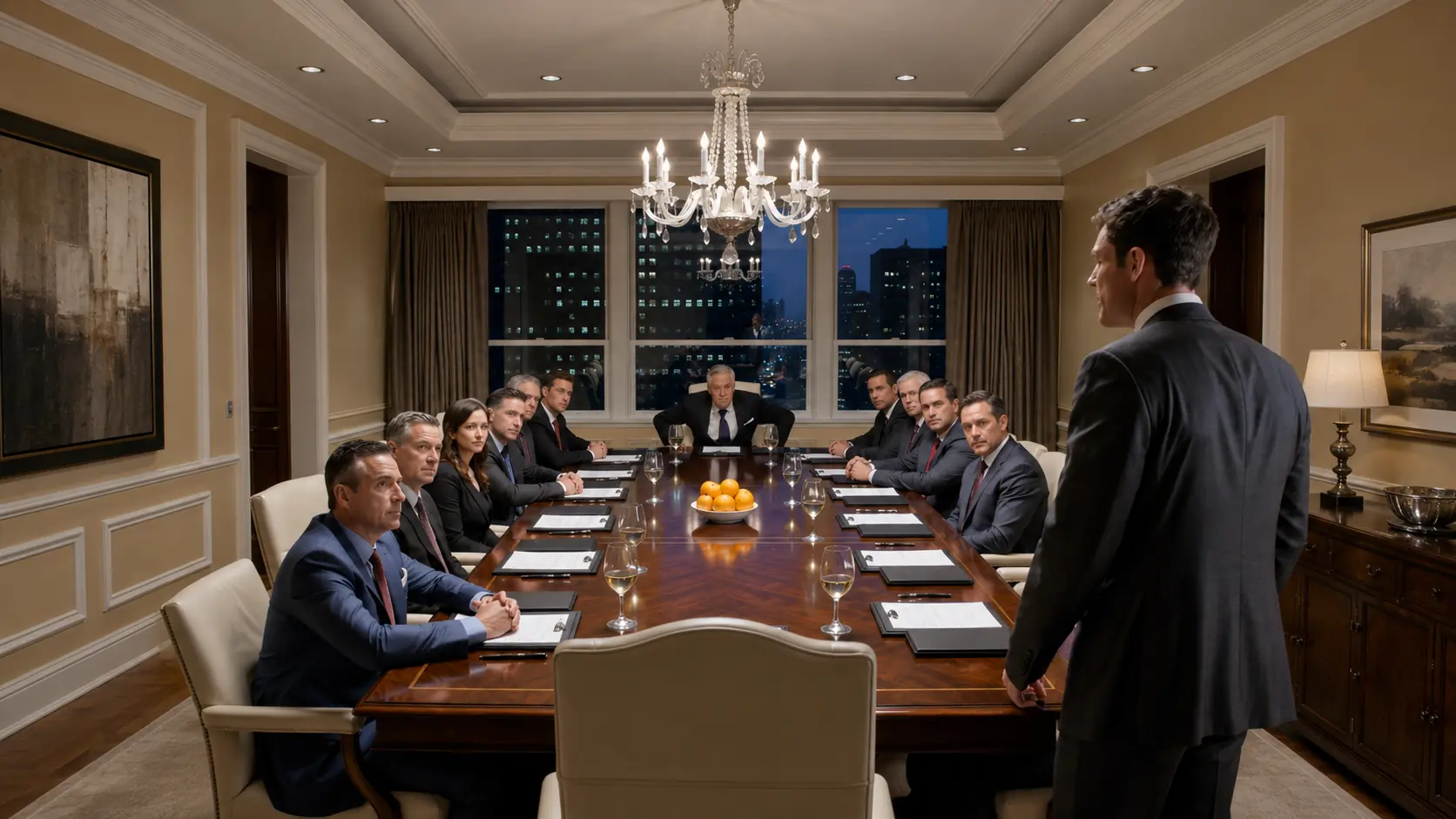
I returned to my desk and opened a folder I had been saving for this conversation. Autumn filed for divorce last Monday. According to the papers, she’s claiming that you misrepresented your financial situation and that the marriage was based on fraud. Henry’s shoulders sagged. She’s not wrong. I did misrepresent my situation.
I thought I was going to inherit $50 million worth of assets. Instead, I inherited $350,000 worth of debt. Where is she now? Gone. She disappeared the same day Vincent Carelli’s people came to collect their money. She took what little cash was left in our joint accounts and vanished.
He looked up at me with red-rimmed eyes. Dad, I don’t think she ever loved me at all. The pain in his voice was raw, genuine. This wasn’t the arrogant young man who had humiliated me in front of my clients 3 weeks ago. This was my son, stripped of his illusions, forced to confront the reality of what he had lost and why he had lost it.
Henry, I said gently, love isn’t something you can counterfeit indefinitely. Real love survives disagreement, disappointment, even failure. What Autumn offered you was a performance designed to get what she wanted. How did you know? he asked. How did you figure it out when I couldn’t see it?
I thought about that question for a moment. Because I’m your father, and I’ve loved you since the day you were born. That kind of love teaches you to recognize the real thing when you see it, and more importantly, to recognize when it’s absent. Henry was quiet for several minutes, processing everything I had told him.
Outside my office windows, the city continued its daily rhythm. Construction crews worked on buildings that would outlast all of us, laying foundations that would support dreams not yet imagined. Dad, Henry said finally, I need to ask you something, and I need you to be completely honest with me. All right.
Do you think there’s any way I can earn back your respect? The question hung between us like a bridge waiting to be crossed. I looked at my son, seeing past the mistakes and the manipulation to the young man who had once asked me to teach him how to build things that would last.
Henry, you never lost my respect. You lost your way, and you made choices that hurt both of us. But respect isn’t something you earn once and keep forever. It’s something you build every day through your actions and your character. I opened my desk drawer and pulled out a business card for Davis Construction Solutions.
I’m hiring project managers for three new developments. The starting salary is $48,000 a year with the possibility of advancement based on performance and reliability. Henry stared at the card. You’re offering me a job? I’m offering you a chance to start over, to learn the business from the ground up, the way I did 42 years ago, to prove to yourself and to me that you understand the difference between earning something and inheriting it.
What about my military experience? My business degree, my years working at Meridian. What about them? I asked. Your military experience taught you discipline and leadership which are valuable. Your business degree gave you theoretical knowledge that might be useful if applied correctly. And your years at Meridian showed you what happens when ambition isn’t balanced by wisdom.
Henry turned the business card over in his hands, studying it as if it contained hidden messages. If I take this job, I’d be starting at the bottom. I’d be working for people who used to work for me. Yes, I agreed. Is that a problem? He was quiet for a long time, and I could see him wrestling with his pride, his shame, his fear of what starting over would mean.
Finally, he looked up at me with something I hadn’t seen in his eyes for months. Humility. When do I start? Monday morning, 7:00 a.m. Wear clothes you don’t mind getting dirty. Henry stood up and extended his hand across my desk. When I took it, his grip was firm, his eyes steady.
Dad, I’m sorry for everything. For not seeing what Autumn was doing. For treating you like you didn’t matter. For nearly destroying everything you built. I’m sorry, too, son, for not teaching you better how to recognize real love from manipulation, for working so hard to give you everything that I forgot to teach you the value of earning things yourself.
Do you think we can fix this, our relationship? I thought about Sarah, about the promise I had made to her about protecting what we built together. But I also thought about the other promise I had made to love our son unconditionally, to never give up on him, even when he gave up on himself.
Henry, relationships aren’t like construction projects. You can’t just pour a new foundation and start over. You have to rebuild trust one conversation at a time, one decision at a time, one day at a time. I’m willing to put in the work, he said quietly. So am I.
After Henry left, I sat alone in my office as the afternoon light faded into evening. The city below was beginning to light up, windows glowing in buildings that would stand long after I was gone. Some of those buildings were my legacy. Structures that would house businesses and families for generations.
But my real legacy was walking out of this office building, heading home to figure out how to rebuild his life from the ground up. Henry would probably struggle for a while. He would have to learn to live on a project manager’s salary instead of an owner’s profits. He would have to earn the respect of co-workers who remembered his arrogance.
He would have to rebuild his sense of self-worth based on his actions rather than his inheritance. It would be hard work, but I had faith in him because he was Sarah’s son as much as he was mine, and Sarah had never backed down from hard work. My phone buzzed with a text message from Margaret Phillips. Dinner tonight to celebrate your new venture, my treat.
I smiled and typed back, Sounds perfect, but I’m buying. It’s time I stopped letting other people take care of me. As I gathered my papers and prepared to leave for the day, I thought about the company I had lost and the company I had gained. Meridian Construction was gone, dissolved into bankruptcy and legal proceedings.
But Davis Construction Solutions was already showing promise, built on the relationships and reputation that no contract could transfer and no manipulation could steal. I had spent 42 years learning that the most valuable things in life, trust, respect, love, integrity, couldn’t be inherited or stolen or bought. They had to be earned through honest work and genuine care for others.
Autumn had tried to take everything from me, but she had only succeeded in taking the things that didn’t really matter. The things that truly mattered, my relationship with my son, my reputation in the industry, my ability to create something meaningful, those were still mine. As I locked my office door and headed for the elevator, I realized that I felt something I hadn’t felt in years. Excitement about the future.
At 63 years old, I was starting over. And this time I was going to build something even better than what I had left behind.
The end.