The first time my sister denied owing me seven hundred and fifty thousand dollars, she did it while standing beneath a chandelier I had paid to keep hanging over her head.
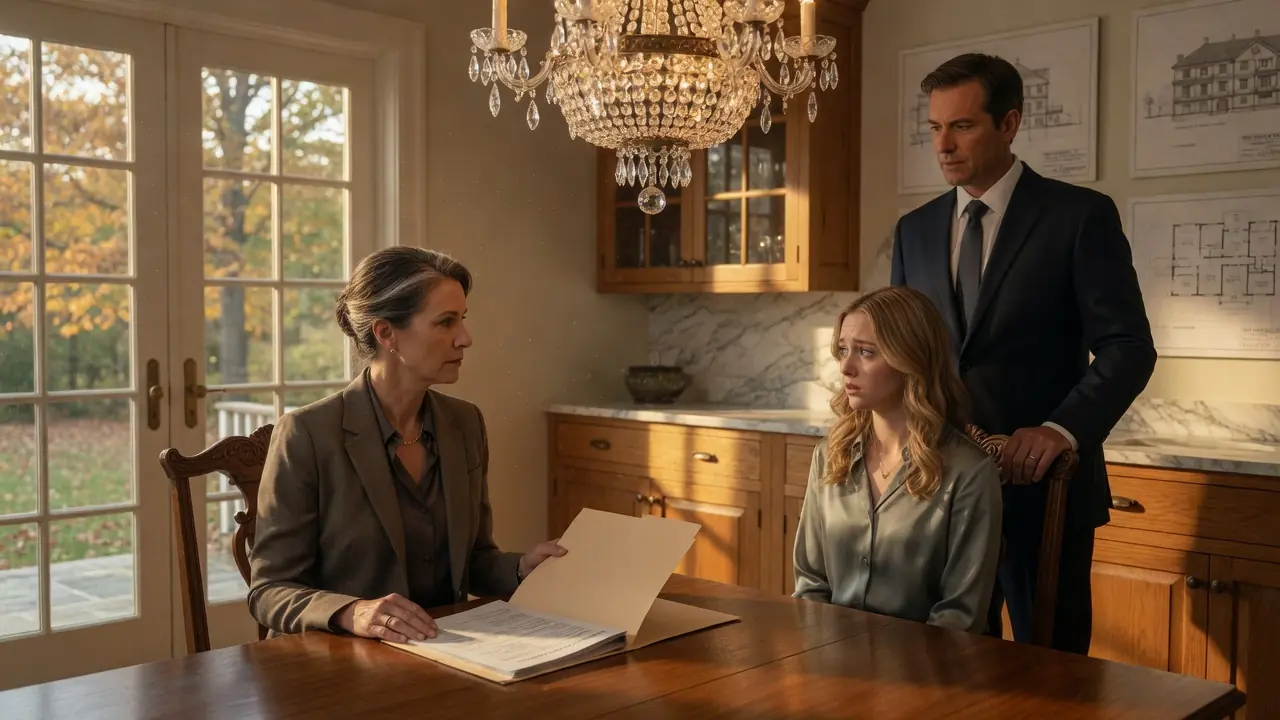
Claire sat at the end of the dining table in the restored farmhouse she and her husband had nearly lost three years earlier. Sunlight streamed through the French doors, catching on the marble counters, the custom oak cabinets, and the framed architectural plans displayed like trophies along the wall.
Her husband, Thomas, stood behind her with one hand resting on the back of her chair.
“We don’t owe you anything,” he said.
For a moment, I thought I had misunderstood him.
The coffee cup in front of me was still warm. Claire had poured it herself, added exactly one spoonful of sugar, and smiled the way she had smiled through every childhood apology before asking me to take the blame for something she had done.
“What did you just say?” I asked.
Claire looked down at the table.
Thomas answered for her.
“You never made us sign anything.”
The words entered the room slowly.
I could hear the old refrigerator humming in the kitchen. Somewhere upstairs, one of their children dropped something heavy and laughed.
I looked at my sister.
“Claire.”
She lifted her eyes.
“I’m sorry, Evelyn.”
“No, you’re not.”
Her mouth tightened.
“This isn’t how we wanted to handle it.”
I almost laughed.
“You invited me here after avoiding my calls for two months. How exactly did you want to handle it?”
Thomas pulled out the chair beside Claire and sat down.
“We hoped you would understand that circumstances changed.”
“Circumstances changed three years ago. That’s why I gave you the money.”
“You didn’t give it to us,” Claire said quickly. “You offered to help.”
“I lent it to you.”
“You said family doesn’t keep score.”
“I said that when you tried to thank me for saving your house.”
Thomas leaned forward.
“There was no repayment schedule.”
“Because you were facing foreclosure in forty-eight hours.”
“No promissory note,” he continued. “No collateral agreement. No interest terms.”
“Because you were my sister.”
Claire flinched.
I reached into my purse and removed a folder.
Inside were printed bank records showing the three transfers I had made over six weeks.
Three hundred thousand dollars to stop the foreclosure.
Two hundred and fifty thousand to pay the tax liens on Thomas’s construction company.
Two hundred thousand to cover payroll after they claimed twenty-three employees would lose their jobs.
I placed each statement on the table.
“You called me at midnight,” I said. “You were crying so hard I could barely understand you.”
Claire stared at the papers.
“You said the bank was taking the house. You said Lily and Mason would have to leave their school. You said Thomas might go to jail if the payroll taxes weren’t paid.”
“That was an emotional time,” Thomas said.
“Yes. You were very convincing.”
His expression hardened.
“Be careful.”
I looked at him.
“Is that a threat?”
“It’s advice. Accusing someone of fraud is serious.”
“I haven’t accused you of fraud.”
“Not yet.”
I turned back to Claire.
“You promised me I would be repaid after the commercial development in Brookhaven closed.”
“That deal fell apart.”
“You told me it closed last year.”
Her face changed.
Only slightly.
But I saw it.
Thomas stepped in.
“The project changed structure.”
“What does that mean?”
“It means business is complicated.”
“No. It means you received money and decided I no longer deserved the truth.”
Claire reached across the table.
I pulled my hand away.
“Evelyn, please. We know you helped us.”
“You know I lent you money.”
“We can’t repay that amount now.”
“You bought a lake house six months ago.”
Thomas’s jaw tightened.
“It belongs to an investment company.”
“Your investment company.”
“You’ve been investigating us?”
“I read public property records.”
Claire looked frightened.
Not guilty.
Frightened.
That difference mattered, though I did not understand it yet.
Thomas placed both palms flat on the table.
“You have more money than you’ll ever spend.”
The sentence stripped away the last pretense.
“So that’s your defense?”
“It’s reality.”
“I worked thirty-two years to build my company.”
“And then you sold it for forty-eight million dollars.”
“After taking every risk myself.”
“Exactly,” Thomas said. “You’re not going to miss seven hundred and fifty thousand.”
I stared at him.
“You think theft becomes generosity when the victim can survive it?”
Claire whispered my name.
I stood.
Thomas rose too.
“You came here to humiliate us.”
“I came here because my financial adviser needs the money returned before I complete a charitable trust.”
He laughed.
“You need our money for charity?”
“My money.”
“No court will see it that way.”
I looked at Claire one last time.
“Is this really what you want?”
Tears filled her eyes.
“I need you to let it go.”
“Why?”
“Because if you keep pushing, you’ll destroy everything.”
I thought she meant the house.
The business.
Her marriage.
I had no idea she was trying to warn me about something much larger.
I gathered the bank statements.
Thomas reached for them.
I pulled them back.
“These are copies.”
His expression shifted.
“Of course they are.”
I walked toward the front door.
Claire followed me into the foyer.
“Evelyn, wait.”
I turned.
She stood beneath a family portrait taken after the renovation. Thomas had one arm around her. Lily and Mason sat in front of them wearing matching navy sweaters.
They looked stable.
Grateful.
Untouched by the terror that had brought Claire to my apartment three years earlier.
“What?” I asked.
She glanced toward the dining room.
Thomas remained out of sight, but we both knew he was listening.
Claire lowered her voice.
“You need to stop asking about Brookhaven.”
The warning was so unexpected that I almost missed its meaning.
“Why?”
“Just stop.”
“Did Thomas lie about the project?”
Her eyes flicked toward the hallway.
“Go home.”
“Claire.”
“Please.”
She opened the door.
Cold October air entered the house.
I stepped outside.
Behind me, Claire whispered, “I’m trying to protect you.”
Then she closed the door.
I sat in my car for nearly twenty minutes.
The farmhouse stood on twelve acres outside Richmond, Virginia, surrounded by old maples and white fencing. When Claire and Thomas bought it, the roof leaked, the foundation cracked, and half the wiring dated back to the 1940s.
They restored it after receiving my money.
At the time, I told myself the renovation was reasonable. A repaired home would hold value. The children needed stability.
Now I noticed the outdoor kitchen, the new stone terraces, and the heated swimming pool covered for winter.
It had upgraded them.
I had met Thomas at Claire’s twenty-eighth birthday dinner.
He was handsome in a polished, deliberate way, with dark hair, expensive shoes, and the confidence of a man who entered every room expecting to leave with more than he brought.
Claire had always been drawn to certainty.
Our father died when she was eleven and I was seventeen. Afterward, our mother drifted into a fog of tranquilizers, migraines, and days spent behind a locked bedroom door.
I became the practical one.
I paid bills.
Drove Claire to school.
Signed permission slips by copying our mother’s handwriting.
When Claire had nightmares, she climbed into my bed and pressed her cold feet against my legs.
“Promise you won’t leave,” she would whisper.
“I promise.”
That promise followed us into adulthood.
When I founded a medical software company at thirty-four, Claire was the first person I hired. She worked in human resources for three years, then resigned after marrying Thomas.
He said wives did not need to work when their husbands could provide.
Within five years, he had moved her into a large house, leased luxury cars, and opened a construction company called Vale Development.
Everyone admired his ambition.
I admired how relieved Claire looked.
For the first time, someone besides me seemed willing to carry her.
Then came the midnight call.
It was March, just after one in the morning.
I had sold my company eight months earlier and was living alone in a high-rise apartment overlooking the James River. The sale had left me wealthy enough that people began speaking to me as though money had changed my intelligence, morality, and obligations overnight.
Claire’s name flashed across my phone.
When I answered, all I heard was crying.
“Claire?”
“We’re losing the house.”
I sat up.
“What happened?”
“Thomas’s partner stole from the company. The bank froze everything. They’re foreclosing Friday.”
“Where is Thomas?”
“In the garage.”
“Why?”
“He says he ruined us.”
Her voice dropped.
“I’m afraid he’ll hurt himself.”
I was dressed and driving within five minutes.
When I arrived, Thomas sat on the garage floor beside a bottle of bourbon and an unloaded hunting rifle.
Claire stood nearby in her robe.
The children slept upstairs.
“What happened?” I asked.
Thomas stared at the concrete.
“A subcontractor fraud case.”
“Your company was defrauded?”
“My partner falsified invoices. The IRS says we owe payroll taxes. The bank called the loan.”
“How much?”
He named the number.
Three hundred thousand to stop foreclosure.
Another two hundred fifty thousand to resolve the tax lien.
Payroll obligations due the following month.
I asked for records.
Thomas became defensive.
Claire took my hands.
“Evelyn, please. We don’t have time.”
I should have insisted.
I had negotiated multimillion-dollar contracts. I knew better than to transfer money without documentation.
But Claire looked exactly as she had at eleven, standing outside our mother’s locked bedroom.
Promise you won’t leave.
I told Thomas I would help.
“No paperwork,” Claire said through tears. “I can’t stand the thought of lawyers making us feel like strangers.”
Thomas agreed to repay me after the Brookhaven development closed.
He said twelve to eighteen months.
I transferred the first three hundred thousand before dawn.
The remaining money followed after he sent spreadsheets showing payroll and tax obligations. My accountant asked why there was no promissory note.
“They’re family,” I said.
Family became the only due diligence I performed.
After leaving the farmhouse, I drove to the office of my attorney, Judith Lane.
Judith had represented me through the company sale and knew every weakness I disguised as principle.
She listened while I described the meeting.
“You transferred seven hundred fifty thousand without a contract.”
“Yes.”
“Any emails stating it was a loan?”
“Possibly.”
“Texts?”
“Probably.”
“Witnesses?”
“No.”
“Bank memos?”
The transfers were labeled family emergency assistance.
Judith removed her glasses.
“Did Thomas choose that wording?”
“He suggested it would prevent the bank from treating the money as new debt.”
“That was convenient.”
“I know.”
“What is Brookhaven?”
“A mixed-use commercial development outside Fredericksburg.”
“Company name?”
“Vale Brookhaven Partners.”
Judith typed into her computer.
After several seconds, she frowned.
“There is no registered entity with that exact name.”
“Try Vale Development.”
She searched again.
“Multiple companies. Most inactive.”
“That can’t be right.”
“Thomas may operate through project-specific entities.”
“Can you find the property?”
Judith pulled public records.
A Brookhaven Commerce Center existed, but Vale Development did not own it.
The property belonged to Dunley Capital Holdings.
The listed manager was a man named Samuel Pierce.
I recognized the name.
Sam had been Thomas’s business partner.
The man Thomas claimed stole from him.
“Maybe Dunley bought the project after the fraud,” I said.
Judith looked at me.
“Or the story about the partner was false.”
I felt heat rise in my face.
“Claire wouldn’t participate in that.”
“You don’t know what Claire participated in.”
“She begged me for help.”
“That may have been sincere.”
“How can both be true?”
“People can believe a lie and help sell it.”
I thought of the fear in Claire’s eyes when she warned me to stop asking about Brookhaven.
“Find Samuel Pierce.”
Judith leaned back.
“This may become expensive.”
“I can afford expensive.”
“That does not mean you will enjoy it.”
“I’m not trying to enjoy it.”
“No,” she said. “You’re trying to make the facts hurt less than your sister did.”
Three weeks passed.
Claire did not call.
Thomas sent a letter through his attorney threatening action if I continued making “defamatory allegations” regarding their finances.
The language confirmed they were afraid of scrutiny.
Then I ran into an old friend at a charity luncheon.
His name was Martin Hale, a commercial banker who had known our family for twenty years. He looked startled when I mentioned Claire.
“You seriously don’t know?” he asked.
My stomach tightened.
“Know what?”
Martin glanced around the crowded ballroom.
“Let’s go somewhere private.”
We stepped into a hallway near the coatroom.
“What happened to Claire and Thomas after they took your money?” he asked.
The wording chilled me.
“You know about the loan?”
“Everyone in their circle does.”
“What circle?”
“The investors.”
“What investors?”
Martin stared at me.
“Evelyn, Thomas didn’t use that money to save the farmhouse.”
My mouth went dry.
“Then what did he use it for?”
“To buy into Dunley Capital.”
I gripped the edge of a side table.
“That makes no sense. Samuel Pierce owned Dunley.”
“Thomas and Sam created it together.”
“Thomas said Sam stole from him.”
“They may have fallen out later. But three years ago, they were partners.”
Martin lowered his voice.
“Your money funded the Brookhaven acquisition.”
“The development that supposedly failed?”
“It didn’t fail.”
“What happened?”
“It tripled in value.”
The hallway seemed to shift beneath me.
“How much?”
“Dunley sold its interest to a national retailer eighteen months ago for approximately twenty-six million dollars.”
I stared at him.
“Thomas told me the deal collapsed.”
Martin’s expression changed from surprise to pity.
“There’s more.”
I did not want more.
He continued anyway.
“After the sale, Claire and Thomas bought property in Costa Rica through a foreign trust.”
“How do you know?”
“I reviewed part of the financing before our compliance department declined the relationship.”
“Why did you decline?”
“Unclear sources of funds.”
My hands became cold.
“Were the funds illegal?”
“I don’t know.”
“What did you mean when you asked what happened to them after they took my money?”
Martin hesitated.
“Thomas told people you invested with them.”
“I did not.”
“He said you provided seed capital in exchange for hidden participation because you wanted to avoid taxes connected to your company sale.”
“That’s absurd.”
“He showed investors documents.”
“What documents?”
“An investment agreement with your signature.”
I stopped breathing.
“I never signed one.”
“Then someone forged it.”
The betrayal widened beyond unpaid debt.
Thomas had transformed my loan into evidence that I participated in his business.
If Dunley had committed fraud, my name could already be attached.
“Who else saw the agreement?”
“Lenders. Private investors. Possibly regulators.”
“Do you have a copy?”
“No.”
“Can you get one?”
Martin looked uncomfortable.
“I shouldn’t have told you this much.”
“You just told me someone used my identity in a multimillion-dollar transaction.”
He exhaled.
“I’ll see what I can find.”
That evening, I called Claire twelve times.
She rejected every call.
On the thirteenth, she answered.
“What did you sign in my name?”
Silence.
“Claire.”
“I told you to stop.”
“Thomas forged an investment agreement.”
“I don’t know anything about that.”
“Martin Hale saw it.”
Her breathing changed.
“You spoke to Martin?”
“Yes.”
“You have to leave this alone.”
“Why?”
“Because Thomas isn’t the only one involved.”
“Who else?”
She began crying.
“Claire, talk to me.”
“I can’t.”
“Are you in danger?”
Another silence.
Then a door closed in the background.
Thomas’s voice appeared, distant but sharp.
“Who are you talking to?”
Claire whispered, “I’m sorry.”
The call ended.
I called Judith.
She advised me not to contact Claire again until we understood the scope of the fraud.
“You think Thomas is threatening her.”
“I think something is controlling her.”
“Can we call the police?”
“Based on what?”
“She sounded afraid.”
“Fear is not evidence of a crime.”
“She warned me.”
“Document everything.”
I hated that phrase.
Document everything was what professionals said when human beings needed immediate rescue but the facts had not yet become legally useful.
The next morning, federal agents arrived at my apartment.
Two investigators from the FBI’s financial crimes division stood outside with identification badges and a warrant.
They searched my home office, removed two laptops, and copied records from my private server.
The lead agent, Renee Walker, sat across from me at my dining table.
“Do you know Dunley Capital Holdings?”
“Only what I learned yesterday.”
“Your name appears on several formation and financing documents.”
“Forged.”
“You provided seven hundred fifty thousand dollars.”
“As a loan to my sister.”
“No loan documents exist.”
“I trusted her.”
Agent Walker showed no reaction.
“Did you receive distributions from Brookhaven?”
“No.”
“Did you authorize an account in the Cayman Islands?”
“No.”
“Did you meet Samuel Pierce on June seventeenth three years ago?”
“No.”
“Records show your private aircraft landed in Savannah that morning.”
“I allowed Thomas to use the plane.”
“Why?”
“He said he was meeting tax attorneys.”
“Were you on board?”
“No.”
“Flight records list four passengers. Two identities were withheld through a corporate service.”
“Then ask the flight operator.”
“We have.”
Her calm frightened me.
“What exactly are you investigating?”
“Investment fraud, tax evasion, money laundering, and possible theft of pension funds.”
I stared at her.
“Pension funds?”
“Dunley raised capital from several union retirement plans using inflated property valuations.”
“I had nothing to do with that.”
“Your signature guaranteed the initial acquisition financing.”
“Forged.”
“Your transfer funded the earnest-money deposit.”
“I thought I was saving my sister’s house.”
Agent Walker leaned forward.
“Ms. Mercer, wealthy people often describe investments as family assistance when the investment becomes problematic.”
“I did not invest.”
“Then someone close to you constructed a detailed false narrative.”
“Yes.”
“Why?”
“To use my reputation and money.”
“Who?”
“Thomas Vale.”
“Only him?”
I thought of Claire crying on the phone.
“I don’t know.”
The agents left after four hours.
News vans arrived before sunset.
Someone had leaked the search.
By evening, financial websites published headlines linking me to Dunley Capital’s suspected fraud. Commentators replayed interviews from my company sale, contrasting my public philanthropy with allegations of hidden offshore investments.
Claire still did not call.
My former business partners demanded explanations.
The foundation board postponed a grant meeting.
The medical center where I funded a pediatric wing removed my name from an upcoming event pending “clarification.”
I had spent thirty-two years building a reputation.
Thomas used it as collateral.
Then Claire appeared at my apartment just after midnight.
She wore no coat despite the cold.
Her hair was unwashed, and a bruise darkened the inside of her wrist.
I pulled her inside.
“Did Thomas do that?”
She looked down.
“He grabbed me.”
“I’m calling the police.”
“No.”
“Claire.”
“He has recordings.”
“Of what?”
“Me.”
Her body began shaking.
I wrapped a blanket around her and sat beside her on the sofa.
“What happened?”
She stared toward the windows as though Thomas might be outside.
“The foreclosure was real,” she said.
That surprised me.
“Then why wasn’t the money used to save the house?”
“It was, at first.”
She explained that Vale Development had collapsed under debts Thomas concealed from her. The bank threatened the farmhouse and several business properties.
My first three hundred thousand stopped the foreclosure.
Then Samuel Pierce offered Thomas a way out.
Brookhaven.
A retail development whose land value would rise once a confidential highway interchange was announced.
“How did Sam know about the interchange?” I asked.
“His brother worked for the transportation department.”
“Inside information.”
“Yes.”
Thomas convinced Claire that using the remaining money would restore everything.
“He said he would repay you before you ever knew.”
“And you agreed?”
“I begged him not to.”
“But you signed something.”
She began crying.
“He said the investment needed both spouses’ consent. I signed.”
“What did the document say?”
“I didn’t read all of it.”
“Claire.”
“I was afraid we would lose the house.”
“You helped them use my money.”
“Yes.”
The word struck cleanly.
“Did you know they forged my signature?”
“Not then.”
“When did you know?”
“After Brookhaven sold.”
My heart pounded.
“You knew eighteen months ago.”
“Yes.”
“And you said nothing.”
“Thomas said the documents would never matter if we repaid you.”
“But you didn’t repay me.”
“He wouldn’t let me.”
“Why?”
“Because the money was gone.”
“Twenty-six million dollars does not disappear.”
“Most of it never belonged to us.”
Thomas and Sam had borrowed heavily against the project. They paid secret fees, political bribes, and earlier investors.
The sale generated millions, but far less than the headline price suggested.
Thomas received approximately six million.
“What happened to six million dollars?”
Claire’s face tightened.
“He lost it.”
“How?”
“Another development. Cryptocurrency. Gambling.”
I stared at her.
“He gambled six million?”
“He said he was investing.”
“Of course he did.”
“What about Costa Rica?”
“A house he bought for two million.”
“Sell it.”
“He can’t.”
“Why?”
“It isn’t in his name.”
“Whose name?”
Claire looked at me.
“Yours.”
The room went silent.
“He bought a house in my name?”
“Through a trust using your passport information.”
“How did he get my passport?”
“You gave it to me when we went to Paris.”
Five years earlier, Claire arranged our flights and hotel reservations for a family trip. I had emailed her a scanned copy.
The betrayal had been built from ordinary trust.
“Did you sign anything in my name?” I asked.
“No.”
“Did you witness him doing it?”
“Yes.”
“Why didn’t you stop him?”
“He said if the government investigated, we would all go to prison.”
“You believed him?”
“He showed me the documents with your signature and my signature. He said the money trail began with your transfer.”
“You were trying to protect yourself.”
“I was trying to protect Lily and Mason.”
“By allowing me to take the blame?”
“No.”
Her answer came too quickly.
I stood.
Claire reached for me.
I stepped away.
“You let me sit at your table while Thomas called my money a gift.”
“I wanted to tell you.”
“You told me to let it go.”
“Because I thought the investigation had ended.”
“It had not even begun.”
She covered her face.
“I’m sorry.”
“Stop.”
“I am.”
“No. You are afraid.”
She lowered her hands.
“What do you want me to do?”
“Tell the FBI everything.”
“If I do, Thomas will go to prison.”
“Yes.”
“He’s the children’s father.”
“He used their home, their future, and his wife as shields.”
“You don’t understand.”
“I understand perfectly. You are still asking me to carry the danger so your family can look intact.”
The words hurt her.
They were also true.
Claire stood.
“I came here because Thomas said he was going to destroy you.”
“He already tried.”
“No. He has more.”
“What?”
“A recording.”
“Of me?”
“Of our mother.”
My anger paused.
“What does Mom have to do with this?”
Claire looked toward the dark window.
“Thomas has been paying her.”
Our mother lived in an assisted living facility near Charlottesville. Her dementia had advanced over the previous two years, but before that she remained lucid enough to manage basic affairs.
I paid every bill.
Visited twice a month.
Claire visited rarely.
“Paying her for what?”
“To say the seven hundred fifty thousand was an inheritance distribution.”
My stomach tightened.
“There was no inheritance.”
“Dad left money.”
“No. Dad died with debt.”
Claire shook her head.
“Mom had a life insurance policy.”
“How much?”
“Eight hundred thousand.”
I stared at her.
“That is impossible.”
“Mom received it after Dad died.”
“Where did it go?”
“She hid it.”
“From me?”
“From everyone.”
Our mother had spent years claiming poverty. I bought groceries, paid medical expenses, and worked nights while attending college because I believed no safety net existed.
“Why would she hide it?”
“Dad had another family.”
The room seemed to tilt.
Claire explained that shortly before our father’s death, our mother discovered he had supported a woman and child in North Carolina.
The life insurance money became her weapon.
She kept it secret so the other family could not make a claim.
“What happened to it?”
“She invested it. It grew.”
“How much?”
“Nearly three million.”
“And you knew?”
“Not until Thomas found her old statements.”
“When?”
“Four years ago.”
Before the loan.
Before the foreclosure.
Before the midnight tears.
“Did Mom give him money?”
“Not at first.”
“What did he do?”
“He threatened to tell the other family.”
I felt sick.
“Blackmail.”
“He called it negotiation.”
“How much did he take?”
“More than a million.”
“And you let me give you seven hundred fifty thousand while Thomas already had access to secret family money.”
“I didn’t know the full amount.”
“You knew enough.”
Claire began crying again.
“Mom made me promise not to tell you.”
“Why?”
“Because she was ashamed.”
“Of Dad?”
“Of what she did afterward.”
The child from our father’s second family had contacted her after his death. He was fourteen.
Our mother denied knowing him.
She kept every dollar.
That boy grew up without support while Claire and I believed there had been none to give.
“Thomas found him,” Claire said.
“Where is he?”
“His name is Daniel Ross. He lives in North Carolina.”
“What did Thomas do?”
“He offered Daniel money to sign away any claim.”
“How much?”
“Two hundred thousand.”
“Did he accept?”
“No.”
“Then what?”
“Thomas forged his signature too.”
The scheme had roots beneath roots.
Thomas did not merely exploit my trust.
He harvested every secret our family had buried.
“What recording does he have?”
“Mom admitting she wanted Daniel excluded from the estate.”
“That harms her reputation, not mine.”
“She says you knew.”
“I didn’t.”
“Thomas edited the conversation.”
I laughed bitterly.
“Of course he did.”
“He plans to release it and claim you helped hide the insurance money, then used part of it for Dunley.”
“Will people believe him?”
Claire looked at me.
“Some already do.”
That was true.
Truth did not enter public life alone. It competed with whatever story arrived first and sounded complete.
I called Agent Walker.
Claire gave a formal statement before dawn.
By morning, the FBI placed her under protective supervision and moved Lily and Mason to a secure location.
Thomas discovered she had left when he woke.
He called me thirty-seven times.
I answered the thirty-eighth.
“You took my wife.”
“She walked out.”
“She belongs with her children.”
“They’re with her.”
A pause.
“You think Claire can survive without me?”
“She survived before you.”
“No. She had you.”
The cruelty was deliberate.
“You trained her to need rescue,” he continued. “First from your mother. Then from life. Then from me.”
“And you mistook that for permission to own her.”
He laughed.
“You’re no different.”
The accusation struck because part of it was true.
For decades, I had built my identity around being Claire’s protector. I offered money before asking what it allowed her to avoid. I solved crises quickly enough that she never learned which ones she could survive herself.
Thomas recognized that pattern.
Then weaponized it.
“I’m not discussing Claire with you.”
“You should discuss yourself.”
“What do you want?”
“Withdraw your complaint. Tell the agents you knowingly invested in Brookhaven.”
“No.”
“I’ll release the recording.”
“Do it.”
“You haven’t heard it.”
“I know I didn’t conspire with my mother.”
“Facts are expensive. Stories are free.”
“That sounds rehearsed.”
“You taught me.”
“I barely spoke to you.”
“You taught everyone. The successful sister. The savior. The one who pays and then expects gratitude forever.”
My hand tightened around the phone.
“I expected repayment because it was a loan.”
“You expected obedience because you were the rescuer.”
He hung up.
Two hours later, the recording appeared online.
My mother’s frail voice said, “Evelyn knows where the money came from.”
Then Thomas asked, “She agreed Daniel should receive nothing?”
“Yes.”
“She used the insurance money to support Dunley?”
“Yes.”
The edit was smooth.
Convincing.
News channels played it repeatedly.
My mother could no longer explain what she meant.
The assisted living facility moved her to a private wing after reporters gathered outside.
I drove there under the guidance of my attorney.
She sat near a window folding the same napkin again and again.
“Mom?”
She looked up.
For a moment, recognition came.
“Evelyn.”
I sat beside her.
“Did Thomas visit you?”
Her expression tightened.
“Bad man.”
“What did he ask?”
“He wanted the box.”
“What box?”
She looked toward the closet.
“Your father’s letters.”
There was no box in the room.
“Where is it?”
“Claire took it.”
“When?”
“Long time.”
My mother’s mind drifted.
I took her hand.
“Did I know about the insurance money?”
She frowned.
“You always knew everything.”
“That isn’t an answer.”
She laughed softly.
“You hated when people said that.”
Then she looked at me with sudden clarity.
“I didn’t tell you because you would make me give it back.”
“Give what back?”
“His money.”
“To Daniel?”
“He wasn’t mine.”
“He was Dad’s son.”
“He was proof.”
Her eyes hardened with an old bitterness.
“I buried your father. I paid his debts. I raised his girls. That boy did nothing.”
“He was a child.”
“So were you.”
She touched my face.
“I made sure you never needed anyone.”
The sentence nearly broke me.
“I needed you.”
Her clarity vanished.
She returned to folding the napkin.
The next day, Judith located Daniel Ross.
He was fifty-four, married, and owned an auto repair shop near Durham.
I called him.
“My name is Evelyn Mercer.”
“I know.”
His voice was guarded.
“I’m your half sister.”
“I know that too.”
“Thomas contacted you.”
“Yes.”
“I need to meet.”
“Why?”
“To understand what happened.”
“You had forty years.”
“I didn’t know.”
“That’s what your sister said.”
“She contacted you?”
“Three months ago.”
Claire had known where Daniel was.
“What did she want?”
“To warn me Thomas might use my identity.”
“Did she offer help?”
“She offered money.”
Of course.
“What did you say?”
“I said I was tired of people in your family treating money like an apology.”
The sentence humbled me.
“I’m not calling to offer money.”
“What are you offering?”
“The truth, if we can find it.”
He agreed to meet at his shop.
Daniel looked like our father.
Not exactly.
He had the same broad forehead, deep-set brown eyes, and habit of pressing his lips together before answering.
We sat in a small office smelling of motor oil and coffee.
He placed a file between us.
Inside were letters from our father.
Dozens.
Our father had visited Daniel until the boy was twelve. Then our mother discovered the relationship and demanded he stop.
“He promised he would come back,” Daniel said. “He died two years later.”
“Did you know about us?”
“Yes.”
“Did he talk about Claire and me?”
“All the time.”
Jealousy rose before I could stop it.
Our father had been absent from our home emotionally long before death. Yet somewhere else, he wrote letters and made promises.
“Did you contact Mom after he died?”
“Yes.”
“What did she say?”
“That I was lying.”
“She knew who you were.”
“I had photographs.”
He showed them.
Our father stood beside a younger woman and a boy holding a baseball glove.
“Your mother threatened mine,” Daniel said.
“With what?”
“She said she would expose the affair publicly and make sure my mother lost her nursing job.”
“Why would she lose her job?”
“She worked at the clinic where your father was treated.”
The affair began within a professional relationship.
“My mother backed away. We never filed a claim.”
“Then Thomas came.”
“Yes.”
“What did he offer?”
“Two hundred thousand to sign documents stating your father was not mine.”
“Did you take a DNA test?”
“I did one years earlier.”
The result confirmed paternity.
“Thomas knew?”
“I gave him a copy.”
“Why?”
“He said Claire wanted to acknowledge me privately.”
My stomach tightened.
“Did she?”
“She wrote one letter.”
Daniel handed it to me.
Claire’s handwriting filled two pages.
She apologized for our mother. She said she had always sensed another secret inside the family. She asked whether he wanted to meet.
At the bottom, Daniel had written no response.
“Why didn’t you answer?”
“Thomas arrived the next day and told me Claire was unstable.”
The pattern again.
He isolated people by defining their perception as illness.
“He said you controlled her money,” Daniel continued. “He said meeting us would destroy her marriage and affect her children.”
“And then he forged your signature.”
“Yes.”
“Why didn’t you go to police?”
“I did.”
“What happened?”
“They called it a family estate dispute.”
The same way Thomas turned my loan into a gift.
Everything became civil when criminal behavior wore the clothing of family.
Daniel leaned back.
“You want revenge.”
“I want to clear my name.”
“That is not the same as justice.”
“No.”
He studied me.
“At least you admit it.”
“What do you want?”
He looked toward the garage, where mechanics moved beneath raised vehicles.
“I want my children to know their grandfather did not hide us because he was ashamed.”
“Wasn’t he?”
“Yes.”
The answer surprised me.
“He loved us. He also lacked courage. Both are true.”
“Would you testify?”
“Yes.”
“Why?”
“Because Thomas used my father’s failure as a business model.”
The case moved quickly after Daniel joined the investigation.
His DNA records, forged release, and correspondence supported a pattern of identity fraud. Claire provided access codes and emails from Thomas’s private accounts.
Martin secured a copy of the false investment agreement carrying my signature.
A forensic examiner proved it had been copied from documents related to my company sale.
Then Samuel Pierce disappeared.
His car was found at Richmond International Airport, but no record showed him boarding a flight.
Investigators believed Thomas had warned him.
Agent Walker placed Thomas under surveillance rather than arresting him immediately. She wanted the full network, including political officials connected to Brookhaven.
I hated waiting.
Claire hated it more.
She lived with the children in a rented house under federal supervision. I was allowed to visit, but our conversations remained tense.
One afternoon, Lily asked why her father could not see her.
Claire answered carefully.
“Dad made serious mistakes.”
“Did he hurt Aunt Evelyn?”
“Yes.”
“Did you help?”
Claire froze.
Her daughter was fourteen.
Old enough to notice the gaps.
“Yes,” Claire said.
“Why?”
“Because I was afraid.”
Lily looked toward me.
“Are you mad at Mom?”
“Yes.”
Claire’s face tightened, but she did not interrupt.
“Do you hate her?”
“No.”
“Will you forgive her?”
“I don’t know.”
Lily looked frightened.
Claire reached for her.
Lily pulled away.
“Everybody says family forgives.”
I answered before Claire could.
“Family should also tell the truth when forgiveness hasn’t happened yet.”
Lily left the room.
Claire stared at me.
“You could have reassured her.”
“I did.”
“No. You made her feel unsafe.”
“The truth is that our relationship is unsafe right now.”
“She’s a child.”
“She is living under guard because her father committed fraud and her mother helped conceal it.”
Claire stood.
“I came to you.”
“After Thomas threatened to sacrifice me.”
“I risked everything.”
“When the risk of staying became greater than leaving.”
Her eyes filled.
“What do you want me to say?”
“I don’t know.”
“That I’m weak? Selfish? Stupid?”
“I want you to stop asking me to decide what you are.”
The words silenced her.
“You have spent your whole life letting other people define you,” I continued. “Mom called you fragile. I called you someone I had to save. Thomas called you incapable without him.”
Claire looked down.
“What do I call myself?”
“That is finally your problem.”
She began crying.
This time, I did not rush to hold her.
That was harder than writing a check.
Two weeks later, Thomas vanished.
Surveillance agents lost him after he entered a courthouse parking garage. His vehicle remained inside, but he left in another car.
He called Claire that evening.
She answered under FBI instruction while agents recorded.
“Where are the children?” he asked.
“Safe.”
“With Evelyn?”
“No.”
“Good.”
Claire looked at me through the glass of the monitoring room.
“What do you want?”
“I need you to meet me.”
“I can’t.”
“You can.”
“No.”
His voice softened.
“Claire, I know you’re frightened. Evelyn is using this to take you away from me.”
“No.”
“She has always wanted you dependent on her.”
“That may be true.”
I flinched.
Claire continued.
“But it doesn’t make you innocent.”
Thomas became silent.
“You signed the Brookhaven papers.”
“Yes.”
“You moved money.”
“Yes.”
“You knew about the offshore account.”
“Eventually.”
“You’ll go to prison too.”
“Maybe.”
His control slipped.
“You cannot survive prison.”
“You said I couldn’t survive losing the farmhouse.”
“Think about Lily and Mason.”
“I am.”
“Then come to me.”
“Where?”
Agents leaned closer.
Thomas named an abandoned warehouse near Ashland.
“Bring the access device for Evelyn’s trust accounts.”
I stared at Claire.
My charitable trust had not yet been funded, but the accounts held several million awaiting transfer.
“How do you know about that?” Claire asked.
“Your sister’s adviser is less loyal than she believes.”
Another betrayal.
“Who?” Claire asked.
“Bring the device.”
The line ended.
The FBI prepared a controlled meeting.
Claire insisted on going.
I objected.
“He could kill her.”
Agent Walker remained calm.
“We’ll have tactical teams in place.”
“He has used her for years.”
“That is why she can keep him talking.”
Claire stood nearby wearing a recording device beneath her blouse.
“I need to do this.”
“You don’t owe him courage now.”
“No.”
She looked at me.
“I owe myself one decision he doesn’t make.”
We drove to the warehouse after midnight.
I waited in a command vehicle while Claire entered alone.
Cameras captured Thomas standing near a loading dock with a duffel bag and a handgun tucked into his belt.
He looked exhausted but still polished enough to seem in control.
“You came,” he said.
Claire stopped ten feet away.
“I brought the device.”
“Give it to me.”
“Where is Sam?”
Thomas’s expression changed.
“You don’t need to worry about Sam.”
“Did you kill him?”
“No.”
“Where is he?”
“Safe.”
“Is that what you said about me?”
He stepped closer.
“Claire, we can still leave.”
“With what money?”
“Enough.”
“What about the children?”
“They’ll join us later.”
“You mean after Evelyn pays.”
He smiled faintly.
“She always pays.”
Inside the command vehicle, the words struck with humiliating accuracy.
Thomas continued.
“She paid when your mother disappeared into herself. She paid when you wanted a wedding beyond my means. She paid when the children needed private school.”
Claire stared at him.
“She paid because I asked.”
“You asked because that’s what you were trained to do.”
“And you married me because you knew it.”
His face hardened.
“Give me the device.”
“No.”
He reached for her.
Agents prepared to move.
Then Claire said, “I know about Samuel.”
Thomas stopped.
“He recorded you.”
That was a bluff.
But it worked.
“What recording?”
“The night you moved the pension money.”
His eyes shifted.
Claire saw it.
“You did move pension funds.”
“Sam handled that.”
“You blamed Sam for everything.”
“He became greedy.”
“Did you kill him?”
Thomas drew the gun.
Agents moved.
Before they reached the loading dock, a second man appeared behind Claire.
Samuel Pierce.
Alive.
He grabbed her and pressed a knife against her throat.
Thomas shouted, “I told you not to come out.”
The twist unfolded in seconds.
Thomas and Sam had not become enemies.
The supposed fallout was another layer.
Sam allowed Thomas to blame him publicly while they continued operating Dunley together. His disappearance had been staged to lure Claire and recover the access device.
“Drop your weapons!” agents shouted.
Samuel dragged Claire backward.
Thomas pointed the gun toward the darkness where officers were positioned.
Claire’s face remained strangely calm.
“Sam,” she whispered.
“Shut up.”
“Thomas is going to leave you.”
Samuel’s grip tightened.
“He already moved money without you.”
Thomas looked toward him.
“Don’t listen.”
Claire continued.
“He blamed the pension theft on you.”
“That’s a lie.”
“Ask him why the Costa Rica house is in Evelyn’s name instead of yours.”
Samuel’s eyes shifted.
Thomas raised the gun.
“Claire, stop.”
She drove her heel down onto Samuel’s foot, dropped her weight, and tore away from the knife.
Agents opened fire when Thomas turned his weapon toward her.
One shot struck his shoulder.
Samuel tried to run and was tackled near the loading bay.
Claire fell to the concrete.
For one terrible moment, she did not move.
Then she lifted her head.
I was out of the command vehicle before anyone could stop me.
Agents shouted for me to stay back.
I ran to her anyway.
Blood covered her blouse, but it belonged mostly to Thomas, who lay several feet away groaning while medics treated him.
Claire looked up at me.
“I didn’t bring the real device.”
I laughed and cried at the same time.
“I know.”
“No, you don’t.”
She reached inside her sleeve and removed a small black object.
“The real one is here.”
I stared at her.
“Why?”
“Because I knew Thomas would check the bag.”
“You could have given it to the FBI.”
“I wanted him to believe he was close.”
Even now, she had made a dangerous decision without telling anyone.
Part of me wanted to yell.
Instead, I helped her sit up.
“We are going to have a very long argument about this.”
She smiled weakly.
“I know.”
Thomas survived.
Samuel testified against him after learning Thomas had prepared documents placing primary responsibility for the pension fraud on Dunley and Samuel personally.
The conspiracy involved fraudulent valuations, forged signatures, bribed officials, shell companies, and stolen identities.
Thomas pleaded guilty only after Claire agreed to testify publicly.
She received probation and community service for her role in signing false documents and concealing knowledge after the sale. Prosecutors credited her cooperation, but the conviction remained.
Thomas was sentenced to twenty-eight years in federal prison.
Samuel received twelve.
Several officials and advisers went to prison as well.
My financial adviser, Harold Webb, had sold information about my trust accounts to Thomas in exchange for investment access. He received seven years.
The Costa Rica property was seized.
Pension funds recovered part of their losses through asset sales and insurance.
My name was formally cleared.
The news organizations that called me a fraud published corrections on pages no one read.
I learned that innocence restored legally does not return reputation to its original condition.
Some people continued believing I had escaped punishment because of wealth.
Others called me brave for exposing my family.
Neither story felt accurate.
I had trusted carelessly.
Claire had betrayed me.
Thomas had forged my identity.
Our mother had hidden money from a child who deserved acknowledgment.
Our father had created the secret and left others to carry it.
There was no clean hero.
After sentencing, Daniel Ross and I visited our mother together.
Her dementia had advanced.
She looked at him for a long time.
Then whispered our father’s name.
“No,” Daniel said gently. “I’m his son.”
She began crying.
“I’m sorry.”
The apology might have been for him.
Or our father.
Or herself.
Daniel took her hand.
“I know.”
Later, I asked whether he forgave her.
“No.”
“Then why comfort her?”
“Because refusing cruelty does not require forgiveness.”
That lesson stayed with me.
Claire and I did not speak for three months after the trial.
She moved into a small rental with Lily and Mason and began working at a community employment center. It was her first full-time job in nearly twenty years.
I wanted to help with rent.
Judith advised me not to.
My instinct was to rescue.
For once, I resisted it.
Claire eventually called.
“Can we have coffee?”
We met at a diner halfway between our homes.
She arrived early.
I noticed because Claire had been late for nearly every meeting of our adult lives.
She wore an inexpensive navy blouse and carried no designer handbag.
“I started paying restitution,” she said.
“To whom?”
“You.”
I stared at her.
She slid a receipt across the table.
A transfer of two hundred dollars.
“You cannot repay seven hundred fifty thousand this way.”
“No.”
“Then what is this?”
“The first payment.”
“At two hundred a month, it will take centuries.”
“Probably.”
“Claire.”
“I know the amount is symbolic.”
“I don’t need symbolism.”
“I do.”
Her voice remained steady.
“I need to stop treating your money like proof that consequences can be postponed.”
I looked at the receipt.
“I can forgive the debt.”
“No.”
“Why?”
“Because you will turn forgiveness into another rescue.”
The accuracy irritated me.
It also made me proud of her.
“You’ve changed.”
“No,” she said. “I’m practicing.”
That was more honest.
We spoke about Lily and Mason.
The children loved their father and hated what he had done. They attended therapy. Lily refused to visit prison. Mason wrote letters and received manipulative responses.
Claire did not tell them what to feel.
“I used to think protecting children meant giving them one version of a parent,” she said. “The good version.”
“What do you think now?”
“They need enough truth to make their own relationship.”
“That sounds difficult.”
“It is.”
The waitress refilled our coffee.
Claire wrapped both hands around the cup.
“Do you hate me?”
“Sometimes.”
She nodded.
“Do you love me?”
“Yes.”
“Can both stay?”
“They already have.”
Tears filled her eyes.
“I don’t expect things to go back.”
“They can’t.”
“I know.”
“No. I need you to understand. I will never again give you money without paperwork.”
She almost laughed.
“That seems fair.”
“I will not call your landlord, speak to your boss, or solve problems you didn’t ask me to solve.”
“That sounds harder for you than for me.”
“It is.”
“And if I fail?”
“I’ll listen.”
“Then?”
“Then I may still say no.”
She looked down.
“I need that.”
Our relationship rebuilt slowly.
Not through dramatic apologies.
Through ordinary evidence.
Claire arrived when she said she would.
She paid what she could.
She told me when she was afraid before fear became another person’s authority.
I stopped offering answers before she finished describing the problem.
Sometimes she made choices I considered foolish.
I let them remain hers.
Two years after Thomas’s conviction, our mother died.
Her estate contained nearly two million dollars after legal fees and restitution connected to Thomas’s scheme.
Her original will left everything equally to Claire and me.
It did not mention Daniel.
We could have accepted it legally.
Instead, Claire and I met with him.
“The money should be divided into thirds,” I said.
Daniel shook his head.
“I don’t want it.”
“It was partly your father’s insurance.”
“It was your mother’s money for forty years.”
“She kept it from you.”
“That doesn’t make taking it healing.”
Claire leaned forward.
“What would feel fair?”
Daniel considered the question.
“Create something for children abandoned by a parent’s secret.”
We established the Ross-Mercer Family Truth Fund.
The name embarrassed all of us, but it funded legal and counseling services for people discovering hidden parentage, forged estate records, and family financial abuse.
Daniel joined the board.
Claire worked there part-time.
I contributed additional money but did not control daily operations.
That was intentional.
The seven hundred fifty thousand dollars remained unresolved.
Asset recovery returned approximately four hundred thousand to me from Thomas’s seized holdings.
Claire continued paying two hundred dollars each month.
After five years, she had repaid twelve thousand.
One afternoon, I returned every payment.
Not as debt forgiveness.
As investment in her future retirement account, placed in a structure she could not access for immediate emergencies.
She became furious.
“You said no more secret decisions.”
“You’re right.”
I had repeated the family pattern in a kinder form.
I apologized.
Then we sat with a financial adviser together and changed the arrangement. Claire chose to continue repayment, but half now went toward restitution and half toward her retirement.
The distinction mattered.
Consent mattered.
Even when the result looked nearly identical.
Lily graduated from college six years after the farmhouse confrontation.
At the ceremony, Claire and I sat together.
Thomas watched through a prison-approved livestream.
Lily knew.
She chose it.
Afterward, she handed me a small envelope.
Inside was a check for one thousand dollars.
“What is this?”
“My first repayment.”
I looked at Claire.
She appeared equally surprised.
“You don’t owe me anything,” I said.
Lily nodded.
“I know.”
“Then why?”
“Because some of the money kept our house.”
“That was not your decision.”
“No. But I benefited.”
I handed the check back.
She refused it.
We compromised.
The money went into the family fund in her name.
Again, the final decision was not mine alone.
That became the measure of change in our family.
Not whether money moved.
Whether people had a real choice before it did.
I sold the apartment overlooking the river and moved into a smaller house near Daniel’s family.
People assumed I had lost money in the scandal.
I had not.
I simply no longer wanted rooms designed to impress people who disappeared when my name became inconvenient.
Claire visited on Sundays.
Sometimes we cooked.
Sometimes we argued.
Once, she asked whether I regretted lending her the money.
“Yes,” I said.
Her face fell.
Then I continued.
“I regret doing it blindly. I regret helping you avoid questions you needed to ask. I regret believing love made paperwork insulting.”
“Do you regret saving the farmhouse?”
“The house was sold in restitution.”
“I know.”
“Then perhaps it was never saved.”
She smiled sadly.
“What did the money save?”
I thought about it.
“The illusion that Thomas could fix everything.”
“That doesn’t sound worth seven hundred fifty thousand.”
“No.”
“Anything else?”
“It eventually exposed him.”
“That wasn’t what you paid for.”
“No.”
We sat quietly.
“Do you regret helping me?” she asked.
“That is a different question.”
“What’s the answer?”
“No.”
Years later, people still told the story incorrectly.
They said I lent my sister three quarters of a million dollars and she denied owing it because there was no contract.
That was true.
It was also the smallest part.
The money uncovered a forged investment, a pension fraud, an offshore property, a hidden brother, a stolen inheritance, and a marriage built around control.
But beneath every crime was a simpler pattern.
Someone believed love allowed them to decide for someone else.
Our mother decided Daniel did not deserve acknowledgment.
Thomas decided Claire could not survive without him.
Claire decided I could carry the consequences of her silence.
I decided protecting Claire meant solving her problems before she learned whether she could solve them herself.
None of us called it control.
We called it family.
The last time Claire made a repayment, she brought cash inside an envelope.
We were sitting at my kitchen table, drinking coffee.
“Why cash?”
“My bank app is down.”
“How much?”
“Two hundred.”
I did not open the envelope.
“You know the recovered assets already covered most of the principal.”
“I know.”
“You could stop.”
“I know.”
“Then why continue?”
She looked at me.
“Because the promise matters now.”
I placed the envelope back in her hand.
“So does choice.”
Her fingers closed around it.
“What are you saying?”
“I’m saying I release the remaining debt.”
She stared at me.
“No.”
“Listen first.”
“You’ll say this isn’t rescue.”
“It isn’t.”
“How?”
“Because I’m not erasing what happened. I’m choosing what I want the debt to mean in the rest of my life.”
She waited.
“I don’t want our relationship measured by whether you can repay money Thomas helped steal.”
Tears filled her eyes.
“What do you want it measured by?”
“Whether you tell me the truth when lying would be easier.”
She looked down at the envelope.
“I don’t deserve that.”
“Deserving is not the point.”
“Then what is?”
“What we do after we understand the damage.”
She laughed through tears.
“Daniel says that all the time.”
“He stole it from me.”
“No. You stole it from him.”
“Families recycle wisdom.”
Claire placed the envelope between us.
“Can we give this last payment to the fund?”
“Yes.”
“We decide together?”
“Yes.”
That was the final repayment.
Not because the numbers balanced.
They never would.
Because the debt had stopped being a weapon, an excuse, or proof of who had power.
It became a fact.
A painful one.
Something we could name without allowing it to own every conversation afterward.
I once believed trust meant refusing paperwork.
Now I understand trust is not weakened by clarity.
Healthy love does not fear questions, signatures, boundaries, or the word no.
The people who object most loudly to those things are often the ones planning to benefit from their absence.
If Claire asked me for seven hundred fifty thousand dollars today, I would not transfer a cent before seeing records, speaking to independent counsel, and establishing terms.
That does not mean I love her less.
It means love no longer requires me to disappear inside someone else’s emergency.
Claire no longer asks me to rescue her.
Sometimes she asks for advice.
Sometimes for help.
Sometimes she calls only to say she is frightened and does not want a solution yet.
That may be the greatest change of all.
Last Sunday, she arrived carrying two grocery bags and an old framed photograph.
It showed us as girls after our father’s funeral.
I was seventeen, wearing a black dress too large for me. Claire stood beside me holding my hand.
On the back, our mother had written:
Evelyn will take care of Claire.
I read the sentence twice.
Then I handed the photograph to my sister.
“She gave us roles before either of us understood them.”
Claire traced the words.
“You did take care of me.”
“Yes.”
“Too much?”
“Sometimes.”
She smiled faintly.
“I let you.”
“Sometimes.”
We removed the photograph from the frame.
Claire tore the note from the back.
Not the picture.
Only the sentence assigning our future.
She placed the photograph on my kitchen shelf without instructions beneath it.
Two sisters.
No savior.
No helpless child.
No husband, mother, father, secret account, or unpaid debt deciding what we had to become next.
Just two women who had survived the cost of confusing love with control.
We began making dinner.
Halfway through chopping onions, Claire looked at me.
“Do you trust me?”
The old version of me would have answered yes immediately because that was what loving sisters were supposed to say.
The old version of Claire would have needed the answer.
I considered it carefully.
“More than I did five years ago.”
She nodded.
“That’s fair.”
“Do you trust me?”
“More than I did when you solved everything.”
“That’s also fair.”
Then we kept cooking.
No dramatic embrace.
No promise that nothing would ever go wrong again.
Trust was no longer a grand declaration in our family.
It was the freedom to answer honestly and remain at the table.