My name is Harper Lawson. For twelve years, I paid part of my parents’ mortgage every month, rain or shine, good job or bad job, no matter what was happening in my life. Mom called it helping keep the family home. Dad called it family responsibility.
Then one Tuesday afternoon, I lost my job. Three hours later, I came home, and my key did not work. My room was empty, and my mother texted, “We can’t carry you now. Your brother needs the room.” Three weeks later, a banker called me by mistake, and that phone call proved something my family never expected me to learn.
The house they threw me out of was not just their house. I had been paying for it almost as much as they had. I was twenty-two when it started. Dad sat me down at the kitchen table and said there was mortgage trouble.
Bills, stress, family emergency, all the usual words. Interesting, because in my family, emergencies always required my money and never my brother’s. That was my first warning, though I did not understand it at the time. Mom squeezed my hand and said, “Families help each other.”
Simple sentence, powerful sentence, dangerous sentence. Because when families say that, the help rarely moves equally. Somehow, I always ended up on the paying side. My brother Ethan was twenty-four, healthy, employed, living at home, and rent-free.
It was an interesting arrangement, especially because I was contributing hundreds every month. Yet somehow, Ethan was the one being protected. Dad looked me in the eye and said, “This will always be your home.” That mattered because I believed him.
For twelve years, I believed him. I delayed moving, delayed buying, and delayed building my own future because family came first. At least that was what I thought. At thirty-four, I lost my job because of corporate downsizing.
It was not performance, not misconduct, just numbers. Still, it was devastating. I cried in my car for twenty minutes before driving home because home felt safe. I was wrong.
I pulled into the driveway, and something felt off. Then I reached the front door and inserted my key. Nothing. I tried again. Nothing.
Locks do not randomly stop working. My stomach dropped instantly. Then I looked through the front window. My clothes, my belongings, everything I owned, had been stuffed into black trash bags stacked by the hallway like garbage, like twelve years meant nothing.
My phone buzzed. It was one message from Mom. “We can’t carry you now. Ethan needs the room.” Just like that, no conversation, no warning, no dignity, nothing.
Then I saw Ethan’s girlfriend walking through my bedroom, carrying decorative pillows. My bedroom. Apparently, my replacement had already moved in. That meant this was not spontaneous. This was planned.
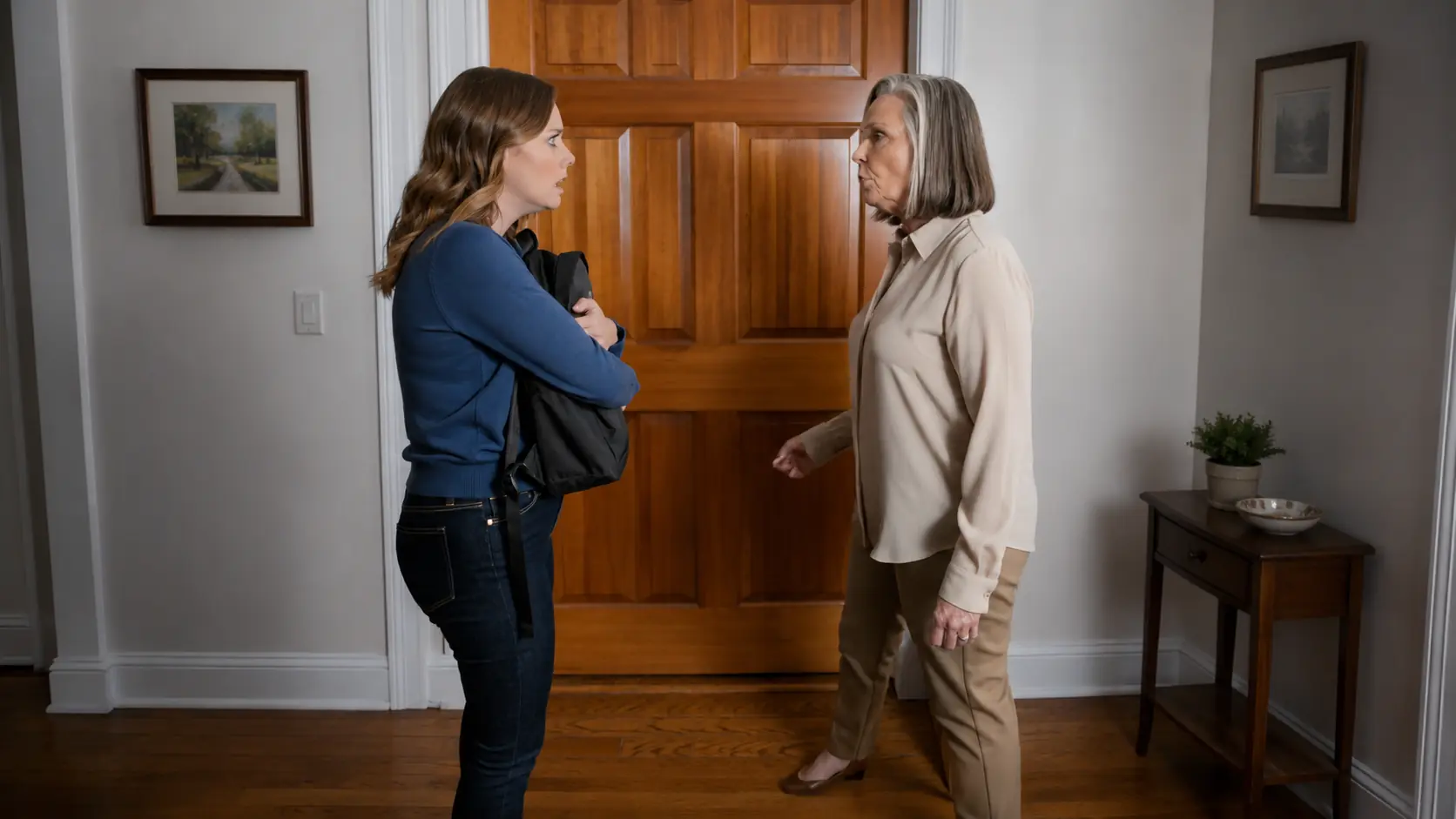
Dad finally opened the door. I thought maybe, just maybe, he would explain. Instead, he looked at the ground, not at me. That was when I knew he was not surprised. He already knew this was happening, and that changed everything.
I stood on the porch holding one of the trash bags, my entire life stuffed into black plastic. Then Mom appeared behind Dad. There was no guilt, no shame, nothing. She looked at me and said, “You’re unemployed now.”
As if that explained everything. As if losing a job somehow erased twelve years of sacrifice. I stared at her, waiting and hoping there was more. Unfortunately, there was.
Then Mom said, “We can’t afford dead weight.” Silence. Pure silence. I had spent twelve years helping them pay their mortgage, and somehow, I was the burden. That sentence stayed with me.
Then Ethan walked into the hallway, smiling. Actually smiling. Most people would feel awkward watching their sister get kicked out. Not Ethan.
He shrugged and said, “Guess adulthood finally caught up.” The same joke, different day, still ugly. I looked past them. My room was gone.
Fresh paint, new bedding, new furniture. Renovations do not happen overnight. This had been planned for weeks, maybe months. The lock change was not the betrayal. The planning was.
I asked one question. “When did you decide this?” Silence. Dad looked away again. Bad sign.
Then Mom answered, “A while ago.” There it was. Confirmation. They did not react to my job loss. They used it. Huge difference.
I drove straight to my Aunt Denise’s house. She was Dad’s older sister, the family truth-teller. Everyone hated her honesty, which usually meant she was right. I told her everything.
She listened quietly with no interruptions and no judgment. When I finished talking, Denise looked furious. Actually furious. She rarely reacted emotionally.
Then she asked, “They changed the locks?” I nodded. Silence followed. Then she muttered, “Oh no.”
It was not sympathy. It was recognition, like she knew something I did not. Denise sighed and said, “Your parents have always depended on you more than Ethan.” I laughed and told her everyone knew that.
Then she shook her head. “No, Harper,” she said. “More than you realize.” That felt important. Very important.
Three days later, Sunday dinner happened. It was family tradition, and everyone attended, even me. After what happened, I almost skipped it. Thank God I did not, because that was where the humiliation started.
Halfway through dinner, my mother sighed dramatically and told everyone, “Harper’s going through a rough patch.” Technically true, but not complete. Then Ethan added, “She’s always struggled with money.” The table nodded. Relatives nodded. Everyone nodded.
I realized they were rewriting the story. In their version, I was the burden, not the person paying the bills. My cousin Mark looked at me sympathetically. Then Ethan laughed and said, “She was basically a temporary tenant anyway.”
The room went silent because everyone knew I had lived there for twelve years. Everyone knew. Yet nobody corrected him. That hurt more than the joke.
Then Mom nodded. Actually nodded. Lies become dangerous when multiple people agree to them. Then she added, “We tried to help her.”
Tried? I nearly laughed because changing locks is not help. It is eviction. Then Aunt Denise put down her fork. That was a bad sign for them and a good sign for me.
She asked, “How much mortgage did Harper pay?” Silence. Immediate silence. Nobody wanted numbers involved. Dad jumped in quickly, too quickly, and said, “That’s not relevant.”
There it was. The panic. Innocent facts do not require protection. Only dangerous facts do. My payments had become dangerous.
Ethan leaned back in his chair, confident and smug. Then he said, “It’s not like she owned anything.” Ownership kept coming up. Nobody mentioned ownership except Ethan. That meant ownership was already on his mind, and that mattered later.
That night, I searched old emails. I was just looking and remembering at first. Then I found dozens. Dad had written, “Your payment saved us this month.” Another said, “Mortgage cleared thanks to you.”
Another and another. Apparently, I was not helping occasionally. I was helping constantly. Three weeks after being kicked out, my phone rang from an unknown number.
I almost ignored it. That would have been a big mistake. A man asked, “May I speak with Harper Lawson regarding the refinance appointment?” I froze.
Refinance? What refinance? I explained there must be a mistake. The banker paused for a long moment, then said, “Your name is listed on the file.”
My heart stopped because I knew absolutely nothing about any refinance. This was not just family drama anymore. I asked him to repeat himself slowly. Then he read the names: Dad, Mom, and me.
Again, I almost dropped the phone. I was connected to a mortgage I supposedly did not own. That night, I dug through old records, tax files, insurance papers, and old folders. Then I found them.
Documents from when I was twenty-two. The papers Dad had called simple household forms. I stared at my signature. Then another page. Then another.
I realized that twelve years earlier, I had signed something far bigger than I understood. I spread the documents across Aunt Denise’s dining table and stared at them. There it was: my signature, twenty-two years old, naive and trusting. Dad had told me they were tax forms.
They were not tax forms. Not even close. The next morning, I requested copies from the bank. When they arrived, I nearly stopped breathing.
Co-borrower support documentation. Credit qualification records. Income verification. My income. My credit score.
For twelve years, I thought I was helping. According to the bank, I was not just helping. I was one of the reasons they got approved at all. Every sacrifice suddenly felt much bigger.
The banker explained everything in simple, professional, brutal language. At twenty-two, my credit profile helped secure better mortgage terms. Interesting, because while Ethan was spending money, I was helping build the foundation under that house without even realizing it. Then one thought hit me.
If my name helped them get the house, how could they throw me out of it so easily? Then I added the numbers. Month after month, year after year, twelve years of mortgage payments, emergency payments, and late-payment rescues. The total was not small. Not even close.
I stared at the final number and understood something painful. I had not delayed my future by accident. I had been financing someone else’s. Then I found something unexpected: an old text thread from years before.
Dad had written, “Don’t mention this payment arrangement to Ethan.” I froze because secrecy means awareness. Awareness means intent. Then a worse thought appeared.
What if Ethan knew more than he pretended? His smile on the day I was kicked out felt different now. I checked social media, a bad habit with good timing. Ethan’s girlfriend, Breanna, had posted photos of fresh paint in my old room.
The caption read, “Can’t wait to make this house ours.” I had lost my room three weeks earlier, yet somehow they were already talking about ownership. For the first time, I realized I had not been replaced. I had been planned around.
I called the bank again, this time asking questions. Lots of questions. Then the representative accidentally revealed something huge. The refinance was not routine. It was designed to remove names, specific names, including mine.
Getting kicked out looked a lot less personal and a lot more strategic. Then I saw the proposal. My parents would refinance, the mortgage would be rewritten, and ownership would be transferred later. Ethan would become successor.
There it was. The plan. Simple, clean, and cruel. Use my credit. Use my money. Use my loyalty. Then erase me.
That hurt more than changing the locks. Then I found the document that made me sick. It was signed by Dad, an official statement with one sentence highlighted. “Harper Lawson made no material contribution to the property.”
I actually laughed, a dark laugh. I had spent twelve years sacrificing for that house. Twelve years. With one sentence, Dad had tried to erase all of it.
Lies are dangerous, but documented lies are gifts. I knew exactly how this story was going to end. For two weeks, I gathered everything. Bank records, emails, texts, mortgage statements, photos, screenshots, and receipts.
Truth leaves a paper trail. By the end of those two weeks, I had a folder thick enough to destroy every story my family had told. I did not know it yet, but they were about to invite me to a meeting. They thought I was coming alone.
Three days later, Mom called. After changing the locks, she suddenly wanted to talk. She said, “Let’s handle this like adults.” Family translation: we need something. Judging by her tone, they needed it badly.
The meeting happened at my parents’ house, ironically the same house I supposedly had no connection to. Mom, Dad, Ethan, Breanna, and one attorney were all waiting. Everyone was smiling too hard. Bad sign.
Then the attorney slid documents across the table. Release forms, claim waivers, acknowledgments. Nobody had even greeted me yet. Straight to paperwork. Straight to signatures. That told me everything.
Ethan already had champagne chilling. Actual champagne. Confident people celebrate outcomes. Arrogant people celebrate assumptions. Ethan assumed this meeting was over before it started. He was wrong. Very wrong.
Mom grabbed my hand and immediately started crying. Classic. Then she said, “Please don’t destroy this family.” Families always become sacred the moment consequences arrive. Not before. Never before.
I knew exactly how this meeting would go. Dad leaned forward with his serious voice and said, “You never owned part of this house.” Interesting statement, especially because I had documents proving otherwise. Then he added, “Just sign and move on.”
I almost laughed because Dad still thought I knew nothing. Then I placed my folder on the table. Thick. Heavy. Twelve years thick.
Everyone’s confidence vanished immediately. Mom stopped crying. Ethan stopped smiling. Dad stopped talking. The room felt different.
I opened the folder slowly. Bank statements, mortgage records, emails, and texts sat inside. Then I read one message aloud, Dad’s message. “Your payment saved the mortgage this month.” Then another. And another.
The room grew quieter with every page. Then I looked directly at them and said, “You changed the locks on a woman who paid for the door.” Silence. Pure silence. Absolute silence.
Then Aunt Denise cleared her throat. She had not come alone. The attorney sitting beside her was not there by accident. Apparently, I was not the only person preparing.
Then the banker joined by phone. The refinance was frozen. The file was flagged. Ownership claims were unresolved. Ethan’s face went white because suddenly his future house was not his. Not anymore.
Six months later, the settlement was finalized. The refinance collapsed. The house was sold. Dad cried. Mom blamed everyone.
Ethan lost the inheritance he thought was guaranteed. As for me, I took my settlement, the money connected to twelve years of payments, and bought a condo. My condo. My name. My keys. My door.
No roommates. No guilt. No family leverage. Just mine. Sometimes I still think about the day my key stopped working.
The day they changed the locks. They thought unemployment made me powerless. They thought they could erase twelve years. They thought nobody would ever know.
Then a banker called the wrong number, and everything changed. Three weeks after my parents threw me out of a house they claimed was not mine, the bank proved something they had spent twelve years hiding. I was not simply helping pay for the house. I was one of the reasons they got to keep it.