The last thing my husband said before he died was, “I’m the reason Eddie stopped writing.”
For a moment, I thought the morphine had confused him.
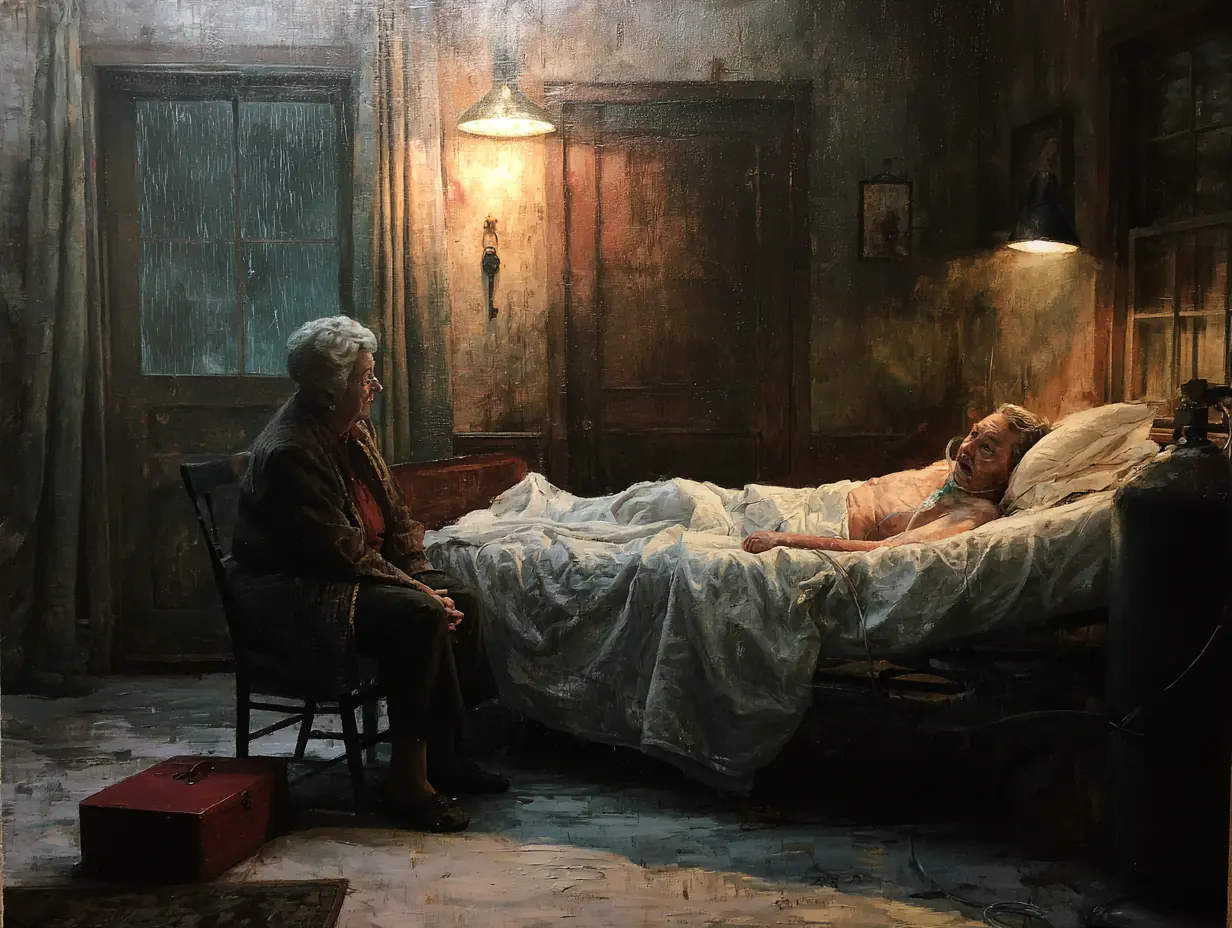
Kenneth lay propped against white pillows in the hospital bed we had moved into our living room, his body reduced to angles beneath the blanket. Rain tapped against the windows, and the oxygen machine hummed beside us with the steady patience of something that did not understand a marriage was about to be rewritten.
“What did you say?” I asked.
His eyes opened.
They were still the same soft gray eyes I had trusted for fifty-one years, but fear had changed them. He looked like a man standing in the doorway of a room he had kept locked his entire life.
“The soldier,” he whispered. “Edward Donnelly.”
The name struck with enough force to make me grip the bed rail.
I had not spoken it aloud in decades.
Not to Kenneth.
Not to our children.
Not even to myself when memory came in the quiet hours before dawn, carrying the smell of paper, fountain-pen ink, and the dusty summer of 1969.
“How do you know that name?”
Kenneth turned his face toward the darkened window.
“I found the letters.”
My mouth went dry.
“What letters?”
“The ones he sent after he was wounded.”
The oxygen machine continued humming.
I stood so quickly that the chair behind me fell backward.
“No.”
Kenneth flinched.
“Margaret—”
“No. His letters stopped.”
“I know.”
“He stopped writing.”
“No.”
The word came out so quietly that it was almost swallowed by the rain.
I stared at the man I had loved since I was twenty-five years old.
“What did you do?”
Kenneth closed his eyes.
“I was afraid.”
“Of a man fighting a war six thousand miles away?”
“Of the part of you that was still waiting for him.”
I stepped back from the bed.
He lifted one trembling hand toward me.
“Please.”
I did not take it.
For fifty-five years, I had carried a simple sorrow.
A young soldier had written to me from Vietnam. Then his letters had stopped. I had imagined death, injury, forgetfulness, another woman, or the slow erosion of a connection that had meant more to me than perhaps it had meant to him.
All those possibilities hurt.
But they belonged to life.
This belonged to betrayal.
“How many?” I asked.
Kenneth’s hand fell back to the blanket.
“Seven.”
The number was obscene in its precision.
“You stole seven letters from me?”
“I didn’t think of it that way.”
“How did you think of it?”
“I thought I was protecting what we were building.”
“We weren’t building anything when Eddie stopped writing.”
Kenneth’s face tightened.
“I knew you before we dated.”
I shook my head.
“You saw me at church.”
“I noticed you.”
“That is not knowing me.”
“I asked your cousin about you. I knew you were waiting for someone overseas.”
My knees weakened.
I lowered myself into the chair without taking my eyes from him.
“What year?”
“Seventy-one.”
“That was four years before we married.”
“I know.”
The betrayal stretched backward through time, longer than our courtship, longer than our marriage, longer than the lives of our children.
“You were taking my mail before I even loved you.”
“I only took the letters from him.”
“Only?”
Kenneth began coughing.
I watched him struggle for breath and hated myself because part of me did not move to help.
Then instinct defeated anger.
I adjusted the oxygen tube and pressed the call button for the hospice nurse. Kenneth’s coughing eased before she arrived, but his face had turned gray.
He looked at me with tears in his eyes.
“I wanted to tell you.”
“When?”
“Every year.”
“That is not an answer.”
“I thought about it when Michael was born. When we moved into this house. When our girls got married.”
“Yet somehow you managed not to.”
“I was ashamed.”
“You were comfortable.”
He closed his eyes again.
The nurse entered, checked his breathing, and asked whether he wanted additional medication.
Kenneth shook his head.
“I need to talk to my wife.”
The nurse looked at me.
I must have appeared frightening because she touched my elbow and quietly asked whether I needed a moment outside.
“No,” I said. “I have needed this moment for fifty-five years.”
She left.
Kenneth’s breathing steadied.
“Where are the letters?” I asked.
His eyes opened.
“In the garage.”
“Where?”
“The red toolbox beneath the workbench.”
My heart pounded.
“You kept them?”
“I couldn’t destroy them.”
“But you could hide them.”
“Yes.”
The honesty was almost unbearable.
“Did you open them?”
He hesitated.
That hesitation answered me.
“You read them.”
“Some.”
“All of them?”
“Yes.”
I stood again.
“Margaret, please understand. I was twenty-three. I loved you before you even knew me.”
“You did not love me. You wanted me.”
“I wanted a life with you.”
“So you stole the choice.”
He began crying.
I had seen Kenneth cry only a handful of times.
When his father died.
When our youngest daughter nearly drowned in a lake.
When our first grandchild was born.
His tears had always moved me toward him.
That night, they felt like another demand.
“What did Eddie say?” I asked.
“He had been wounded.”
I pressed my fist against my mouth.
“He was alive.”
“Yes.”
“He tried to explain.”
“Yes.”
“What else?”
Kenneth’s voice broke.
“He said he loved you.”
The room seemed to tilt.
For fifty-five years, I had believed Eddie’s silence was the answer to a question neither of us had been brave enough to ask.
Now I learned an answer had existed.
A man had simply taken it from me.
“I need the letters.”
“Don’t leave.”
“I am going to the garage.”
“I may not have much time.”
I looked at him.
“Neither did I.”
The cruelty landed.
Kenneth closed his eyes.
I went outside.
The garage smelled of motor oil, damp wood, and the peppermint gum Kenneth had chewed while working on old radios. Tools hung in careful rows above the workbench. Even dying, he had left everything organized.
The red toolbox sat beneath a stack of folded tarps.
My hands shook so badly that I dropped the key twice before getting the lock open.
Inside were seven envelopes tied together with a faded blue ribbon.
My name appeared on each one.
Miss Margaret Sullivan.
The handwriting was unmistakable.
Eddie’s letters from Vietnam had always leaned slightly to the right, every capital M broad and deliberate. He wrote as though paper were scarce and every word had to be given enough room to breathe.
The envelopes had been opened.
Kenneth had sliced them neatly along the top.
I sat on the cold garage floor and unfolded the first letter.
March 4, 1971
Dear Maggie,
I don’t know what they have told anyone back home, so I will begin with the plain truth. I was shot outside Quảng Trị. The bullet went through my shoulder and caused more damage than seems reasonable for something so small. I am in a hospital in Germany now. They say I will keep the arm, though I may never throw a baseball properly again. I know that is not the most important thing, but it was the first question I asked.
I stopped reading.
A sob tore from my chest.
I pressed the letter against my mouth and tried to breathe.
Then I continued.
I have thought about your last letter every day. You wrote about your mother burning the Sunday roast because she fell asleep listening to the radio. You apologized for writing about something ordinary. Please never apologize for ordinary things. Ordinary things are what we are trying to survive long enough to return to.
The second letter had been written three weeks later.
His handwriting was shakier.
He described surgery, nightmares, and a nurse who played Motown records too loudly after midnight. He asked whether the lilacs had bloomed behind my parents’ house.
The third letter contained the words Kenneth had mentioned.
Maggie, this may be unfair because we have never stood in the same room, but I believe I love you. Maybe it is not the kind of love people can build a house on yet. Maybe it is only the kind that keeps one person alive while another waits. But it is real to me.
The fourth letter said he had received no reply.
The fifth apologized for burdening me.
The sixth said he had learned I was seeing someone from Saint Matthew’s parish.
Kenneth.
The seventh was written from Walter Reed Army Medical Center in Washington, D.C.
Dear Maggie,
I will not write again after this because I think your silence is an answer, and I want to respect it even if I do not understand it. I hope the man you have chosen is good. I hope he listens when you speak about nothing at all. I hope he knows that those ordinary details are not small. They are a life.
I sat on the garage floor until morning.
When I returned to the living room, the nurse stood beside Kenneth’s bed.
The pauses between each breath were longer.
“He’s very close,” she whispered.
I looked at the man who had shared my bed for more than half a century.
I remembered his hand at the small of my back during crowded parties. The way he peeled apples in one unbroken spiral. The nights he stayed awake with feverish children so I could sleep.
I remembered mortgages, vacations, funerals, arguments, and fifty-one Christmas mornings.
Then I remembered seven stolen letters beneath a workbench.
Love and betrayal occupied the same body.
I sat beside him.
“Kenneth.”
His eyelids fluttered.
“I found them.”
A tear slipped from the corner of his eye.
“I’m sorry.”
“Why did you keep them?”
“So someday you could know.”
“You made sure someday came after you could no longer face the consequences.”
His lips trembled.
“Yes.”
That answer was the closest thing to accountability he could offer.
“Did you ever contact him?”
“No.”
“Did you know where he was?”
“For a while.”
“How?”
“I asked a friend at the post office.”
The depth of planning still shocked me.
“You knew he was at Walter Reed.”
“Yes.”
“And you did nothing.”
“I thought if you went to him, I would lose you.”
“You never had the right to decide.”
“I know.”
“No. You know now because you are dying.”
He looked at me.
“I knew then.”
That was worse.
The nurse quietly left the room.
Kenneth reached toward me again.
This time, I took his hand.
Not because he deserved comfort.
Because fifty-one years of love had trained my body to respond before judgment.
“I did love you,” he whispered.
“I know.”
“I made you happy.”
“Sometimes.”
“We had a good life.”
“Yes.”
“Does this erase it?”
I looked at him.
“No.”
Relief moved across his face.
“But it changes it.”
His relief disappeared.
“How?”
“I don’t know yet.”
His breathing became shallow.
“Will you forgive me?”
It would have been easy to lie.
Dying people are offered lies the living are expected to carry afterward.
I could not do it.
“Not tonight.”
Fear entered his eyes.
“I don’t have another night.”
“I know.”
He began to cry.
I held his hand while he died.
His last breath came just after sunrise, as pale light moved across the living-room floor and touched the red toolbox I had brought inside.
Our oldest daughter, Ellen, arrived twenty minutes later.
She found me sitting beside her father with seven letters spread across my lap.
“Mom?”
I looked up.
She saw Kenneth’s stillness, then the letters.
Her face collapsed.
“Oh, Dad.”
She moved toward the bed.
I let her grieve before saying anything.
By noon, all three of our children had gathered.
Michael stood near the fireplace with both hands in his pockets. Ellen sat beside Kenneth’s body until the funeral home arrived. Our youngest, Susan, cried in the kitchen while making coffee no one drank.
I considered hiding the truth.
That would have been another inheritance from their father.
Instead, I placed the letters on the dining-room table.
“There is something you need to know.”
Michael read the first letter standing up.
By the third, he sat down.
Susan stopped crying.
Ellen looked at me with horror.
“Dad did this?”
“Yes.”
“Are you sure?”
“He confessed.”
“Why would he keep them?”
“He said he wanted me to know someday.”
Michael pushed back from the table.
“That doesn’t make sense.”
“It makes perfect sense if he wanted control and absolution.”
“Dad wasn’t controlling.”
I looked at my son.
“You knew him as your father.”
“And you knew him as your husband.”
“Yes.”
“For fifty-one years.”
“Yes.”
Michael picked up the final letter.
“He loved you.”
“Your father?”
“Yes.”
“I know.”
“Then why are you talking like he was some kind of monster?”
“I am not.”
“It sounds like you are.”
Susan turned toward him.
“He stole her mail.”
“He was young.”
“For seven letters?”
Michael looked at me.
“Did Dad make you marry him?”
“No.”
“Did he force you to stay?”
“No.”
“Then those years were real.”
“Yes.”
“Why tell us this now?”
The accusation hurt.
“Because secrets grow teeth.”
Michael shook his head.
“Or because you’re angry and want us to be angry too.”
He left before I could answer.
At the funeral three days later, people described Kenneth as honest.
Dependable.
A man of integrity.
Each word entered me like grit beneath the skin.
I stood beside his coffin and accepted condolences while the letters waited inside my bedroom dresser.
Michael barely spoke to me.
After the burial, he cornered me near the church hall.
“Don’t tell anyone else.”
I stared at him.
“Excuse me?”
“Dad deserves his reputation.”
“What about the truth?”
“He made one mistake.”
“One that lasted fifty-five years.”
“He was scared.”
“So was Eddie.”
“Who cares about Eddie?”
The question stunned me.
“I do.”
Michael’s face hardened.
“You’re acting like you lost some great love. You never even met him.”
“Letters can make someone real.”
“Dad was real.”
“Yes.”
“He was there.”
“Yes.”
“He raised us.”
“Yes.”
“Then stop punishing him after death.”
I looked at my son and saw Kenneth in his certainty.
“I am not punishing him.”
“What do you call this?”
“Understanding my own life.”
Michael walked away.
The funeral hall was filled with photographs.
Kenneth holding babies.
Kenneth coaching baseball.
Kenneth beside me on our fortieth anniversary cruise.
The pictures were not false.
But neither were the letters.
That contradiction became the landscape of my grief.
In the weeks after the funeral, condolences slowed.
Casseroles stopped arriving.
The house became quiet.
I read Eddie’s letters every morning at the kitchen table.
Then I read the letters I had kept from him.
One hundred and twelve, stored in a hatbox behind winter blankets.
Most were ordinary.
He wrote about rain soaking through his boots, a corporal who snored, canned peaches, and the moon appearing strangely bright above a place where darkness never felt complete.
He asked about my job at the library.
My parents.
The blue dress I mentioned wearing to my cousin’s wedding.
I had answered with stories about church picnics, neighborhood gossip, books, and my terror that everyone else understood adulthood while I remained a child pretending.
He never made my small world feel small.
That was what I had loved.
Kenneth was a good listener while we dated.
After marriage, he preferred solutions.
If I was unhappy, he repaired something.
If I was lonely, he suggested hosting people.
If I questioned a decision, he explained why his choice was practical.
I had mistaken his certainty for safety.
Perhaps it had been both.
Two months after his death, I began searching for Eddie.
At first, I told no one.
I typed his full name into search engines and found dozens of Edward Donnellys. Obituaries, doctors, accountants, and one man arrested for stealing copper wire.
The return address on his final letter led to old military records I could not easily access.
I called the Department of Veterans Affairs.
A woman explained privacy rules in a voice so practiced that compassion had been polished out of it.
“I’m not asking for medical information.”
“We cannot confirm whether an individual receives services.”
“I have his Army serial number.”
“That does not change the policy.”
“Can you forward a letter?”
“No.”
I hired a private investigator named Nina Alvarez.
She was forty, blunt, and operated from an office above a bakery.
When I explained the situation, she did not romanticize it.
“You’re looking for a man you knew through letters fifty-five years ago.”
“Yes.”
“He may be dead.”
“I know.”
“He may not want contact.”
“I know.”
“He may have a wife.”
“I know.”
“What exactly do you want?”
The answer changed every time I asked myself.
“I want him to know I did not ignore him.”
Nina studied me.
“That’s reasonable.”
“Is it?”
“It’s specific. Reasonable is harder when people want history rewritten.”
“I don’t want that.”
“You sure?”
“No.”
She smiled faintly.
“Honesty helps.”
Nina found his military record in four days.
Edward Joseph Donnelly, born in 1948, Army infantry, Purple Heart, discharged in 1972.
He married Carol Ann Mercer in 1978.
Two children.
Carol died in 2015.
Eddie still lived in Pennsylvania.
“Where?”
“I won’t give you his home address.”
I bristled.
“I paid you.”
“You paid me to locate him, not invade him.”
“How do I contact him?”
“He volunteers at a VFW post three mornings a week.”
She wrote down the address.
“Call first.”
I folded the paper.
“I was thinking of going.”
“That may be overwhelming.”
“Fifty-five years is already overwhelming.”
“Ms. Brennan—”
“Maggie.”
“Maggie, surprise reunions sound beautiful in movies. In life, people have heart conditions.”
I laughed despite myself.
“I’m seventy-seven. So does everyone I know.”
She did not laugh.
“Call first.”
I promised.
Then I did not.
The drive to Pennsylvania took five hours.
I left before dawn on a Thursday in October, carrying Eddie’s seven letters and a photograph of myself at nineteen.
The VFW post occupied a low brick building near a tire store and a church. An American flag snapped in the wind above the entrance.
I sat in my car for twenty minutes.
A man using a walker entered.
Two younger veterans smoked near the side door.
I nearly drove away.
Then I remembered the final line of Eddie’s last letter.
I hope he listens when you speak about nothing at all.
I went inside.
The lobby smelled of coffee and floor wax.
A gray-haired man behind a desk looked up.
“Can I help you?”
“I’m looking for Edward Donnelly.”
“You family?”
“No.”
He waited.
“An old friend.”
“Name?”
“Maggie Brennan.”
The desk man’s expression changed slightly.
“Hold on.”
He disappeared through a doorway.
I heard low voices.
A chair scraped.
Then Eddie entered.
He looked at me with eyes I somehow recognized even though I had never seen them in person.
Older eyes.
Weathered.
But with the same steady kindness that had come through in his letters, in the way he had written about the men in his unit like they were brothers, and in how he had asked questions I never fully answered because I did not know how.
We stood frozen.
The desk man quietly backed away.
Eddie’s face shifted from confusion to disbelief and then recognition, as if he were assembling a puzzle he had carried for more than half a century.
“Maggie?”
It was not quite a question.
His voice was rough.
I nodded because I could not find mine.
He took one step toward me, then stopped, uncertain whether he had the right to close the distance.
“I’ve thought about you,” he said. “Off and on, all these years.”
My hands began shaking.
“Your letters stopped.”
It was a foolish thing to say.
But it was the truth I had carried longest.
Eddie closed his eyes.
“I know.”
“No,” I said. “You don’t.”
I opened my bag and removed the seven envelopes.
The blood drained from his face.
He recognized them.
“Where did you get those?”
“My husband.”
Eddie stared at me.
“He kept them.”
The desk man looked between us.
“I’ll make coffee.”
He left.
Eddie touched the top envelope but did not take it.
“I sent these.”
“I know.”
“You never received them.”
“No.”
He lowered himself into a chair.
For a moment, I feared Nina had been right about his heart.
“Are you all right?”
He nodded.
“Sit.”
I sat opposite him.
Eddie looked at the letters.
“Your husband intercepted them?”
“Yes.”
“How?”
“He never explained every detail.”
“Did he work at the post office?”
“No. His cousin did.”
Eddie leaned back.
“Jesus.”
“He confessed before he died.”
“When?”
“Two months ago.”
“I’m sorry.”
The sincerity in his voice nearly undid me.
“You’re sorry for him?”
“For you. For losing someone after fifty-one years and finding out you didn’t know everything.”
The exactness of his compassion reminded me why I had driven there.
“He said he was afraid I would choose you.”
Eddie looked down.
“We had never met.”
“I know.”
“Would you have?”
“I don’t know.”
He nodded.
“That’s the honest answer.”
The desk man returned with coffee and directed us to a small break room.
Photographs of service members covered the walls. A folded flag rested in a glass case.
Eddie wrapped both hands around the cup.
“Why did you stop after the seventh?” I asked, though I knew from the letter.
“You didn’t answer.”
“You could have called.”
“I tried once.”
My heart tightened.
“When?”
“Summer of seventy-one.”
“What happened?”
“A man answered.”
“Kenneth?”
“I suppose.”
“What did he say?”
Eddie’s mouth tightened.
“He said you were engaged.”
“We weren’t.”
“He said you didn’t want me contacting you.”
I closed my eyes.
Kenneth had done more than steal letters.
“He said you were frightened by what I wrote from the hospital. That you wanted a normal life.”
“That sounds like something Kenneth would believe.”
“I asked to hear it from you.”
“What did he say?”
“He told me not to be selfish.”
I felt sick.
“I’m sorry.”
“You didn’t do it.”
“But you believed I did.”
“Yes.”
“Did you hate me?”
“No.”
“Why not?”
“I hated myself.”
The answer surprised me.
“I thought I had frightened you. The letters from the hospital weren’t easy.”
“They were honest.”
“I described nightmares.”
“You were wounded.”
“I wrote that I loved you.”
“I wish I had read it then.”
Eddie looked toward the photographs.
“I don’t know if that would have helped either of us.”
“Why?”
“Because I was not ready to be loved.”
The words were quiet.
“I wanted you, Maggie. But I wanted what you represented too. Your letters were home, even though I had never stood in your home.”
“I would have waited.”
He shook his head.
“You think that because you know how your life turned out.”
“I thought it then.”
“You were twenty.”
“So were you.”
“And I came home angry, addicted to pain pills, and unable to sleep without a light on.”
His voice sharpened.
“I put my fist through my mother’s kitchen wall because a car backfired. I nearly killed a man in a bar because he touched my shoulder.”
I did not look away.
“You needed help.”
“Yes.”
“You didn’t deserve silence.”
“No.”
We sat with the truth.
After several minutes, Eddie asked, “What was he like?”
“Kenneth?”
“Yes.”
The question disarmed me.
I could have described only the betrayal.
Instead, I told the whole truth.
“He was dependable. He never missed work. He coached our son’s baseball team and made pancakes shaped like animals for the grandchildren.”
Eddie smiled faintly.
“Good pancakes?”
“Terrible. The children loved them.”
“Did he make you happy?”
“Yes.”
“Then I’m glad.”
I stared at him.
“How can you say that?”
“Because your life mattered even if I wasn’t in it.”
His kindness made my anger feel crude.
“I’m not glad he stole your letters.”
“Neither am I.”
“I’m furious.”
“You should be.”
“I don’t know what parts of my marriage were mine anymore.”
“All of them.”
I shook my head.
“He manipulated the beginning.”
“He did.”
“Then everything after came from a lie.”
“No.”
Eddie leaned forward.
“He stole a choice. That is serious. But he did not manufacture fifty-one years from nothing.”
“You sound like my son.”
“Your son may be right about one thing without being right about everything.”
I almost laughed.
“You still ask questions as if you know me.”
“I remember you.”
“You remember a girl.”
“Some people spend a lifetime hiding the person they were. You walked in carrying my letters. I suspect the girl is still nearby.”
I looked down.
“What happened to you after Walter Reed?”
Eddie told me about Carol.
She was a nurse, though not assigned directly to him. They met in a physical therapy room after he threw a cane at an orderly.
“She picked it up and handed it back,” he said.
“What did she say?”
“She said, ‘Throw it again and I’ll make you crawl to get it.’”
I laughed.
“I liked her immediately.”
They did not begin dating until years later.
Eddie worked construction, drank too much, and avoided family gatherings. Carol remained in touch through veterans’ events.
One night, after he drove drunk and hit a guardrail, she brought him to an addiction meeting.
“She saved you,” I said.
“She helped me decide whether to save myself.”
They married in 1978.
Their daughter, Louise, became a teacher. Their son, Patrick, joined the Army against Eddie’s wishes and served in Iraq.
“Carol died ten years ago,” he said. “Ovarian cancer.”
“I’m sorry.”
“So am I.”
He looked at me.
“I understand what it means to miss someone and still be angry with them.”
“Were you angry with Carol?”
“She refused treatment at the end.”
“That was her choice.”
“I know.”
“You wanted more time.”
“Yes.”
We spoke until the afternoon light changed.
Then Eddie asked me to dinner.
I said yes.
The restaurant was a small Italian place where everyone knew him. The owner hugged Eddie and called him Sergeant, though he had never held that rank.
We ate lasagna and talked about children, marriages, politics, and books.
The ease frightened me.
It felt less like meeting a stranger than resuming a conversation interrupted by war, injury, and half a century.
When Eddie walked me to my car, he said, “I’d like to see you again.”
“So would I.”
He studied my face.
“But?”
“I don’t know what this is.”
“Coffee and lasagna.”
“You know what I mean.”
“Yes.”
He placed both hands in his coat pockets.
“It doesn’t have to be anything yet.”
“I’m not trying to replace Kenneth.”
“I’m not trying to replace Carol.”
“I loved my husband.”
“I know.”
“I’m angry enough to hate him.”
“I know that too.”
Eddie looked toward the street.
“Grief is a house with more than one room.”
“Did Carol say that?”
“No. I did.”
“It sounds like something she would say.”
“It probably is. I stole most of my wisdom from her.”
I drove home after dark.
For the first time since Kenneth’s death, the house did not feel entirely empty.
That frightened me too.
Michael called the next morning.
Ellen had told him I went to Pennsylvania.
“You found him.”
“Yes.”
“You met him?”
“Yes.”
“How was he?”
The question contained accusation.
“Alive.”
“Obviously.”
“Kind.”
Michael sighed.
“Mom.”
“What?”
“Dad has been dead two months.”
“I know exactly how long.”
“You’re meeting another man.”
“I met someone I corresponded with before I knew your father.”
“That sounds like a technical defense.”
“I am not dating him.”
“Are you planning to?”
“I don’t know.”
Michael became silent.
“Did you tell him what Dad did?”
“Yes.”
“So now he thinks Dad was terrible.”
“No. Eddie has shown more compassion toward your father than you have toward me.”
“That isn’t fair.”
“No.”
Michael’s voice hardened.
“You’re rewriting our family.”
“I’m adding what was hidden.”
“Some things should stay buried.”
“Things buried alive do not stay quiet.”
He hung up.
Ellen supported me cautiously.
Susan was fascinated and wanted details.
“Was he handsome?” she asked.
“He is seventy-eight.”
“That doesn’t answer the question.”
“Yes.”
“Did you feel something?”
“Yes.”
“What?”
“Recognition.”
She smiled.
“That’s romantic.”
“No. It’s unsettling.”
“Those can be the same thing.”
My children reacted differently because each had built a different Kenneth.
Michael saw the father who taught him to drive and defended him after a school suspension.
Ellen remembered a man who criticized her first marriage until she nearly stopped visiting.
Susan had always been his favorite and avoided examining that too closely.
My truth threatened each of them differently.
Two weeks after meeting Eddie, I received a package.
Inside was a photocopy of every letter I had sent him.
He had kept them.
A note rested on top.
You may want to remember who you were before anyone made choices for you.
I spent the evening reading my younger self.
She was funny.
Naive.
Sometimes vain.
She complained about her hair, worried about disappointing her mother, and dreamed of leaving Pennsylvania though she never traveled farther than Ohio before marriage.
In one letter, I wrote:
Sometimes I think the worst thing in the world would be to wake up old and realize I chose my life because it was safe rather than because it was mine.
I stared at the sentence for a long time.
Had I chosen Kenneth because he felt safe after Eddie disappeared?
Yes.
Had I loved him?
Yes.
Had safety become another form of captivity?
Sometimes.
All truths existed together.
Eddie and I spoke by phone every few days.
We avoided romance at first.
He told me about the VFW’s leaking roof and his granddaughter’s college applications. I described my neighbor’s obsessive battle against squirrels.
We spoke about nothing.
It still mattered.
Then trouble arrived through Eddie’s daughter.
Louise called me on a Sunday evening.
“I know who you are.”
Her tone was not welcoming.
“I assume your father told you.”
“He told me a woman from his past appeared after her husband died.”
“That is accurate.”
“You’ve been calling constantly.”
“Not constantly.”
“He sounds different.”
“How?”
“Distracted.”
“I don’t want to harm him.”
“People always say that immediately before causing harm.”
I gripped the phone.
“What are you asking?”
“Leave him alone.”
“That is his choice.”
“He is vulnerable.”
“So am I.”
“That doesn’t make this healthy.”
“We are speaking.”
“You drove five hours without warning.”
She had a point.
“I should have called.”
“You should have respected that he built a life.”
“I do.”
“Then why are you trying to turn letters from Vietnam into some love story?”
Anger rose.
“I am not.”
“My mother spent forty years helping him survive the damage that happened before she met him. She held him through nightmares. She managed his drinking. She raised us while he disappeared into himself.”
“I know she mattered.”
“You don’t know anything.”
“You’re right.”
That stopped her.
“I know only what he told me.”
“And he tells the version that makes him sound healed.”
“What version would you tell?”
Silence.
Then Louise said, “He hurt her.”
My chest tightened.
“How?”
“He was unfaithful.”
I sat down.
“When?”
“Twice that we know of.”
“Did Carol forgive him?”
“She stayed.”
“That isn’t the same thing.”
“No.”
Louise’s voice broke.
“My mother loved him. But she spent her life cleaning up after his trauma while everyone called him brave.”
I closed my eyes.
“I’m sorry.”
“Don’t be. Just don’t romanticize him.”
After the call, I did not contact Eddie for three days.
He eventually called.
“Louise spoke to you.”
“Yes.”
He exhaled.
“I’m sorry.”
“Were you unfaithful to Carol?”
“Yes.”
The direct answer hurt more than I expected.
“Twice?”
“Three times.”
“Does Louise know?”
“Not about the first.”
“When?”
“Early in our marriage.”
“Why?”
“There is no good answer.”
“I did not ask for a good answer.”
“I was selfish. Angry. Drinking.”
“Those are explanations.”
“Yes.”
“Did Carol know?”
“Eventually.”
“What did she do?”
“She made me leave.”
“But you returned.”
“After a year.”
“Why did she take you back?”
“She believed I had changed.”
“Had you?”
“For a while.”
“And the other affairs?”
“Years apart. Short.”
I felt foolish.
I had imagined Eddie as the gentle boy inside the letters, preserved by silence.
But time had happened to him too.
“You allowed me to sit there praising Carol while you hid this.”
“I didn’t know how much to tell you during the first meeting.”
“That sounds familiar.”
“Maggie.”
“You said honesty mattered.”
“It does.”
“Only when convenient?”
“No.”
I stood at the kitchen window.
“What else are you hiding?”
He became silent.
The silence frightened me.
“Eddie.”
“I was arrested once.”
“For what?”
“Assault.”
“When?”
“Nineteen eighty-six.”
“Who did you hurt?”
“A man in a bar.”
“Why?”
“He made a joke about Carol.”
“How badly?”
“Broken jaw.”
“Did you go to prison?”
“Six months in county.”
I pressed my hand against the counter.
“Anything else?”
“I haven’t had a drink in thirty-two years.”
“That is good.”
“Yes.”
“But it does not answer the question.”
“No more arrests. No more affairs after ninety-one.”
“Carol stayed.”
“Yes.”
“Was she happy?”
“I hope so.”
“That is a terrible answer.”
“I know.”
We remained silent.
Then Eddie said, “You should not see me again if you’re looking for the man in those letters.”
“Are you telling me he died?”
“No. I’m telling you he did damage.”
I thought about Kenneth.
Two men.
Two hidden histories.
Both asking to be understood through the suffering that shaped them.
“What did you think I was looking for?” I asked.
“A second chance.”
“At what?”
“At us.”
“There was never an us.”
“I know.”
His voice sounded tired.
“Maybe that was why it felt safe.”
I ended the call.
For several days, I regretted finding him.
Not because Louise had destroyed an illusion.
Because I realized how badly I had needed one.
The discovery of Kenneth’s betrayal made me want Eddie to be innocent.
If Eddie remained noble and gentle, then perhaps Kenneth had stolen a perfect life from me.
But Eddie was not a perfect life.
He was a man who survived war and then wounded people who loved him.
Kenneth had not stolen certainty.
He had stolen possibility.
Those were not the same.
I returned to therapy for the first time since my mother died.
My therapist, Dr. Helen Park, was younger than my children and refused to let that make her timid.
“You want to decide which man was good,” she said.
“Is that unreasonable?”
“It may be impossible.”
“Kenneth betrayed me.”
“Yes.”
“Eddie betrayed Carol.”
“Yes.”
“So perhaps they were both terrible.”
“Perhaps they were both people who caused serious harm.”
“That sounds like softer language.”
“It is more precise.”
“What is the difference?”
“Calling someone terrible can become a way to avoid grieving the good.”
I disliked her immediately.
That was how I knew she might help.
Over several sessions, I spoke about Kenneth.
His habit of checking the doors three times before bed.
His refusal to apologize without explaining.
The surprise trip he arranged for our twenty-fifth anniversary.
The way he held my mother’s hand while she died.
The letters beneath the workbench.
“Can I forgive him after death?” I asked.
“Yes.”
“Should I?”
“That is not my decision.”
“What would forgiveness mean?”
“What do you think it means?”
“Excusing him.”
“Then perhaps choose another definition.”
“Such as?”
“Deciding how much room the harm gets in the rest of your life.”
I thought about Eddie.
“Does forgiving Kenneth require letting go of what might have happened?”
“No.”
“It feels disloyal to wonder.”
“To whom?”
“Everyone.”
Dr. Park smiled faintly.
“That is too many people to satisfy.”
A month passed before I called Eddie again.
He answered on the first ring.
“Maggie.”
“I’m not looking for the boy in the letters.”
“All right.”
“I’m not looking for a replacement husband.”
“All right.”
“I’m not sure I trust you.”
“That makes sense.”
“Your daughter had a right to warn me.”
“Yes.”
“You should have told me before she did.”
“Yes.”
His lack of defense made it difficult to remain angry.
“What do you want from me?” I asked.
“Conversation.”
“Only that?”
“I don’t know.”
“At least that is honest.”
“I’m trying.”
“Trying is not the same as doing.”
“No.”
We agreed to meet halfway at a café in Maryland.
The reunion felt different.
No frozen recognition.
No mythology.
Eddie arrived late because traffic stopped near Baltimore.
I noticed irritation before affection.
That felt healthy.
We spoke about Carol.
Not the saint Eddie had described the first day, but the real woman.
She loved mysteries, hated camping, and once threw his clothes onto the lawn after learning about an affair.
“She should have left me,” he said.
“Do not take away her choice by deciding that now.”
He looked surprised.
“You sound like Louise.”
“She is intelligent.”
“She got that from Carol.”
“Perhaps some from you.”
“Not the best parts.”
“You don’t get to claim only your failures either.”
He studied me.
“You defend people even when you’re angry.”
“I was married a long time.”
“So was I.”
At the end of lunch, Eddie asked whether he could hold my hand.
The question moved me more than if he had simply taken it.
“Yes.”
His hand was warm, rough, and unfamiliar.
No lightning.
No return to youth.
Just two elderly people sitting in a café, allowing contact after a lifetime of distance.
We began meeting every few weeks.
Louise remained suspicious.
Patrick was more welcoming.
He called me “Dad’s pen pal” and asked whether Eddie had always been stubborn.
“Yes.”
“Good. I was afraid war did that.”
Eddie and I visited museums, parks, and bookstores.
We also argued.
He disliked my tendency to plan every hour. I disliked his habit of arriving late.
Once, he canceled dinner because a veteran at the VFW was in crisis and needed help.
I accused him of treating me as optional.
He accused me of believing every delay was abandonment.
Both accusations contained truth.
“Are we too old for this?” I asked.
“For dinner?”
“For whatever this is.”
“Too old to be frightened?”
“No one is too old for that.”
He smiled.
“Then probably not.”
Michael refused to meet him.
When I invited Eddie to Thanksgiving, Michael threatened not to attend.
“He does not belong in Dad’s house.”
“It is my house.”
“You know what I mean.”
“Yes. You mean your father’s death should control the guest list.”
“That’s cruel.”
“So is treating me like a monument to your parents’ marriage.”
“He is not family.”
“Neither was Kenneth until I chose him.”
“You are comparing them?”
“No.”
“You are.”
I took a breath.
“Michael, I am not asking you to call Eddie family. I am asking you to respect that I have a life after your father.”
“You moved on in six months.”
“I have not moved on. I have moved.”
He looked at me with contempt.
“Dad was right to be afraid.”
The words stopped me.
“What?”
“If he had given you those letters, you would have left him.”
“You cannot know that.”
“You drove to Eddie immediately after Dad died.”
“Two months later.”
“That is immediately after fifty-one years.”
Anger rose.
“Your father did not hide the letters because he knew my decision. He hid them because he did not trust me to make one.”
“Maybe he knew you better than you think.”
I slapped him.
The sound stunned both of us.
Michael touched his cheek.
I had never hit any of my children.
“I’m sorry,” I whispered.
He stepped backward.
“Now I know why Dad kept things from you.”
He left.
I stood in the kitchen shaking.
The slap was not only for his words.
It carried grief, guilt, and anger he did not deserve to hold.
I called that night.
He did not answer.
I sent a message.
I had no right to touch you in anger. Nothing you said excuses what I did. I am sorry.
He did not respond.
Thanksgiving came.
Michael stayed home.
Ellen and Susan attended with their families. Eddie came carrying a pecan pie from a bakery because I had warned him not to cook.
He was nervous.
My grandchildren were curious.
Louise did not attend.
During dinner, Kenneth’s empty chair seemed visible even though we had removed it from the table.
Susan asked Eddie about Vietnam.
He answered briefly.
Ellen asked about Carol.
He spoke warmly.
No one mentioned the letters.
Then my fourteen-year-old grandson, Caleb, looked at us.
“Are you two dating?”
Everyone froze.
Eddie said, “We’re eating turkey.”
Caleb rolled his eyes.
“That’s not what I asked.”
I looked at Eddie.
“Yes,” I said. “I think we are.”
The words surprised me.
Eddie smiled.
After dinner, we stood on the porch beneath a clear sky.
“You think we’re dating?” he asked.
“Do you disagree?”
“No.”
“Then why do you sound pleased with yourself?”
“I’m seventy-eight. Being chosen for anything feels impressive.”
I laughed.
Then he kissed me.
It was gentle and brief.
I did not feel twenty again.
I felt seventy-seven.
Widowed.
Angry.
Alive.
That distinction mattered.
Michael did not speak to me for four months.
During that time, Eddie’s health began to fail.
He had chronic heart disease, something he had mentioned casually but not explained fully. A test revealed a severe blockage requiring surgery.
Louise called me from the hospital.
“He listed you as an emergency contact.”
My chest tightened.
“Is that a problem?”
“I don’t know.”
She sounded exhausted rather than angry.
“Where are you?”
“Philadelphia.”
“I’m coming.”
Eddie underwent bypass surgery the following morning.
Louise and I sat in the waiting room together.
For three hours, we spoke only about practical matters.
Then she said, “My mother would hate this.”
I looked at her.
“Me?”
“All of it.”
“Did she know about the letters?”
“Yes.”
That surprised me.
“When?”
“Before she died.”
“What did Eddie tell her?”
“Everything.”
“Did she resent me?”
“No.”
Louise looked down at her hands.
“She resented that he kept an ideal version of you in his mind.”
I felt shame.
“I did the same with him.”
“I know.”
“How?”
“He told me.”
The surgery board changed from IN PROCEDURE to RECOVERY.
We both exhaled.
Louise continued.
“My mother once said imaginary people are easy to love because they never leave dishes in the sink.”
I smiled.
“She sounds wise.”
“She was furious when she said it.”
“Wisdom often sounds that way.”
Louise looked at me for a long time.
“I don’t want him hurt.”
“Neither do I.”
“And I don’t want my mother erased.”
“She won’t be.”
“You cannot promise that.”
“No.”
I corrected myself.
“I will not ask him to erase her.”
“That is different.”
“Yes.”
When Eddie woke, he saw both of us beside his bed.
“Am I dead?” he asked.
“Not yet,” Louise said.
“Maggie and you in the same room peacefully suggests otherwise.”
She kissed his forehead.
“Do not ruin it.”
Recovery took months.
I stayed in Pennsylvania for several weeks, renting a small apartment near Eddie’s home.
Helping him exposed the reality beneath romance.
He was impatient.
He refused assistance, then complained no one anticipated his needs.
I discovered he left socks everywhere and watched television too loudly.
He learned I reorganized cupboards without permission and became furious when plans changed.
We were not young lovers reclaiming destiny.
We were old people with scars, habits, medications, and adult children monitoring our judgment.
It was better than destiny.
It was real.
During recovery, Eddie received a package from an unknown sender.
Inside were photocopies of letters I had written to him.
Not the copies he already kept.
These had notes written in Kenneth’s handwriting along the margins.
Eddie called me immediately.
I drove over.
He spread the pages across the table.
On one letter, Kenneth had underlined a sentence where I described feeling invisible at home.
Beside it, he wrote:
I will make her feel necessary.
On another, I joked that I wanted a husband who would never disappear without explanation.
Kenneth wrote:
She needs certainty.
My skin crawled.
“Where did these come from?” Eddie asked.
There was no return address.
I checked the packaging.
The postmark came from my hometown.
Michael.
I called him.
He answered this time.
“Did you send the copies?”
“Yes.”
“How did you get them?”
“Dad had another box.”
My heart pounded.
“Where?”
“In his office storage unit.”
“What was inside?”
“Letters. Notes. Photographs.”
“Why didn’t you tell me?”
“I found them last week.”
“What notes?”
Michael became silent.
“What did your father do?”
“He researched Eddie.”
Eddie’s face tightened.
“How?”
“Military contacts. Public records. He kept newspaper clippings about arrests and drinking.”
The timeline became clear.
Kenneth knew about Eddie’s troubles.
Perhaps he had used them to justify his choice.
“Anything else?” I asked.
Michael’s voice broke.
“Dad paid someone.”
“For what?”
“To keep Eddie away.”
Eddie stood.
“What?”
Michael continued.
“There are canceled checks to a man named Robert Hanley.”
Eddie gripped the table.
“I know that name.”
“Who is he?” I asked.
“My former commanding officer.”
The room chilled.
After Eddie returned from Walter Reed, Hanley helped him find work and later introduced him to the construction company.
“What did Kenneth pay him to do?”
“I don’t know,” Michael said.
“But the checks continued for nine years.”
Eddie sat down slowly.
I remembered his statement that he learned I had married.
“Did Hanley discourage you from contacting me?” I asked.
Eddie looked sick.
“He did more than that.”
“What?”
“In seventy-four, I was going to drive to your town.”
“Before I met Kenneth properly.”
“Yes.”
“Why didn’t you?”
“Hanley told me you had a baby.”
I stopped breathing.
“He said what?”
“That you married the man from church and had a child. He said you wrote asking me never to contact you.”
“I had no child until nineteen seventy-seven.”
“I know that now.”
Kenneth had not simply hidden letters.
He had hired someone Eddie trusted to construct a false life for me.
“How much did he pay Hanley?” Eddie asked.
Michael named the amounts.
The first was small.
Later checks became larger.
“Why nine years?” I asked.
Michael spoke quietly.
“One note says Hanley began blackmailing Dad.”
The twist widened.
Kenneth’s original crime had trapped him too.
Hanley threatened to expose the stolen letters and lies unless Kenneth paid.
My husband had spent the first decade of our marriage buying silence from another man.
“Did he stop because Hanley died?” Eddie asked.
“Yes.”
Hanley died in 1980 in a hunting accident.
Eddie looked toward the window.
“I went to his funeral.”
I placed a hand on his shoulder.
He pulled away.
“Don’t.”
“I’m sorry.”
“He was like a brother.”
“I know.”
“No, you don’t.”
His anger was not at me, but I stood closest.
“He saw me nearly die. He helped carry me to evacuation.”
“And he betrayed you.”
“For money.”
Eddie paced.
“What kind of man does that?”
The question could have been asked about both our husbands, ourselves, or anyone who turned fear into permission.
Michael said he would bring the box.
He arrived the next day.
It was the first time he met Eddie.
They stood in the doorway studying each other.
Michael resembled Kenneth strongly.
Eddie noticed.
“You’re his son.”
“Yes.”
Michael placed the box on the table.
“I’m sorry.”
“You didn’t do it,” Eddie said.
“I defended him.”
“So did people who loved me.”
Michael looked at me.
The mark from my slap had disappeared months earlier, but shame returned when I saw him.
“I’m sorry I hit you.”
“I know.”
“No. I need to say it properly.”
Eddie moved toward the kitchen to give us privacy.
I continued.
“I used my anger as if it gave me the right to punish you. It didn’t.”
Michael nodded.
“I shouldn’t have said Dad was right.”
“Words do not justify violence.”
“I know.”
“Are you ready to talk?”
“Not about everything.”
“That is enough.”
He looked toward Eddie.
“I thought he was taking Dad’s place.”
“No one can.”
“I know that now.”
We opened the box together.
Kenneth’s notebooks documented everything.
The intercepted mail.
The phone call.
Payments to Hanley.
His observations about me.
Some entries were disturbingly strategic.
March 1972: Margaret appears calmer. She mentions Edward less often. Continue patience.
June 1973: Took her to the lake. She laughed more. I think she is beginning to see me.
January 1974: Hanley confirmed Donnelly will not contact her.
There were also expressions of guilt.
October 1981: Michael took his first steps. I looked at Margaret and wondered whether joy built on theft remains joy.
April 1996: Nearly told her after Ellen’s wedding. Could not destroy the day.
December 2018: She deserves truth. I am still a coward.
The final entry was written two weeks before he confessed.
I have loved her longer than I have lied to her, but I no longer know whether duration makes love stronger or simply makes the lie older.
I closed the notebook.
Michael cried.
“That sounds like Dad.”
“Yes.”
“Does it help?”
“No.”
“Does it make it worse?”
“Yes.”
Eddie stood near the doorway.
“What will you do with these?”
I looked at the box.
“Keep them.”
“Why?”
“Because destruction is another kind of control.”
Michael nodded.
That evening, Eddie and I argued.
He wanted to contact Hanley’s surviving family and expose the payments.
“What would that accomplish?” I asked.
“The truth.”
“His children may know nothing.”
“They deserve to know.”
“Or you want someone alive to punish because the guilty men are dead.”
His face hardened.
“You defend them.”
“No.”
“You defended Kenneth for fifty-one years.”
“I did not know.”
“You knew he liked control.”
“That is not the same as knowing he stole letters.”
“Maybe you didn’t want to see.”
The accusation cut.
“Perhaps.”
Eddie stopped.
He had expected denial.
I continued.
“Perhaps I ignored parts of Kenneth because security benefited me. Perhaps Carol ignored parts of you because leaving would have cost her too much.”
His face changed.
“Do not use Carol.”
“I am not insulting her.”
“You don’t know what she endured.”
“I know she endured you.”
He stepped backward as if struck.
The moment the words left my mouth, I regretted their cruelty.
But the truth remained.
Eddie picked up his coat.
“I need to go.”
“This is your house.”
“Then you should.”
I left.
We did not speak for two weeks.
During that time, I read Kenneth’s notebooks from beginning to end.
What emerged was not a villain.
That would have been easier.
He was insecure, observant, and deeply afraid of being ordinary. He envied Eddie’s emotional connection with me and believed patience entitled him to replace it.
He loved me.
He manipulated me.
He felt remorse.
He continued hiding the truth.
Every contradiction was real.
The final notebook contained an unsent letter addressed to Eddie.
Edward,
There is no apology that would not sound like another attempt to control the outcome. I stole your correspondence because I believed love was a prize awarded to whoever acted decisively. By the time I understood that love given without choice is damaged from the beginning, Margaret and I had children. I told myself truth would only cause pain. In reality, silence protected me.
I considered giving the letter to Eddie.
Then I wondered whether Kenneth intended that too.
Another confession left behind for someone else to deliver.
Another burden assigned after death.
I called Dr. Park.
“Do I give it to him?”
“What do you want it to accomplish?”
“I want Eddie to know Kenneth understood.”
“Why?”
“So maybe he can let go.”
“Or so you can?”
I hated her again.
The next morning, I drove to Pennsylvania.
Eddie opened the door but did not invite me inside.
“I was cruel,” I said.
“Yes.”
“You were too.”
“Yes.”
“I’m sorry.”
“So am I.”
 I held out Kenneth’s letter.
“He wrote this to you.”
Eddie did not take it.
“Do you want me to read it?”
“I don’t know.”
“Then why bring it?”
“Because I am tired of deciding what information other people can handle.”
He accepted the envelope.
We sat in the living room.
He read silently.
When he finished, he folded it and placed it on the table.
“Well?”
“He was right about one thing.”
“What?”
“No apology can change it.”
I nodded.
“Do you feel better?”
“No.”
“Worse?”
“No.”
“What do you feel?”
“Tired.”
I understood.
Eddie looked at me.
“Are we doing this because we care about each other or because Kenneth and Hanley denied us the chance years ago?”
The question frightened me.
“Both.”
“Is that enough?”
“I don’t know.”
“I don’t want revenge disguised as romance.”
“Neither do I.”
“And I don’t want to become your proof that your marriage was stolen.”
“You aren’t.”
“Are you sure?”
“No.”
He smiled sadly.
“At least we’re getting better at that answer.”
We decided to stop seeing each other for one month.
No phone calls.
No letters.
No decisions made from panic.
The first week felt like losing him again.
The second felt calmer.
During the third, I began missing specific things rather than the idea of him.
His dry jokes.
The way he listened before answering.
His infuriating lateness.
The small grunt he made while lowering himself into a chair.
Real details.
Ordinary details.
At the end of the month, a letter arrived.
Not a phone call.
A letter.
Dear Maggie,
I spent fifty-five years believing silence was your decision. Then I learned it belonged to men who thought love gave them authority over us.
I do not want to answer that theft by rushing you now.
So here is what I know.
I miss you.
Not the girl in the letters.
You.
The woman who plans too much, argues well, and pretends she does not like pie.
I do not need the life we might have had.
I would like some of the life still available.
If you want that too, write back.
I sat at the kitchen table smiling through tears.
Then I found my stationery.
Dear Eddie,
You are still late.
But I would like some of the life still available too.
We did not marry.
People expected us to.
At our age, romance made everyone impatient, as if limited time required immediate legal paperwork.
We maintained separate homes.
I spent long weekends in Pennsylvania. Eddie visited me twice a month.
We traveled once, to Maine, where it rained for four days and we argued about directions.
It was wonderful.
Louise gradually accepted me.
Not as a replacement for Carol.
As someone who understood that her father’s healing did not erase the harm he caused.
One evening, she gave me a box of Carol’s recipes.
“She would want someone to use them.”
“I cannot cook well.”
“Then she would enjoy that.”
Louise smiled.
Michael met Eddie again and apologized for his hostility.
Eddie did not demand closeness.
They spoke about baseball, military history, and eventually Kenneth.
“Did you hate my father?” Michael asked.
Eddie thought before answering.
“Sometimes.”
“Do you still?”
“No.”
“Why?”
“Hate requires attention I would rather use elsewhere.”
Michael nodded.
“I want to remember him as good.”
“You can.”
“Even knowing what he did?”
“Good memories are not lies simply because bad ones also exist.”
That sentence helped Michael more than anything I had said.
Susan began calling Eddie “Mom’s veteran,” which he pretended to dislike.
Ellen remained cautious but brought him books.
Our grandchildren accepted the relationship more easily than the adults.
To them, life was not a monument. It was whatever happened next.
Two years after we reunited, Eddie suffered another heart attack.
This one was severe.
I reached the hospital before Louise.
He was conscious but frightened.
“I’m not ready,” he said.
“No one is.”
“I wasted too much time.”
“So did I.”
“Not enough left.”
“There is today.”
He smiled weakly.
“You always wrote about today.”
“What else was there?”
He recovered, though his heart remained fragile.
We became more deliberate.
No postponed trips.
No ending calls while angry.
No assuming there would be a better time to speak.
One afternoon, we returned to the VFW where we first met.
The desk man, whose name was Charlie, had retired. His replacement did not know our story.
We sat in the small break room with bad coffee.
“I was terrified when you walked in,” Eddie said.
“You looked calm.”
“I was considering hiding in the supply closet.”
“You should have. I might have reconsidered.”
He laughed.
“Do you regret coming?”
“No.”
“Even after everything?”
“Yes.”
He looked confused.
“I mean no, I don’t regret it. Yes, even after everything.”
“Very clear.”
“I was a librarian. Precision belonged to lawyers.”
We sat beneath photographs of young men who never knew how old they would become.
“I used to think our letters saved me,” Eddie said.
“Didn’t they?”
“They helped. But saying they saved me made you responsible for my survival.”
“I never felt responsible.”
“Good.”
“I felt important.”
“You were.”
He reached for my hand.
“So were you,” I said.
“For writing?”
“For listening.”
His eyes filled.
We remained together for seven years.
Seven years.
The same number as the letters Kenneth stole.
I tried not to give symbolism too much authority, but some patterns insist on being noticed.
During those years, Eddie became part of my family without replacing anyone.
He attended Michael’s retirement party.
He helped Susan move into a smaller house.
He sat beside Ellen during breast cancer treatment.
When my first great-grandchild was born, Eddie held the baby and cried.
“You would think you had never seen one,” Louise teased.
“Each one is new.”
That was Eddie’s gift.
He understood that ordinary things were not repetitions.
They were evidence of continuing life.
His final illness began quietly.
He became tired.
Lost weight.
A scan found pancreatic cancer.
The doctor gave him six months.
He lived four.
During the final weeks, Louise and I cared for him together.
One night, he asked us to bring the letters.
Mine and his.
We spread them across the bed.
“Burn them after I die,” he said.
I stared at him.
“No.”
“They’ve carried enough.”
“They belong to history.”
“They belong to us.”
Louise touched one envelope.
“Dad, people might learn from them.”
“People learn whatever supports what they already believe.”
I understood his concern.
The letters could be romanticized.
A war love story.
Fifty-five years apart.
A reunion after widowhood.
That version would erase Carol, Kenneth, betrayal, addiction, affairs, children, and the complicated work required after recognition.
“What do you want remembered?” I asked.
Eddie looked at me.
“That we wrote.”
“Nothing else?”
“That we answered eventually.”
He died on a Sunday morning with Louise holding one hand and me holding the other.
His last words were not poetic.
“Turn down the television.”
Louise laughed while crying.
I turned it down.
He died in the quiet.
At his funeral, Patrick spoke about his father’s military service.
Louise spoke about recovery, without hiding that it had been imperfect.
Then she asked me to read something.
I chose the passage from Eddie’s first stolen letter.
Please never apologize for ordinary things. Ordinary things are what we are trying to survive long enough to return to.
After the service, Louise handed me the box of letters.
“He wanted you to decide.”
“I thought he wanted them burned.”
“He changed his mind.”
“When?”
“The night before he died.”
“Why didn’t he tell me?”
“He said you would argue.”
“He was right.”
Inside the box was one final envelope.
Maggie,
If Louise gives you this, then I have done the rude thing and left first.
Do whatever you believe is right with the letters. I realized asking you to burn them was another attempt to control what happens after I am gone. Apparently, men can remain slow learners into their eighties.
Thank you for finding me.
Not because you completed a love story interrupted by war. Life is not that tidy.
Thank you because you allowed me to be known after the ideal version failed.
That is rarer than love at a distance.
I sat in the church hall and cried until the chairs around me were empty.
A year after Eddie’s death, I donated copies of the letters to a veterans’ oral history archive.
Not only the romantic ones.
All of them.
I included Kenneth’s notebooks, his unsent apology, and documentation of the payments to Hanley.
Michael objected.
“Dad’s private thoughts should remain private.”
“They shaped other people’s lives.”
“He can’t defend himself.”
“No.”
“That seems unfair.”
“History is unfair to the dead because they no longer control it.”
Michael looked at me.
“Do you hate him?”
“Your father?”
“Yes.”
“No.”
“Did you forgive him?”
I considered the question.
“I stopped asking whether forgiveness was a verdict.”
“What is it now?”
“A boundary around the harm.”
He nodded slowly.
“Do you still love him?”
“Yes.”
“And Eddie?”
“Yes.”
“That feels impossible.”
“It isn’t.”
I placed one hand over his.
“Love does not become false because another love exists. But it can become dishonest when we pretend harm did not happen.”
Michael looked toward the archive box.
“I miss Dad.”
“So do I.”
“That makes me feel disloyal to you.”
“It shouldn’t.”
“Does missing Eddie make you disloyal to Dad?”
“No.”
He smiled sadly.
“Then maybe I understand.”
At eighty-six, I moved into a smaller apartment near Ellen.
I kept three boxes.
One held Kenneth’s photographs.
One held Eddie’s original letters.
The third held my own letters, returned to me after Eddie died.
Sometimes I read them.
Not often.
Memory does not need constant feeding.
On quiet afternoons, I sit near the window and think about the lives that almost happened.
The life with Eddie after Vietnam.
The life where Kenneth gave me the letters.
The life where I chose neither man.
Those lives are not ghosts anymore.
They are simply roads I did not travel.
I once believed Kenneth stole my true life.
That belief gave him too much power.
He stole choices.
He changed my path.
He caused harm no apology could undo.
But the life I lived with him remained mine.
The children.
The laughter.
The arguments.
The mornings when he brought coffee without being asked.
The last terrible night when truth finally entered the room.
Eddie did not restore what was stolen.
He gave me something new.
A chance to be known without innocence.
To love someone whose failures were visible.
To understand that recognition is not destiny, and timing is not proof that something was meant to be.
Sometimes people meet at the wrong time.
Sometimes they meet again after becoming entirely different people.
Sometimes the second meeting works only because both have stopped demanding the first life return.
Fifty-five years after his letters stopped, I found Eddie in a VFW hall beneath fluorescent lights.
He looked at me with eyes I recognized.
He said my name.
For years, I thought that moment was the world tilting on its axis.
It was not.
The world had been tilting quietly all along.
In a hospital in Germany.
At a church social where Kenneth first noticed me.
Inside a post office where letters disappeared.
At a kitchen table where Carol demanded truth from a wounded husband.
Beside a hospice bed where a dying man finally confessed.
Lives do not change in single moments.
Single moments only reveal how long the change has been happening.
People sometimes ask whether I wish I had married Eddie instead.
The question assumes one life can be weighed cleanly against another.
It cannot.
If Eddie had returned to me in 1971, perhaps I would have loved him.
Perhaps his trauma would have frightened me.
Perhaps I would have become another woman trying to rescue him.
Perhaps we would have failed.
If Kenneth had delivered the letters, perhaps I would have chosen Eddie, or neither man, or still married Kenneth after knowing the truth.
I will never know.
That uncertainty no longer feels like punishment.
It feels honest.
The last letter I ever wrote to Eddie remains in my desk.
I wrote it after his funeral, though there was nowhere to send it.
Dear Eddie,
You once told me ordinary things were what soldiers fought to return to.
Today, Ellen brought soup.
Michael repaired the loose hinge on my door.
Susan called to complain about her neighbor’s dog.
It rained for twenty minutes, then stopped.
I thought of you.
Nothing remarkable happened.
It was a good day.
I never mailed it.
Some letters do not need to arrive to be true.
This morning, the sunlight falls across my floor in a long golden rectangle. A delivery truck idles outside. Someone down the hall is playing music too loudly.
My coffee has gone cold because I forgot to drink it.
These are small things.
Once, I would have apologized for writing them down.
I do not anymore.
I know what they are worth.