Devon had planned the anniversary night three weeks early because he already knew what he was competing against. In the apartment kitchen, under the clean white cabinet lights, he stood with dinner reservations in one hand and concert tickets in the other while Natalie’s phone buzzed against the counter. A wrapped vintage typewriter sat on the kitchen island between them, tied with a simple black ribbon, the gift he had spent two months tracking down because she had admired it in an antique shop window. Natalie stood across from him in a cream house shirt, loose gray lounge pants, and a beige apron, looking less like a woman surprised by a conflict and more like someone annoyed that he had interrupted her group chat.
“Just confirming Saturday,” Devon said, keeping his voice calm. “Marello’s at seven, concert at nine, and I already called to make sure they could seat us near the patio.” Natalie looked down at her phone, then back at him, and her face shifted in a way he had learned to recognize. It was the look she got when she had already chosen her friends but still wanted him to make the surrender easy.
“Oh,” she said. “That is Ivy’s birthday pregame.” Devon stared at her, waiting for the sentence to continue into an apology or an explanation that made sense. Instead, Natalie crossed her arms over her apron and leaned against the counter like the matter was already settled. “I can’t miss that.”
Her birthday was not even on Saturday, and Devon had told Natalie about the anniversary plans nearly a month earlier. He had chosen the restaurant where they had their first date, bought the Radiohead tickets she had been talking about for weeks, and hidden the typewriter at Owen’s apartment until that afternoon. He had done everything carefully because Natalie’s friend group planned their lives like a committee, and he knew last-minute romance had no chance against their shared calendar. Still, hearing her say it so casually made something cold move through his chest.
“Can they do Friday or Sunday?” he asked. “This is our two-year anniversary.” Natalie shook her head as if he had suggested something childish. “Saturday is the only night everyone can make it work. Brandon has an exam Sunday, Britney has been working doubles, and Cole is still upset about that breakup.”
Devon looked at the tickets in his hand. He thought of every small compromise he had made during the last two years, every dinner cut short because “the core” needed Natalie, every weekend rearranged around people who treated her relationship like an optional side project. The core was what they called themselves: Britney, Brandon, Ivy, Cole, and Natalie, five college friends who seemed to believe adulthood was something that happened to other people. They had spreadsheets, shared calendars, endless group chats, and a strange emotional loyalty system where missing one night became a betrayal.
“I am asking for one evening,” Devon said. “Not every weekend. Not every holiday. Just one evening that we already planned.” Natalie’s eyes narrowed, not with guilt, but irritation. “Stop acting like one date matters more than the people who were in my life before you.”
For a second, Devon did not recognize the kitchen. It was the same apartment kitchen where they had cooked pasta on rainy nights, made coffee before work, and laughed over burned pancakes when they first moved in together seven months earlier. But now the clean marble island felt like a witness stand, the typewriter gift felt foolish, and Natalie’s phone kept buzzing beside her like a third person in the argument. He realized he had not been dating one woman for two years; he had been auditioning for acceptance from five people who never intended to give it.
“You keep saying I want you to abandon your friends,” Devon said. “I never asked for that.” Natalie rolled her eyes. “You want me to choose.” Devon nodded slowly, because maybe that was finally true. “Yes,” he said. “I want you to choose me sometimes.”
Natalie laughed once, sharp and humorless. “That sounds exhausting.” The words were small, but they emptied the room. Devon looked at her apron, at the phone in her hand, at the gift she had not noticed, and felt the last fragile part of his hope break cleanly instead of bending again.
He did not shout. He did not call her selfish, even though the word sat hot behind his teeth. He only picked up the tickets, slipped them into his jacket pocket, and moved the typewriter box off the island. “What are you doing?” Natalie asked, suddenly uneasy.
“Putting away something you do not want,” Devon said. Natalie scoffed. “So now you are punishing me with the gift?” Devon looked at her for a long moment. “No. I am finally understanding the pattern.”
That night, Devon did not sleep much. Natalie went to bed angry, curled on her side with her phone glowing under the blanket as the group chat buzzed past midnight. Devon lay awake staring at the ceiling, replaying every moment he had excused. His sister’s wedding in Santa Barbara, where Natalie had arrived late and exhausted because she had chosen a festival weekend with the core. His father’s hospital procedure, where she had refused to visit because the group had scheduled an extended Lord of the Rings movie night.
By morning, the decision felt less like a reaction and more like relief. Devon went to a coffee shop four blocks from the apartment and searched rentals until he found a small one-bedroom fifteen minutes away. He filled out the application, paused over the submit button, and thought about Owen telling him to give Natalie an ultimatum. Then he remembered Natalie saying he was optional without blinking, and he pressed submit.
Approval came two days later. For the next ten days, Devon moved quietly whenever Natalie was out with her friends, which was often enough to make the process almost easy. Tuesday dinner with Britney, Wednesday climbing, Thursday rooftop drinks Cole wanted to try, Friday movie night, Saturday brunch and shopping. Every time she left, Devon packed another part of himself into boxes and carried it to a place where nobody’s phone buzzed like a court summons.
Natalie did not notice at first. She was naturally messy, leaving sweaters over chairs, makeup near the sink, shoes under the coffee table, and mail wherever she dropped it. The apartment simply looked a little less cluttered, which she probably considered an improvement. By the sixth day, half of Devon’s life was gone, and she still had not asked a single question.
On Friday night, just after one in the morning, Devon was taping a box in the bedroom when he heard Natalie’s key. She had texted earlier that the group was “wrapping up,” which meant they had spent another night dissecting drama at a bar. Her footsteps stopped in the living room. Then came her voice, sharp and confused. “Where is all your stuff?”
Devon stood in the bedroom doorway as she moved from room to room. Her eyes swept over the missing gaming setup, the empty shelves, the cleared nightstand, the half-bare closet. “Are you moving out?” she asked, her voice rising. Devon handed her the two-page letter he had written and rewritten until it no longer sounded angry, only finished.
Natalie read it once quickly, then slower, her face tightening with every paragraph. The letter said he needed a relationship where he was not treated like an afterthought, where anniversaries mattered, where family emergencies were not ranked below movie nights. It said he had spent two years trying to explain basic priority, and she had spent two years framing his needs as control. It ended with one simple sentence: I cannot keep begging to matter.
When she looked up, she was not heartbroken. She was offended. “You are seriously leaving me because I have friends?” Devon leaned against the doorframe, exhausted before the argument even began. “I am leaving because you keep choosing them and calling me needy when I notice.”
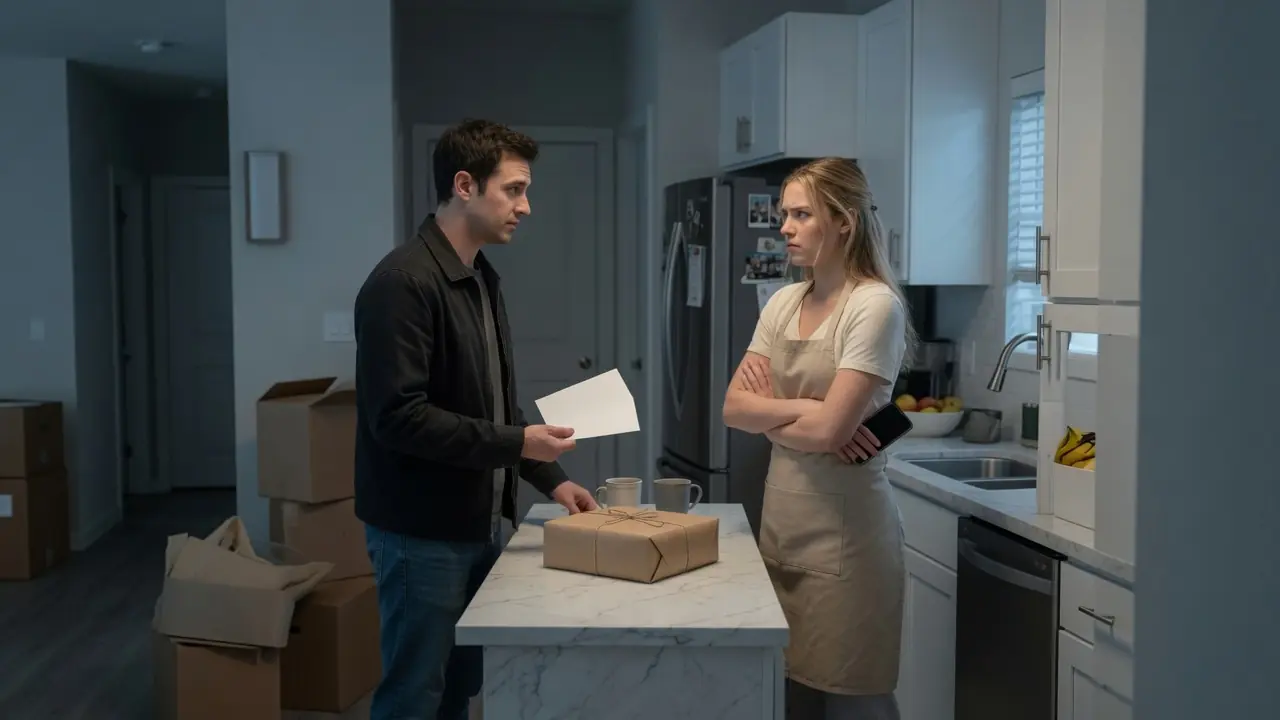
Natalie waved the letter like evidence. “This reads like you want me to cut them off.” Devon shook his head. “No. I wanted you to make space for me too.” She stared at him as if he had spoken another language. “I cannot ditch everyone every time you want attention.”
That word did it. Attention. As if their anniversary, his father’s hospital visit, and his sister’s wedding were all just requests for extra attention from a man too insecure to share. Devon looked at the boxes stacked near the wall and felt oddly calm. “I am done,” he said.
“Done arguing?” Natalie asked. “Done with us,” Devon said. For the first time all night, her face changed in a way that looked real. She followed him through the apartment listing memories, but every memory had her friends in it: concerts with Britney, dinners with the core, group trips, house parties, birthdays. Devon realized she could barely name anything that belonged only to the two of them.
He left his key on the kitchen island, exactly where the tickets had been that Thursday night. Natalie cried then, but even her tears seemed angry at him for refusing the role she had assigned him. Devon took the last box he could carry and walked out without slamming the door. The hallway outside felt quiet enough to breathe in.
The next morning, his phone exploded. Natalie called again and again, then sent long texts about maturity, communication, and how he was throwing away two years. Devon did not answer. By noon, the core began messaging individually, as if he had resigned from an organization and owed the board an explanation.
Britney sent a long paragraph about emotional labor and his “need for priority,” using therapy language like a weapon with a polished handle. Cole called him selfish for disappearing instead of providing closure. Brandon tried the reasonable approach, suggesting they all sit down to discuss the breakup together. Ivy sent a voice message full of sighs and vague statements about energy.
Devon saved everything. He did not reply, argue, or defend himself. If two years with Natalie had taught him anything, it was that the core fed on reaction. The less he gave them, the louder they became.
Three days later, they showed up outside his new apartment building. Natalie stood in front, with Britney, Brandon, Ivy, and Cole lined behind her like an intervention squad. Devon had just come home from work, still wearing his city fire safety inspector jacket and carrying a takeout bag. Natalie started talking before he reached the entrance. “We need to settle this now.”
“There is nothing to settle,” Devon said. “I made my decision.” Brandon stepped forward. “Dude, you are hurting all of us.” Devon looked at him. “I barely know you.”
Britney spoke over him, saying he was avoiding accountability. Cole watched with bright hungry eyes, clearly enjoying the live drama. Ivy had her phone out, angled too low to be casual. Natalie stood there nodding like ambushing someone at his home was a normal step in healing.
“You have thirty seconds to leave before I call security,” Devon said. They did not move. So he walked inside and called security exactly as promised. When the guard escorted them away, Natalie shouted that it was not over, and Devon believed her.
The smear campaign began after that. Ivy posted vague sad photos with captions about “healing era” and “when someone shows you who they are.” Britney posted threads about controlling behavior, tagging Natalie without naming Devon directly. Cole worked through mutual friends, telling them Natalie was shaken and implying Devon had been demanding without ever giving specifics. Devon saved screenshots, organized them by date, and said nothing.
Then Natalie used his credit card. It was the emergency card he had given her during the relationship for car trouble or medical situations, and in the stress of moving, he had forgotten she still had it. The fraud alert came while he was inspecting a restaurant downtown: $847 at an expensive Italian place near the waterfront. He called the restaurant and learned the reservation had been under Natalie’s name for a “support dinner” with the core.
Devon disputed the charge immediately. Then he sent Natalie one text, the only one since he left. “Using my credit card without permission is fraud. The charge has been disputed and reported. Any further contact goes through official channels only.” Then he blocked her number.
Within hours, Britney posted about financial abuse and weaponizing money after a breakup. Devon saved that too. He had bank records, old texts proving the card was only for emergencies, and transaction history showing Natalie had used it once before for a tow he had approved. He still did not post, because people who built public narratives often destroyed themselves when they thought no one was recording the truth.
The next escalation came when Natalie entered the old apartment after her lease access had ended and took his mail. The landlord mentioned seeing her leave with envelopes, and Devon discovered missing DMV documents, credit card statements, and work benefits forms. He had the locks changed, documented the incident, and sent a formal email through the landlord stating that any further entry would be treated as trespassing. Cole posted vaguely about illegal lockouts, leaving out the part where Natalie had no right to be there.
Meanwhile, the core began cracking on its own. Brandon started dating Emma, who made it clear she was not interested in sharing a relationship with four extra people. She asked for the same balance Devon had asked Natalie for, and Brandon actually listened. Natalie confronted him at the gym, accusing him of becoming like Devon, and Brandon told her she needed to grow up.
Britney got promoted and moved to Seattle. Ivy and Cole made their relationship official, which made their public drama harder to maintain. Every change weakened the core’s illusion that nothing mattered except the group. Natalie blamed Devon anyway, saying everyone was “pulling a Devon” as if maturity were an infection.
Six weeks after the breakup, they tried another ambush at a coffee shop. Devon was meeting Owen for lunch, but Owen texted that he would be late, and when Devon walked in, Natalie, Britney, Brandon, and Ivy were already at a corner table. Ivy’s phone was visible. Britney’s posture was rehearsed. Natalie looked ready to cry on command.
Brandon stood first. “Devon, can we talk for a minute?” Devon looked at the table, then at the phone. “Adults do not bring an audience to negotiations.” Britney said they were not there to attack him, only to give Natalie closure. Devon ordered coffee to go and refused to perform for them.
A week later, Ivy posted a fifteen-second clip showing Devon saying, “I do not owe anyone a performance,” then walking away while Natalie cried. The caption made him look cold and cruel. Devon screenshotted it and added it to the growing file. He knew context had been cut, and he knew one day that would matter.
It mattered sooner than expected. A man named Jeremy Martinez messaged him, identifying himself as Britney’s ex. Jeremy sent screenshots from group chats planning the coffee shop ambush, including Ivy saying she would record Devon’s reaction and Britney saying that if he left, they would still win. Then came screenshots about the credit card dinner, where Britney had encouraged Natalie to use Devon’s card as “what he owed her.”
Jeremy also sent messages from months earlier, when Britney coached Natalie to call Devon controlling for asking her to skip one group night. Devon read the screenshots twice, feeling less vindicated than tired. Natalie had not only dismissed him; she had let her friends script the words that made him feel guilty for wanting basic respect. He saved every message and waited.
The final public collapse happened at Chris and Amanda’s engagement party. Devon attended with Zoe, an architect he had met through work, calm and confident in a dark green dress. He had told her everything about Natalie and the core, expecting concern. Zoe only said, “If they make it weird, we leave. Otherwise, I am not intimidated by your ex-girlfriend and her fan club.”
Natalie showed up with the core anyway, even though they were barely connected to the hosts. For an hour, nothing happened. Then Natalie crossed the room in a white dress far too formal for someone else’s engagement party, with Britney and Ivy lifting their phones behind her and Cole already recording. Devon saw it coming like weather on the horizon.
“We need to talk right now in front of everyone,” Natalie said. Devon took a sip of his drink. “No, we do not.” Natalie’s eyes moved to Zoe. “So you moved on that fast?” Zoe looked at her calmly. “This is not a conversation. It is a performance.”
Britney stepped forward, phone raised, talking about closure and abandonment. Devon stood up and looked directly at Natalie. “You want to tell everyone what happened? Tell them about our anniversary. My sister’s wedding. My dad in the hospital. The credit card. The edited recordings. The scripts your friends gave you.”
Natalie’s face changed. Panic flickered behind her eyes before she could hide it. Cole went live, announcing the confrontation like content, until an older guest told him to stop filming at someone’s engagement party. Amanda arrived moments later, furious and composed, and ordered all of them out.
Natalie lost control then. Her voice rose across the room. “You are not allowed to move on before I feel better.” The silence after that sentence was almost physical. Then someone snorted, and awkward laughter spread because the entitlement was too clear to misunderstand.
Security escorted them out. Brandon looked embarrassed, Emma looked mortified, and Britney kept trying to speak into her phone as if the right caption could save the moment. Devon stayed another hour with Zoe, Chris, and Amanda, refusing to let Natalie steal the night. For the first time in months, he felt the story turning.
The next morning, the receipts dropped. Jeremy posted screenshots of the planned ambushes, the credit card messages, the coaching scripts, and comparisons between Ivy’s edited clips and the full context from Cole’s live stream. The post explained how the core created narratives around anyone who tried to leave their ecosystem. It ended with one sentence that spread fast: Devon did not abandon Natalie; he chose himself, and they tried to punish him for it.
The reaction was brutal. People called out the weaponized therapy language, the staged confrontations, the credit card misuse, and the absurdity of bringing cameras to someone else’s engagement party. Brandon posted an apology and stepped away from the core permanently. Britney went private. Ivy tried damage control, but the comparisons destroyed her credibility. Cole was mocked for treating real people like content.
Natalie disappeared from social media. Two weeks later, Chris and Amanda made it clear the core was not welcome at future events. Devon paid an attorney $400 for a cease-and-desist letter demanding that Natalie, Britney, and Cole stop all contact and remove false claims. After that, the harassment ended completely.
Three months later, Devon ran into Natalie in the grocery store produce section. She looked tired, quieter, and strangely smaller without the group around her. “Can we talk for a minute?” she asked. Devon looked at her cart, then at her face. “Make it quick.”
Natalie apologized. Not dramatically, not with excuses, just with the weary honesty of someone who had finally run out of people to blame. She said she understood what he had been asking for, especially after watching Brandon and Emma build the kind of relationship she had refused to give him. Devon thanked her, wished her well, and walked away.
When he told Zoe, she asked how he felt. Devon thought about the kitchen island, the apron, the buzzing phone, the typewriter gift she had never opened, and the sentence that finally set him free. “Done,” he said. “It feels done.”
Months later, Natalie began dating someone new and, according to Owen, was making a real effort to build balance. Britney stayed in Seattle. Ivy rebuilt her life more quietly. Cole kept chasing drama, but fewer people fed it. Brandon and Emma got engaged in a small peaceful ceremony, the kind the core never would have known how to leave alone.
As for Devon, he and Zoe built something ordinary and strong. They got a dog, planned a trip to Japan, cooked dinner without phones buzzing through every conversation, and chose each other without needing a committee. Sometimes Devon thought about those two years and wondered why he stayed as long as he did. Then he remembered how hard it is to leave when everyone around you keeps calling your needs unreasonable.
But he had left. He had walked out of that kitchen, out of the apartment, out of the ambushes, and out of a story where he was always last. Natalie once told him he was optional. In the end, Devon simply agreed and removed himself from the option list.