My name is Warren Cole, and for three years I thought Danica Vale and I were building a life together. We lived in a two-bedroom apartment in Dallas that looked settled from the outside, with framed couple photos on the wall, matching coffee mugs in the kitchen, shared grocery lists on the fridge, and furniture we had chosen together one careful purchase at a time. People who visited us used to say we made adulthood look easy. I believed them because I wanted to believe the home we had built was stronger than the cracks I was beginning to feel.
Danica was twenty-seven, beautiful, polished, and social in a way that made every room adjust itself around her. She worked in brand marketing, knew how to speak to anyone, and had the kind of charm people praised even when it made them feel slightly managed. I was twenty-eight, steadier, quieter, and working in software consulting, the kind of man who liked plans, clean communication, and knowing where I stood. For most of our relationship, I thought our differences balanced us. She brought energy into my life, and I gave her stability.
The first two and a half years were not perfect, but they were real. We argued about money, laundry, schedules, and whether her sister stayed too long when she visited. We hosted game nights, took weekend trips, split bills without drama, and talked about maybe buying a condo when the lease made sense. When people asked when I planned to propose, I did not panic. I smiled because I had already started thinking in that direction.
That is why the ending felt so violent, even though no one threw a plate and no one screamed at first. I was not walking away from something casual. I was tearing myself out of a future I had already started imagining. There were mornings when I watched Danica drink coffee at our kitchen counter and pictured years of that small ordinary scene. I did not know then that the ordinary things would hurt the most once I left.
The shift started when her college friend Trayvon Reed moved back to Dallas. I had heard his name for years in stories about school, parties, professors they hated, and trips where everyone got stranded and laughed about it later. At first, I had no problem with him. I have female friends, and Danica had male friends before him. The problem was never that he was a man. The problem was that he did not act like a normal friend once he reentered her life.
The first time I met him, I genuinely tried. We went to dinner with two other friends at a taco place near Uptown, and I shook his hand, bought a round of drinks, asked about his work, and made space for him in our circle. Trayvon was smooth in a way that felt practiced. He knew exactly when to laugh, how long to hold eye contact, and how to make a sentence sound harmless even when something underneath it felt too intimate. I told myself I was probably reading too much into him.
That was my first mistake. I wanted to be reasonable so badly that I began explaining things away before they even fully happened. Trayvon texted Danica constantly, late at night, early in the morning, during dinner, during movies, and while we were in bed. His name kept lighting up her phone like he had a key to our apartment too. Every time I asked, she had a harmless explanation ready.
He needed a restaurant recommendation. He wanted advice about a woman from a dating app. He was venting about work. He wanted to know if she remembered some joke from college. Each explanation sounded small enough by itself, which made it harder to object without sounding petty. But the pattern was not small. He had no edge to his access, no pause, no awareness that Danica had a relationship with someone else.
We would be halfway through date night, and she would go quiet while typing back to him. We would be getting ready for bed, and she would angle her phone toward the wall. Once, at 11:30 on a Tuesday, I asked who needed her that late. Without looking up, she smiled and said Trayvon was spiraling over some woman he had met three days earlier. She said it like I was supposed to find it funny.
I tried to laugh, but something in me had already tightened. It was not jealousy in the simple way people like to label things. It was the feeling of watching someone else step into time that was supposed to belong to us. The more Trayvon intruded, the more Danica acted like my discomfort was the real problem. She said he was lonely. She said he was readjusting after moving back. She said I was turning normal friendship into something ugly.
Then the physical behavior started becoming harder to ignore. At group dinners, Trayvon always found a way to sit beside her instead of across from her. If we were in a booth, he slid in next to her before I could even pull out her chair. At bars, he leaned close enough to talk into her ear even when the music was not loud. He touched her shoulder, brushed her arm, and guided her through crowds with his hand at the small of her back.
Danica never flinched. She never stepped away. She never looked uncomfortable or surprised. At a rooftop birthday party, I watched Trayvon rest his hand low on her back while they moved through the crowd like he had the right to direct her body. Danica laughed at something he said and kept walking. One of her friends, Paige, saw my face and gave me a tight little smile. It was the kind of smile that said she saw it too but did not want to be the first person to say so.
That was when I started feeling crazy in the dangerous way. Not because I was imagining things, but because I knew I was not imagining them and was still being treated like I was. The first time I brought it up, I waited until we were home, after we had brushed our teeth and turned out the lights. I said Trayvon seemed too comfortable physically and that it was making me uneasy. I chose every word carefully because I did not want to sound controlling.
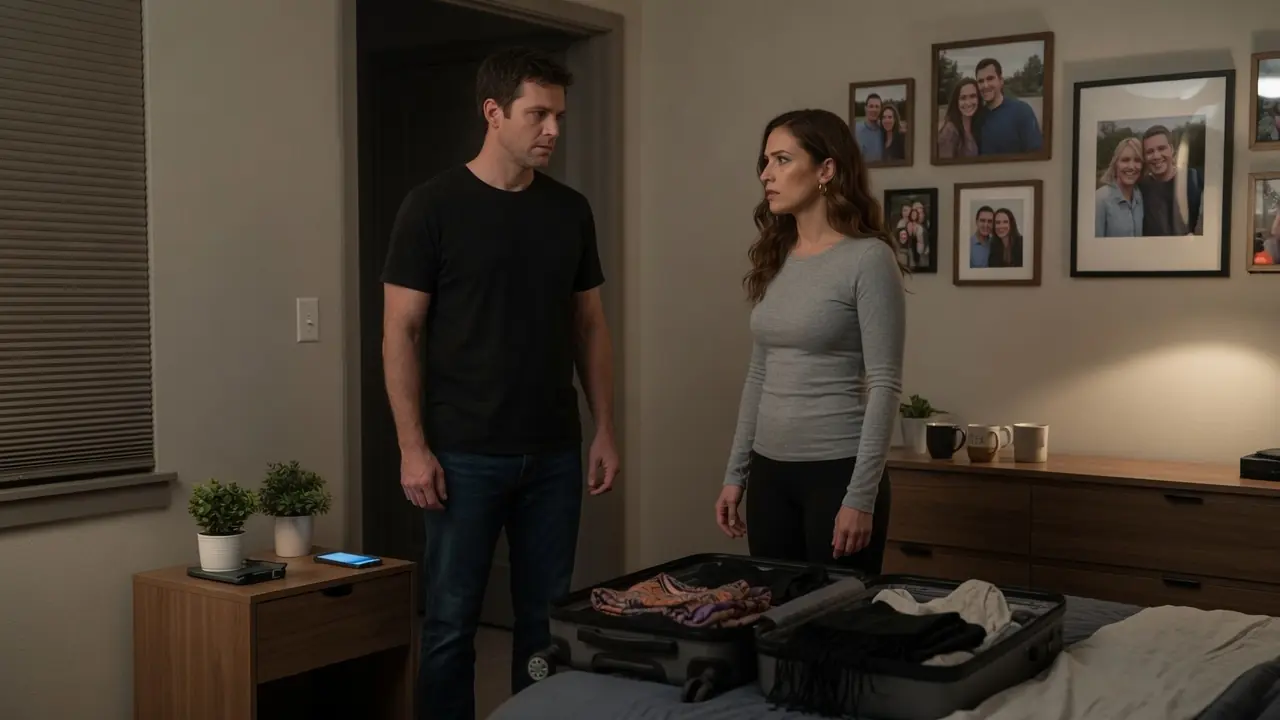
Danica laughed at first, like I had made a joke. When she realized I was serious, her face changed. She said I was reading normal affection through a possessive filter. She said Trayvon was like that with everyone. When I said he was not putting his hands on everyone else like that, she rolled over and told me I was exhausting myself looking for disrespect where there was none.
That became her favorite move. I would raise a specific issue, and she would avoid the issue by attacking the fact that I noticed it. If I said the late-night texting bothered me, I was insecure. If I asked why she turned her phone face down when his name appeared, I was insecure. If I said his compliments about her body crossed the line, I was insecure. The word became a weapon she could use without ever answering the actual concern.
Then came the gifts. Trayvon brought her a rare vinyl record she had mentioned once in the car. He ordered her a hard-to-find skincare set she had put on an online wish list months earlier. For her birthday, he gave her a slim gold bracelet so expensive it made my own gift look small in a way that embarrassed me even though I knew it should not have. Danica put it on immediately.
When I asked later if she understood why that crossed a line, she acted like I had insulted her intelligence. She said Trayvon was generous, successful, and observant. She said not every kind gesture from a man had to be sexualized just because I lacked confidence. I remember sitting there and realizing how completely she had turned the situation around. A man was shopping for her with the intimacy of someone courting her, and somehow I was the one on trial.
The worst moment before the trip happened on a Thursday night about three months before I left. Danica was in the shower, and her phone lit up on the coffee table. I was not trying to look, but the preview flashed before I could avoid it. It was from Trayvon. He wrote that he still had not forgotten how she looked on the patio last weekend, and that if she kept looking at him like that, he was going to stop pretending he was joking.
My stomach dropped so hard it felt physical. I did not open her phone because I did not need to. The preview was enough. When she came out of the bathroom wrapped in a towel, I asked to see the message. She froze for one second, then recovered and said it was obviously sarcasm.
I asked her what exactly he was pretending about. She sighed like a teacher dealing with a slow student and said Trayvon flirted with everyone. She said I was proving her point by acting threatened over a text she had not even answered. I asked to see the rest of the thread. She said no.
When I asked why, she said she was not setting a precedent where I could audit her private conversations every time my ego got bruised. I told her this was not about privacy anymore. It was about disrespect. She turned cold immediately and said if I could not trust her, then that was something I needed to work on. The next morning, the entire conversation thread was gone.
She said she cleaned out old messages all the time because she hated clutter. That might have sounded believable if she had not still had texts from her dentist, her old landlord, and a furniture store from two years ago. I looked at those threads while she spoke, and she saw me looking. Instead of backing down, she squared her shoulders and said the bigger issue was why I was acting like a detective in my own home. I remember thinking she was forcing me to choose between silence and humiliation, then acting offended when I refused silence.
The New Orleans trip was what finally pushed everything into the open. Danica had planned to go to a music festival with a group of friends. I could not go because of a client launch at work, but at first, I did not mind. It sounded like a normal group trip with Paige, Mike, two others, and Trayvon. I trusted group energy more than anything involving only Danica and him.
Then, one by one, the others dropped out. Mike had a work issue. Paige had a family emergency. Another friend got sick. By Thursday evening, it was only Danica and Trayvon still planning to go. I watched her pack at the foot of our bed and felt a quiet pressure building in my chest.
I asked whether they were still getting separate rooms now that the group had collapsed. Danica said no without even looking up. She said the hotel reservation was nonrefundable and they were keeping the room they already had. I asked what that meant exactly. She said it meant one room, two beds, one weekend, no drama.
I told her that was not fine with me. I told her plainly that sharing a hotel room with a man who had crossed lines for months, sent flirtatious messages, bought intimate gifts, and inserted himself into our relationship was not something I could accept. Danica zipped her suitcase, stood up, and looked at me like I was embarrassing her. There was no tenderness in her face. Not confusion, not guilt, not even conflict. Just irritation.
She said I was projecting my lack of confidence onto a friendship I clearly did not understand. I told her this was not about friendship. This was about respect. If I planned a weekend away with a woman who kept flirting with me, bought me expensive gifts, hid messages from her, and touched me every chance she got, Danica would have lost her mind. She snapped that Trayvon and I were not the same because she had never given me a reason to doubt her.
I laughed then. Not because it was funny, but because I finally realized she could say almost anything if it helped her win. I told her again that if she went on that trip and shared a room with him, I would not be there when she got back. I expected a pause. I expected some sign that losing three years together mattered. Instead, she walked to the refrigerator, took out a bottle of water, and leaned against the counter like she was watching a child throw a tantrum.
She said she was not losing money on tickets and a hotel because I had chosen to feel threatened by one of her friends. Then she took a sip, looked straight at me, and said the sentence that ended us. “If my guy friends make you insecure, Warren, that is your problem, not mine.” She was not angry when she said it. She was calm, sure, almost amused.
Something in me went completely still. I had spent months trying to defend my right to feel disrespected without becoming the paranoid, controlling man she kept accusing me of being. In that one sentence, she made it clear my comfort meant less to her than being right. Less than the trip. Less than the ego boost she got from having him orbit around her.
I looked at her and saw that I had been trying to negotiate care with someone who did not believe she owed me any. I said she was right. She blinked, surprised. I repeated it. I told her it was my problem, and I should solve it myself. She smirked and said, “Exactly,” then turned back to her suitcase as if she had won.
Early Friday morning, she kissed my cheek before leaving for the airport. I kept my eyes shut and pretended to be asleep. The kiss felt automatic, like something she performed because skipping it would have forced her to acknowledge the tension in the room. I listened to the front door close, the lock click, the suitcase wheels fade down the hallway, and the muffled sound of the ride-share pulling away. When the engine disappeared, I sat up.
I did not cry. I did not rage. I just felt a cold, strange relief. The uncertainty was over. I knew exactly what the relationship was worth to her, and I was finally free to act like I knew. I started in the bedroom.
I packed the essentials first: clothes, shoes, work equipment, toiletries, documents, and personal things I refused to leave behind. Then I moved through the apartment carefully. I did not touch anything clearly hers. I did not damage anything. I was not interested in revenge that could be twisted into proof of instability. I wanted clean lines.
The television was mine. The sound bar was mine. The gaming console was mine. The espresso machine she used every morning but never maintained was mine. I took the sheets I bought too, because I was not leaving symbolism behind for her comfort. By the time I finished, the apartment looked less destroyed than hollowed out.
Around eight that morning, I called my brother Leon. He answered half asleep and said if I was calling that early, somebody had better be dead or in jail. I told him neither, but I needed his truck and maybe his guest room for a while. He went quiet for one beat, then asked if I had finally left Danica. When I said yes, he told me to send the address of the loading zone and said he would be there in twenty minutes.
Leon had never trusted the polished version of Danica that everyone else loved. He did not hate her. He just thought she liked being admired too much to build anything stable with another person. He showed up in basketball shorts, work boots, and the expression of a man trying very hard not to say I told you so. He did not ask for the full explanation while we loaded boxes. He just worked.
At one point, while we were taking the television off the mount, Leon looked around the apartment and said it already felt like she lived here with an audience instead of a partner. That was the first time I laughed all day. Not because it was funny, but because it was painfully accurate. We hauled everything in two trips. By two in the afternoon, the place still had furniture and all of Danica’s decorative chaos, but the center of gravity was gone.
Before I left, I pulled out the lease agreement. We were month-to-month after the first term ended, so I wrote a formal letter to the landlord stating that I had vacated. I included my half of the upcoming month’s rent so no one could claim I disappeared without notice. I left a copy of the letter for Danica on the counter beside the check and my apartment key. For a minute, I held a pen over a notepad and thought about explaining myself.
I wanted to tell her what she had really done. I wanted to describe the exhaustion of being treated like a problem every time I asked for basic respect. Then I saw her face in my mind, that amused smirk in the kitchen, and I put the pen down. She had already heard me. She had simply decided I was not worth hearing.
When Leon and I drove away, the physical work had numbed me enough to function. The emotional weight hit later, on the ride to his house. I was twenty-eight, single, sleeping in my brother’s spare room, with my life packed into three suitcases and a few boxes. Breakups are often described with words like peace, closure, and self-respect. In the middle of it, there is also humiliation, logistical failure, and the sick feeling that ordinary routines have become evidence of wasted time.
I did not block Danica immediately. Part of me wanted to see when realization would hit and what shape it would take. Friday night passed quietly. Saturday passed too. I answered work emails, helped Leon clean his garage, lay awake on unfamiliar sheets, and checked my phone more than I wanted to admit. Sunday evening, while Leon and I were on his patio eating burgers, the first message came.
Danica wrote that she was home and wanted to know why the living room was empty. A minute later, she asked where the television and espresso machine were. Then she asked whether we had been robbed. I stared at the messages longer than I should have. There was something so revealing about the order. She did not lead with, “Where are you?” She led with inventory.
Then came the calls. I let them ring. Confusion turned into anger within minutes. She said I was childish, throwing a tantrum, acting insane, and that I needed to bring the things back. I read every word with a strange distance, like I was finally seeing her clearly because I was no longer inside the blast zone.
The next morning, her tone softened. She said she had not meant to snap before the trip. She said the weekend had been stressful. She said they barely spent time at the festival because the whole mood had been off. Then she sent another message and unsent it almost immediately. She wrote that Trayvon had made things weird in New Orleans and that this was exactly why she had not wanted me blowing everything out of proportion before she left.
That was the closest she ever came to admitting I had not been crazy. Something happened on that trip. Maybe not everything. Maybe not what people imagine first. But enough for her to reveal that my concern had never been fantasy. I read that message before it disappeared, and it sealed something in me.
By Tuesday, she started panicking about the apartment. She could not afford it alone. She had spoken to the leasing office and embarrassed herself. She said real relationships did not end because someone walked out without a conversation. That message almost got a response from me, not because I wanted her back, but because after years together, your body still moves toward someone’s distress before your mind reminds it why you left. I put the phone down and went for a long walk.
When I returned, the apology had already turned into accusation. She said I was emotionally cruel. She said she had told friends I was having some kind of breakdown. I blocked her on Wednesday. Not because I had nothing to say, but because I finally understood that every message pulled me back into the game I had left.
For the first week after blocking her, I expected regret to hit me hard. It did not. What hit me was space. My chest stopped tightening every time a phone lit up. I stopped wondering who she was texting at midnight. I started sleeping through the night. The peace was not exciting at first. It was quiet, and that made it feel almost unfamiliar.
The social damage came anyway. We shared enough people that stories reached me. Danica told friends I had abandoned her over one harmless trip because I could not handle her having male friends. Then the story got uglier. She implied I had been possessive, controlling, and emotionally abusive. Those accusations mattered because they do not just float. They stain.
Two people from our wider circle stopped returning my messages. A mutual friend canceled plans and never rescheduled. That part hurt more than I expected because I had worked so hard not to become the villain Danica accused me of being. I had left quietly, paid what I owed, and avoided public mess. She still tried to dress me in the costume she needed me to wear.
The first crack in her version came through Paige. She called one evening sounding uncomfortable and asked if she could ask me something directly. I told her to ask. She said Danica had originally told everyone the New Orleans hotel room had two beds, but later slipped that the hotel accidentally gave them one king on the first night and she had decided not to switch because it was late. I went very quiet.
Paige apologized. She said she had defended Danica at first, thinking it was just messy perception, but now it sounded like Danica had been hiding details from everybody. I asked if she believed anything physical happened. Paige said she did not know and did not want to invent facts, but she had seen enough to understand why I left. Then she said the sentence I needed more than I knew.
“You were not wrong.”
She said Trayvon had been crossing lines for months. She said plenty of people noticed, and Danica liked the attention too much to shut it down. Relief moved through me so strongly I had to sit down. Gaslighting does real damage. When someone tells you long enough that your eyes are malfunctioning, hearing another person confirm the room looked exactly the way you thought can feel like getting your balance back after months at sea.
A week later, Danica’s friend Vanessa called. She sounded tired, not angry. She said Danica was struggling, the apartment situation was bad, and Trayvon had basically vanished now that things were complicated. I asked if that surprised her. She said not anymore.
Then Vanessa told me that during the New Orleans trip, Trayvon had apparently told Danica she deserved a man who did not make her feel monitored. Vanessa said Danica had repeated it like it was flattering, but the more Vanessa thought about it, the more it sounded like Trayvon had been waiting for an opening. I asked whether Danica shut him down. Vanessa went quiet long enough to answer without words. That call ended the last piece of doubt I had been carrying.
The betrayal was never simply that Danica had a male friend. It was that she kept choosing validation from him over clarity with me. She wanted the relationship security I provided and the extra attention he provided, and she believed she was entitled to both. Once I left and real consequences appeared, Trayvon did what men like him often do. He disappeared. He had been present for tension, flirtation, ambiguity, and ego. He was not present for rent, moving boxes, panic, or fallout.
Three weeks after I moved out, Leon had a birthday barbecue at his house. It was sunny, loud, and ordinary in a way I desperately needed. There were burgers on the grill, music playing low, kids running through the yard, and neighbors drifting in and out through the side gate. I had almost made it through the afternoon without thinking about Danica. Then I heard tires screech out front.
A silver sedan jerked halfway onto the curb, and Danica got out before the engine settled. She looked thinner, stressed, and nothing like the polished woman who usually checked every reflection before leaving home. Her hair was pulled back badly, her face was blotchy, and she wore sweatpants and an oversized T-shirt. She crossed Leon’s lawn gripping her phone like it was the only solid thing left in her life. Conversation died around us.
I set down the grill tongs and stepped away from the patio. Leon rose behind me, already tense, but I lifted a hand to stop him. I needed to finish this myself. Danica stopped a few feet away and started shouting. She said I had blocked her everywhere. She said I humiliated her. She said I could not vanish after three years and leave her to handle the fallout alone.
I kept my voice calm on purpose. I told her blocking someone was exactly what people did when they did not want further contact. That only made her louder. She said I destroyed our relationship over one weekend. She said nothing happened in New Orleans. She said I was still proving how insecure I was by refusing to talk.
I remember noticing neighbors standing still with a dog between them, pretending not to listen. I remember feeling the heat on my neck. I remember realizing I felt nothing romantic toward the woman in front of me. Not hate, not longing, just clarity. This was who she was when she could no longer control the story.
I told her I had not tried to control her. I had set a boundary, and she crossed it. She shouted that it was one trip, one room, one mistake in judgment at most. Then, before she could stop herself, she said Trayvon had kissed her the first night and she pushed him away. The yard went silent.
She realized what she had admitted the second the words left her mouth. Her face changed. She tried to repair it by saying that proved I should have trusted her because she did not kiss him back. But the damage was done. She went anyway. She stayed anyway. She spent the night in that room anyway. She came home and asked about my television before admitting another man had crossed the exact line she spent months pretending did not exist.
I asked her calmly whether she finally understood why I left. She started crying then, real tears, not angry ones. She said she had made a mistake, that she thought she could manage the situation, and that she never thought I would actually leave. I told her that part was obvious. She had mistaken my patience for a lack of self-respect.
I reminded her what she said in the kitchen. If her guy friends made me insecure, that was my problem, not hers. Then I told her I had solved it exactly the way she told me to. I removed myself from a relationship where my feelings were treated like an inconvenience and my boundaries were treated like a joke. She shook her head and said that was not what she meant.
“I know,” I said. “You did not mean for there to be consequences.”
Then I asked the only question that mattered. Where was Trayvon now? If he was so important, if she defended him so fiercely, if our relationship was worth risking to protect his place in her life, where was he when she needed help paying rent, moving furniture, or fixing the mess she had made? She looked down. She said he was giving her space.
That answer was so pathetic I almost smiled. I told her she had chosen his attention over my respect and discovered too late that attention was cheap. It cost him nothing to hover around a taken woman. It cost him everything once the fantasy became responsibility. She reached for my arm and said she could fix it. I stepped back before she could touch me.
I told her I accepted that she was sorry, but I no longer believed she was safe for me to love. Her face broke in a way that might have softened me once. Not then. Not anymore. I told her she was not in this position because I abandoned her. She was in this position because she kept feeding a fire and mocking me for smelling smoke.
Leon stepped closer and asked if he needed to call the police. Danica spun toward him and told him to stay out of it. He said it was his yard and she was trespassing. The music had stopped. Nobody was pretending not to watch anymore. That public stillness seemed to hit her all at once.
She looked around and finally saw that there was no private space left for her to control the narrative. People had heard enough. People had watched her unravel. People had watched me stay calm. Her shoulders dropped, and she looked back at me like the full weight of her choices had finally become heavier than her pride. I told her to go home.
She called my name once as I walked back toward the patio, sharp and desperate. I did not stop. A minute later, I heard Leon telling her to leave. Then a car door slammed, the engine roared, and she was gone. I stood in Leon’s kitchen with a drink in my hand and felt the last tie inside me loosen.
Recovery after that was not magical. It was slow, quiet, and sometimes embarrassing. I lived with Leon for another month, saved aggressively, and worked more than I should have. Some nights I felt free. Some nights I felt stupid for staying as long as I had. Some mornings I woke reaching for a phone I no longer wanted to check.
But the peace kept building. I bought a small house on the edge of the city with a garage I turned into a workshop. I got more focused at work. My boss noticed and said I seemed lighter. I told him I had fewer distractions. That was true, but it was more than that. I was no longer spending half my emotional energy trying to convince someone not to step on my dignity.
The social dust settled too. Danica tried to keep the story tilted in her favor, but it stopped working when too many details contradicted her. Paige stopped defending her. Vanessa told people there was more to the New Orleans trip than Danica first admitted. Even people who never heard the full story saw enough. They saw a man who left quietly, paid what he owed, and stayed out of the public mess.
Months later, I heard Danica had moved into a smaller studio and was dating someone new, a nightlife promoter with his own collection of undefined female friends. I did not feel triumph. I felt completion. Her future was no longer my business. That was how I knew I had truly left.
Two months after the barbecue, I started seeing someone named Autumn. I am not saying that to tie the story in a perfect bow or turn her into a reward for my pain. She was simply someone thoughtful, funny, direct, and unshowy. On our third date, her phone lit up at dinner. She glanced at it, frowned, and turned it face down.
I felt the old tension flicker before I could stop it. Autumn saw my face and said her ex was trying from another new number, and she would block that one too after dessert. I asked if she needed to answer. She looked genuinely confused and said, “Of course not. That would be disrespectful.” The simplicity of it almost stunned me.
That was when I understood what I wish I had understood earlier. Sometimes what people call insecurity is just your nervous system noticing that the person beside you is careless with your trust. Sometimes the problem is not that you feel too much. It is that you keep asking someone to protect what they are perfectly willing to bruise. Danica was right in one narrow way. It was my problem, but not because my boundary was unreasonable.
It was my problem because I was the one who had to decide whether I would keep living where respect had become negotiable. I solved it by packing what was mine, leaving what was not, and walking out before her version of love taught me to doubt my own mind any longer. Now, most days, I think about work, my house, the shelves in the garage, what I am cooking for dinner, and whether Autumn likes the neighborhood bakery as much as I do. That ordinary calm is better than any revenge.
Every now and then, I hear the espresso machine hiss to life on my kitchen counter, and I remember the sound of my old apartment door closing behind me for the last time. I remember how empty my hands felt for one second. Then I remember how free they felt right after.