“You’re too old to fly with us to Hawaii. Just look after the house,” my daughter said, dismissing me as if I were useless.
They flew off on a paradise vacation with my in-laws, who were even older than me, while I stayed behind in the house they considered their inheritance. When they returned, the house was gone, and so was I. They called me forty-three times.
Brochures about Hawaii lay on my coffee table like colorful promises. My daughter Lauren opened them wide, her manicured fingers tracing the golden beaches, while her husband Bradley leaned over her shoulder and nodded in approval. Bradley’s parents, Walter and Margaret Mitchell, sat comfortably on my couch, already discussing departure times and hotel amenities as if the vacation belonged to them by birthright. The Maui resort looked perfect, Lauren announced, her voice bubbling with excitement.
“Four bedrooms, ocean view, private beach access,” she said.
I reached for one of the brochures. “That sounds wonderful. When do we—”
“Dad,” Lauren interrupted, gently but firmly pushing the glossy paper away from my hand. “You’re too old for such adventures.”
The words hit like ice water. I blinked, certain I had misheard. “Better stay home and watch the house,” she continued, her tone casual and matter-of-fact. “We’re flying with Bradley’s mom and dad. It’s their dream trip, you know.”
Walter chuckled from the couch. “Been saving for this for years. Can’t wait to see those sunsets.”
“The kids will love the snorkeling,” Margaret added, already claiming experiences that had not happened yet. I stared at them. Walter was sixty-four, two years older than me, and Margaret was sixty-one. Yet somehow, I was too old while they were perfect traveling companions.
“I’ve never been to Hawaii,” I said quietly.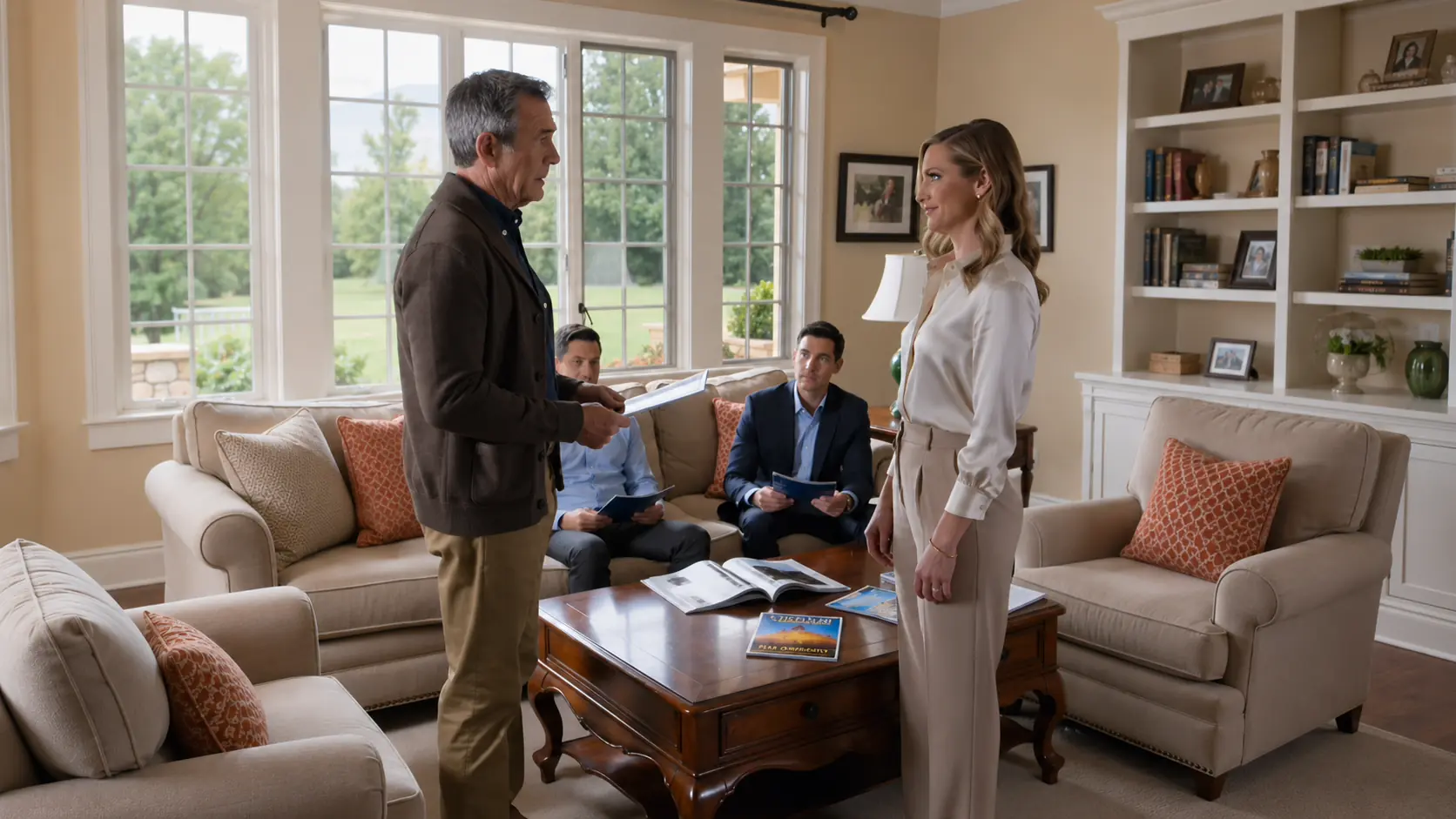
Bradley shrugged. “Maybe next time, Pops. This trip’s kind of a family thing.”
Family. The word twisted in my chest. I watched them continue planning around me, over me, and through me. Lauren pulled out her phone to show Margaret restaurants they had researched, while Bradley grabbed another brochure and pointed out activities.
They moved with the easy confidence of people who had already decided everything without consulting the man whose house they lived in. My generosity had sheltered them for five years. Yet in that living room, I felt less like a father and more like furniture they had stopped noticing. Lauren said the flight left Thursday morning and that they would be gone ten days.
“You’ll have the whole place to yourself,” she said. “Think of it as a little vacation, too.”
A vacation from what? From providing free housing? From cooking dinners they barely acknowledged? From listening to Bradley complain about his credit score while he used my electricity to charge his gaming devices?
I stood slowly, my knees protesting, a reminder of the sixty-two years Lauren suddenly seemed so concerned about. “I should probably get some things in order then, for housesitting.”
“You’re the best, Dad,” Lauren said, finally looking up with the smile that once melted my heart when she was seven and asking for bedtime stories. Now it felt calculated and practiced. “Don’t worry about anything. Just relax and enjoy the quiet.”
Walter raised his coffee mug in a mock toast. “To family vacations.”
They all laughed. Even Margaret, who had met me exactly four times, felt comfortable enough to laugh at my exclusion in my own living room. I walked toward the hallway, their voices following me, full of animated discussions about sunset dinners and helicopter tours. Adventures I had apparently aged out of overnight.
The hardwood floor creaked under my feet, the same sound it had made when Sarah and I danced in this house on our thirtieth anniversary. Sarah would have fought for me. She would have insisted I come. She would have made it clear that family meant all of us or none of us.
Behind me, Lauren’s voice carried clearly. “Mom would have understood. She always said Dad needed looking after as he got older.”
I paused at the bedroom doorway. Sarah had never said anything like that. Not once. Apparently, my late wife’s imaginary concerns were now being used as justification for my exclusion from family joy.
Three hours later, I sat on the edge of my bed, still wearing the same clothes from dinner. My reflection stared back from Sarah’s old vanity mirror, showing a man who had apparently become invisible in his own home. The house had settled into its evening rhythm, but voices drifted up from the living room below. At first, their laughter seemed distant, muffled by the walls and vents.
I planned to ignore them. Maybe I would read one of the mystery novels Sarah had loved. Then Bradley’s voice cut through the ambient noise, clearer than it should have been. “Honestly, I think he bought that whole too old nonsense.”
My book fell closed. I froze. Every muscle in my body tightened.
Lauren’s response floated up through the heating vent near my feet. “Dad’s always been gullible. Remember when we told him we’d pay him back for the roof repairs?”
Their laughter followed, casual, dismissive, and cruel. I moved carefully toward the vent, my teacher’s instincts kicking in. Thirty years of classroom management had taught me when to listen and when to act. This was a listening moment.
Walter’s voice joined in. “Right after we return from Hawaii, we put him in that nursing home we researched.”
My breath caught.
“Sunset Manor has an opening next month,” Margaret added, her tone businesslike. “They said they could expedite the paperwork if we paid the deposit upfront.”
“How much?” Bradley asked.
“Three thousand,” Walter replied. “But it’s worth it to get him settled quickly. Once he’s there, this house becomes ours anyway. It’s our inheritance.”
The floor seemed to tilt beneath my feet. I gripped the windowsill, my knuckles going white against the painted wood. Lauren continued, animated now, saying she had already contacted a real estate agent named Zachary Allen. He believed they could get at least eight hundred thousand dollars, maybe more, with the market the way it was.
“Split four ways?” Bradley asked.
“Obviously,” Lauren said. “Mom, Dad, you’ve earned your share dealing with his complaints these past few years.”
Margaret laughed. “He has gotten rather demanding, hasn’t he? Always asking about our plans, wanting to be included in everything.”
“The entitlement is unreal,” Lauren agreed. “Dad, you’re sixty-two. Accept that your active years are behind you.”
I sank onto the bed, my legs suddenly unreliable. Five years I had housed them. Five years of grocery bills, utility payments, repairs, and maintenance while Bradley looked for work and Lauren figured out her next career move. They had eaten my food, used my car, borrowed my tools, and never once offered genuine gratitude.
Bradley’s voice grew louder and more excited. “The best part is he’ll never see it coming. We’ve got him convinced we’re just concerned about his well-being.”
“Dad always was too trusting,” Lauren said.
Walter interrupted, surprising me. “Your mother never said anything about your father being a burden. That woman adored him.”
“Well, she’s not here to object now, is she?” Lauren answered sharply. “And frankly, this is what’s best for everyone. Dad gets professional care. We get financial security.”
Professional care. They made it sound like a medical necessity instead of convenient disposal. The conversation continued, but I had heard enough. I stood slowly, walked to my dresser, and opened the bottom drawer where I kept Sarah’s jewelry box.
Inside, beneath her wedding ring, lay the deed to the house. This was the house I had bought with my teaching salary. The house where Sarah and I had planned to grow old together. My reflection stared back from the vanity mirror, but something had changed in those few minutes of eavesdropping.
The man looking back no longer seemed invisible.
Sleep became impossible. Every time I closed my eyes, Bradley’s desperate voice from five years earlier echoed in my memory. February 2020. The call had come at 11:30 on a Tuesday night while I was grading algebra tests with a red pen in hand.
“David,” Bradley had said, his voice raw and broken. “I need help. I’ve lost everything.”
The story had tumbled out between sobs. Online poker sites, cryptocurrency investments that promised guaranteed returns, sports betting apps that seemed like easy money, forty-seven thousand dollars in credit card debt, and a house in foreclosure. Lauren was crying in the background, pregnant with their second child.
“It was supposed to be Bitcoin,” he whispered. “Everyone said it couldn’t fail. I put our savings, the home equity loan, everything into it right before the crash.”
I had listened, my teacher’s heart breaking for the young man who had somehow become family. Sarah had been gone only months, and the house felt too empty. Lauren was my daughter. These were my grandchildren.
“We have nowhere to go,” Bradley had continued. “Lauren’s parents are, well, you know. Lauren’s mom never approved of me. We can’t ask them.”
Now, lying in the darkness, I recognized the calculation behind that desperation. He had known exactly which emotional buttons to press. The grieving widower, the protective grandfather, the man with an empty house and a generous heart. I rose from bed and walked to the window overlooking the backyard where my grandchildren played on the swing set I had installed.
Their bicycles leaned against the garage. Training wheels I had purchased and installed myself because Bradley had been too busy looking for work. My hands trembled as I calculated the expenses. Five years of groceries for five people, eighteen thousand dollars conservatively.
Utilities that had doubled with their arrival, another six thousand. The roof repair Lauren had mentioned, fourteen thousand after the storm damage. Medical bills when their insurance lapsed. Car repairs for the vehicle they had claimed as their own.
Over sixty thousand dollars to people who called me a burden.
The algebra was simple and devastating. I had supported them longer than some marriages lasted, and their gratitude had curdled into entitlement somewhere along the way. I pulled out the notebook where I had tracked household expenses since Sarah’s death. Page after page recorded Bradley’s requests, Lauren’s needs, and the children’s requirements.
Always urgent. Always temporary. Always with promises of repayment when things improved. Things never improved. They simply learned to ask for more.
In the morning, they would wake refreshed and plan their vacation. They would pack suitcases I had bought them for Christmas, ride to the airport in the car I had helped finance after their repossession scare, and board a plane with tickets funded by the inheritance they had already claimed. Meanwhile, I would stay behind like an obedient housesitter. But as I sat there in the dark, surrounded by photographs of my teaching awards and Sarah’s garden club certificates, something crystallized in my chest.
They had confused kindness with weakness. Generosity with stupidity. Forty years of teaching had required strategy, patience, and the ability to stay three steps ahead of students who thought they could outsmart the system. Some lessons were learned through guidance. Others required consequence.
Dawn filtered through the kitchen blinds as I entered and found the family already buzzing with travel energy. Lauren stood at the counter, organizing boarding passes and travel documents. Bradley hunched over his phone, presumably checking flight status. Walter and Margaret compared sunscreen brands like military strategists planning an invasion.
“Morning, Dad,” Lauren called cheerfully without looking up. “Coffee’s fresh.”
I poured myself a cup and studied their faces with new perspective. Yesterday, I would have seen excited family members preparing for an adventure. Today, I observed co-conspirators celebrating their successful manipulation.
“The flight leaves at 10:15,” Bradley announced. “We should head out by 8:30 to beat traffic.”
“Did you remember to pack the camera charger?” Margaret asked Lauren.
“Already in the carry-on,” Lauren answered. “Plus backup batteries.”
Their efficiency impressed me. The same organizational skills they had never applied to finding employment or contributing to household expenses suddenly appeared for luxury travel. Apparently, planning vacation activities required different talents than securing basic income.
“Is there anything special you need me to do while housesitting?” I asked, settling into my usual chair.
Lauren finally glanced up with a patronizing expression. “Just the usual, Dad. Water the plants, check the mail, maybe have Elizabeth from next door look in on you.”
Elizabeth Thompson was my seventy-year-old neighbor, who had known Sarah and me for fifteen years. Lauren suggested she look in on me as if I were an invalid requiring supervision. “I’m perfectly capable of managing alone,” I replied mildly.
Bradley snorted. “Right, Pops. Just don’t try fixing anything that breaks. Call a professional.”
The irony struck me forcefully. Bradley, who had lost his house to gambling debts, was advising me about responsible home maintenance. I sipped my coffee and nodded agreeably. “Of course. I wouldn’t want to cause problems.”
Their compliance with my compliance seemed to satisfy them. Walter folded a tourist map of Maui and tucked it into his shirt pocket. “Two weeks of paradise. We’ve earned this.”
Earned through five years of free housing, meals, and financial support they had never acknowledged, let alone reciprocated.
“The time will pass quickly,” I assured them. “I might catch up on some reading, maybe organize a few things around the house.”
Lauren’s eyes brightened. “That would be perfect, Dad. You could start with the garage. It’s gotten so cluttered.”
Cluttered with their belongings, naturally. Items they had stored there when they moved in, then forgotten as my garage became their personal warehouse. Margaret transferred boarding passes, identification, and travel insurance documents into her purse. She mentioned that the resort had confirmed their suite upgrade, complete with ocean view, private lanai, and concierge service.
“Sounds wonderful,” I managed, calculating the cost. Easily four thousand dollars for two weeks, money they had never possessed but somehow commanded. Bradley’s phone chimed. “Uber’s five minutes out.”
The announcement triggered sudden movement. Suitcases appeared. Last-minute items were grabbed. General chaos replaced their earlier organization.
“Dad, you’re sure you’re okay staying alone?” Lauren asked, though it sounded more like polite formality than concern.
“Absolutely,” I said. “I’ll enjoy the quiet.”
She kissed my cheek, a gesture that once would have warmed me. Now it felt like a performance for relatives who expected daughterly affection. Car doors slammed outside, luggage rolled across the walkway, and the front door closed with decisive finality. For the first time in five years, the house belonged entirely to me again.
I watched their car disappear around the corner, carrying my ungrateful family toward their stolen paradise. Two weeks. Fourteen days to consider my options, evaluate my resources, and demonstrate that the burden they dismissed possessed capabilities they had never suspected. I finished my coffee slowly and planned my next move.
When their Uber canceled because of traffic, I offered one final performance as their helpful chauffeur. The drive to Orlando International took forty-five minutes. I listened to their excited chatter about snorkeling excursions and sunset dinners, marveling at how easily they discussed luxury activities funded by my lifetime of savings.
“Remember to take pictures of everything,” I told them at passenger drop-off. “I’d love to see Hawaii through your eyes.”
Lauren hugged me briefly. “We’ll send postcards, Dad. Don’t work too hard while we’re gone.”
Bradley grabbed the heaviest luggage. “Thanks for the ride, Pops. You’re a lifesaver.”
Lifesaver. The casual irony was not lost on me. I waited until they disappeared into the terminal, then drove home with growing anticipation.
By eleven, I was dialing the number Lauren had mentioned in the conversation I overheard. “Allen Realty, Zachary speaking.”
“Mr. Allen, this is David Parker. I need to sell my house as quickly as possible.”
There was a brief pause. “How quickly are we talking, Mr. Parker?”
“Two weeks maximum. I’m willing to price it aggressively for a fast sale.”
“That’s ambitious,” he said. “What’s driving the urgency?”
I had prepared for the question. “Personal circumstances require immediate liquidity. I understand speed comes at a cost.”
When I told him the property was in Windermere, a four-bedroom, two-and-a-half-bath house with no mortgage and clear title, his tone shifted. No mortgage meant a cleaner sale. He asked the square footage. I told him twenty-eight hundred, with an updated kitchen, a new roof, and an established neighborhood.
“Mr. Parker, I can be there in an hour.”
In sixty minutes, I would take the first concrete step toward showing exactly how burdensome this old man could be when properly motivated. I retrieved the deed from Sarah’s jewelry box along with property tax records and insurance documents. Everything Zachary would need. Then I walked through my house with new eyes.
These rooms had witnessed Sarah’s laughter, Lauren’s childhood milestones, and family celebrations back when I believed family meant loyalty. Now they represented assets to be liquidated, equity to be liberated, and resources for changing the power dynamic that had governed my life for five years.
Zachary arrived precisely one hour later. He was younger than I expected, about forty-five, wearing a navy blazer despite the Florida heat. He carried a tablet and measuring tape, ready for immediate business. After explaining the process, he began his assessment.
Two weeks meant cash buyers, minimal contingencies, and competitive pricing. I told him speed mattered more than maximum profit. As he measured rooms and noted architectural details, I felt something shift in my chest. After years of reacting to other people’s decisions, I was finally taking control.
Lauren had mentioned Zachary’s name while planning to sell my house without my knowledge. Now he was there at my invitation, working toward my goals and operating on my timeline. The symmetry felt like justice.
Three hours after Zachary left, my phone rang. The area code was Hawaii. Lauren’s voice bubbled through the speaker.
“Dad, we made it safely. The resort is absolutely incredible.”
I settled into my kitchen chair with Zachary’s business card still beside the property documents. “I’m glad you arrived safely. How was the flight?”
“Long, but worth it. Dad, you should see this place. Private beach, infinity pool, spa services, the works. Bradley already booked us a helicopter tour for tomorrow.”
“That sounds amazing,” I said, tracing the edge of Zachary’s card. “I hope you take lots of pictures.”
“Oh, we will. The concierge recommended this incredible restaurant for tonight. Five-star dining right on the beach. You’d probably find it too fancy, but we’re excited.”
Too fancy for me. Naturally. Lauren’s tone shifted into something maternal, asking how I was managing on my own and reminding me not to overexert myself. Then she mentioned they were preparing a surprise for me when they returned.
“A surprise?” I asked.
“I don’t want to spoil it, but let’s just say we’ve found a solution to help you transition into your golden years more comfortably. Professional care, social activities with people your own age, that sort of thing.”
Professional care. The euphemism they had used while planning my disposal. I kept my voice steady.
“How thoughtful of you,” I said. “Actually, that’s interesting timing. I’m preparing a surprise for you, too.”
Lauren laughed. “What kind of surprise could you possibly be planning, Dad?”
“Well, if I told you, it wouldn’t be a surprise, would it?” I allowed myself a small smile. “Let’s just say I’ve been taking care of important business while you’re away. Really important business that will change everything for all of us.”
“Business?” Lauren started, then caught herself before sounding too dismissive. “That’s sweet, but don’t wear yourself out with whatever little project you’re working on.”
Little project. If only she knew.
After hanging up, I sat in the quiet kitchen, surrounded by the weight of mutual deception. Lauren was preparing to place me in a nursing home, confident I would never discover her plan. Meanwhile, I was preparing to sell the house she considered her inheritance, confident she would never expect decisive action from the supposed burden. Both sides were planning surprises. Only one side was actually in control.
Sunday morning brought Zachary’s call at nine and our first potential buyer. James Clark represented a commercial investment group looking for rental properties in established neighborhoods. Zachary warned me privately that cash buyers expected significant flexibility. I told him cash transactions were perfect for my timeline.
Clark arrived in a silver BMW, wearing expensive casual clothes and carrying a leather portfolio. He was in his mid-fifties, with the practiced efficiency of a man who had acquired many properties. I walked him room by room, highlighting the refinished hardwood floors, updated kitchen, and new roof. Each feature felt like a small betrayal of Sarah’s memory, but I pressed forward.
“The property has excellent fundamentals,” Clark concluded after thirty minutes. “Let me run numbers with my partners. You’ll hear from me by tomorrow afternoon.”
For a few hours, I felt cautiously optimistic. Then Monday afternoon shattered that optimism. Clark’s numbers did not work at the asking price. He needed sixty thousand dollars less.
Sixty thousand dollars. Nearly equal to what I had invested in Lauren’s family over five years. After hanging up, I sat in the kitchen and stared at Zachary’s business card. Was I really willing to lose sixty thousand dollars to prove a point?
For a moment, doubt crept in. Lauren was still my daughter. Bradley was the father of my grandchildren. Maybe I was overreacting to wounded pride.
Then I remembered their laughter. The casual cruelty of planning my disposal while living in my house, eating my food, and spending my money. The nursing home deposit already arranged. The real estate agent already contacted.
They had made their choice five years earlier, deciding I was a resource to exploit rather than family to cherish. Now they would face the consequences.
I picked up the phone and called Zachary. “I accept Clark’s offer.”
He asked if I was certain. I told him I was. The sale could close in eight days, possibly less. Plenty of time before their return. As I hung up, calm certainty settled inside me.
Wednesday morning brought unexpected validation. Zachary called to say Clark’s investment firm wanted to expedite the process and was offering an additional ten thousand dollars above the agreed price for a guaranteed seven-day close. They had capital deployment deadlines, and my property fit their acquisition targets perfectly. They wanted to close by next Tuesday.
Next Tuesday. Five days before Lauren’s return from Hawaii.
I looked out at the backyard where my grandchildren had played on equipment I had purchased. Soon, other children might play there while their parents paid rent to James Clark’s investment company. The irony was not lost on me. Clark’s urgency aligned perfectly with my timeline.
A Hawaii number called again. This time, it was Bradley. He asked how I was holding up. I told him I was taking care of business, just as promised.
He laughed and asked if I was getting into trouble. I said there was nothing I could not handle. He told me about the helicopter tour and mentioned that Margaret and Walter were considering extending the trip if flights could be changed.
Extending the trip. Even better.
“That sounds wonderful,” I said. “Don’t rush back on my account.”
After Bradley hung up, I smiled at the symmetry. They were so certain I would remain compliant that they were considering giving me even more time to complete my counterstrategy. By the time they returned, the inheritance would have evaporated. Their housesitter would have evolved into something far more formidable than the burden they had dismissed.
Thursday morning, I began the most satisfying project of my retirement: removing my ungrateful family’s belongings from the house they had claimed as their inheritance. I started with Lauren’s bedroom. Five years of accumulated possessions filled every surface. Expensive clothes purchased while I covered grocery bills, jewelry I had given her for birthdays, and photographs of vacations I had funded but been excluded from.
Each item went carefully into labeled boxes. Bradley’s possessions told their own story: gaming equipment worth thousands, cryptocurrency guides, gambling books, and tools he had borrowed and never returned. I packed everything systematically. The storage facility I chose sat twenty minutes away, close enough for eventual access and far enough to feel like exile.
Professional movers treated everything respectfully. Watching box after box disappear into the storage unit felt like watching justice take physical form. Walter and Margaret’s items required special attention: medications, important documents, and expensive luggage. I inventoried everything so they would find their possessions organized when they discovered their new situation.
The final box contained Lauren’s childhood mementos. School awards, family photographs, art projects I had saved for decades. My hands trembled slightly as I placed it in the storage unit. Those items belonged to the daughter I had raised, not the woman who had planned my disposal.
By evening, I had transformed my house into something almost unrecognizable. A clean, empty property ready for new owners. My own belongings remained: teaching certificates, Sarah’s photographs, and books that had shaped my thinking for forty years. The apartment I rented nearby was modest but sufficient.
One bedroom. A kitchenette. Enough space for a man learning to live independently again.
As I arranged my clothes in the small closet, I felt something I had not experienced in years: complete control over my environment. No one would eat my food without contributing. No one would use my utilities while complaining about my presence. No one would plan my future without consulting me.
Lauren called again from Hawaii, relaxed and bright. “Just checking in. How are you managing?”
I looked around my sparse but peaceful apartment, then at the house keys I would soon surrender to James Clark. “Extremely well,” I said honestly. “Everything is exactly where it should be.”
Monday arrived with the weight of inevitability. I sat in Linda Martinez’s notary office, surrounded by documents that would legally cement my decision. Across from me, James Clark reviewed the final paperwork with the efficiency of someone used to property acquisitions. Zachary sat nearby, satisfied that he had managed a timeline that usually took weeks.
“The deed transfer is our first document,” Linda explained. “This officially transfers ownership of 847 Maple Street from David Parker to Pinnacle Investment Holdings.”
847 Maple Street. The address where Sarah and I had planned to grow old together. Where Lauren had taken her first steps. Where three generations of memories lived inside every room.
I signed my name with steady hands.
Property disclosure statements came next. Then the financial settlement sheet. The numbers told their own story: reduced price for a quick sale, fees, closing costs, and final proceeds still larger than anything I had seen in one place since Sarah’s life insurance payout. Money that would fund my independence while Lauren’s family discovered what absence truly meant.
“Your signature here makes the sale legally binding,” Linda said, pointing to the final line.
I paused for one moment. Once signed, there would be no reversal. Lauren and Bradley would return from Hawaii to find their assumed inheritance gone. Their comfortable, parasitic lifestyle would end permanently.
The pen touched paper. My signature flowed across the line in the same careful script I had used to grade papers for forty years.
“Congratulations,” James said, extending his hand. “Pinnacle Investment is pleased to add this property to our portfolio.”
Thirty minutes remained for me to collect any final personal items. I drove to 847 Maple Street one last time with the keys I would surrender soon. Walking through empty rooms, I felt something I had not felt since Sarah’s death: closure.
The living room where Lauren had excluded me from the trip. The kitchen where I overheard the nursing home plan. The bedroom where I processed betrayal and chose action. Every room now belonged to someone who had paid for it legally.
I collected Sarah’s photo from the mantle and my teaching certificates from the walls. Everything else belonged to the new owners per our agreement. Standing in the foyer where I had welcomed Lauren’s family five years earlier, I felt the weight of transformation. The generous widower who had offered sanctuary had become something far more strategic.
My phone buzzed with a text from an unknown Hawaii number.
“Dad, having amazing time. Bradley proposed we extend trip another week. Hope you don’t mind the extra alone time. Love, Lauren.”
An extra week. They were giving me even more time to savor my victory. I locked the door for the last time and handed the keys to James, who waited in the driveway with Zachary.
“Property transfer complete,” I said.
Two weeks after my family’s departure, I sat in a beachfront hotel room in Maui, sipping coffee and waiting for Elizabeth Thompson’s call. The irony was perfect. I was enjoying the Hawaiian vacation they had denied me, funded by the sale of the house they considered their inheritance.
The phone rang at precisely four o’clock Florida time.
“David,” Elizabeth said, her voice trembling with excitement. “They’re back.”
I set down my coffee and watched palm trees sway outside my window. “How did they take the news?”
“Oh, my word. You should have seen Lauren’s face when she realized strangers were living in your house. She kept insisting it was some mistake, that they belonged there.”
I imagined Lauren’s entitled confidence crashing against legal reality. Elizabeth explained that the new owners showed them the deed and explained they had purchased the property legally. Lauren tried to push past them into the house. Bradley started yelling about lawyers and lawsuits until the owners threatened to call the police.
Margaret cried. Walter kept asking where I had gone. Elizabeth gave Lauren the storage facility address, just as I had instructed. Their belongings were safe and accessible.
“Has she tried calling?” I asked.
“Constantly,” Elizabeth said. “She’s been ringing your number every ten minutes.”
I glanced at my phone. Forty-three missed calls and counting.
Elizabeth asked if I was really in Hawaii. I told her I was, at a resort not far from the one they had enjoyed without me. She said Sarah would be proud of me for standing up for myself. Sarah would indeed have appreciated the mathematical precision of it all: equal and opposite reaction to five years of exploitation.
After hanging up, I walked onto the hotel balcony and breathed in the tropical air my family had assumed I was too old to appreciate. Below me, tourists enjoyed the beach they thought I could not handle. Helicopter tours buzzed overhead, carrying passengers on adventures I had supposedly outgrown. My phone buzzed again with another call from Lauren.
I let it ring.
Another call from Bradley followed.
I ignored that too.
For five years, they had controlled my life through emotional manipulation and financial dependency. They had planned my future without my input, assumed my compliance without my consent, and treated my generosity as their entitlement. Now I controlled the terms of engagement.
They could wait until I decided they had learned enough humility to deserve my attention.
I ordered room service and settled in to watch the sunset they had tried to deny me. My phone continued buzzing with increasingly desperate calls from the family who had finally discovered the true cost of taking someone for granted. Some lessons required complete powerlessness to fully understand.
They were about to become excellent students.
Six hours after Elizabeth’s call, I boarded the evening flight from Orlando to Honolulu, using money from the house sale to purchase the first-class seat my family had deemed me too old to occupy. As the plane lifted into the Florida sunset, I settled into leather comfort and examined my phone. Forty-three missed calls. Seventeen voicemails. More were coming.
The first voicemail carried Lauren’s familiar commanding tone. “Dad, I don’t know what game you’re playing, but this isn’t funny. Call me back immediately.”
By the tenth message, anger had crept into Bradley’s voice. “This is insane, David. You can’t just sell our house without telling us. We’re getting lawyers involved.”
Message fifteen revealed Margaret’s tears. “Please, David, we don’t understand what’s happening. Where are you? We need to talk.”
The final voicemail before takeoff captured Lauren’s complete collapse. “Dad, please answer. We’ll do anything. Just call us back. We have nowhere to go.”
Nowhere to go. The exact phrase they had planned for me in that nursing home conversation. As the plane climbed, I gazed down at the shrinking lights of Florida. Somewhere below, my family huddled in a hotel room, frantically calling a number that would remain unanswered until I decided otherwise.
The flight attendant appeared with champagne service. “Celebrating anything special tonight, Mr. Parker?”
“Independence Day,” I replied, accepting the glass. “About forty years overdue.”
Nine hours of Pacific Ocean stretched ahead. Nine hours between me and their desperate attempts to regain control. I opened my laptop and began composing an email I would not send, a letter explaining every cruel thing they had done, every dismissive comment about my age, and every assumption they had made about my weakness.
The writing felt therapeutic, like grading the most important lesson I had ever taught. But they did not deserve explanations yet. Explanations came after consequences. After understanding. After genuine remorse replaced entitled anger.
My phone buzzed with another call. Lauren again. I watched her name glow on the screen, then fade to black as the call went to voicemail. The cycle of desperation would continue while I enjoyed the meal service they assumed I was too old to appreciate.
Below us, the Pacific stretched endlessly, dark water reflecting starlight like scattered diamonds. We were crossing time zones and leaving their crisis behind with every mile. By the time I reached Honolulu, they would be waking to their second day of having no house to return to, their second day of understanding what it meant to be discarded by family.
I deleted the unsent email and closed my laptop. Some lessons could not be taught through words. They required immersion in consequence.
The math teacher in me appreciated the symmetry. Five years of exploitation balanced by however long it took for genuine remorse. Five years of taking me for granted, paid for with days of taking nothing for granted again.
As the plane carried me toward the Hawaiian sunrise, I finally understood what Sarah had meant about knowing where the money went. It had gone toward the most expensive but valuable education my family would ever receive. The price of learning that some burdens, when properly motivated, could bear far more weight than anyone imagined.
My phone showed forty-six missed calls when I finally turned it face down and fell asleep thirty thousand feet above their world of consequences, heading toward the paradise they had thought I was too old to enjoy.