When my daughter Gwen came to my kitchen that afternoon, she wore the kind of smile people use when they have already decided what answer they want.
I was standing by the counter, peeling carrots for dinner, with a cup of chamomile tea cooling beside the cutting board. The house was quiet, the garden was bright through the window, and the pot on the stove had just begun to whisper before boiling. At sixty-five, I had learned to enjoy silence, not because my life was empty, but because peace had become something I protected carefully. My husband had been gone for ten years, and after a decade of managing bills, grief, repairs, and family expectations, I no longer had the patience for games dressed up as affection.
Gwen set her handbag on the kitchen island and looked around my home as if measuring how much of it still belonged to her. She was thirty-nine, polished, always carefully dressed, and always able to make a request sound like an announcement. “Mom,” she said brightly, “we wanted to invite you on the family vacation.” Her tone had that cheerful edge I had learned to distrust.
I kept peeling the carrot. “That’s nice.”
She gave a small laugh, the kind people give when they think you are supposed to be more grateful. “It’ll be me, Tyler, Blair, and maybe you. We thought it would be good for everyone to get away.”
Maybe you.
That little phrase told me more than the invitation did.
Gwen leaned both hands on the island and smiled wider. “Of course, you’d have to cover your own expenses. You know how the economy is right now. Flights are expensive, hotels are ridiculous, and we’re trying to be fair.”
Fair.
For years, that word had been used against me by the very people who never practiced it. My younger son Tyler had borrowed money for emergencies that somehow became electronics, vacations, or business ideas that dissolved before the first payment came back. Blair, his wife, always forgot her wallet at restaurants but never forgot which wine cost the most. Gwen had once used my credit card after her divorce, and I had helped because I believed family meant standing beside someone when life knocked them down.
The problem was that my family had turned my generosity into a habit.
I looked at Gwen across the kitchen island, directly into the face of the daughter I had once driven to school in the rain, once stayed awake with through fevers, once comforted after heartbreak. “No thanks,” I said calmly. “I think I’ll stay home this time. Enjoy the trip.”
Her smile tightened.
“Really?” she asked.
“Yes.”
She blinked as if I had insulted her. “After we were kind enough to include you?”
I placed the carrot on the cutting board and wiped my hands on a towel. “An invitation that comes with a bill is not kindness.”
The air changed immediately.
Gwen straightened, her face turning cold in that familiar way that used to make me rush to fix things. “Well,” she said, grabbing her handbag, “if that’s how you feel, I guess we’ll go without you.”
I nodded. “That sounds best.”
She waited another second, hoping I would fold. When I did not, she turned and walked out, letting the front door shut just hard enough to make her anger known without technically slamming it. I stood in the kitchen, listening to the quiet return, and for a moment, I thought that was the end of it. I went back to dinner, chopped an onion, and set water to boil for pasta.
Then my phone lit up.
At first, I assumed it was Gwen sending a final cold message. Instead, it was a bank notification. Then came another. Then another. Airline tickets, a luxury resort deposit, full-day spa packages, upgraded seats, and travel charges I had not authorized. In less than twenty minutes, more than twelve thousand dollars had been charged to my card.
I stared at the screen.
For a split second, I thought a stranger had hacked my account. Then I opened the details, and the names appeared one by one. Gwen Harris. Tyler Harris. Blair Harris. My own children and daughter-in-law had tried to use my card for the vacation after telling me I could only come if I paid for myself.
The saddest part was not that I was shocked.
It was that I was not.
Years earlier, after Gwen’s divorce, I had allowed her to save my card in a family travel account. She had been overwhelmed then, scared, embarrassed, and trying to rebuild. I trusted her enough to forget about it. Clearly, she remembered better than I did.
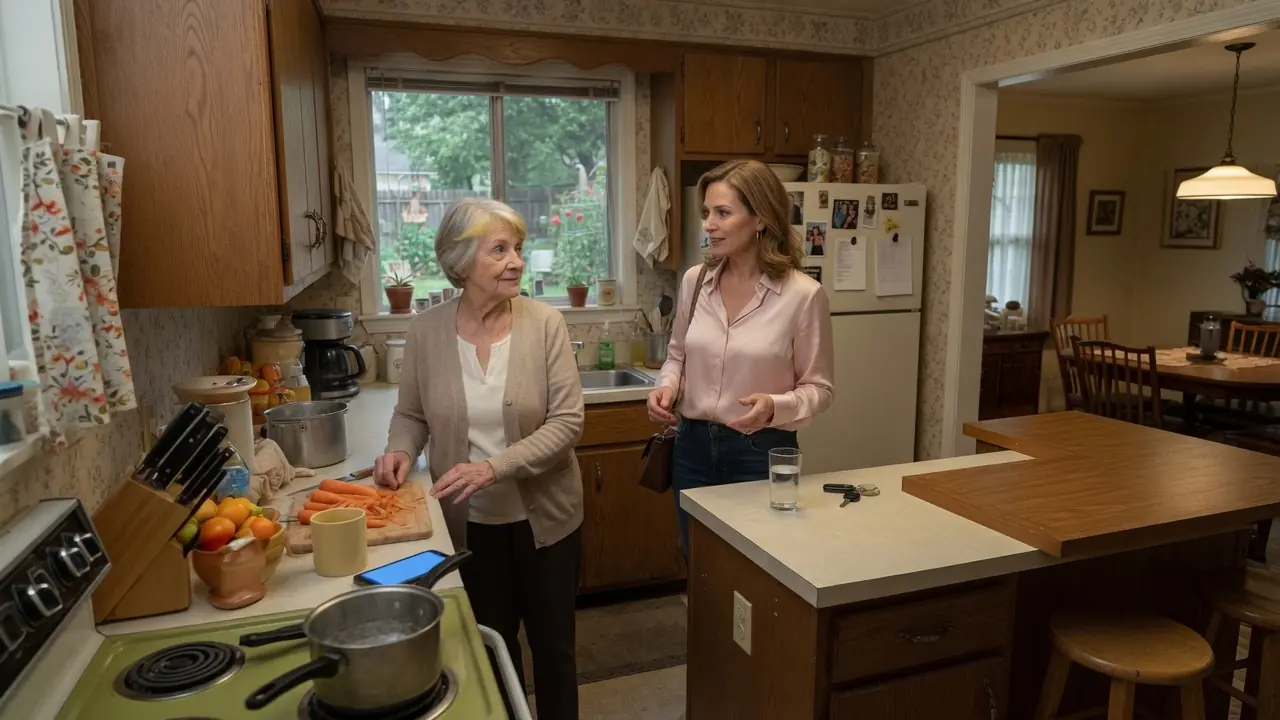
I stood in my kitchen with the pot boiling behind me and felt something inside me settle into place.
Not rage. Not panic. Something colder and cleaner.
I was done begging my own family to respect me.
I sat on the kitchen stool, opened the banking app, selected the first transaction, and marked it as fraudulent. Then I did the same for the next one, and the next, and the next. After that, I froze the card, changed every password, removed saved payment information from the travel account, and requested a replacement card. The bank confirmed the charges would be investigated and the funds held.
It took less than ten minutes.
No shouting. No crying. No lawyers. No dramatic family confrontation in the street.
Just a few taps on a screen, and the power went back to the person who owned the money.
I turned off my phone, tucked it into my apron pocket, and went back to the stove. The water was boiling hard now. I dropped the pasta in and stirred it slowly, feeling a strange peace rise in my chest. For the first time in years, I had not explained, justified, softened, or apologized.
Now I only had to wait for them to reach the airport.
The first message came the next morning while I was watering the hydrangeas by the porch. It was from Gwen.
Your card is getting declined at the airport check-in desk. They won’t let us through. What did you do?
I looked at the message, wiped water from a leaf, and replied.
Exactly what you suggested yesterday, Gwen. I am paying only for my own expenses.
Then I put the phone on silent and carried it inside.
For hours, the screen lit up on the entryway table. Gwen called. Tyler called. Blair texted in long furious blocks, accusing me of ruining their year, their vacation, and their mental health. Their hotel booking had been cancelled because there was no valid payment method. The airline had flagged the tickets before boarding passes could be issued. The resort spa packages were gone.
Their dream vacation died before they reached security.
That afternoon, a car pulled sharply up in front of my house.
I heard suitcases hit the walkway before I saw them. Tyler and Blair came through my front door using the spare key Tyler had kept for years. They looked like they had been dragged through embarrassment and decided I was the easiest place to dump it.
Tyler dropped a heavy suitcase in the hallway, and it scratched the hardwood floor.
“I can’t believe you did this to us,” he yelled. “You humiliated us in front of the whole airport.”
I was sitting in my reading chair with a book open on my lap. I looked up slowly. Tyler was thirty-two, but in that moment, with his wrinkled travel hoodie and offended face, he looked like a boy angry that the rules had suddenly applied to him. Blair stood behind him with her arms crossed, lips pressed tight, waiting for me to collapse under guilt.
“The only people who used someone else’s money without permission,” I said, “were you and your sister.”
Tyler’s face darkened. “We’re family. You were supposed to help us.”
“Family is respected,” I said. “It is not stolen from.”
Blair scoffed. “So what are we supposed to do now? We rented out our apartment for two weeks because we were supposed to be away. There are tourists sleeping in our place, Eleanor.”
I closed my book and placed it carefully on the side table.
“That sounds inconvenient,” I said.
Tyler stared at me as if he did not recognize me.
I continued, keeping my voice even. “You may stay here for a short time, but the rules are simple. Clean up after yourselves. Respect my space. Do not touch my money, my papers, or my property without permission. If those rules are too difficult, the door is wide enough for you to leave.”
Blair narrowed her eyes.
She had expected tears, guilt, trembling hands, maybe an apology. She had expected the old version of me, the woman who filled refrigerators, paid emergency bills, tolerated rude comments, and then lay awake wondering why love felt so much like being drained. That woman had disappeared the moment twelve thousand dollars in charges lit up my phone.
From the first day, Blair decided to punish me by taking over my house.
Since she could not go to the resort, she treated my home like one. The next morning, I woke to a kitchen that looked like a careless guest had mistaken it for a hotel buffet. My cast iron skillets sat soaking in the sink, which was almost a crime by itself. Egg shells lay on the counter, coffee grounds had spilled near the machine, and Blair sat at the dining table drinking the imported coffee I saved for special mornings.
“Morning, mother-in-law,” she said without looking up from her phone. “The Wi-Fi is slow. You should call the company. And there’s no almond milk. Tyler only drinks almond milk now.”
In the past, I would have sighed, grabbed my keys, and driven to the supermarket.
I would have told myself it was easier than arguing. I would have bought the almond milk, cleaned the pans, wiped the counters, and wondered why my own kitchen felt like a place where I worked instead of lived. But that morning, I did none of those things.
I wiped down only the counter space I needed, brewed myself tea, and made toast.
Then I sat at the far end of the table in silence.
Blair finally looked up, annoyed by my calm. “Are you not going to clean that?”
“I didn’t use those pans,” I said. “When you wash them, dry them properly. Cast iron rusts.”
I finished my toast, washed my cup, and went to my bedroom.
That afternoon, while Tyler and Blair were out walking around the neighborhood and complaining loudly about how boring it was, I went to the local appliance store. I bought a small mini fridge and installed it in the corner of my bedroom. Then I moved my good coffee, cheese, meats, fresh fruit, desserts, and a few other things I actually enjoyed into it.
The kitchen fridge was left with rice, beans, vegetables, some pasta, and tap water.
The scream came the next morning.
“Tyler, where is all the food?”
I was already dressed for my walk when I passed the kitchen. Blair and Tyler stood in front of the open fridge like they had discovered a crime scene. Tyler turned toward me with that confused little-boy tone he still used whenever he wanted me to rescue him.
“Mom, what happened to the food? Did you do a cleanout?”
“No,” I said, adjusting my scarf in the hallway mirror. “I adjusted the house budget. As you know, I recently had to deal with a bank fraud attempt, so my finances are under strict control.”
Blair pointed inside the fridge. “There’s nothing here but onions and cheap pasta.”
“That is the community pantry.”
“We’re your guests,” she snapped.
“You are adults,” I corrected. “The supermarket is three blocks away. I assume you have your own cards, since you were apparently planning to enjoy a luxury spa.”
I left them standing there.
When I returned an hour later, Tyler was eating a bowl of plain rice, and Blair was staring out the window with the tragic expression of a woman denied room service.
Food was the first comfort to disappear.
Transportation was the second.
Tyler had always treated my car as an extension of his own life. He took it without asking, returned it with no gas, and acted annoyed if I needed it on the same day. That Wednesday, he came downstairs wearing a nice shirt, adjusting his collar for some business meeting he claimed would change everything.
“Mom, I’m taking the car,” he announced.
He walked to the little ceramic bowl by the door, where I used to keep my keys. His hand landed in an empty bowl. He frowned and pushed old receipts around as if the keys might be hiding under them.
“Where are the keys?”
I was watering my indoor plants with a copper watering can. “The car isn’t available.”
“What do you mean it isn’t available? I need it now.”
“I took it to Dawn’s garage this morning,” I said, plucking a dead leaf from a fern. “Oil change, brake check, tire rotation, preventative maintenance. He said it could take a few days. Maybe a week. I told him I was in no hurry.”
Tyler stared at me. “Why didn’t you ask me?”
I turned and looked him straight in the eye. “Because it is my car, Tyler. I do not need permission to maintain my property.”
“But I have a meeting.”
“Call a cab. The number four bus comes in ten minutes.”
His face moved from anger to disbelief, then finally to helplessness. There was no argument he could win because I had stated a fact, not opened a debate. He stormed out and slammed the door. I went back to watering my fern.
The weekend brought Blair’s next attempt at control.
If she could not control the kitchen, the food, or the car, she decided to control the atmosphere. Without asking me, she invited three friends and Gwen to my house for an afternoon gathering. I returned from my errands to find the living room turned into a loud social club.
Cheap wine sat on my coffee table.
Shoes were on my light-colored sofa.
The television blared so loudly I could hear it from the porch.
Gwen saw me and looked away, still angry about the airport. Blair smiled smugly, clearly pleased with herself. “Hi, mother-in-law,” she called over the noise. “We decided to have a little get-together to lift our spirits.”
They expected me to lose control.
They wanted me flustered, shrill, or hurt. They wanted an emotional scene they could retell later as proof that I was unstable and cruel. Instead, I walked to the main outlet behind the cabinet and unplugged the television and sound system.
Silence dropped over the room.
The women stared at me.
“Excuse me, ladies,” I said politely. “This is my downtime. In this house, shoes are not allowed on furniture. I would ask you to lower your voices, or better yet, continue your gathering in a public place.”
Then I turned to Blair.
“And if a drop of wine lands on that sofa, the professional cleaning bill will come out of your husband’s account.”
I picked up the TV power cord, coiled it, and carried it away.
Within five minutes, the room was empty.
Blair was left standing there, red-faced and humiliated, with no audience left to play victim for. Gwen left without saying goodbye. I did not chase her. I did not explain myself. I gathered the glasses, poured out the cheap wine, and opened a window.
The next morning, I noticed my study drawer was slightly open.
My desk chair had been pushed back. One drawer, where I used to keep bank statements, was not fully closed. Nothing valuable was missing because nothing valuable was there anymore. Since freezing the card, I had rented a safe deposit box at the bank. My backup cards, important documents, updated will, and jewelry were all safe.
Still, the message was clear.
They had been searching.
Maybe they wanted my new card. Maybe they wanted financial papers to convince themselves I owed them something. Maybe they were looking for cash. Whatever the reason, they had entered a private room in my home and crossed one more line.
That afternoon, I bought a smart lock with a keypad.
I installed it myself on my study and bedroom door. I had always been handy with tools, and the instructions were simple. When Tyler tried to enter later under the excuse of needing a pen, he found the keypad.
I heard him tapping uselessly from the hallway.
I stepped out of the kitchen and handed him a cheap plastic pen.
“This part of the house is private now, Tyler.”
He stared at the lock, then at me. “You locked me out?”
“No,” I said. “I locked myself in.”
That was the moment I saw reality reach him.
He was beginning to understand that I was not the unconditional safety net anymore. I was the homeowner, the bank account holder, the person with the keys to the comfort they had abused. They were not guests. They were unwanted occupants on borrowed time.
The final push came on Thursday morning at exactly seven.
The doorbell rang, and three men in work coveralls entered with paint buckets, plastic tarps, and electric sanders. I had hired them the week before. Tyler and Blair were still asleep in the guest room when I opened the door and led the workers straight down the hallway.
I threw the guest room door open.
“Good morning,” I said brightly. “Rise and shine. The painters need to get started.”
Tyler jolted upright. “What painters? Mom, it’s seven in the morning.”
“Yes,” I said. “I’ve been meaning to turn this room into my sewing and reading room. The cream color is boring, so we’re painting everything linen and sanding the floors today.”
Blair clutched the sheets. “But we have nowhere to sleep.”
“The living room sofa is comfortable with a blanket,” I said kindly. “Pack your clothes quickly unless you want them smelling like paint. The work will take five days. There will be noise.”
The workers began covering furniture with heavy plastic.
Then the electric sander roared to life.
I left the room smiling.
There is no arguing with a homeowner improving her own property.
Some people do not learn through speeches. They learn when comfort disappears. Tyler and Blair lasted through the noise, dust, plain rice, no car, no private access, and no control for exactly twenty-four more hours.
By Friday afternoon, they were dragging their suitcases down the hallway.
Blair refused to look at me. She typed furiously on her phone, probably describing me as the worst mother-in-law in America. Tyler stopped by the front door, his face tired and defeated.
“You didn’t have to treat us like this,” he said. “We’re family.”
“Exactly,” I replied. “And family is respected. Vacations are paid for. Loans are paid back. Homes are treated with care. When you understand that, we can have coffee.”
He looked like he wanted to say more, but he had no words that would change anything.
“Have a safe trip home,” I said.
Then I closed the door gently and slid the bolt.
The next morning, I called a locksmith and changed the front lock. Tyler’s spare key had worked once, and once was enough. Peace, I had learned, should never depend on someone else being decent enough to return access they should never have abused.
That evening, Gwen called.
I let it go to voicemail.
Her message was long, sharp, and full of accusations about how I had destroyed the family. I listened to none of it. I had no obligation to accept lectures from people who tried to use my money, invade my home, and call it love.
My house was quiet again.
A deep, clean silence filled every room.
I cooked dinner using the good ingredients from my private fridge and ate in the living room with my feet tucked under me. The guest room smelled faintly of new paint, the sofa was clean, the kitchen was mine, and my phone was silent. There was no grand celebration, no group apology, no movie-like reconciliation where everyone cried and learned their lesson.
Real life is not that tidy.
My children might never understand what they did. Gwen may always believe I was selfish for refusing to pay. Tyler may always tell himself I was cruel because I stopped rescuing him. Blair may always describe herself as the victim of a cold mother-in-law.
But for the first time, I did not need them to understand.
I had set a boundary with action, not with pleading words.
The money was mine.
The house was mine.
The peace was mine.
And after years of being treated like a family wallet, I finally remembered that love without respect is not love at all.