On Thanksgiving Day, my daughter looked across the table at me and said, “The best gift would be for you to disappear.”
So that was exactly what I did.
I paid off their mortgage, took back everything they thought belonged to them, and flew to Hawaii. But what I left on her kitchen table destroyed every illusion they had about me.
I reached into my jacket pocket, feeling the edge of the envelope, still believing the night would end with gratitude. The dining room felt warm, almost too warm, with the fireplace crackling behind me and the chandelier casting soft yellow light over the Thanksgiving table. Snow fell outside the window in Oak Park, covering the street in thick white flakes. Maria’s photo watched from the mantel, her smile frozen in a better time.
I stood slowly, pushing back from the table with more effort than I remembered needing. Sixty-five felt heavier these days. “Fern, honey,” I said, trying to keep my voice hopeful. “I got something for you. Happy Thanksgiving.”
The envelope passed from my scarred fingers to her smooth ones. She took it without looking up from her phone, tearing the paper with her thumb while Sophie picked at her pumpkin pie, Vernon cut another piece of turkey, and Alex stared at the blue glow of his screen. Inside was a check for $5,000. I had thought it would help with the credit card debt Fern had mentioned during a panicked call at two in the morning.
Fern’s eyes scanned the numbers, but her expression never changed. No smile, no surprise, not even thanks. “Five thousand?” she said flatly, as if I had handed her a grocery receipt. “That’s it?”
My chest tightened. “Well, I figured it would help with that credit card situation.”
She looked up then, and her eyes were colder than the snow outside. “You know what, Dad? The best gift would be when you’re no longer around.”
Time did something strange after that. The fire’s crackling faded into a dull roar in my ears, and Vernon’s knife stopped mid-cut. Sophie’s fork froze in the air, and Alex’s thumbs stopped moving on his phone. Fern’s face stayed perfectly still, as if she had just commented on the weather.
“What?” I whispered.
“You heard me,” she said. She set the check down on the table, not in her purse, not in her pocket, just down, like it was trash. “You’re always here. Always hovering. Always controlling everything with your money. We can’t breathe with you around.”
I gripped the back of my chair because my hands would not stop shaking. Fifteen years of mortgage payments came rushing through my head. Fifteen years of showing up when they called, fixing what broke, covering what they could not pay, and buying what the kids needed. I had thought that was love.
“I just wanted to help,” I said quietly.
“Help?” Fern laughed without humor. “You wanted to keep us dependent. You wanted to make sure we’d always need you. Well, congratulations, Dad. It worked. We’re stuck.”
Vernon looked down at his plate. Sophie’s face crumpled, but she said nothing. Alex scrolled again like nothing was happening. The check sat between the serving dishes, $5,000 nobody wanted, while my daughter explained why the world would be better without me in it.
“What did you just say?” I asked. “About me being gone?”
“I said what I said,” Fern replied, crossing her arms. “And you know I’m right. When you’re gone, we’ll finally be free. The house will be ours. Our money will be ours. Our lives will be ours.”
The chandelier’s soft light suddenly felt harsh, exposing every crack in the life I thought I had built for my family. I pushed back from the table, feeling every one of my sixty-five years in my knees, my back, and my chest. Something painful had taken root inside me. “I think I need some air.”
I turned toward the kitchen, away from Fern’s cold eyes, Vernon’s cowardice, and the check that represented fifteen years of my life being treated like nothing. The kitchen door was only a few steps away, but it felt like miles. Behind me, Fern said something else, but the words blurred into the pounding of my heart. I walked away from the table and left them with their turkey and their truth.
The kitchen door swung shut behind me. The fluorescent lights hummed overhead, colder and harsher than the dining room’s glow. I gripped the sink with both hands and stared out the window at the snow piling against the back fence. My reflection in the glass looked like an old man with gray hair and confused eyes.
I turned on the cold water and splashed my face. The shock helped a little. My daughter had actually said the world would be better when I was gone. Not gone on vacation, not moved away, but gone in the only way that would make the house and money theirs.
The door slammed open. “Don’t you walk away from me,” Fern snapped.
She crossed the small kitchen, grabbed a sponge, and attacked the dishes with sharp, angry movements. Plates clattered, water splashed, and every sound felt deliberate. I turned slowly and said, “I needed a moment, Fern. What you said was hurtful.”
“Hurtful?” she said, scrubbing harder. “You want to talk about hurt? Try living under your shadow for forty years. Try having a father who thinks every dollar spent is a chain around your neck.”
“That’s not true.”
“I’ve spent my entire adult life hearing about your sacrifices,” she cut in. “The house, the bills, the kids’ school supplies, the car repairs, everything you’ve done for us. Over and over, like we asked for it.”
“You did ask,” I said quietly. “Every time you called at two in the morning because the furnace broke. Every time Vernon lost another job and you needed help with rent. Every time the kids needed something.”
“Because you made sure we’d need help,” she said. The sponge hit the sink with a wet slap. “You bought the house in your name. You pay the mortgage so you can hold it over us. You set it up perfectly.”
I stared at her. “I bought the house because you couldn’t afford it. You and Vernon were three months behind on rent. Sophie was a baby. What was I supposed to do?”
“Let us figure it out ourselves,” she said. “Maybe we would have been fine. But you needed to be the hero. You needed us to owe you.”
She moved closer and jabbed a finger into my chest. “You wanted us dependent.”
I stepped back against the counter. “I wanted my daughter and my grandchildren to have a safe place to live.”
“No,” she said. “You wanted to make sure we could never leave. Because what would you be without us needing you, Dad? Just a lonely old man in an empty house.”
The words hurt worse than her finger. I raised my hands, not in defense, but in surrender. “Is that really what you think after everything?”
She hesitated, and for a moment her anger shifted into something almost like pain. Then she said, “Mom would have wanted you to hear this.”
“Don’t bring your mother into this.”
“She knew what you were like,” Fern said. “Controlling. Always making everything about your sacrifices.”
“Your mother would be ashamed to hear you talk like this.”
Fern’s face turned red. “Don’t you dare bring Mom into this. She’s gone because of the stress you caused.”
“That’s a lie,” I said, and my voice became sharper than I expected. “Your mother had a heart condition. The doctors explained it. You were there.”
Fern folded her arms. “Convenient diagnosis.”
The kitchen felt smaller. The fluorescent lights buzzed louder. I could hear my heartbeat in my ears. “Why are you doing this? What did I do that was so terrible?”
She looked away, then said the real reason out loud. “We want to move. Vernon and I want to sell the house and move to Arizona. Start fresh. But we can’t because it’s in your name.”
There it was.
They wanted the house. They wanted to cash out fifteen years of my mortgage payments and disappear to Arizona. All the talk about control, all the anger, all the cruelty came down to one thing: I was standing between them and the money they thought they deserved.
“I see,” I said.
“Do you?” Fern demanded. “We’re suffocating here. Vernon can’t find work. I’m stuck in retail management. The kids are growing up in your shadow. We need a fresh start, but you won’t let us have it.”
I looked at her and wondered when my little girl had become a stranger. She had once handed me tools in my workshop and called herself my helper. She had once wrapped her tiny fingers around mine and looked at me like I could fix anything. Now she looked at me like I was an obstacle.
“I’ll leave you alone now,” I said.
“Yeah, that’s right,” she called after me. “Run away like you always do.”
I stopped at the hallway doorway but did not turn around. My hand rested on the frame. The house, my house, suddenly felt like a cage. I walked to my bedroom and shut the door.
I sat in the dark for a long time before turning on the lamp. The rocking chair by the window held me the way it always did when sleep would not come. Outside, Chicago wore its winter coat, snow drifting past streetlights while distant headlights cut through the darkness. Inside, my mind replayed Fern’s words again and again.
Near one in the morning, I stood and crossed to the bookshelf. Under Maria’s books and my old engineering manuals sat the leather-bound photo album. The leather creaked as I opened it, as if it remembered every night I had searched its pages for comfort. The first photo was Maria in her wedding dress in 1982, smiling beside my younger self.
I turned the pages slowly. Baby Fern gripping my finger. Toddler Fern at the playground. Five-year-old Fern in my workshop, wearing one of my old hard hats and handing me a wrench with great seriousness. Then Maria holding Fern at about three years old, both of them laughing at something off camera.
I touched Maria’s face in the photo. “When did it change?” I whispered.
When had Daddy become Dad, and Dad become a burden? Was it after Maria passed away eight years ago? Was it when Fern married Vernon and money became the language of our relationship? Or was it gradual, death by a thousand small betrayals I had been too busy to notice?
I looked down at my hands. Scarred, calloused, marked by decades of construction work. Every scar told a story of providing. Every mark was a payment made.
That night, I did the math. Fifteen years of mortgage payments came to nearly $287,000. Credit card bailouts, car repairs, school supplies, medical bills, and emergency loans added tens of thousands more. None of it had been repaid. Worse, none of it had even been appreciated.
I remembered Maria’s voice. “Lem, don’t let people mistake your kindness for weakness.”
She had said that when contractors tried to underbid me, when neighbors asked for favors they never returned, and when Fern started calling more often as an adult, but only when she needed something. I finally understood what Maria meant. I had not built a legacy. I had built a prison for myself.
By morning, my mind was sharp. I went to the kitchen, made coffee strong enough to strip paint, and pulled the folder labeled “Home Documents” from the cabinet above the refrigerator. Maria had written the label in her careful handwriting years ago. Inside were insurance papers, warranty booklets, old utility bills, and the original contract for the house.
The date was March 15, 2010. Property address: 342 Oak Street, Oak Park. Purchase price: $320,000. Primary owner: Lemuel Gomez.
I stared at my name.
Fourteen years earlier, Fern had shown up at my old house crying with baby Sophie in her arms. Chase Bank had rejected her mortgage application because of unstable income, poor credit, and Vernon’s unemployment. She had begged me to help. “Please, Dad. The kids need a stable home.”
At the bank, the loan officer explained that because I had the income and credit, I would be listed as the primary owner. Fern would be a co-resident. I had hesitated for a second, but Sophie had grabbed my finger with her tiny fist, and I thought, “Family takes care of family.” So I signed.
Now the truth sat in front of me in black and white.
Fern had used “your house” as an accusation. She had not realized she was giving me the answer. It was my house. My name, my credit, my money, my responsibility. Legally and completely, it was mine.
I called Mark Rivera the next day. He was an attorney I had known for years, back when his firm handled contracts for the construction company. His office was on the twenty-eighth floor downtown, with glass windows overlooking Chicago and Lake Michigan. I arrived with the folder under my arm like it was evidence.
Mark read through everything in silence. He checked details on his computer, made notes, and finally leaned back. “Lem,” he said, removing his glasses. “Legally speaking, this property is entirely yours.”
Something in my chest loosened.
“Your daughter is listed as a co-resident,” he continued. “That gives her no ownership stake. You never gave the house away.”
“What if I want them out?” I asked.
Mark went still. “That’s heavy. They’re family.”
“Family that told me the best gift would be when I’m no longer around.”
The office became silent. Mark stared at me, shocked. Then he clicked his pen twice and said, “You have every legal right. They are month-to-month residents without a formal lease. You can give them fourteen days to vacate.”
“Draft the notice.”
“Are you sure? Family doesn’t come back from this.”
I thought of Fern’s cold eyes, Vernon’s silence, and fifteen years of being their safety net, their bank, and their scapegoat. “More sure than I’ve been about anything in a long time.”
Mark drafted the notice and slid the papers into an envelope. “Once you hand this over, there’s no taking it back.”
I took it. “It’s already ugly.”
On the way home, I stopped for lunch near the train station and barely tasted the sandwich. One more thing had to be done. When I got back, the house was empty. Fern had left a note saying they had gone to the outlet mall. Perfect.
I opened my online banking account and called Chase. The remaining mortgage balance was $43,127.89. After fifteen years, that was all that stood between me and total freedom. I transferred the money from my pension account and paid it off in full.
The confirmation email arrived minutes later. “Your mortgage payment has been received and is processing.”
I printed it and slid it into the home documents folder. Then I sat alone in the living room and let the truth sink in. The house was mine. The control was mine. The power was mine.
For the first time in years, I was holding the cards.
The next day, I walked down Michigan Avenue with no destination. Chicago wind cut through my coat, and holiday shoppers hurried past me with bags and bright scarves. Then I stopped in front of a travel agency window. A huge poster read, “Escape to Paradise: Hawaii.”
Waikiki Beach stretched across the image in impossible blue and gold. I saw my reflection in the glass, an old man with tired eyes layered over palm trees and ocean. Maria’s voice came back to me from twenty years earlier: “Lem, someday when we retire, let’s go to Hawaii. Just us.”
We never went.
There was always something. Money was tight, Fern needed help, Maria got sick. Always something.
I pushed open the door. A woman behind the desk smiled. “Looking to escape the cold?”
“You could say that,” I replied. “Tell me about Hawaii.”
I booked two weeks on Oahu, a beachfront room in Waikiki, and a flight leaving Tuesday morning. The total was $1,847. Less than one mortgage payment from all the years I had given away. When the agent asked if I was celebrating something special, I said, “A new beginning.”
On Monday afternoon, I wrote the note. I rewrote it four times, trying to make it neither angry nor weak. The final version was clean and simple.
Fern and Vernon, by the time you read this, I’ll be gone. Not gone the way you wished on Thanksgiving, but gone from your life in a different way. I’ve paid off the mortgage. The house at 342 Oak Street, Oak Park, is now entirely in my name. You have fourteen days from today, December 2, 2024, to vacate the property. I’ll return on December 17. If you’re still here, I’ll proceed with legal eviction.
This isn’t cruelty. This is consequences. You wanted me gone. Now you’re gone, but on my terms, not yours. I’ve spent fifteen years sacrificing for you, and what I received was a wish for my death. I’m going to live the life I put on hold. Do not try to reach me. I won’t answer. Lem Gomez.
I placed the note and mortgage confirmation inside a manila envelope, sealed it, and wrote, “Fern and Vernon. Read immediately.”
Then I placed it under the crystal vase in the center of the kitchen table. Maria had loved that vase. She had kept it filled with flowers every week before she got sick. Now they would have to lift Maria’s legacy to see their consequences.
At five the next morning, I left the house quietly. The Uber waited outside, and the driver helped with my suitcase. I looked back once at 342 Oak Street. The house was dark except for one porch light. Then we turned the corner, and it disappeared.
At O’Hare, I ignored the first call from Fern. Then another. Then another. By 8:45, the voicemails were stacking up. At 8:55, I answered.
“What is this, Dad?” she shouted.
“You found the note. Good.”
“You can’t do this. This is our home.”
“No,” I said calmly. “It’s my home. Check the documents.”
“Where are we supposed to go?”
“Not my problem. You have fourteen days.”
She tried anger first, then tears. “Dad, please. We can talk about this.”
“We talked on Thanksgiving,” I said. “You said the best gift would be my death. I’m giving you a different gift. A lesson.”
“Where are you going?”
“Somewhere you’ll never find me.”
Then I ended the call and powered off the phone.
The plane to Honolulu lifted off soon after. Chicago fell away beneath me, shrinking into streets, buildings, and winter gray. Somewhere below, Fern was panicking, Vernon was useless, and the house they had taken for granted was no longer theirs. I was thirty-five thousand feet in the air, heading toward the ocean.
Hawaii felt like another life. Warm air hit me when the plane door opened, carrying the scent of flowers I could not name. At the hotel, I stepped onto my balcony and saw Waikiki Beach curving in both directions. Waves rolled in, steady as breathing, and Diamond Head rose in the distance.
For the first day, I did nothing. I sat on the beach, turned off from the world, and let the sound of the ocean replace years of guilt. My phone stayed powered off in my room. No one could reach me. No one could ask me for money. No one could make me feel responsible for their failures.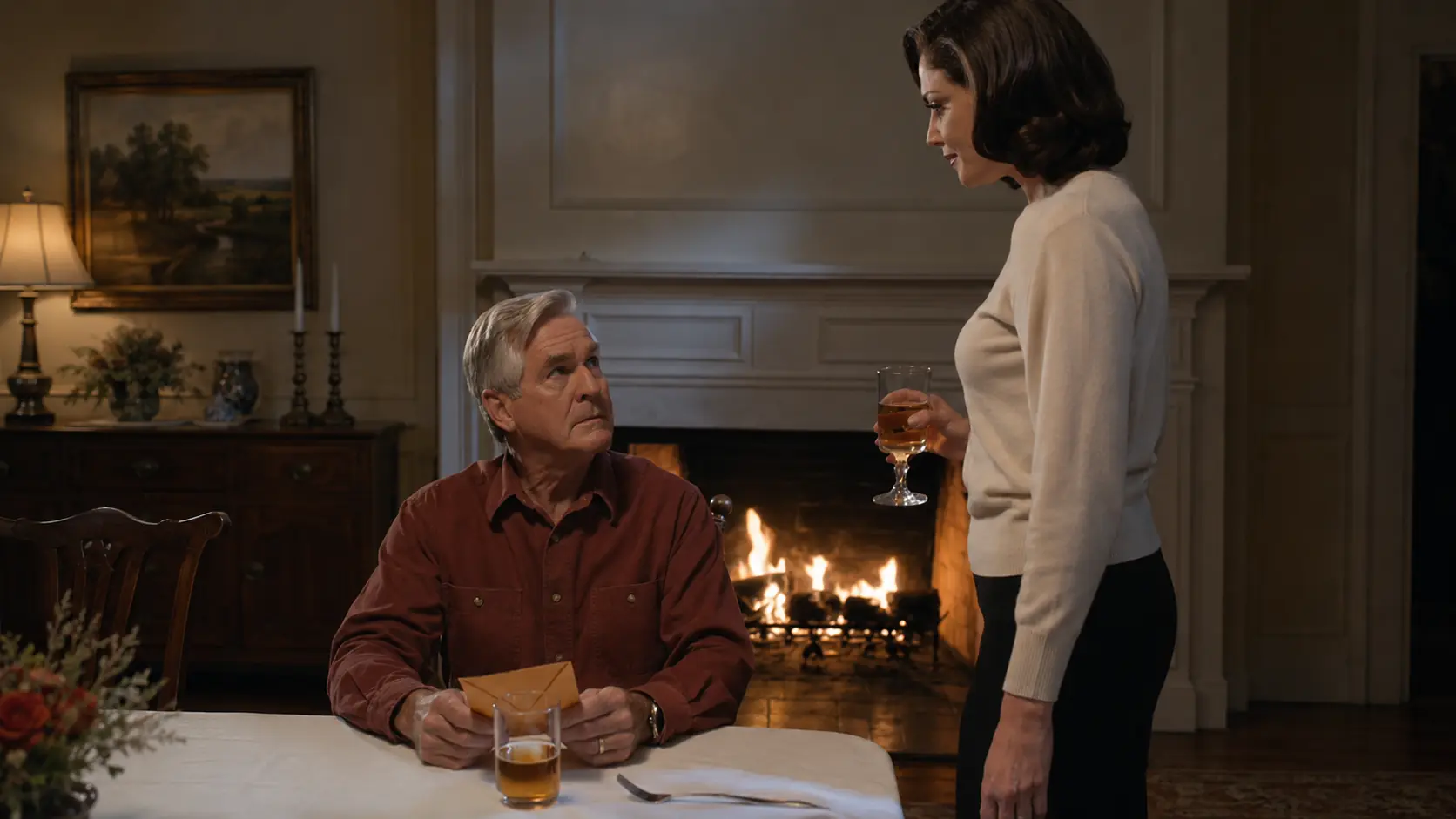
Over the next days, I tried surfing and fell more times than I could count. I hiked Diamond Head and stood at the top sweating and smiling. I ate shave ice, fresh pineapple, grilled fish, and garlic shrimp from a roadside truck. I watched sunsets turn the sky red, orange, and purple.
I took a day trip to the Big Island and stood at the rim of a volcano. The ranger said volcanoes were both creators and destroyers. I understood that. Sometimes destruction cleared the way for new growth. Sometimes you had to burn down the old structure before building something better.
At Pearl Harbor, I thought about sacrifice. Real sacrifice. Not the kind that gets expected, exploited, and turned against you. I stood quietly at the memorial and realized I had choices all along. It had taken me sixty-five years to make the right one.
Two weeks passed faster than I wanted. On my last night, I ate lobster by the ocean and watched the sunset. The waiter told me I looked more relaxed than when I had arrived. I told him I felt different. I meant it.
When I flew back to Chicago, I was nervous for the first time in days. The taxi turned onto Oak Street, and I leaned forward. The driveway was empty. No cars.
I unlocked the front door and turned on the lights. The living room was empty except for my recliner, the one Maria had bought me for my fiftieth birthday. Fern’s furniture was gone. Vernon’s mess was gone. The big television was gone. My house echoed, but it felt clean.
In the kitchen, a note was stuck to the refrigerator.
Dad, you won. We’re gone. I hope you’re happy. Don’t expect us to ever forgive you. You chose money over family.
I read it twice and laughed softly. “No, Fern,” I said to the empty room. “I chose myself over being used.”
I tore the note in half and dropped it in the trash.
Then I walked through every room. Their bedrooms were empty, their closets bare, their things gone. My shaving kit was still exactly where I had left it. The house felt larger, quieter, and lighter, as if the walls themselves had been holding their breath for years.
I turned my phone back on. Messages flooded in. I deleted them all and blocked Fern and Vernon’s numbers.
Then I called Mark. “They’re gone,” I said.
“How do you feel?” he asked.
“Lighter,” I replied. “Like I can breathe again.”
That night, I made coffee and sat in my chair. The house was empty, but for the first time in years, it felt full of possibility. I looked through the photos from Hawaii, the surfing wipeout, the Diamond Head summit, the sunset over Waikiki. Two weeks had reminded me I was more than a bank account, more than a doormat, more than Fern’s father.
I was Lem Gomez. Sixty-five years old. A man who had built things, survived loss, given too much, and finally learned where kindness had to end.
Fern wanted me gone, and she got her wish. Just not the way she expected.
I stood by the window, looking out at Chicago in the winter dark. Tomorrow, I might call a realtor. I might book another trip to Hawaii. I might do both.
But tonight, I just stood there and breathed.
The house was empty.
My life was full.