I had just retired when my daughter-in-law called and told me she was leaving her three children with me. Not asking. Telling. Her exact words were, “After all, you don’t do anything anymore, so you can watch them while I travel.”
For a moment, I sat in my living room with the phone in my hand, staring at the travel brochures spread across my coffee table. Yellowstone, the Grand Canyon, the Pacific Coast Highway, all the places I had dreamed of seeing for years were right there in front of me. I had worked since I was twenty-two years old, and now, at sixty-seven, I had finally earned time for myself. But Brooke saw my retirement as empty space she could use.
My name is Helen Miller. For thirty-five years, I taught at Lincoln Elementary in Columbus, Ohio. I dealt with difficult children, exhausted parents, classroom fights, broken homes, and impossible situations. But nothing in all those years prepared me for my daughter-in-law.
Brooke never called me Mom. She barely called me her mother-in-law. Most of the time, she just said my name like it was a small inconvenience. That afternoon, she called without even saying hello.
“Helen,” she said sharply, “I have an incredible opportunity in Miami. It’s a business conference, and it is going to change our lives.” I already knew what that meant. Another one of her schemes, another trip, another excuse to spend money Michael worked fourteen-hour days to earn.
“The kids can’t miss two weeks of school,” she continued. “So I’ll leave them with you.” I blinked and whispered, “I’m sorry?” She laughed like I had failed to understand something obvious. “Don’t play deaf. I said I’m going to leave Aiden, Chloe, and Leo with you. You don’t do anything anymore. You can watch them while I travel.”
I felt my blood turn hot. I had raised my son alone after my husband Richard died. I had taught generations of children. I had worked until my hands ached and my knees hurt. And now this woman, who had never held an honest job long enough to sweat through one hard week, was telling me I did nothing.
“Brooke, I have plans,” I said. “Plans?” she snapped. “What plans can a retired old woman have? Knitting? Soap operas? Don’t be ridiculous. I’ll drop them off tomorrow morning at seven.”
I told her I would not watch the children for her. That was when her voice changed. “You’re their grandmother. It is your obligation. And if you ever want to see them again, you had better cooperate, because I decide whether they have a grandmother or not.”
Something inside me broke then. Or maybe something inside me finally woke up. I had spent years keeping quiet for Michael, swallowing insults so I would not make his life harder. But Brooke had just declared war, and she had forgotten something important.
Mrs. Miller never stayed silent in the face of injustice. “All right, Brooke,” I said in the sweetest voice I could manage. “Bring them tomorrow.” She took that as victory. “That’s more like it. And don’t spoil them. They’re difficult because you never knew how to raise Michael properly.”
I ended the call before she could finish. I sat there staring at my framed retirement certificate on the wall. Thirty-five years of shaping children, calming chaos, and teaching right from wrong, and my own daughter-in-law treated me like free labor. But if teaching had taught me anything, it was this: the best lessons are not always taught with words.
I picked up my phone and called my old friend Carol. “Carol, it’s Helen. I need your help.” I asked about the small recorders she once used during her divorce. Then I asked if her sister still worked with Child Protective Services.
That night, I barely slept. Memories came in waves. I remembered Richard leaving for a business trip on a rainy October morning and never truly coming home. His car had been caught in a massive pileup on the interstate during a blizzard. He survived three days in the hospital, just long enough to take my hand and say, “Take care of our son. Make him a good man.”
I tried. I was left with one hundred dollars, a three-year-old boy, and a teaching degree. I worked mornings in the classroom and afternoons tutoring. Michael ate before I did. If there was money for shoes, they were for him. If there was a birthday toy, I pretended I was not hungry that night.
When Michael grew older, the expenses multiplied. Books, clothes, bus fare, school supplies. I sold pies at church bake sales on Sundays and graded papers late into the night. My hands were swollen from kneading dough before dawn, but it was worth it when Michael was accepted into Ohio State for industrial engineering.
Then Brooke appeared during his junior year. She wore a pastel pink dress, smiled perfectly, and hugged me like she had known me all her life. “Mrs. Miller, Michael has told me so much about you,” she said. “Raising such a wonderful son alone. You are my hero.”
I believed her. After years of being alone, after years of sacrifice, I wanted to believe someone saw me. Brooke helped me cook, told stories about growing up poor, and said she understood struggle. I now know most of it was a performance.
The change came slowly. First, little comments. “What a shame Michael did not have a father figure.” “If you had saved better, he could have gone to a private school.” “No offense, Helen, but your food is very simple.” Each sentence was a small cut, and I endured every one for Michael.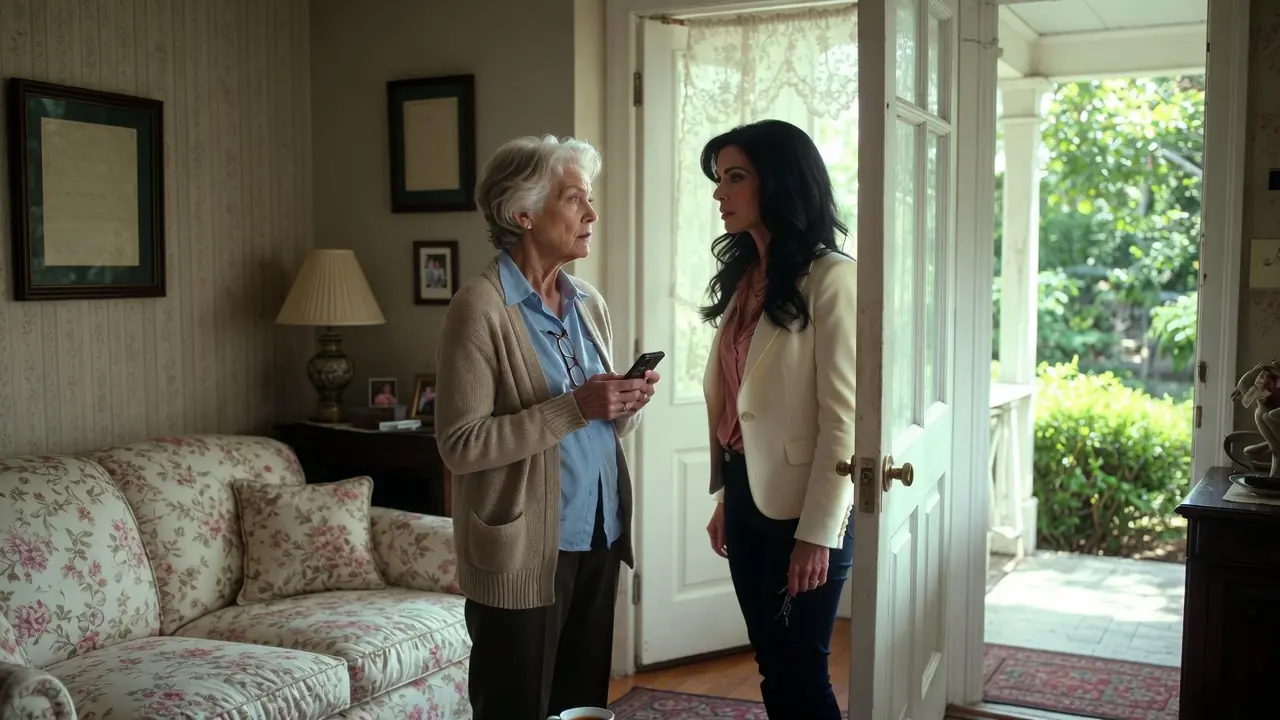
When Aiden was born, I thought things would improve. I knitted him a blanket for nine months. Brooke took one look at it and said they already had better things from Nordstrom. “We can donate this,” she said.
With Chloe and Leo, I was pushed farther away. Brooke said my house was unsafe, my ideas were old-fashioned, and I would spoil them. She let me see them only when it was useful to her. She taught them that I was poor, boring, embarrassing, and not worth their time.
The worst blow came at Chloe’s fifth birthday. I had saved for three months to buy the dollhouse she wanted. I arrived in my best dress with the wrapped gift in my arms. Brooke met me at the door and did not let me inside.
“Oh, Helen,” she said with fake sadness. “This is just for Chloe’s school friends and their parents. Different people, you understand. We would not want you to feel uncomfortable.” I saw Michael in the backyard, playing with the children. He saw me too. He looked away.
Now Brooke wanted me when she needed free childcare. The next morning at exactly seven, the doorbell rang. She stood there with three children and suitcases bigger than they were. Aiden was twelve, glued to his phone. Chloe was ten, wearing disgust like a mask. Leo was seven and already looking for a television.
“I don’t have time to chat,” Brooke said. “Aiden is allergic to dust. Chloe won’t eat green vegetables. Leo needs his iPad to sleep. The medicine is in the blue suitcase. I’ll be back in two weeks.”
“Is Michael coming to say goodbye?” I asked. Brooke rolled her eyes. “Michael is working, as always. Someone has to support this family.” Then she leaned close and whispered, “And don’t fill their heads with ideas. Remember, I decide if they ever see you again.”
She left without hugging them. No kiss. No goodbye. Just her heels clicking away and the engine of her new SUV disappearing down the street. I stood in the doorway with three children who looked at me like I was the enemy.
“Where’s the Wi-Fi?” Aiden demanded. “The modem is broken,” I said. It was not broken. I had unplugged it. He began shouting like I had taken away oxygen. “You’re the worst grandmother in the world. That’s why nobody likes you.”
There was Brooke’s poison coming out of my grandson’s mouth. Chloe crossed her arms and said she would not eat anything I cooked because her mother said I was terrible in the kitchen. Leo wanted YouTube. I looked at them and saw not bad children, but neglected children trained to disrespect love when it arrived without a price tag.
“You mother asked me to take care of you,” I said calmly. “Not entertain you. There is food in the kitchen, water in the tap, and beds to sleep in. If you want anything else, you will earn it.” Chloe looked offended. “We’re kids. We don’t have to earn anything.” “In this house,” I said, “everyone contributes.”
The first night was awful. Aiden kicked his bedroom door. Chloe cried for hours. Leo wet the bed on purpose. They wanted to break me the way their mother had tried to break me for years. But at two in the morning, I heard real sobbing from Chloe’s room.
I found her hugging a crumpled photograph. She tried to hide it, but I had already seen enough. It was a picture of me holding her when she was a baby, before Brooke began pushing me away. “Do you miss your mom?” I asked softly.
“No,” Chloe said too quickly. Then she whispered, “Mom always leaves. She’s used to it. I mean, I’m used to it.” That was the first crack in the armor. Brooke had not only separated the children from me. She had emotionally abandoned them too.
The next morning, Carol arrived before the children woke. She brought small recorders, a hidden camera, and credit reports. Brooke had thirty thousand dollars in debts under Michael’s name. Carol’s sister Lauren, who worked with child protective services, agreed to visit the next day as part of a routine concern check. If Brooke wanted a war, I would fight with evidence.
Breakfast was pancakes shaped like animals, fruit cut into stars, and chocolate milk. Aiden tried to pretend he was unimpressed, but I saw the smile before he hid it. Leo said the pancakes were delicious. Chloe elbowed him and whispered that they were not supposed to like my food.
“Not supposed to?” I asked. Chloe went silent. After breakfast, I gave them chores. Aiden washed dishes. Chloe made beds. Leo picked up toys. They protested, but they did the work.
Then I showed them a public photo from Brooke’s social media. She was in Miami, on the beach with a man who was not Michael. Leo said innocently, “That’s Uncle Dominic. He comes over when Dad is at work.” Aiden covered his mouth, but it was too late.
The children knew far more than they should. Uncle Dominic had been in their home. He slept in Michael and Brooke’s room when Michael traveled for work. Brooke told the children not to mention him because their father would “die of sadness” if he knew.
I kept recording. I asked careful questions. Little by little, the truth came out. Brooke had told them I was poor, embarrassing, bitter, and useless. She had taught them my house was dirty and my food unsafe. Yet Chloe looked around my kitchen and whispered, “It smells like cinnamon and coffee. It smells like home.”
That afternoon, I checked Aiden’s phone. Children save everything now, whether they know it or not. What I found froze my blood. Brooke and Dominic were not just having an affair. They were planning to leave Michael, take the children, and move to Miami.
Brooke had opened credit cards in Michael’s name. She had emptied accounts. She had talked about my house as if it would become hers when I died. There were messages about forcing a divorce, hiding money, and using the children as leverage. I photographed everything.
That night at dinner, I tested them. “Would you like to go home tomorrow?” I asked. Aiden answered automatically, “Yes.” I asked, “To your father’s house or Uncle Dominic’s house?” Chloe dropped her fork.
The truth spilled out after that. Chloe cried and said Brooke told them Michael was boring, Dominic was more fun, and they would soon have a better house with a pool. Leo said Dominic slept in their parents’ room. Aiden looked terrified and asked if Michael knew.
“No,” I said. “Your father does not know. But he deserves the truth.” That night, I called Michael and asked him to come the next evening. I told him it was about a leak. It was not a total lie. There was a leak, but it was in his marriage.
Before Michael arrived, things got worse. Leo found old fireworks and lit one inside the house at dawn. The curtain was scorched, smoke filled the room, and the children spiraled into chaos. Aiden threw a vase, Chloe broke plates, and Leo tore pages from my photo albums.
I stood in the middle of it all, calm, because the hidden camera was recording. When they were done, I asked, “Are you finished?” They stared at me, confused by my lack of panic. “Now you will clean it up. Every broken piece.”
Then I pulled out three savings passbooks. One for Aiden, one for Chloe, one for Leo. I had been saving from my small pension since they were born. Aiden had forty-five hundred dollars, Chloe thirty-eight hundred, and Leo twenty-five hundred.
They went silent. They had believed I did not care. They had believed I was only an old woman with nothing to give. Chloe broke first and whispered, “Grandma, we didn’t know.” I told her, “You did not know because your mother taught you not to ask.”
Lauren arrived soon after and saw the destruction. She interviewed the children separately. By the end, her face was serious. “Helen,” she said quietly, “these children are suffering from emotional neglect and manipulation. Document everything. When their father comes, I need to speak with him.”
Michael arrived at seven-fifteen, still in his work uniform, tired down to the bones. I placed a folder on the table. He thought I meant the roof. “It is not the leak in the roof,” I told him. “It is the leak in your marriage.”
With each page he turned, his face lost more color. Screenshots. Bank statements. Photos. Messages. Proof of Dominic. Proof of debt. Proof that Brooke had lied to everyone.
“This has to be a mistake,” he whispered. “Brooke is at a sales conference.” I took his hand. “Michael, she is in Miami with her lover. And the children have known for months.”
I watched the moment my son broke. He did not scream. He sank into the chair like someone had cut the strings holding him upright. “I’m an idiot,” he whispered. “No,” I told him. “You are a man who trusted the wrong person. Now you must be strong for your children.”
Aiden had been standing in the doorway. Chloe and Leo appeared behind him. For the first time in years, Michael truly looked at his children. He opened his arms, and they ran to him. The four of them cried together while I made coffee, because sometimes tears are the first step toward healing.
The next days became what I called the Respect Project. Schedules. Chores. Meals. Therapy. No Wi-Fi unless it was earned. No shouting without consequences. No broken things without repair.
At first, they resisted. Then they softened. Chloe asked me to teach her pecan cookies. Aiden asked why I never defended myself when Brooke insulted me. Leo drew a picture of our family with me in the middle and Brooke missing from the page.
Five days before Brooke returned, Chloe came to me with a secret. Brooke had another phone, hidden in her makeup bag, and Chloe had copied files onto a USB drive. On that drive, we found the rest of the plan. Brooke intended to move the children to Miami with Dominic and accuse Michael of being violent if he fought back.
There was even an audio file. Brooke’s voice called the children brats and said Michael was too weak to stop her. Leo admitted he once heard Brooke call him a mistake. My seven-year-old grandson had carried that wound in silence.
Michael went to the bank and learned Brooke had emptied thirty-eight thousand dollars from their savings. Mr. Martinez, a divorce lawyer, came that afternoon. He said the evidence could support emergency custody, a restraining order, and charges for fraud and attempted parental kidnapping. Michael did not want revenge. He wanted his children safe.
We prepared for Brooke’s return carefully. The children would be at Carol’s house. The lawyer would be present. A patrol car would be nearby. But children have a way of knowing when their lives are being decided.
On the thirteenth day, we went to the park. For the first time in years, I watched my grandchildren simply be children. Leo climbed a tree. Chloe ate corn on the cob beside me. Aiden bought cotton candy for everyone with his allowance.
That night, each child said something I will carry forever. Aiden thanked me for not giving up on him. Chloe said she wanted to be strong like me. Leo asked if he could call me Mama Helen. I cried because I had spent years thinking I had lost them, only to find they had been waiting behind a wall someone else built.
Brooke returned at noon the next day. She walked into my house without knocking, tan from Miami, dragging a designer suitcase behind her. “Where are the kids?” she demanded. Then she saw Michael and the lawyer.
Michael stood up with a strength I had not seen in years. “We need to talk.” Brooke laughed nervously and blamed me before she even knew what we had. Then Michael played one of her own audio recordings. Her voice filled the room, cold and careless.
The color drained from her face. She claimed it was edited. Mr. Martinez laid out the evidence: credit cards in Michael’s name, stolen savings, the Miami house, Dominic, the plan to take the children, and the false accusations she intended to make. Brooke staggered and grabbed the sofa.
“The children are mine,” she said. “I gave birth to them.” I answered quietly, “Children are not property.” Then Chloe appeared at the doorway. She had slipped away from Carol’s house, and Aiden and Leo stood behind her.
Brooke tried to rush to them, but Chloe stepped back. “Don’t touch me.” Brooke turned pale. Aiden said he knew about Dominic. Chloe said she knew about the lies. Leo said, “A mother does not call her son a mistake.”
Then the three children said together, “A mother protects us. Like Grandma does.” The silence that followed was deafening. For once, Brooke had no script ready. She had spent years teaching them to fear the truth, and now they were standing inside it.
Brooke signed the papers furiously. She gave up custody rather than face criminal charges immediately. She left screaming that I had destroyed her family. But the truth was, she had destroyed the lie, and we had finally stopped pretending it was a home.
That night, we ate chili at my small table. Michael raised a glass of iced tea and said, “To Mom, the woman who saved us all.” The children shouted, “To Grandma.” I raised my glass and said, “To the truth.”
Three weeks later, Brooke tried one last attack. She arrived with Dominic and a social worker, claiming I had abused the children and Michael was dangerous. But Lauren arrived with our file. Michael had recordings. The children spoke for themselves.
The false report collapsed. Dominic abandoned Brooke on the spot when he realized she had lied to him too. Brooke left defeated, not because we had hated her enough to destroy her, but because we had finally loved the children enough to stop her.
Six months later, my house was full of laughter. I had started Helen’s Art House, small classes for neighborhood children where I taught painting, crafts, and traditional cooking. Michael had been promoted and was rebuilding his life. Aiden made the honor roll. Chloe joined the volleyball team. Leo discovered music on my old piano.
One Saturday evening, my family stayed for dinner, as they always did now. Aiden read an essay about his hero, a sixty-seven-year-old grandmother with wrinkled hands and the biggest heart in the world. Chloe read a poem about finding love at Grandma’s door. Leo showed me a drawing of all of us holding hands in front of the house.
On Mother’s Day, they woke me with breakfast in bed. “Happy Mother’s Day, Mama Helen,” they shouted. I told them I was their grandmother. Michael stood in the doorway and said, “You are more than that. You are the mother we all needed.”
They handed me legal papers. The children wanted me named as their guardian in case anything ever happened to Michael. I cried harder than I had cried since Richard died. But these were not tears of grief. They were tears of being made whole.
Brooke once said I did nothing anymore. She was wrong. I saved my son. I helped save my grandchildren. I rebuilt a family from the wreckage of lies.
In the end, Brooke did not lose because I defeated her. We won because the truth came into the light, because love finally grew boundaries, and because three children learned that family is not manipulation, fear, or expensive gifts. Family is who stays, who protects, who tells the truth, and who teaches you how to love without being owned by anyone’s cruelty.